

Phosphorus is an essential mineral that builds strong bones and teeth, helps your cells produce energy, and keeps cell membranes and kidneys working properly. Most adults get enough from everyday foods such as dairy, meat, fish, eggs, nuts and legumes. Deficiency is rare in healthy people, but too much phosphorus — often from processed-food additives — can strain the kidneys.
Phosphorus is the second most abundant mineral in your body after calcium, and the two work closely together. Your bones, your energy levels and even your DNA depend on a steady supply — and a normal varied diet usually provides plenty of it.
 What does phosphorus do in your body?
Phosphorus plays a role in almost every cell. Around 85% of it is stored in your bones and teeth, where it combines with calcium to form the hard structure that keeps them strong. The rest is found in cells and blood, supporting many vital processes.
- Strong bones and teeth: phosphorus works with calcium to build and maintain bone density throughout your life.
- Energy production: phosphorus is a key part of ATP, the molecule your cells use as their main energy source.
- Healthy cell membranes: phosphorus forms part of phospholipids, the building blocks of every cell membrane.
- DNA and RNA: phosphorus is part of the backbone of DNA and RNA, the molecules carrying your genetic instructions.
- Kidney function: your kidneys filter phosphorus from your blood and help keep its levels in balance.
- Acid-base balance: phosphorus helps buffer acids and keep your blood pH within a healthy range.
Your body regulates blood phosphorus tightly. When intake is too low, bones release stored phosphorus to keep blood levels stable — one reason a long-term shortage can quietly weaken bones. Like calcium and magnesium, phosphorus is worth understanding.
How much phosphorus do you need each day?
For most healthy adults, general guidance puts the daily requirement at around 700 mg of phosphorus per day. Teenagers need more — roughly 1,250 mg per day — because their bones are still growing rapidly. Children need less, with recommended amounts rising gradually with age. These are general figures only; exact recommendations vary slightly between countries.
Most people eating a varied diet take in far more than 700 mg a day without trying, since phosphorus is naturally present in almost all protein-rich foods. Track your intake with the NutriCounter nutrition tool or the food tracker.
Signs of phosphorus deficiency
Phosphorus deficiency (hypophosphatemia) is rare in healthy people who eat a normal diet. It is more likely with malnutrition, alcohol misuse, certain medical conditions such as severe burns or diabetic ketoacidosis, heavy long-term use of aluminium-containing antacids, or refeeding after a long period of very low food intake.
Possible signs of low phosphorus include:
- Loss of appetite and unexplained weight loss
- Weakness, fatigue and low energy
- Bone pain and fragile bones over time
- Muscle weakness and difficulty walking
- Confusion, irritability or trouble concentrating
- Numbness or tingling in the hands and feet
- In severe cases, breathing difficulties or heart problems
These symptoms are not specific to phosphorus, so they are no reason to diagnose yourself. If you notice several together, especially with a very restricted diet or a medical condition, ask your doctor for a blood test. Do not start phosphorus supplements on your own.
 Best food sources of phosphorus
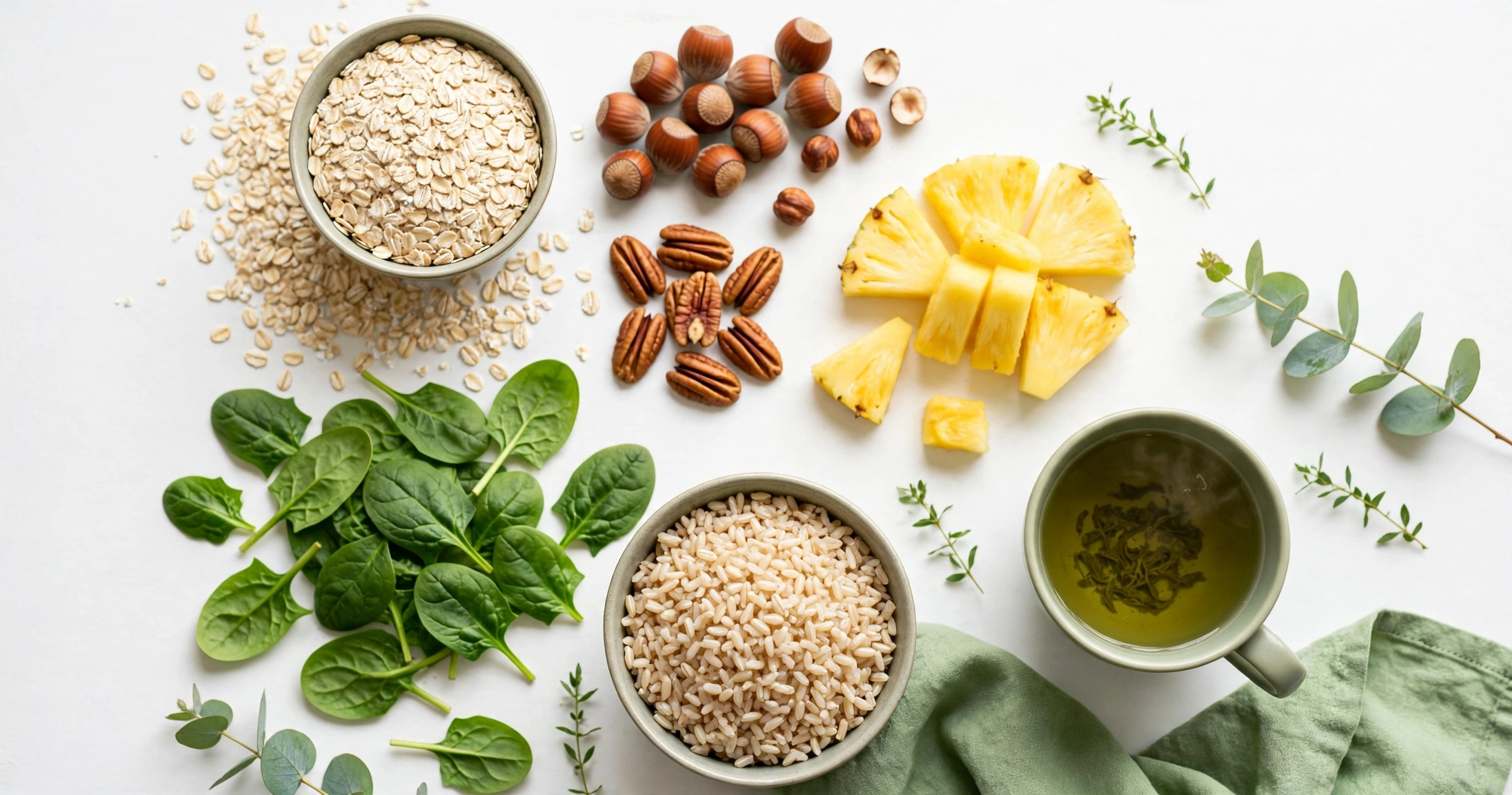
Phosphorus is found in almost every protein-rich food, so most people meet their needs easily. Animal foods are usually richest, but legumes, nuts, seeds and whole grains also contribute. Figures below are rough averages — exact values vary by brand and preparation.
- Milk: about 230 mg per glass (250 ml)
- Yoghurt: about 200–250 mg per small pot
- Cheese: about 150–250 mg per 30 g serving
- Salmon: about 250 mg per 100 g fillet
- Chicken breast: about 200 mg per 100 g
- Eggs: about 90 mg per large egg
- Lentils: about 180 mg per cooked cup
- Almonds: about 140 mg per small handful (30 g)
- Pumpkin seeds: about 350 mg per small handful (30 g)
- Oats and wholegrain bread: about 100–150 mg per serving
One normal day — yoghurt for breakfast, chicken or fish with lentils, plus a handful of nuts — can easily provide 1,000 mg or more. Vitamin D helps your body absorb phosphorus and calcium, so read about vitamin D deficiency signs and food sources too. The meal log shows what you actually ate during the day.
Too much phosphorus: additives and kidney health
While deficiency is rare, excess phosphorus is a growing concern — mainly because of phosphate additives in processed foods. These additives, found in fizzy drinks, processed cheese and meats, instant noodles, frozen meals and some baked goods, are absorbed far more easily than the phosphorus in whole foods. A diet heavy in ultra-processed foods can push intake well above what the body needs.
Healthy kidneys usually cope by excreting extra phosphorus in urine. But consistently high intakes have been linked to poorer bone health and extra kidney strain, and for people with chronic kidney disease excess phosphorus is a serious problem, because their kidneys cannot clear it properly.
To keep added phosphates in check:
- Check ingredient lists for words starting with "phos", such as phosphoric acid or sodium phosphate
- Limit cola and other fizzy drinks that contain phosphoric acid
- Choose fresh meat and fish over heavily processed versions
- Cook more meals at home with whole ingredients
Do not fear the phosphorus in natural foods such as dairy, fish or beans — the concern is the extra load from additives on top of an already adequate diet.
Do you need a phosphorus supplement?
For most people, the answer is no. A normal diet provides enough phosphorus. Doctors may prescribe phosphate supplements in specific medical situations — certain kidney or bone disorders, or hospital treatment for very low blood phosphorus — but that is a medical decision, not a dietary one.
Taking phosphorus supplements without medical advice is not a good idea. Extra phosphorus can upset the balance with calcium, irritate digestion, and strain the kidneys. If you suspect a deficiency or take antacids regularly, talk to your doctor first and ask for a blood test. Food first — supplements only when a doctor says so.
Key takeaways
- Phosphorus builds strong bones and teeth and powers cells through ATP.
- Most adults need around 700 mg per day, and a normal varied diet usually provides more than enough.
- Deficiency is rare and more likely with malnutrition, certain illnesses or heavy antacid use.
- The best sources are dairy, fish, meat, eggs, legumes, nuts, seeds and whole grains.
- Phosphate additives in processed foods and fizzy drinks are the main reason for excess intake.
- Too much phosphorus can strain the kidneys, especially for people with kidney disease.
- Supplements are rarely needed — ask your doctor first if you are concerned.
Frequently asked questions
What is phosphorus good for?
Phosphorus is essential for strong bones and teeth, for producing energy through ATP, and for building cell membranes, DNA and RNA. It also helps your kidneys filter waste and keeps blood pH in balance.
How much phosphorus do I need per day?
General guidance suggests around 700 mg per day for adults, and about 1,250 mg per day for teenagers whose bones are still growing. Most people eating a varied diet get more than this without trying.
What are the signs of phosphorus deficiency?
Early signs can include loss of appetite, weakness, fatigue and bone pain; a longer-term shortage may lead to fragile bones and muscle weakness. These symptoms have many causes, so see a doctor and ask for a blood test rather than diagnosing yourself.
Which foods are highest in phosphorus?
Dairy products, fish, meat, eggs, legumes, nuts, seeds and whole grains are the best sources. A glass of milk provides roughly 230 mg, a salmon fillet about 250 mg per 100 g, and a small handful of pumpkin seeds about 350 mg.
Can you get too much phosphorus?
Yes, mainly from phosphate additives in processed foods and phosphoric acid in fizzy drinks, which are absorbed very easily. Healthy kidneys usually clear the excess, but consistently high intakes can strain kidneys and affect bone health.
Should I take a phosphorus supplement?
Most people do not need one, because a normal diet provides enough phosphorus. Supplements are only used in specific medical situations and should be prescribed by a doctor after a blood test.





Comentarios (0)
Aún no hay comentarios. ¡Sé el primero en compartir tu opinión!
Deja un comentario