
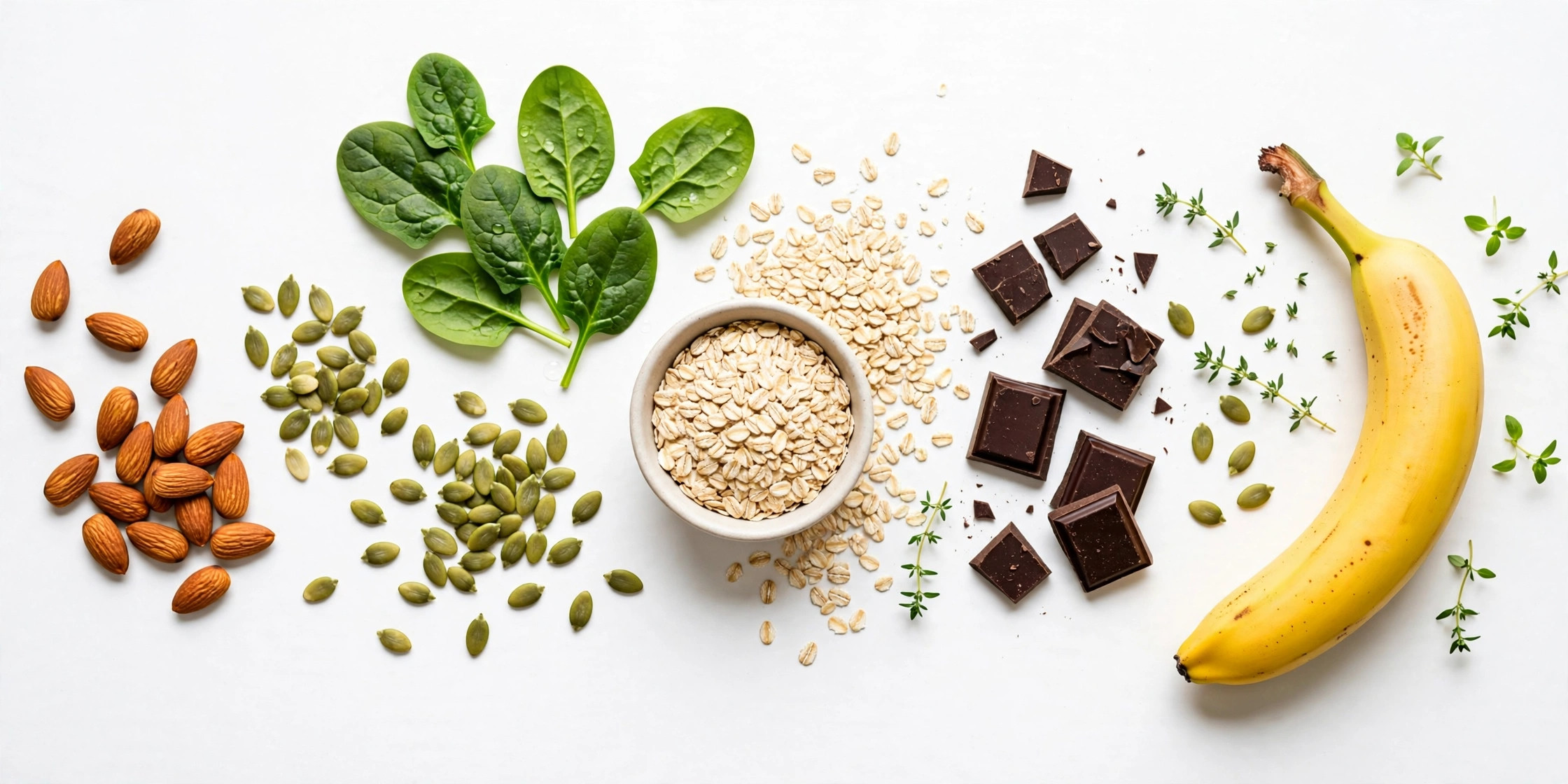
Magnesium is an essential mineral involved in more than 300 processes in your body, from energy production and muscle function to bone strength and restful sleep. Many people don't get enough from food. This guide covers the real magnesium benefits, common deficiency signs, daily needs, and the best magnesium-rich foods like leafy greens, nuts, seeds, legumes, and dark chocolate.

What Is Magnesium and Why Does It Matter?
Magnesium is the fourth most abundant mineral in the human body. It acts as a helper (cofactor) in hundreds of enzyme reactions: turning food into energy, building protein, supporting muscle and nerve function, keeping bones strong, and helping regulate blood pressure and blood sugar. In short, magnesium benefits nearly every system you rely on every day.
Despite its importance, studies consistently show that a large share of adults in Western countries consume less than the recommended daily amount. Modern diets heavy in processed foods and light on whole plant foods are the main reason. The good news is that fixing this usually comes down to simple food choices, not complicated routines.
Key takeaways
- Magnesium supports energy, muscles, nerves, bones, and heart health.
- Leafy greens, nuts, seeds, legumes, whole grains, and dark chocolate are the best food sources.
- Adult men need roughly 400–420 mg per day; adult women need roughly 310–320 mg.
- Most shortfalls can be corrected with whole foods; talk to a health professional before taking supplements.
The Main Magnesium Benefits Backed by Science
Here is what magnesium actually does in the body, in plain language:
1. Energy production
Magnesium helps convert the food you eat into usable energy (ATP). When intake is low, people often describe feeling drained even after enough sleep. A balanced diet rich in whole foods supports steady energy through the day.
2. Muscle and nerve function
Your muscles need magnesium to relax properly after contracting. This is why adequate magnesium intake is linked with fewer everyday muscle cramps and a sense of physical ease. It also supports calm, steady nerve signaling.
3. Bone strength
About 60% of the body's magnesium is stored in bones, where it supports bone structure alongside calcium and vitamin D. Getting enough of all three minerals from food is the foundation of long-term bone health.
4. Heart and blood pressure support
Magnesium helps maintain a normal heart rhythm and supports healthy blood pressure as part of an overall balanced diet. Diets rich in magnesium-containing foods, such as leafy greens and nuts, are consistently linked with better cardiovascular markers.
5. Relaxation and sleep quality
Magnesium plays a role in calming the nervous system, which is why it is often mentioned in connection with rest and sleep. While it is not a sleep drug, eating enough magnesium-rich food is a sensible part of a good sleep routine, and poor sleep can also make weight management harder.

Signs You Might Not Be Getting Enough Magnesium
Magnesium deficiency is hard to diagnose from symptoms alone, because signs like fatigue, muscle cramps, poor sleep, and feeling on edge have many possible causes. Still, people who consistently eat few whole plant foods are more likely to fall short. Commonly mentioned signs associated with low magnesium intake include:
- Frequent muscle cramps or twitches
- Feeling tired despite enough rest
- Difficulty relaxing or unwinding in the evening
- Trouble falling asleep or restless sleep
If these sound familiar, the safest first step is to improve your diet and track what you actually eat. A food tracker can show you whether your meals contain enough magnesium-rich foods. Only a health professional can diagnose a true deficiency, usually with a blood test, so see one if symptoms persist.
Who Is Most at Risk of Low Magnesium?
Certain groups are more likely to have low magnesium intake or higher needs:
- People who eat a lot of processed food and few vegetables, nuts, or whole grains
- Older adults, whose diets are often lower in magnesium
- Athletes and very active people, who lose minerals through sweat
- People with digestive conditions that reduce nutrient absorption
Certain medications can also affect magnesium levels. If you take prescription medicine regularly, ask your doctor whether your magnesium intake needs attention.
How Much Magnesium Do You Need Per Day?
General reference ranges (from public health authorities) are:
- Adult men: about 400–420 mg per day
- Adult women: about 310–320 mg per day
- Teenagers: about 240–410 mg per day, depending on age and sex
- Pregnant women: about 350–360 mg per day
These are general guidelines, not personal prescriptions. Food should be your first source. If you are considering a magnesium supplement, talk to a doctor or pharmacist first, since supplements can interact with medications and too much from supplements can cause digestive upset.
The Best Food Sources of Magnesium
Plant foods are the richest sources. Here are widely published approximate values per serving:
- Pumpkin seeds — about 150 mg per ounce (28 g)
- Almonds — about 80 mg per ounce (28 g)
- Cashews — about 75 mg per ounce (28 g)
- Dark chocolate (70–85%) — about 65 mg per ounce (28 g)
- Cooked spinach — about 75 mg per half cup
- Black beans — about 60 mg per half cup cooked
- Banana — about 30 mg per medium fruit
- Brown rice — about 40 mg per half cup cooked
- Oatmeal — about 30 mg per half cup cooked
- Avocado — about 45 mg per medium fruit
A day of eating that includes a handful of almonds, a spinach salad, black beans, and a square of dark chocolate can already cover most of your daily target. Planning balanced meals is easier with a nutrition tool that shows the mineral content of your foods.
Simple Tips to Get More Magnesium From Food
- Snack on nuts and seeds. Keep a small bag of almonds, cashews, or pumpkin seeds at your desk instead of crisps.
- Go green daily. Add a handful of spinach or kale to smoothies, omelets, or pasta — you barely taste it.
- Choose whole grains. Swap white rice for brown rice and white bread for whole-grain versions.
- Add beans to meals. Black beans, lentils, and chickpeas fit easily into salads, soups, and wraps.
- Finish with dark chocolate. A small square of 70%+ dark chocolate is a genuinely magnesium-rich treat.
- Start the day right. Oatmeal topped with banana and a spoonful of pumpkin seeds is a magnesium-packed breakfast.
Frequently Asked Questions
What are the main magnesium benefits?
Magnesium supports energy production, muscle and nerve function, bone strength, heart health, and relaxation. It is involved in hundreds of enzyme reactions, which is why adequate intake matters for overall wellbeing.
How do I know if I have a magnesium deficiency?
Signs sometimes linked with low intake include muscle cramps, fatigue, poor sleep, and trouble relaxing. These symptoms have many causes, so only a health professional can confirm a true deficiency with a blood test.
Which foods are highest in magnesium?
Pumpkin seeds, almonds, cashews, dark chocolate, cooked spinach, black beans, and whole grains top the list. Eating a variety of these foods daily is the simplest way to meet your needs.
Can I get enough magnesium from food alone?
Yes, most people can. A diet with daily servings of leafy greens, nuts, seeds, legumes, and whole grains usually reaches the recommended range. Supplements are a personal decision best made with a professional.
Is it safe to take magnesium supplements?
Magnesium from food is very safe, and supplements are generally well tolerated, but high doses can cause digestive issues and interact with some medications. Talk to a doctor or pharmacist before starting any supplement.

Comments (0)
No comments yet. Be the first to share your thoughts!
Leave a comment