

A low-carb diet limits carbohydrates — such as bread, pasta, rice, and sugar — and replaces them with protein, healthy fats, and non-starchy vegetables. Most beginners aim for 50–150 grams of carbs a day, far below the typical 200–300 grams. It can support weight loss, but only if it creates a calorie deficit.

How does a low-carb diet work?
A low-carb diet works mainly by changing what you eat, not by magic. When you cut back on carbs, you usually eat more protein and fat, which keep you full for longer. Many people also naturally eat fewer calories because the foods they cut — sugary drinks, white bread, pastries, crisps — were the ones they tended to overeat. That makes it easier to stay in a calorie deficit, which is what actually drives weight loss.
There is no single official definition, but most guides use these ranges:
- Liberal low-carb (100–150 g per day): you cut sugar, refined grains, and most processed foods, but keep some fruit, whole grains, and starchy vegetables. The easiest starting point for most beginners.
- Moderate low-carb (50–100 g per day): you skip bread, pasta, and rice most of the time, and keep carbs mostly to vegetables, berries, and dairy.
- Very low-carb / keto (under 50 g per day): the strictest level. At this point the body starts producing ketones, which is the state known as ketosis. This is essentially the keto diet — see below.
For most beginners, starting at the liberal level is the smart move. You get most of the benefits without the strict rules, and you can always go lower later if you want to. If you want a personal calorie target first, the BMR & TDEE calculator gives you a starting point before you change anything.
Low-carb vs keto: what's the difference?
Keto is the strictest form of low-carb eating: a typical keto diet keeps carbs under 50 grams a day — often under 30 — and gets most of its calories from fat, aiming for ketosis, a state where the body burns fat for fuel and produces ketones. A general low-carb diet does not aim for ketosis; it simply reduces carbs to a moderate level.
That distinction matters for beginners. Keto demands careful tracking, strict limits on fruit and starchy vegetables, and a lot of label reading. A short term keto trial — say, a few weeks — can work for some people, especially if they enjoy high-fat foods and do not mind the structure. But many people find it hard to sustain, and the strictness is also what causes most of the early side effects, like fatigue and headaches in the first week (often called the "keto flu").
If you are curious about keto specifically, read our full keto diet beginner's guide before deciding.
What to eat on a low-carb diet
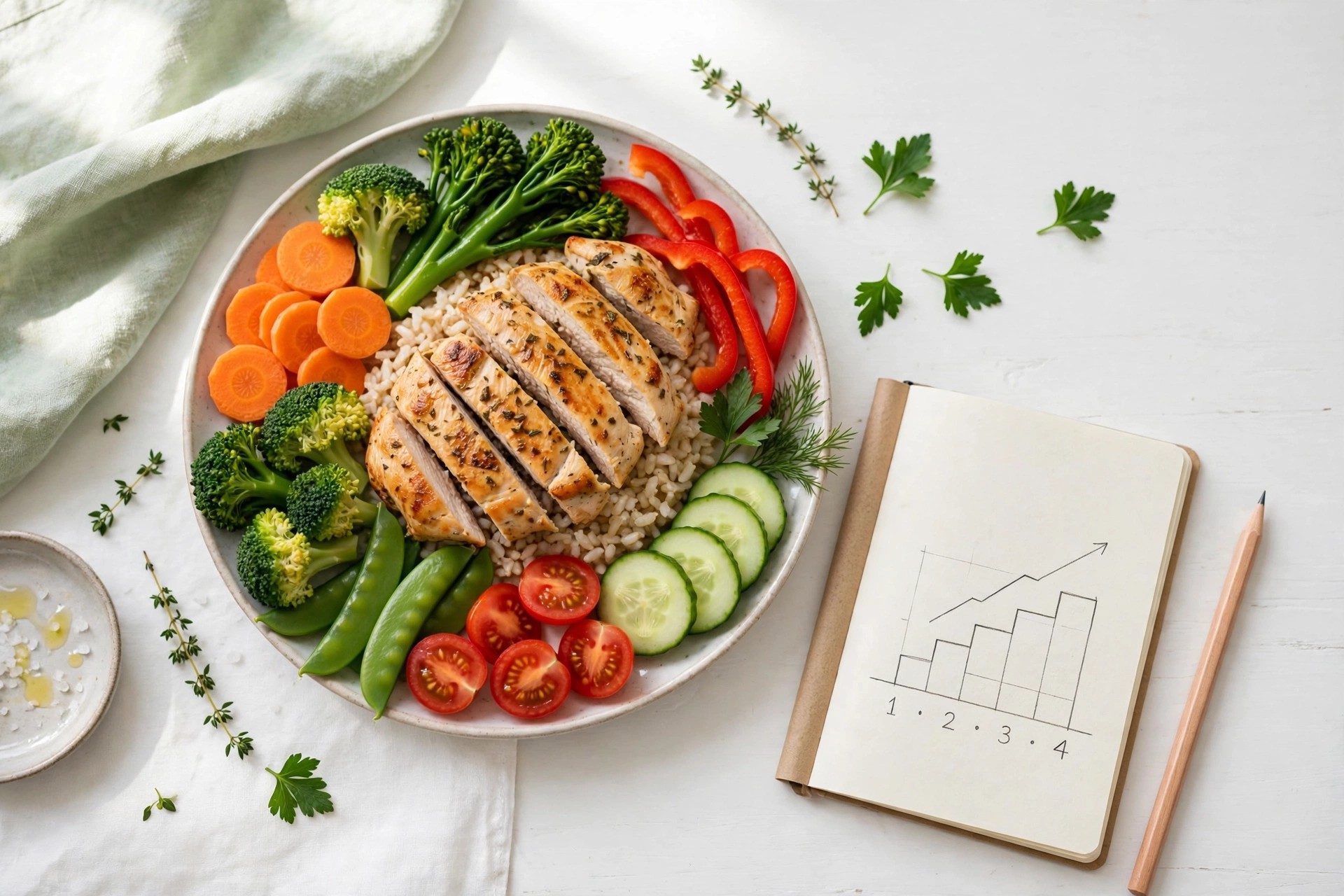
A low-carb plate is built around protein, non-starchy vegetables, and healthy fats:
- Protein: eggs, chicken, turkey, beef, fish, seafood, tofu, tempeh, Greek yogurt, cottage cheese, and cheese. Aim for a palm-sized portion at each meal.
- Non-starchy vegetables: leafy greens, broccoli, cauliflower, zucchini, peppers, mushrooms, green beans, cucumber, and tomatoes. These are low in carbs and high in fibre, so eat plenty.
- Healthy fats: olive oil, avocado, nuts, seeds, and oily fish like salmon and sardines. Fat adds flavour and keeps meals satisfying.
- Low-sugar fruit (in moderation): berries, especially raspberries and strawberries, are the lowest-carb fruits. Apples and pears are fine in small portions at the liberal level.
- Drinks: water, sparkling water, unsweetened tea, and black coffee.
The easiest way to start is to build each meal the same way: half the plate vegetables, a quarter protein, and a quarter healthy fat. Logging your food for a week in the meal log shows you where your carbs are actually coming from — most people are surprised by how much hides in sauces, drinks, and snacks.
Foods to limit or avoid
These foods are the main sources of carbs in most diets — cutting them back is the whole point of eating low-carb:
- Sugar in all forms: fizzy drinks, fruit juice, sweets, biscuits, cakes, and sweetened cereals. A single can of cola contains around 35 g of sugar — more than a whole day's carbs on a strict low-carb plan.
- Bread, pasta, rice, and noodles: including whole-grain versions. A cup of cooked rice has roughly 45 g of carbs, so it adds up fast.
- Starchy vegetables: potatoes, sweet potatoes, corn, and peas are healthy foods, but they are high in carbs and best kept to small portions.
- Processed low-fat products: low-fat yogurts, sauces, and dressings often replace the fat with sugar. Check the label.

A simple low-carb meal plan for one day
Here is what a day of eating low-carb can look like at the moderate level (roughly 50–100 g of carbs). Adjust portions to your own calorie needs.
Breakfast
Two scrambled eggs with spinach and mushrooms, cooked in butter, plus half an avocado. Black coffee or tea. About 5–8 g of carbs.
Lunch
A large salad with grilled chicken, mixed leaves, cucumber, tomato, feta, and an olive oil dressing, plus a handful of walnuts. About 10–12 g of carbs.
Dinner
Baked salmon with roasted broccoli and cauliflower, plus a side salad with olive oil. About 10–12 g of carbs.
That day totals roughly 25–30 g of carbs, which sits at the stricter end — at the liberal level you could add a piece of fruit, a small portion of oats, or a slice of whole-grain bread. Low-carb eating does not have to mean tiny portions: the plates above are generous, because vegetables and protein are filling.
Benefits and possible side effects
People try low-carb eating for several reasons, and the honest picture includes both the upsides and the downsides:
- Weight loss: low-carb diets can help with weight loss, mainly because they reduce appetite and cut out the foods people overeat most. Studies comparing diets generally find that low-carb works about as well as other diets over the long term — the best diet is the one you can keep.
- Steadier energy and fewer cravings: many people notice fewer sugar crashes once they cut back on refined carbs.
The first one to two weeks can be rough: headaches, tiredness, constipation, and irritability are common as the body adapts. Drinking enough water, eating enough salt, and getting enough fibre from vegetables usually helps. If symptoms persist beyond a couple of weeks, ease up and talk to a healthcare professional.
Is a low-carb diet right for you?
A low-carb diet suits people who enjoy protein-rich foods, do not mind giving up bread and pasta, and struggle with sugar cravings. It can be a good fit if you found counting calories tedious — cutting a whole food group is simpler to follow than tracking every bite.
It may not be the best choice if you love bread, rice, or fruit, train at high intensity and need quick energy from carbs, or have a history of disordered eating. It is also not suitable without medical supervision for pregnant or breastfeeding women, people with kidney or liver disease, or anyone taking diabetes medication. When in doubt, ask your doctor before making a big change to how you eat.
And remember: low-carb is a tool, not a rule for life. Some people stay low-carb for years; others use it for a few months to reset their habits and then move to a more balanced way of eating. What matters is finding an eating pattern that keeps you healthy, satisfied, and able to enjoy food — because that is the only kind of diet that lasts.
Key takeaways
- A low-carb diet limits carbs to roughly 50–150 g a day and replaces them with protein, healthy fats, and non-starchy vegetables.
- It supports weight loss mainly by reducing appetite and making a calorie deficit easier — not by magic.
- Keto is the strictest form of low-carb (under 50 g a day, aiming for ketosis); a short term keto trial suits some people, but most beginners do better starting at the moderate level.
- Build meals around vegetables, protein, and healthy fats — and watch out for hidden carbs in sauces, drinks, and snacks.
- Start at the liberal level, eat plenty of vegetables, and track your intake for the first week.
- Talk to a doctor first if you take diabetes medication or have kidney or liver disease.
Frequently Asked Questions
How many carbs should I eat on a low-carb diet?
Most beginners aim for 50–150 grams of carbs per day, depending on how strict they want to be. A liberal low-carb diet is 100–150 g, moderate is 50–100 g, and keto is under 50 g. Start at the liberal end and reduce gradually if you want a stricter approach — jumping straight to very low carb makes the first week much harder than it needs to be.
Can I eat fruit on a low-carb diet?
Yes, but in moderation and with the right choices. Berries such as raspberries, strawberries, and blackberries are the lowest in carbs and fit easily into a low-carb diet. Bananas, grapes, and mangoes are much higher in carbs, so a small portion now and then is fine, but a daily banana smoothie will use up most of your carb allowance.
Is keto the same as low-carb?
No. Keto is the strictest form of low-carb eating, keeping carbs under about 50 grams a day to reach ketosis, where the body burns fat for fuel. A general low-carb diet simply reduces carbs to 50–150 grams a day and does not aim for ketosis. Keto is harder to follow and has more side effects in the first weeks, so most beginners are better off starting with a regular low-carb diet.
Will a low-carb diet help me lose weight?
It can, but only if it creates a calorie deficit. Low-carb diets help many people eat fewer calories because protein and fat are filling and the foods they cut are easy to overeat. Over the long term, studies find low-carb works about as well as other diets — the best diet is the one you can stick to. Check your calorie needs with a BMR and TDEE calculator before you start.
What are the side effects of starting a low-carb diet?
The most common early side effects are headaches, tiredness, constipation, and irritability during the first one to two weeks as your body adapts. Drinking enough water, eating enough salt, and getting fibre from vegetables usually helps. If symptoms last longer than a couple of weeks, ease up on the carb restriction and speak to a healthcare professional.
Do I need to count carbs every day?
Not forever, but tracking for the first week or two is very helpful. Most people underestimate their carb intake because of hidden carbs in sauces, drinks, and snacks. Logging your meals in a meal log for a week teaches you roughly how many carbs are in your usual foods, after which many people can eat low-carb without strict daily counting.





Comments (0)
No comments yet. Be the first to share your thoughts!
Leave a comment