

The best eating schedule to lose weight is one you can actually stick to: three balanced meals a day, four to five hours apart, with an optional protein-rich snack if genuinely hungry. Eating at consistent times, front-loading more food earlier in the day, and avoiding late-night grazing helps most people stay in a calorie deficit without feeling deprived.
 Key Takeaways
- Eat at roughly the same times daily so hunger becomes predictable instead of constant.
- Aim for three balanced meals, four to five hours apart, with protein and fibre at each one.
- Make breakfast and lunch substantial and dinner lighter — not skipped, just smaller.
- Late-night snacking is the most common schedule-breaker; a firm kitchen closing time fixes it.
- The best schedule is one you can repeat on busy days, weekends, and shift days.
Why the Best Eating Schedule to Lose Weight Matters
Weight loss ultimately comes down to a calorie deficit — eating slightly less energy than your body uses — but when you eat shapes how easy that deficit feels. Skipping meals and arriving at dinner starving rarely ends well, and grazing all day without real meals can leave you unsatisfied yet still overeating.
A regular schedule works because it trains your hunger: when meals arrive at predictable times, your body learns when food is coming and stops sending urgent hunger signals between meals. That is why the best eating schedule to lose weight is less about magic meal times and more about a repeatable rhythm. Logging meals for a week with the meal log tool shows how your pattern really looks.
The Best Eating Schedule to Lose Weight: A Sample Day
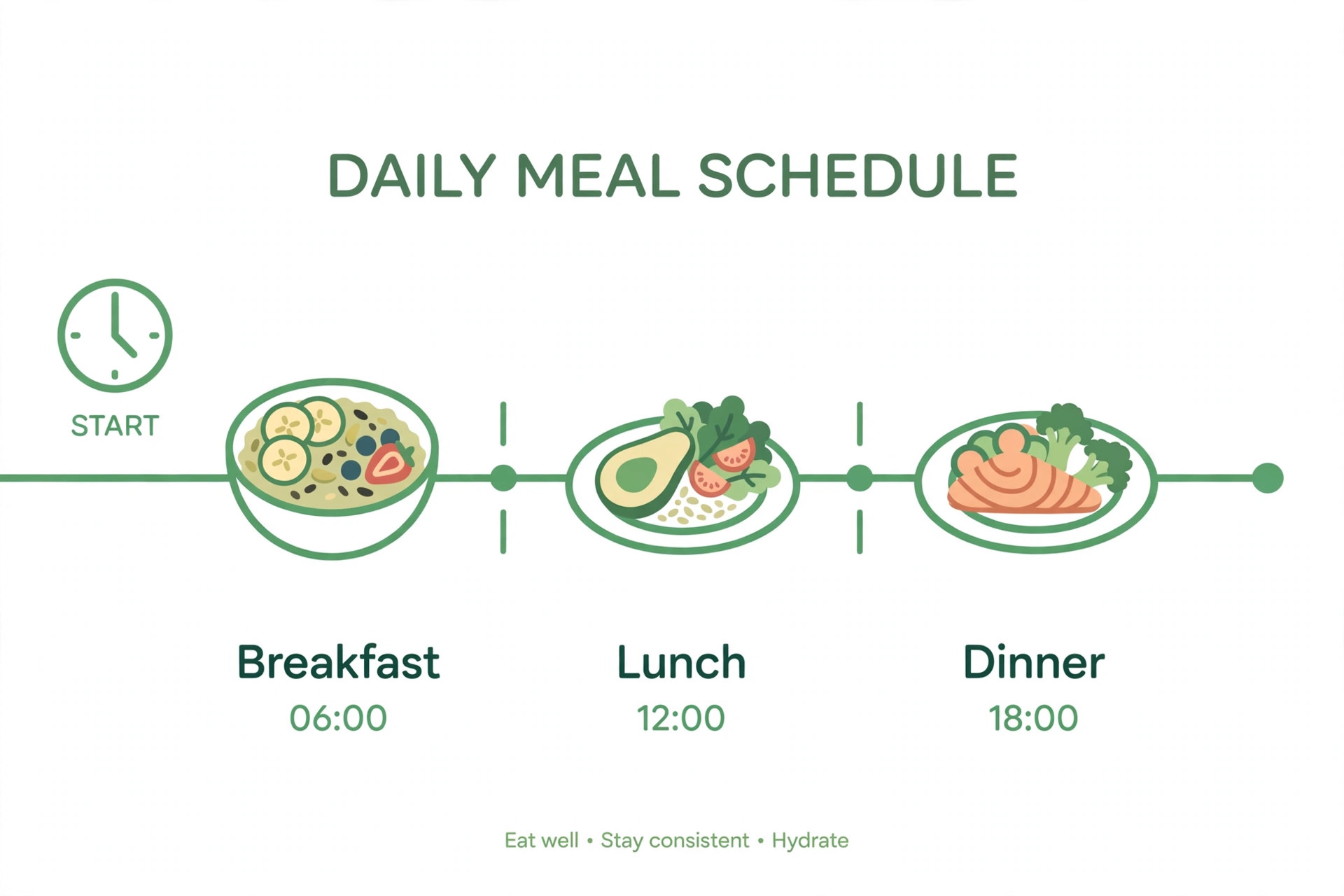
Here is a practical template for someone who wakes around 7 a.m. Treat the times as anchors, not rules — shifting everything by an hour changes nothing, as long as the spacing stays roughly even.
- 7:30 a.m. — Breakfast: a filling start with protein and fibre: eggs with whole-grain toast and fruit, or yoghurt with oats and berries.
- 12:30 p.m. — Lunch: the largest or second-largest meal — a grain bowl, a hearty salad with chicken or beans, or a homemade wrap with vegetables.
- 4:00 p.m. — Optional snack: only if genuinely hungry — a handful of nuts, fruit with yoghurt, or a small protein snack. Skip it happily on days you are not hungry.
- 7:00 p.m. — Dinner: a balanced, lighter plate — half vegetables, a quarter protein, a quarter whole grains or starchy vegetables.
- 8:30 p.m. — Kitchen closes: no more snacking after dinner; herbal tea or water is fine, and the fridge can wait until morning.
Notice what this schedule does not include: no rigid calorie prescription, no banned foods, no 6 a.m. breakfast rule. The structure does the work — simply moving dinner earlier and closing the kitchen after it removes many unplanned calories.
 How to Adapt the Schedule to Your Life
If You Work Shifts
Shift workers can follow the same pattern anchored to their own wake time, not the wall clock. Eat your first meal within an hour or two of waking, space the next meals four to five hours apart, and keep one main meal during your shift rather than snacking through it. On days off, return to a daytime pattern gradually instead of flipping everything at once. Preparing food in advance helps enormously — see our meal prep guide for beginners.
If You Are a Late Riser
If you wake at 10 a.m., your schedule simply starts later: brunch around 11 a.m., a main meal around 3 p.m., dinner around 7:30 or 8 p.m. Skipping breakfast is fine on its own — what matters is eating regular, satisfying meals rather than one huge late dinner. If you regularly skip your first meal and overeat at night, a small protein-rich morning meal usually fixes the pattern.
Hunger vs Habit: How to Tell the Difference
Not every urge to eat is hunger. Habit hunger arrives at a familiar cue — the TV goes on, you pass the bakery, the workday ends — and it usually craves one specific food. Real hunger builds gradually, is satisfied by an ordinary meal, and brings physical signs like an empty stomach or low energy.
Before an unplanned snack, try this quick check:
- Drink a glass of water and wait ten minutes.
- Ask: would I eat a plain, balanced meal right now? If yes, you are probably hungry — eat a proper snack or bring your next meal forward.
- If only one specific treat will do, it is likely a habit cue. Change the routine — take a short walk, make tea, or move to another room — and the urge usually fades.
This is not about willpower or guilt — just noticing the pattern so your schedule serves you instead of fighting you.
What to Do on Weekends
Weekends derail more eating schedules than weekdays, because routines dissolve. The fix is not a stricter weekend plan — it is keeping two anchors: a first meal within a couple of hours of waking, and dinner at a normal time. A later brunch is fine; skipping meals all day then ordering a huge takeaway dinner is the pattern to avoid.
Social meals deserve a place in the plan too: eat a lighter lunch before a dinner out, enjoy it without guilt, and return to your normal schedule the next morning. One meal never ruins a schedule; abandoning it for the whole weekend does.
Common Mistakes That Break a Good Eating Schedule
- Skipping meals to "save" calories — it usually backfires into a much larger evening meal.
- Eating dinner too late, every night — late, heavy dinners bring snacking and poor sleep, making the next day harder.
- Grazing instead of eating meals — small bites all day rarely satisfy, yet they add up quickly.
- Copying someone else's schedule exactly — a plan built for a 5 a.m. riser will fail for a night-shift nurse, so adapt the pattern to your own day.
- Treating one off-plan day as failure — the schedule works because of what you do most days, not because of any single perfect day.
Note: this article is general information only, not medical advice. If you have diabetes, an eating disorder, or any medical condition, or you take medication that affects appetite or blood sugar, talk to a doctor or registered dietitian before changing your eating schedule.
Frequently Asked Questions
What is the best eating schedule to lose weight?
Three balanced meals a day, spaced roughly four to five hours apart, with an optional snack if you are genuinely hungry. Consistent timing, a substantial earlier meal, and a lighter dinner help most people maintain a calorie deficit.
Should I skip breakfast to lose weight?
Skipping breakfast only helps if it genuinely reduces your total daily intake without making you overeat later. Many people who skip it end up much hungrier in the evening and eat more overall.
Is it bad to eat after 8 p.m.?
Eating after 8 p.m. is not automatically harmful, but it often means extra snacks rather than a planned meal, and it can disturb sleep. A planned dinner at 8 or 9 p.m. fits fine into a weight-loss schedule.
How many meals a day should I eat to lose weight?
Most people do well on three meals a day, with an optional snack. Fewer, satisfying meals can work, as can more frequent small meals with controlled portions. Total intake and consistency matter more than the number of meals.
Can I follow this schedule if I work night shifts?
Yes. Anchor the schedule to your wake time: eat your first meal after waking, space meals four to five hours apart, and keep one main meal during your shift. Prepare food in advance instead of relying on vending machines at 3 a.m.





Comments (0)
No comments yet. Be the first to share your thoughts!
Leave a comment