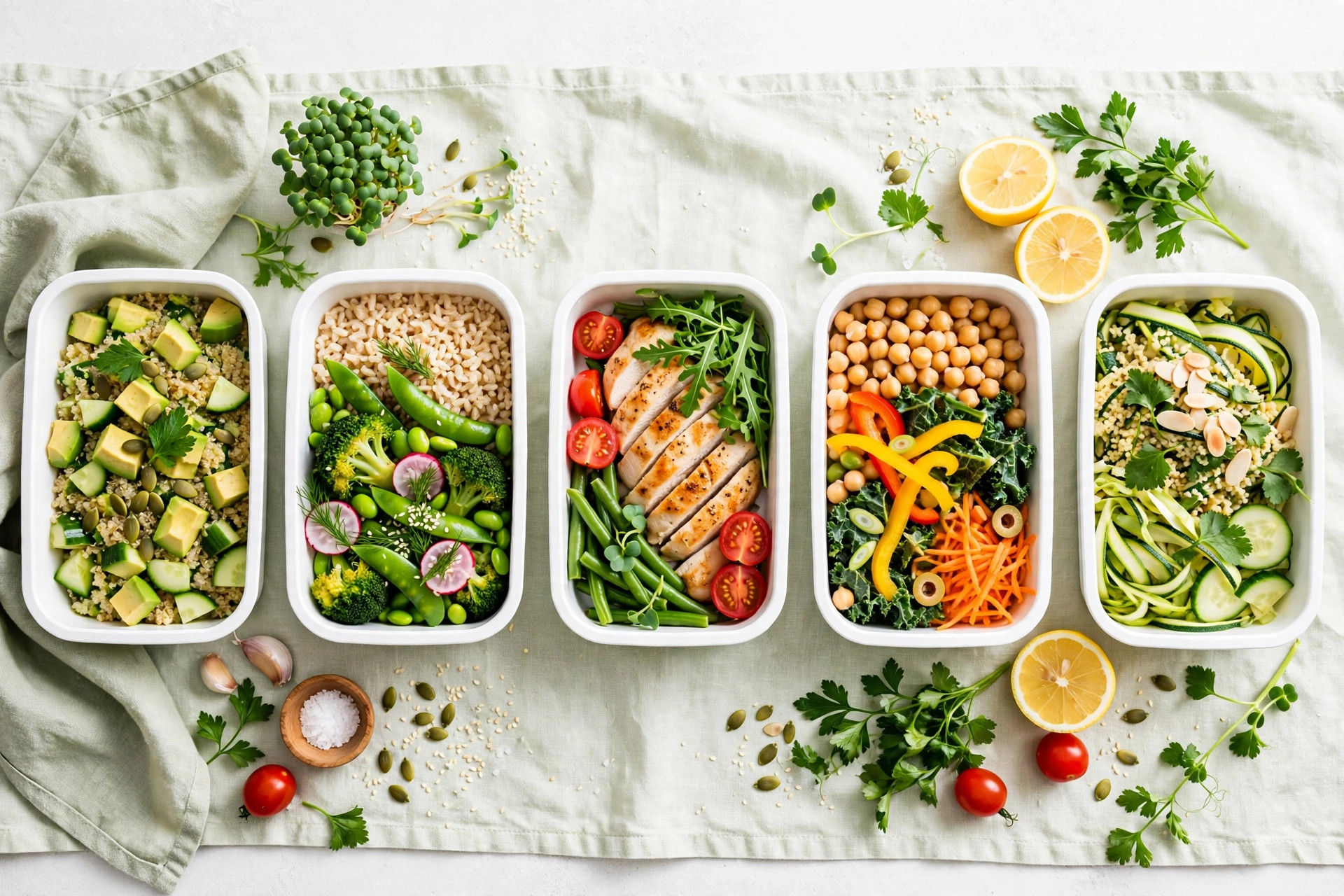
Meal prep for beginners means planning your meals ahead of time, cooking them in batches, and portioning them into airtight containers so healthy food is always ready to eat. It saves time during the busy week, cuts down on food waste and impulse takeout, and makes it far easier to stick to balanced, nutritious eating — without cooking from scratch every day.
Key takeaways
- Meal prep means planning, shopping, cooking, and portioning healthy meals in one weekly session.
- Start small: prepare lunches or dinners for 3–4 days rather than a full week.
- Batch-cook versatile bases — whole grains, lean proteins, and roasted vegetables — then mix and match.
- Cool cooked food quickly, refrigerate within 2 hours, and eat refrigerated meals within 3–4 days.
- Use airtight containers and label every meal with the date.
Why Meal Prep Works for Beginners
When healthy food is already cooked and waiting in the fridge, eating well stops being a daily battle. That is the real power of meal prep: it removes the 6 p.m. question of "what should I eat?" — the exact moment when most of us reach for takeout or snacks. With meals ready to go, you eat what you planned, not what your cravings decide in a tired moment.
Meal prepping also saves money. Buying ingredients in bulk and cooking at home costs far less per meal than restaurants or delivery apps. Many beginners notice their weekly food spending drop within the first month, simply because they throw away less food and order in less often.
Finally, it gives you quiet control over portions and ingredients. You decide how much oil, salt, and sugar goes into your food, and each container holds exactly one serving. Over time, this simple habit builds a healthier relationship with food — without strict dieting or complicated rules.
Your First Meal Prep for Beginners: A Step-by-Step Plan
You do not need fancy equipment or chef-level skills to start. All you need is a plan, one to two hours on a single day of the week, and a set of containers. Here is a simple five-step process that works for complete beginners.
Step 1: Choose 2–3 Simple Recipes
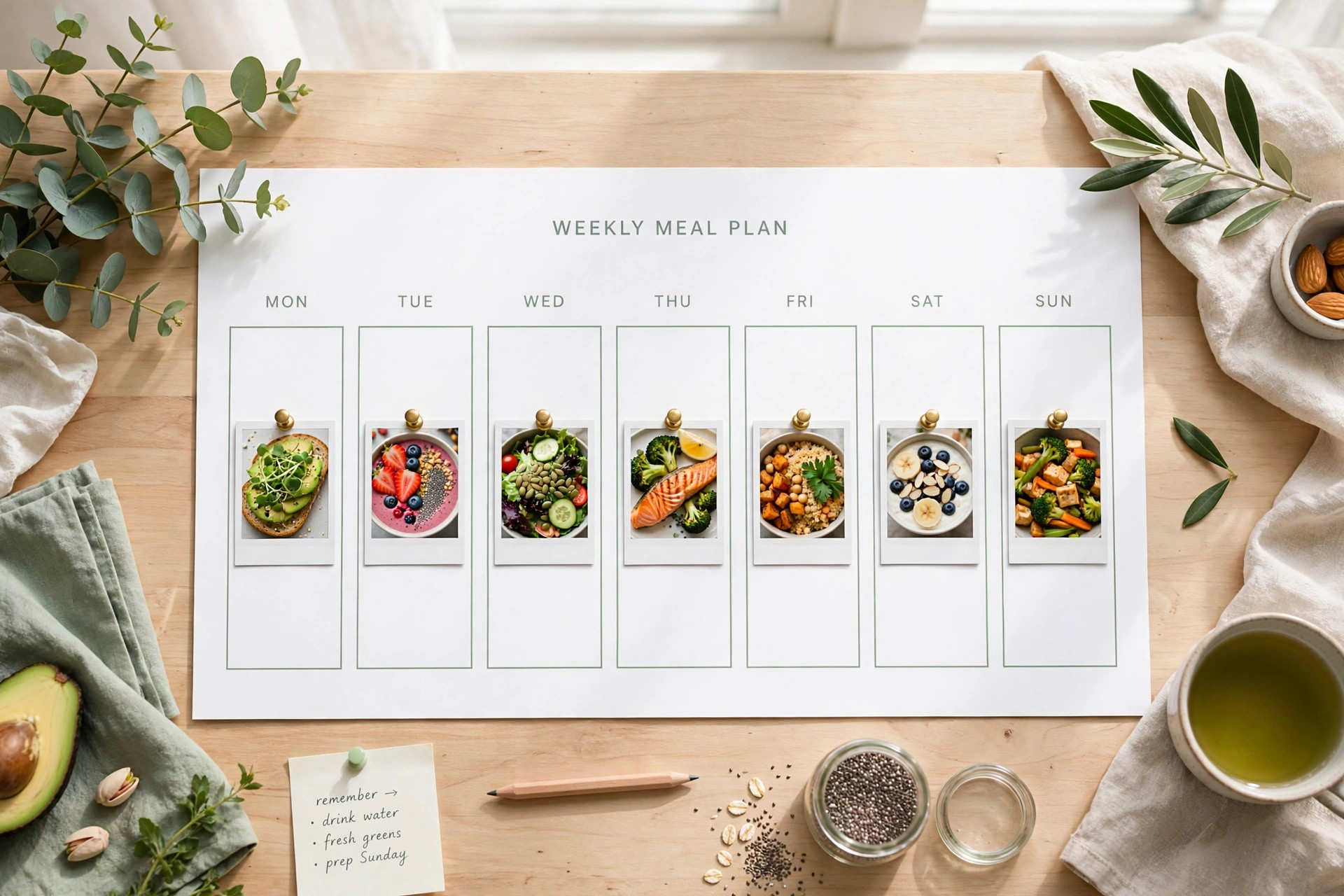
Pick recipes you already enjoy and that share ingredients — for example, a chicken and vegetable stir-fry, a lentil soup, and a quinoa salad. Shared ingredients mean a shorter shopping list and less waste. Aim for meals that balance protein, whole grains or starchy vegetables, and plenty of colorful vegetables. If you are not sure what to cook, our AI meal plan generator can build a balanced weekly menu for you in seconds.
Step 2: Write a Grocery List (and Stick to It)
Go through your chosen recipes and write down every ingredient, checking what you already have at home first. Organize the list by store section — produce, protein, grains, pantry — so shopping takes less time. A written list keeps you focused and prevents impulse buys that do not fit your plan. While you shop, practice reading nutrition labels so you can compare packaged foods like sauces, yogurts, and bread.
Step 3: Schedule Your Prep Session
Block out 1–2 hours on a day that suits you — Sunday works for most people, but any day is fine. Treat it like an appointment you keep. Put on some music or a podcast, and remember: two focused hours now saves you cooking time on five busy evenings later.
Step 4: Cook in Batches
Start with whatever takes longest. Preheat the oven, get grains simmering on the stove, and roast a big tray of vegetables while your protein cooks. This parallel cooking is the secret to finishing fast. Season simply — olive oil, salt, pepper, garlic, lemon — so the ingredients stay versatile. You can add variety later with different sauces and toppings through the week.
Step 5: Portion, Cool, and Store
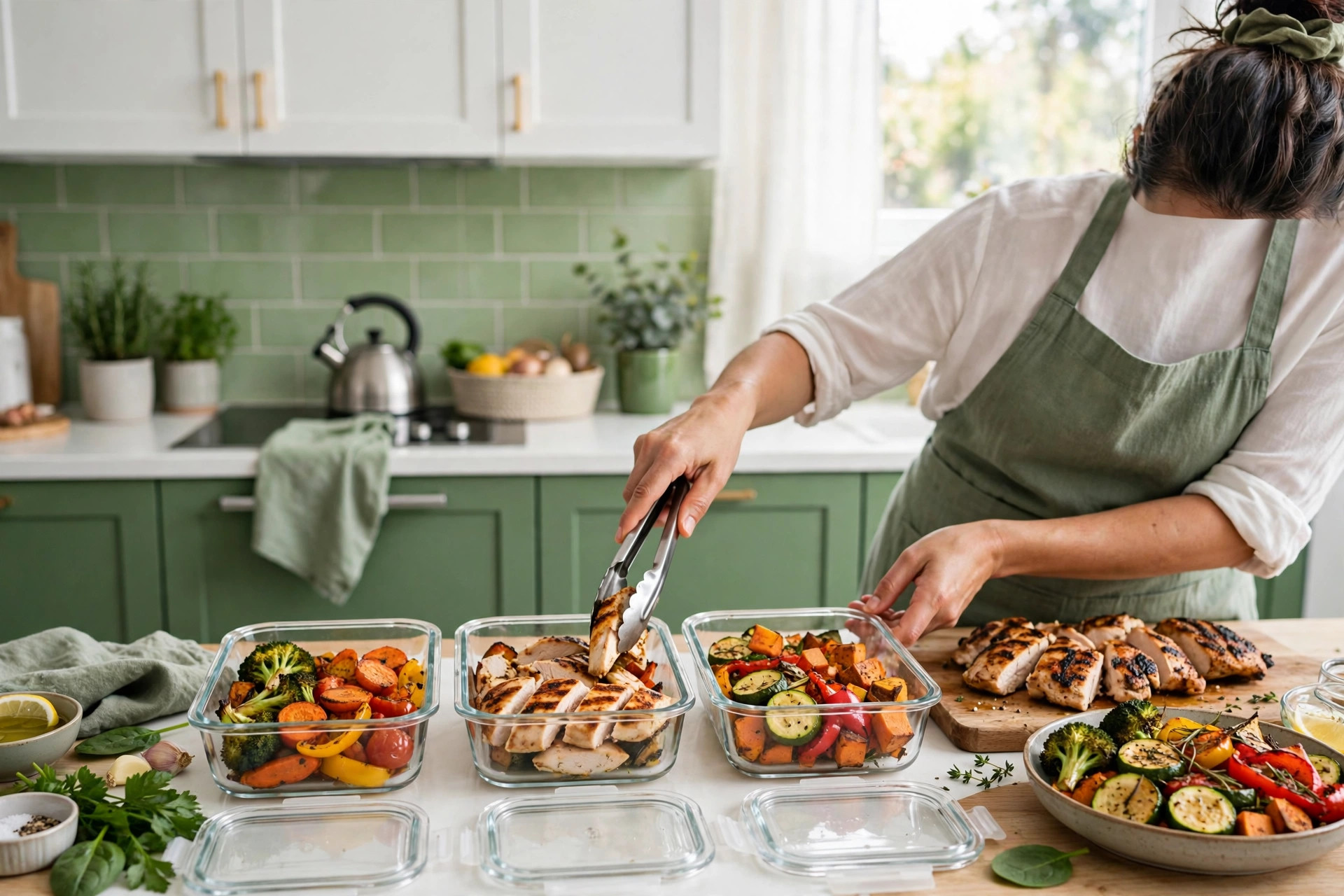
Divide the food into individual airtight containers — one container per meal makes grab-and-go effortless. Let hot food cool for no more than 2 hours before refrigerating (spreading it on a wide tray cools it faster). Label each container with its contents and the date, then refrigerate what you will eat in the next 3–4 days and freeze the rest.
Best Foods for Beginner Meal Prep
Some foods hold up beautifully for days; others go soggy or stale. Beginners get the most reliable results by building meals from these staples:
- Whole grains: brown rice, quinoa, bulgur, oats, and whole-wheat pasta reheat well and keep you full for hours.
- Lean proteins: chicken breast, turkey, lentils, chickpeas, black beans, eggs, tofu, and canned tuna.
- Roasted vegetables: broccoli, cauliflower, carrots, bell peppers, zucchini, and sweet potatoes stay tasty for days.
- Healthy fats: olive oil, nuts, seeds, and avocado — add avocado fresh just before eating, not in advance.
- Flavor boosters: hummus, salsa, low-sodium soy sauce, mustard, and fresh herbs keep meals interesting all week.
Prep with caution: leafy salads (dress them just before eating), fried foods (they lose their crunch), and delicate fish, which is best eaten within 1–2 days. A Mediterranean-style approach works especially well for meal prep — see our Mediterranean diet guide for beginners for inspiration. To fine-tune your portions, check calories and macros with the nutrition tool.
Meal Prep Food Safety Basics
Food safety is the one part of meal prep you cannot skip. Bacteria multiply quickly at room temperature, so cool cooked food and get it into the fridge within 2 hours. Keep your refrigerator at or below 4°C (40°F).
Eat refrigerated meals within 3–4 days. If you prepped more than that, freeze the extras right away — most cooked meals keep well in the freezer for up to 3 months. Thaw frozen meals in the fridge overnight, never on the kitchen counter. When reheating, heat food until it is steaming hot all the way through, and reheat each portion only once.
When in doubt, throw it out: if something smells off or you cannot remember when you cooked it, do not risk it. Consistent labeling habits make these decisions easy.
Common Meal Prep Mistakes to Avoid
- Prepping too much, too soon: cooking 21 identical meals in week one leads to burnout. Start with 3–4 days of lunches or dinners.
- Eating the same meal five days straight: prep versatile components instead, and vary sauces and toppings so each day feels different.
- Skipping the labels: unlabeled containers become mystery boxes. A quick date label takes seconds and prevents waste.
- Forgetting to track: log your prepped meals in the meal log to stay accountable and spot patterns in your eating habits.
Note: this guide shares general nutrition information for healthy adults. If you have a medical condition, food allergies, or specific dietary needs, check with a healthcare professional before making big changes to how you eat.
Frequently Asked Questions
How long does meal prep take for beginners?
Most beginners need 1–2 hours once a week, including cooking and cleanup. As you learn to cook multiple things at once, that time usually shrinks. Start with just a few meals so the session feels manageable rather than overwhelming.
How long do meal-prepped meals last in the fridge?
Most cooked meals stay safe for 3–4 days in a fridge kept at or below 4°C (40°F). If you want meals for the whole week, refrigerate 3–4 days' worth and freeze the rest, then thaw portions in the fridge overnight as needed.
Is meal prep actually healthy?
Yes — when your prepped meals are balanced. Meal prep itself is just a method; what matters is what you cook. Build each meal around vegetables, a lean protein, and a whole grain, and go easy on added oils, salt, and sugary sauces.
Do I need special containers for meal prep?
You do not need anything fancy, but airtight containers make a real difference. Glass containers with locking lids are durable, microwave-safe, and do not stain. If you use plastic, choose BPA-free containers and avoid heating them when they are scratched or warped.
Can meal prep help with weight loss?
It can support weight loss because it makes portion control almost automatic — each container is one planned serving, which reduces overeating and impulse snacking. For best results, pair meal prep with realistic calorie targets; our AI meal plan generator can help you build a plan that fits your goals.
Comments (0)
No comments yet. Be the first to share your thoughts!
Leave a comment