
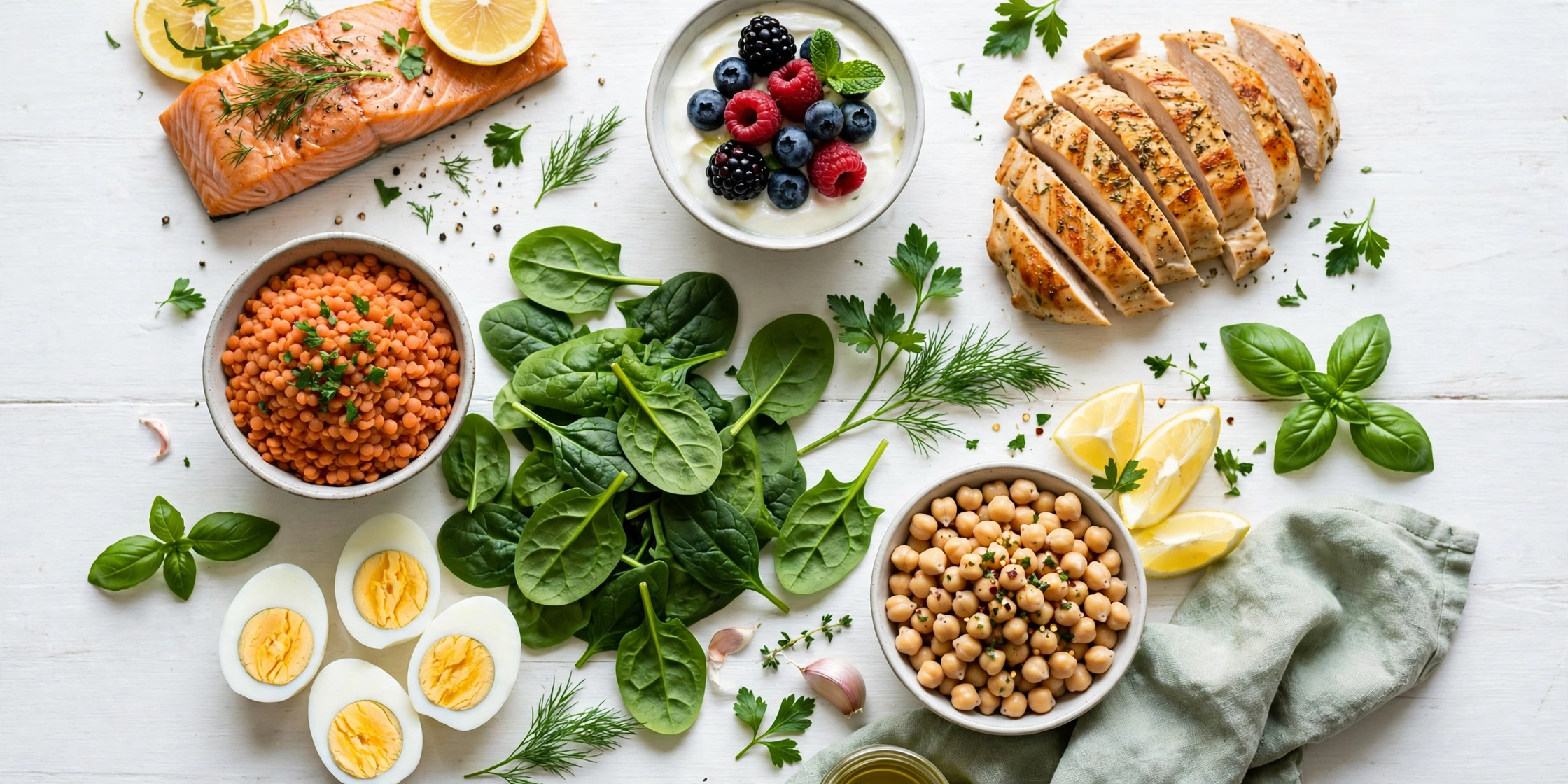
Short answer: A 7-day high-protein diet plan for weight loss fills each meal with protein — eggs, chicken, fish, yogurt, beans and lentils — plus vegetables and grains, keeping calories in a modest deficit. Aim for 1.2–1.6 g of protein per kg daily, spread across three meals and a snack. This plan gives you a menu for each day.
Protein helps in two ways: it keeps you full longer than carbohydrates or fat, and it protects muscle while you lose fat, making a calorie deficit easier to hold. This guide is general information, not medical advice — if you have kidney disease, diabetes, or another health condition, talk to your doctor or a registered dietitian before changing your diet.
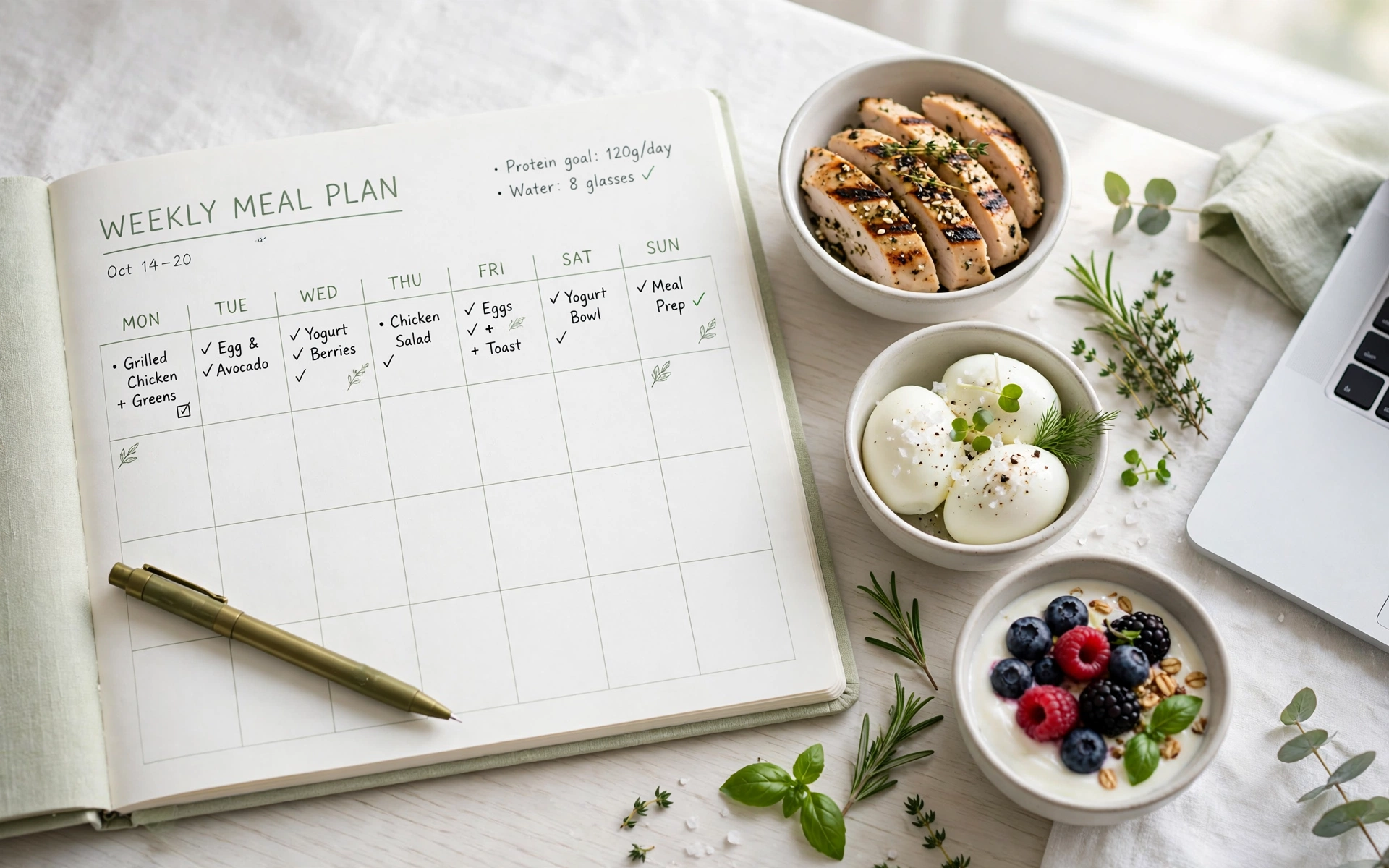 How the 7-Day High-Protein Diet Plan Works
The plan is built on three rules. First, every meal contains a clear protein source. Second, half the plate is vegetables or salad, adding volume and fiber for very few calories. Third, portions stay sensible — enough to feel satisfied, not so much that the deficit disappears. Drink water with meals, and skip sugary drinks and alcohol this week if you can.
Before you start, know your calorie target: use our BMR & TDEE calculator to estimate daily calorie use, then aim roughly 300–500 calories below it. Log meals in our Meal Log for the first few days — most people are surprised where their calories come from.
Your 7-Day High-Protein Diet Plan: Day by Day
Each day below lists breakfast, lunch, dinner and a snack, with an approximate daily protein total. Swap similar foods freely — turkey for chicken, cottage cheese for Greek yogurt, chickpeas for lentils — the protein target matters, not the exact recipe. For more ideas, see our related guide: 7-Day High-Protein Meal Plan for Beginners.
DayBreakfastLunchDinnerSnackProtein/day (approx.) Day 1Greek yogurt with berries and a spoonful of oatsGrilled chicken salad with chickpeas and olive oilBaked salmon, steamed broccoli and quinoaA boiled egg~95 g Day 2Scrambled eggs (2) with spinach and whole-grain toastLentil soup with a slice of whole-grain breadTurkey stir-fry with peppers, green beans and brown riceCottage cheese with cucumber~100 g Day 3Overnight oats with milk, yogurt and chia seedsTuna and white-bean salad with tomatoes and lemonBeef and vegetable stew with a small baked potatoA handful of almonds and an apple~95 g Day 4Cottage cheese with peach slices and flaxseedChicken and vegetable whole-grain wrapBaked cod, roasted carrots and lentilsGreek yogurt with cinnamon~100 g Day 5Vegetable omelette (2 eggs) with mushrooms and cheeseQuinoa bowl with black beans, corn and avocadoGrilled chicken breast, sweet potato and green saladA small protein smoothie (milk, banana, yogurt)~105 g Day 6Greek yogurt with walnuts and honeyEgg salad sandwich on whole-grain bread with saladLentil and vegetable curry with brown riceEdamame with a pinch of salt~90 g Day 7Scrambled eggs with smoked salmon and toastChicken soup with beans and vegetablesGrilled tofu or halloumi with roasted vegetables and quinoaCottage cheese with berries~95 g
These totals suit an adult of roughly 60–75 kg; heavier or very active people need more (see below). If a day feels too light, add an extra egg, a portion of yogurt, or more beans rather than biscuits or crisps.
Protein Targets by Body Weight
Use this table as a starting point, and adjust for your appetite and activity level.
- Sedentary adult aiming to lose weight: about 1.2 g of protein per kg of body weight per day. Example: a 70 kg person aims for around 85 g per day.
- Active adult or regular exerciser: about 1.4–1.6 g per kg per day. Example: a 70 kg person aims for around 100–110 g per day.
- Strength training several times a week: about 1.6–2.0 g per kg per day, spread across meals. Example: an 80 kg person aims for around 130–160 g per day.
- Older adults: research suggests slightly higher intakes, around 1.2–1.5 g per kg per day, can help protect muscle — worth discussing with your doctor.
Spread protein across the day rather than loading it into dinner: aim for roughly 25–35 g per meal — about a palm-and-a-half of chicken or fish, a cup of Greek yogurt, or three eggs. Check your numbers by logging one day in the Meal Log.
Cheap High-Protein Foods
High protein need not mean expensive. Eggs, lentils, beans, canned tuna, cottage cheese, milk, yogurt and frozen chicken are among the cheapest protein sources per gram, while plant proteins like lentils and chickpeas add filling fiber.
 Shopping List for the Week
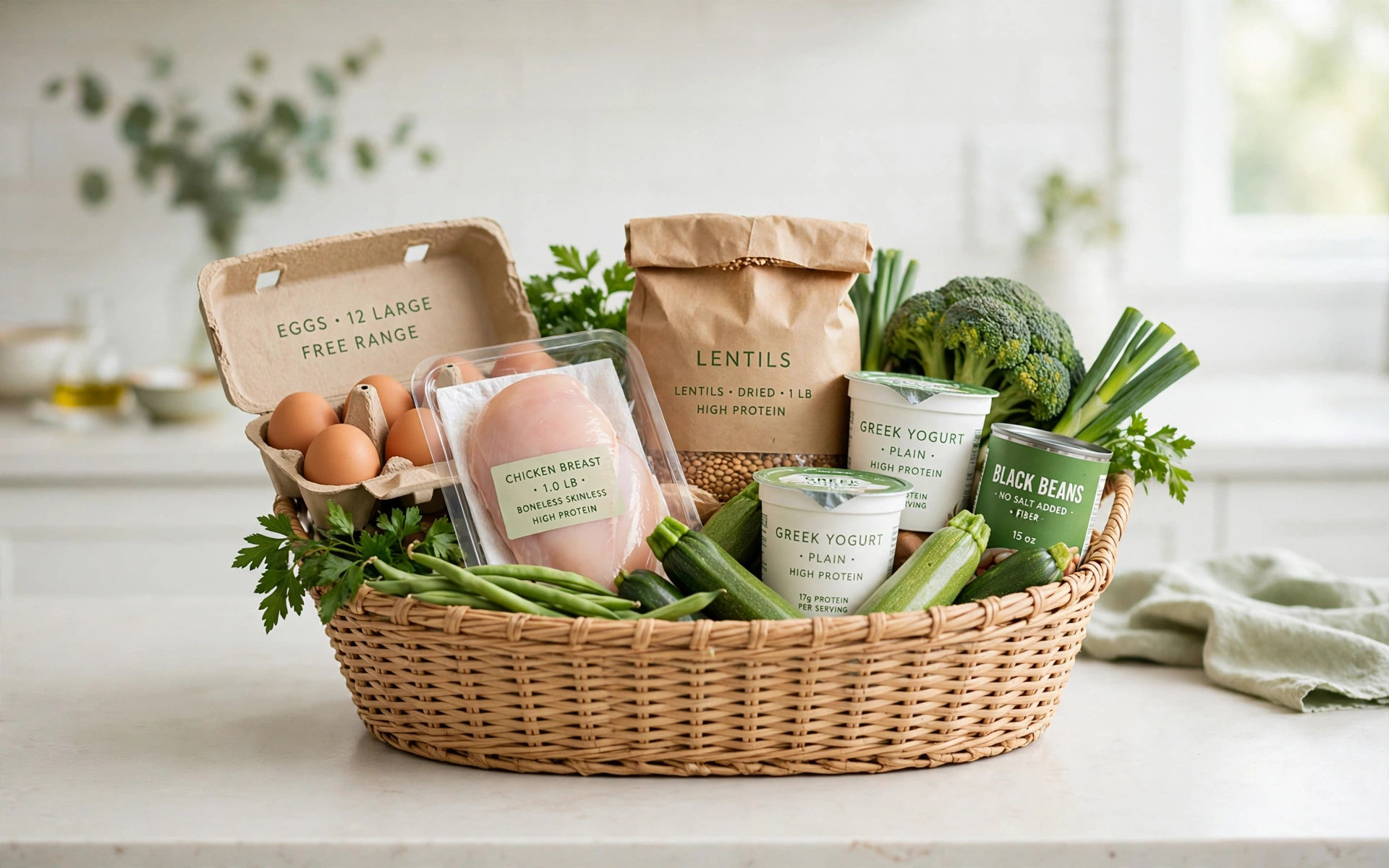
Buy once, cook simply, and repeat ingredients across days. This list covers the plan for one person.
- Protein: eggs (12), Greek yogurt (1 kg), cottage cheese (500 g), chicken breast (600 g), salmon fillets (2), canned tuna (2 tins), turkey mince (400 g), lentils (500 g dried), chickpeas (2 tins), black beans (1 tin), tofu or halloumi (1 block)
- Vegetables and salad: spinach, broccoli, peppers, green beans, carrots, tomatoes, cucumber, mushrooms, mixed salad leaves, onions, garlic
- Fruit: berries, apples, bananas, peaches, lemons
- Grains and extras: oats, quinoa, brown rice, whole-grain bread and wraps, olive oil, nuts (almonds, walnuts), seeds (chia, flaxseed), milk, cheese, herbs and spices
Prep on Sunday if you can: cook a pot of lentils, grill the chicken, boil a few eggs and wash the salad — weekday meals then take ten minutes.
Tips to Stay Full on a High-Protein Diet
- Start each meal with vegetables or salad. Fiber and water add volume before the calorie-dense foods.
- Do not skip the snack. A planned protein snack at 4 p.m. prevents the evening kitchen raid.
- Drink water before meals. A glass of water 20–30 minutes before eating often takes the edge off hunger.
- Keep portions visible. Serve food on a plate rather than eating from the packet.
- Sleep matters. Short nights raise hunger hormones, so regular 7–8 hour sleep makes the plan easier.
- Plan one flexible meal. If you eat out once during the week, pick grilled protein with vegetables and enjoy it — one meal does not undo six good days.
What to Avoid During the 7 Days
- Sugary drinks and juices — they add hundreds of calories without filling you.
- Highly processed snacks — crisps, biscuits and pastries are low in protein and easy to overeat.
- Skipping meals to "save" calories — it usually backfires into overeating.
- Very low-calorie crash diets — below about 1,200 calories a day for most women and 1,500 for most men is hard to sustain; read our calorie-deficit guide for a safe approach.
- Protein bars as a daily habit — many are closer to candy bars; real food is usually cheaper and more filling.
Key Takeaways
- A 7-day high-protein diet plan for weight loss works best with 1.2–1.6 g of protein per kg of body weight per day, spread across meals.
- Every meal needs a clear protein source, plus vegetables and a modest portion of whole grains.
- Know your calorie target first — a small deficit of 300–500 calories a day is more sustainable than a crash diet.
- One week of shopping, a little prep and a simple daily menu is enough to start; repeat it with swaps if it suits you.


Comments (0)
No comments yet. Be the first to share your thoughts!
Leave a comment