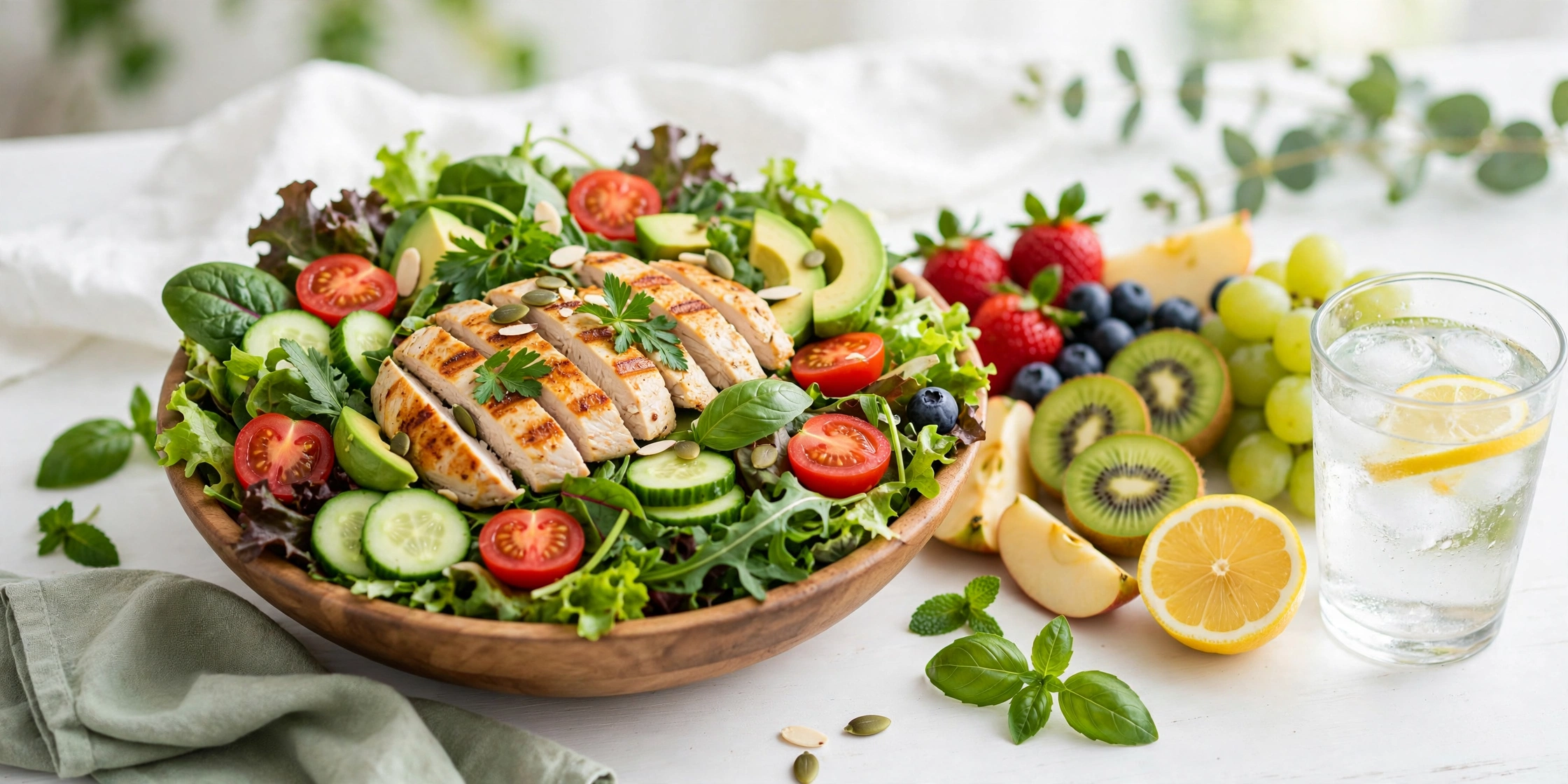
The Volumetrics diet helps you lose weight by eating more food, not less. It focuses on low calorie density foods — vegetables, fruits, soups and whole grains — so you feel full on fewer calories. Instead of counting every calorie, you choose foods that fill your plate for less energy.
Most diets ask you to eat less, and most people give up because they feel hungry all the time. Volumetrics takes the opposite approach. Developed by Barbara Rolls, a Penn State professor of nutritional sciences, it rests on one simple finding: people tend to eat roughly the same weight of food every day, whether that food is light or heavy in calories. Fill that daily amount with foods carrying fewer calories per gram and you eat fewer calories without feeling deprived. There are no banned foods, no special products and no points system — you simply learn which foods give you the most volume for the fewest calories.
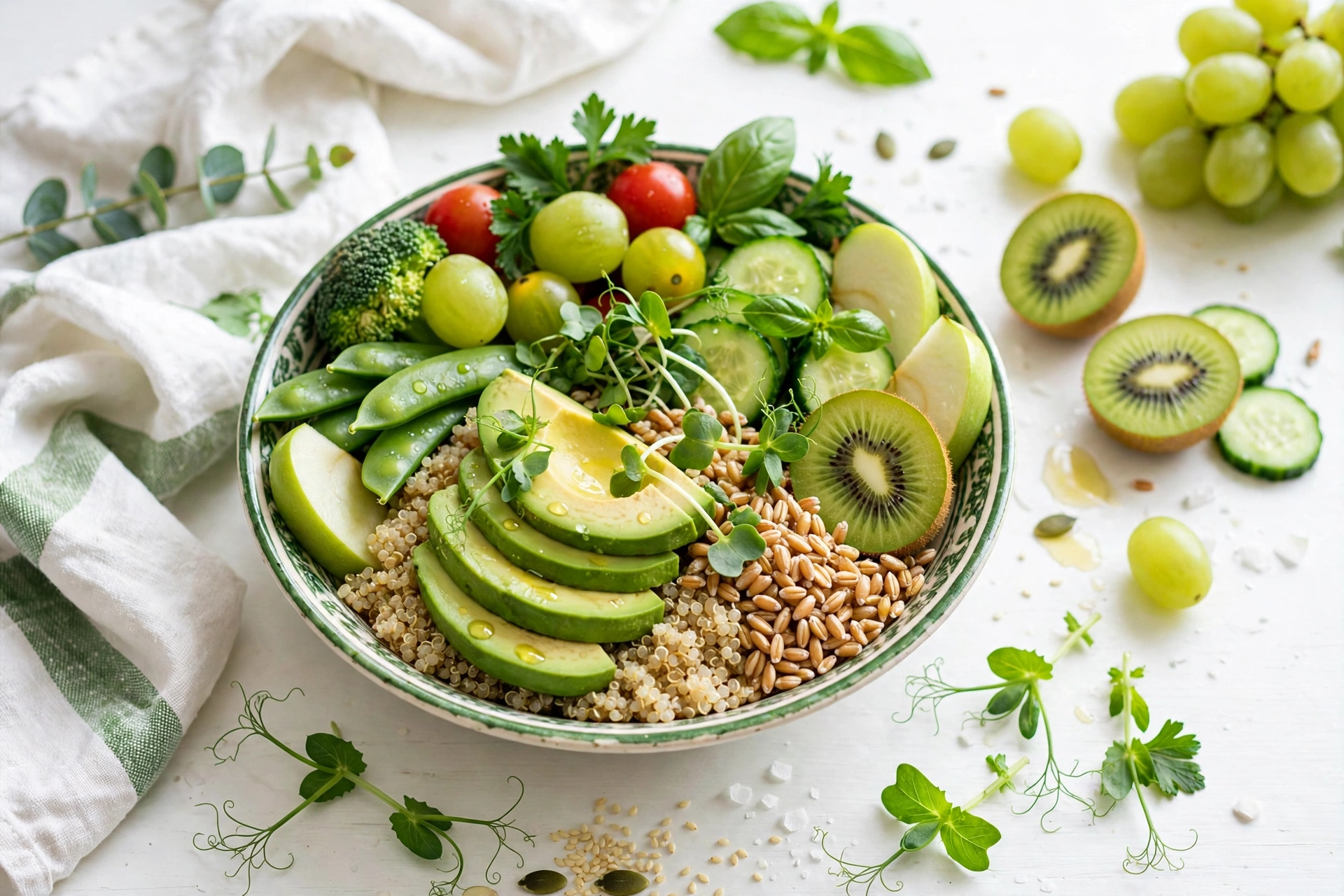 What is the Volumetrics diet?
Volumetrics is not a strict meal plan. It is a flexible way of choosing foods, based on one idea: calorie density — how many calories a food contains per gram. Water and fibre add weight and volume without adding many calories, so water-rich foods are low in calorie density. Fat packs 9 calories per gram, while carbohydrate and protein each provide 4, so fatty foods are high in calorie density.
A practical example makes this clear. A bowl of vegetable soup can weigh 300 grams and contain around 100 calories, while a small handful of crisps weighing 30 grams can contain the same 100 calories. The soup fills your stomach; the crisps barely touch it. Volumetrics teaches you to choose the soup more often, without forbidding the crisps entirely. See our guide to calorie density explained.
How calorie density works
Fullness comes partly from the volume of food your stomach receives, not only from its calories. That is why a large salad can leave you satisfied while a small pastry leaves you hungry again within an hour, even with similar calories. Volumetrics works with this feeling, rather than against it.
- Water content: cucumber, tomatoes, oranges and broth-based soups are low in density and very filling.
- Fibre: fibre adds bulk and slows digestion, so whole grains, beans and vegetables keep you full for longer.
- Fat content: fat is the most calorie-dense nutrient, so fried foods, butter, oils and cheese raise a meal's density quickly.
Check how many calories your body needs with our BMR and TDEE calculator, and log what you eat with our meal log tool.
The 4 Volumetrics food categories by calorie density
Barbara Rolls groups foods into four categories, from lowest to highest calorie density. Reach for categories 1 and 2 most of the time, keep category 3 moderate, and category 4 small and occasional.
Category 1: very low density (under about 0.6 calories per gram)
Eat these freely — they form the base of almost every meal.
- Most fruits: apples, berries, oranges, melon
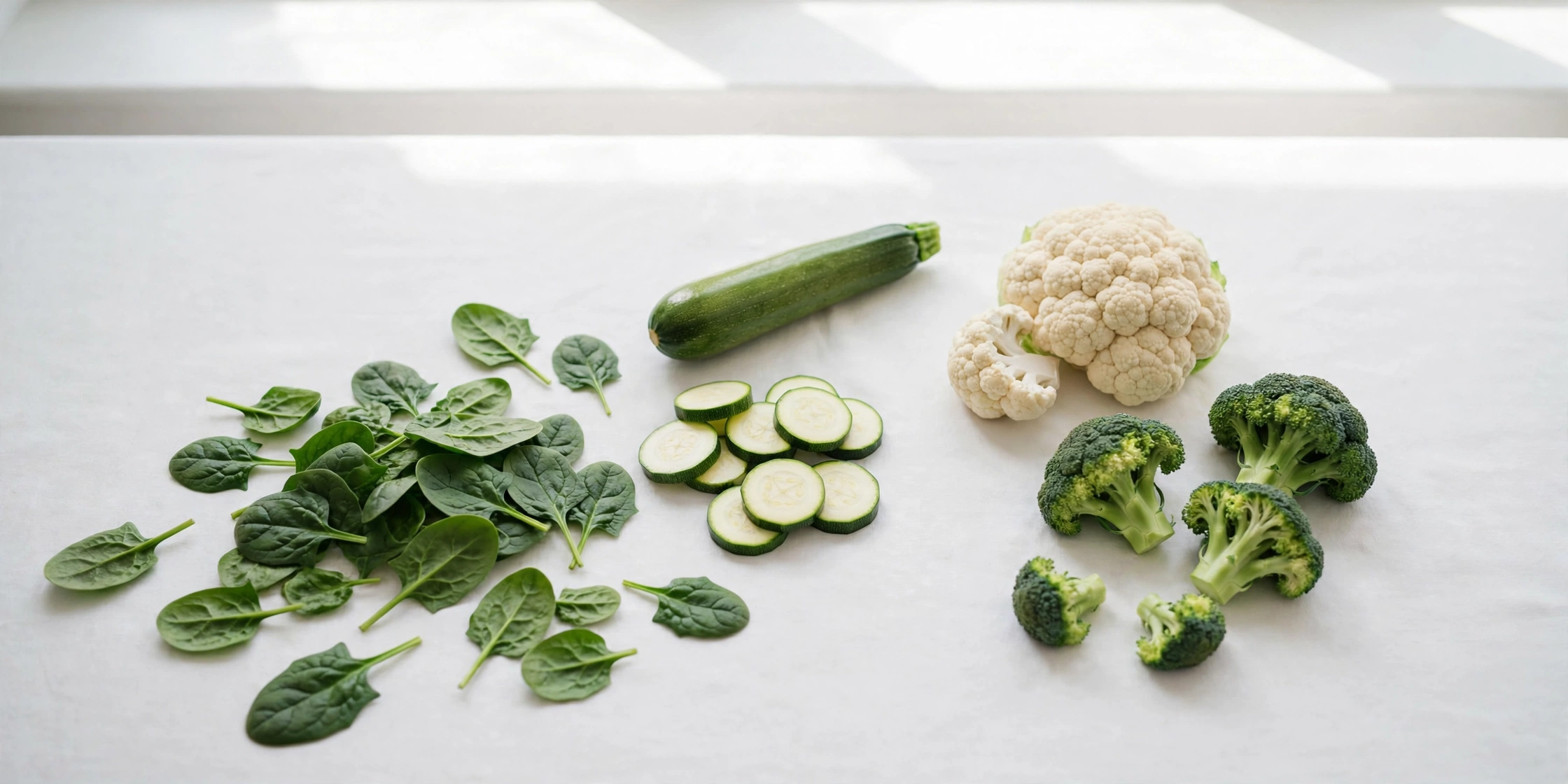
- Non-starchy vegetables: lettuce, spinach, cucumber, tomatoes, carrots
- Broth-based soups and vegetable soups
- Skimmed milk and fat-free yoghurt
Category 2: low density (about 0.6 to 1.5 calories per gram)
Eat these in reasonable portions — they add staying power to your meals.
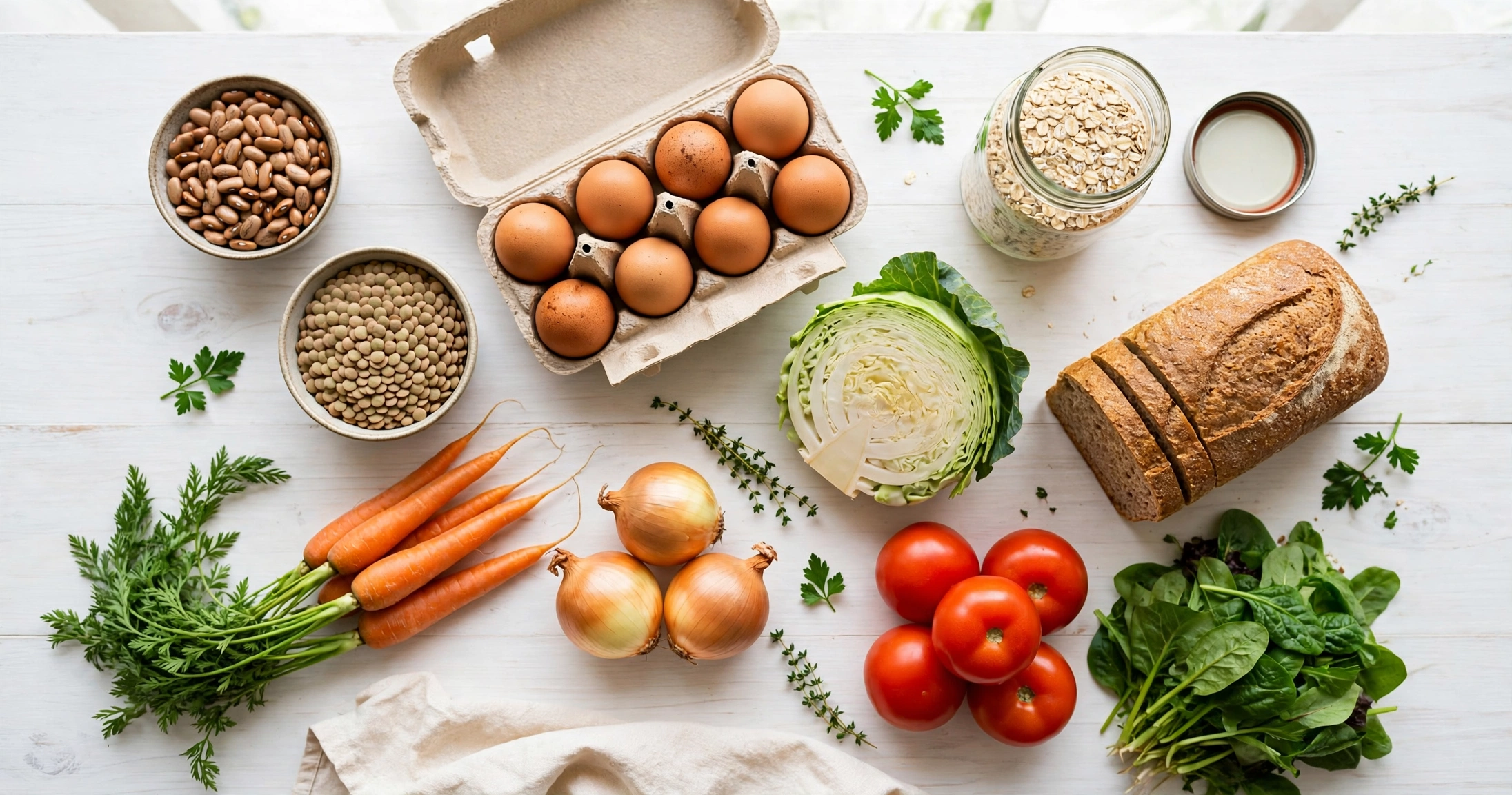
- Whole grains: brown rice, oats, wholemeal bread
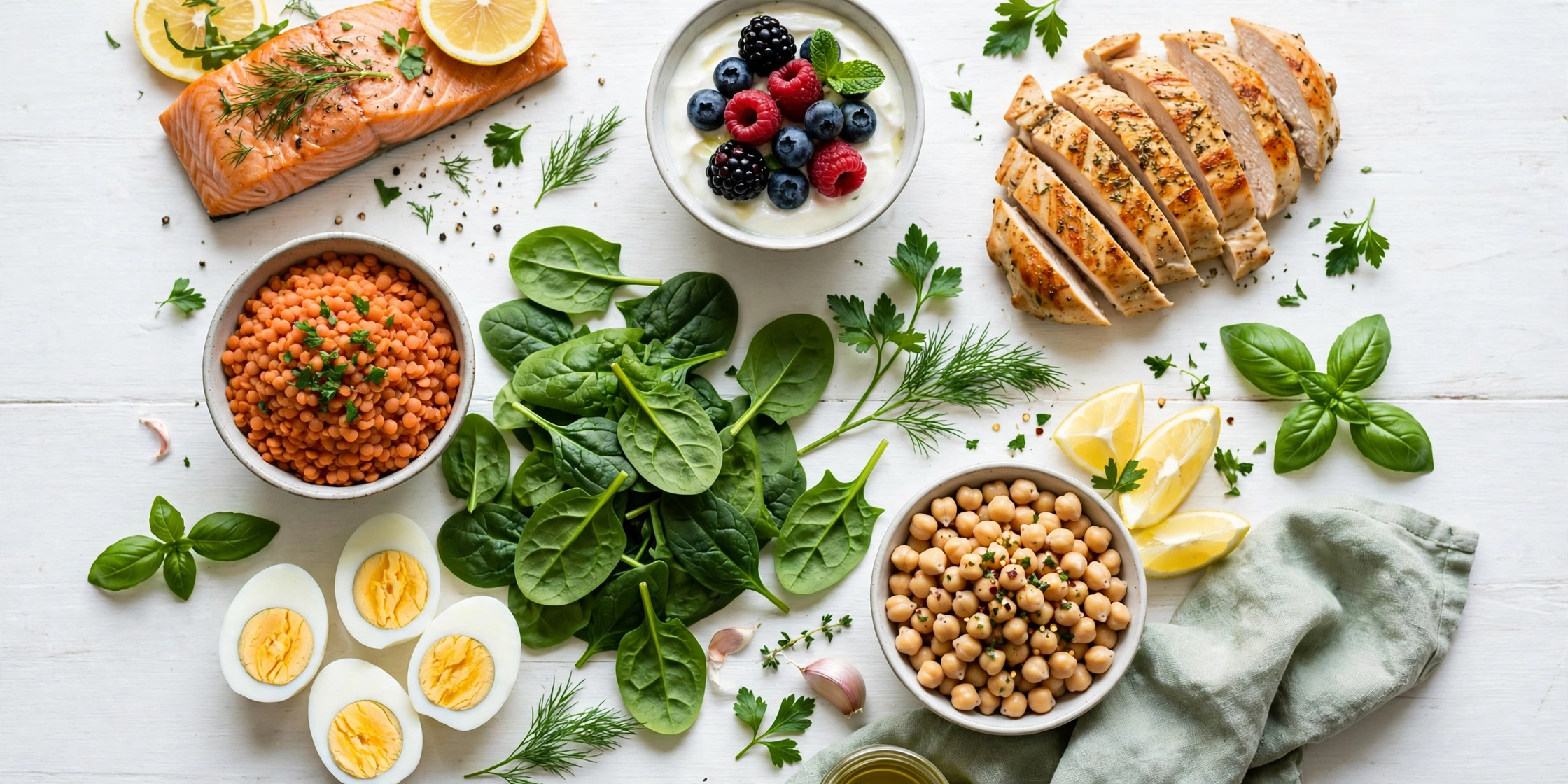
- Lean proteins: chicken breast, white fish, eggs, tofu
- Legumes: beans, lentils, chickpeas
- Starchy vegetables: potatoes, sweet potatoes, corn, peas
Category 3: medium density (about 1.5 to 4 calories per gram)
Enjoy these in moderate portions, alongside plenty of category 1 foods.
- Bread, pasta and breakfast cereals
- Cheese, hummus and red meat
- Dried fruit and pretzels
- Ice cream and cake in small servings
Category 4: high density (above about 4 calories per gram)
Keep these small and occasional — a tiny amount carries many calories.
- Crisps, crackers and fried snacks
- Chocolate, biscuits and pastries
- Butter, oils and mayonnaise
- Nuts and seeds (healthy, but very calorie-dense)
For more ideas in the first two categories, see our list of the best low-calorie foods for weight loss.
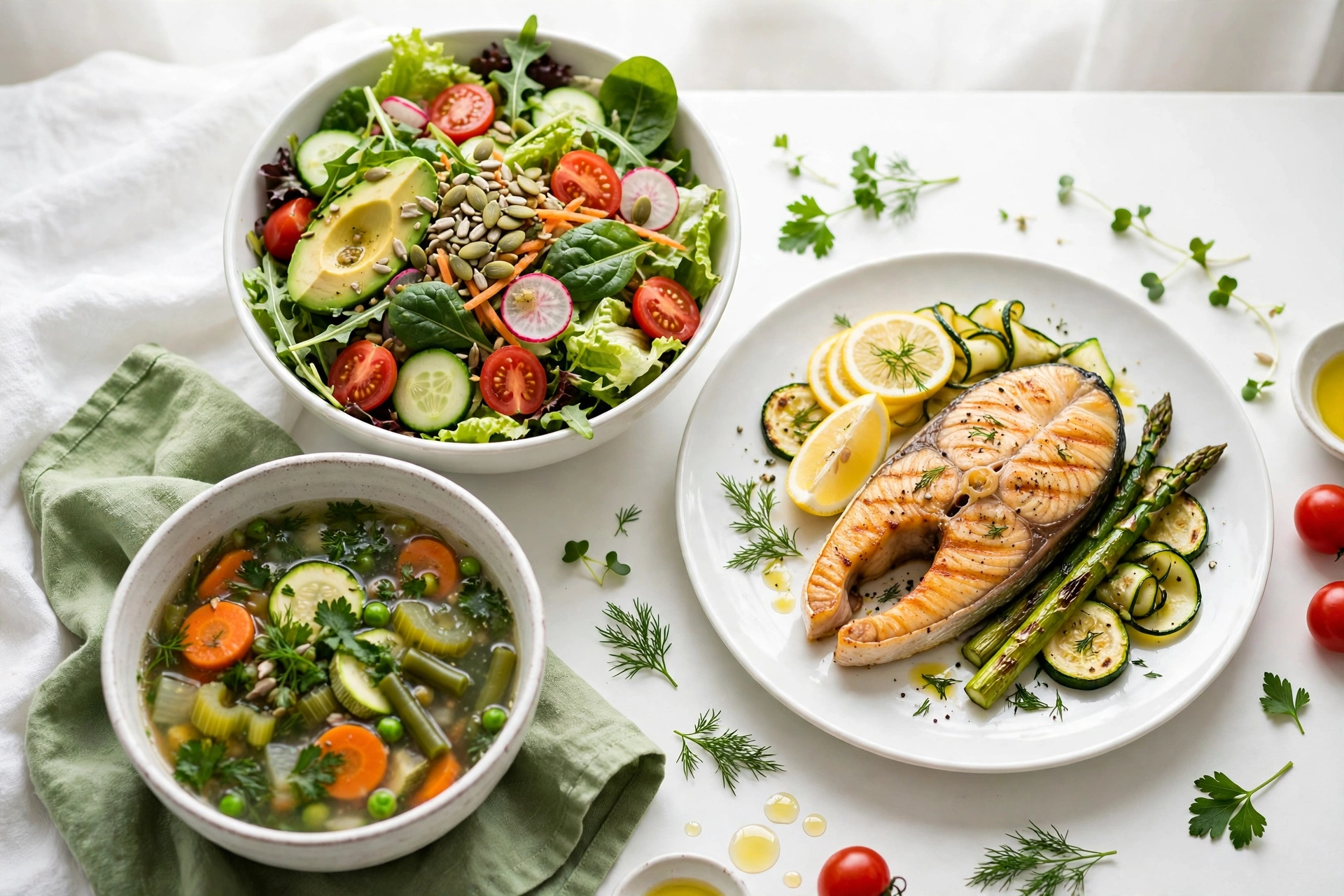 A sample day of low calorie density eating
A typical day can look like this. Portions are flexible — swap any item for a similar food.
- Breakfast: porridge with oats and skimmed milk, topped with strawberries and blueberries, plus tea or coffee.
- Mid-morning snack: an apple and a small handful of grapes, or fat-free yoghurt with berries.
- Lunch: a large mixed salad, grilled chicken breast, a slice of wholemeal bread, and a bowl of vegetable soup to start.
- Afternoon snack: carrot and cucumber sticks with hummus, or a small bowl of melon.
- Dinner: grilled fish or tofu with steamed broccoli and carrots, a small serving of brown rice, and fruit salad for dessert.
Every meal centres on a large portion of low-density food, with the higher-density food as the smaller part — a lot of food, yet modest total calories.
How to start Volumetrics in 7 practical steps
- Start meals with soup or salad. Soup or salad before the main course takes the edge off hunger.
- Make vegetables half the plate. At lunch and dinner, fill at least half your plate with vegetables or salad first.
- Swap, don't ban. Replace half the pasta with vegetables, choose fruit instead of dried fruit, and grill instead of frying.
- Choose whole fruit over juice. An orange fills you up; a glass of orange juice does not.
- Add water-rich foods to every meal. Soups, salads, fruit and steamed vegetables add volume, not many calories.
- Watch liquid calories. Sugary drinks, alcohol and creamy coffees add calories without filling you at all.
- Track for a week. Log your meals for seven days with our meal log tool.
Who Volumetrics suits, and who should be careful
Volumetrics suits people who hate feeling hungry, want flexibility over strict rules, and like cooking simple meals at home. Because nothing is banned, it is easier to keep going for months than a diet built on willpower alone — and it suits families, because the same meals work for everyone at the table.
Some people should take extra care. If you have diabetes, talk to your doctor or dietitian about fruit and starchy vegetable portions, since these affect blood sugar. If high-fibre foods upset your digestion, add fibre gradually. People who are underweight, pregnant, breastfeeding, or recovering from an eating disorder should not follow any weight-loss approach without professional guidance — Volumetrics is a way of eating, not a medical treatment.
Key takeaways
- Volumetrics is about calorie density: calories per gram of food.
- Water-rich and high-fibre foods fill you up on fewer calories.
- Build meals on categories 1 and 2; keep 3 moderate and 4 small.
- Start meals with soup or salad to cut hunger before the main course.
- No food is banned, so Volumetrics is easier to stick to long term.
- Pair it with a realistic daily calorie target from a BMR and TDEE calculator.
- Ask a healthcare professional first if you have diabetes or another medical condition.
Frequently asked questions
Can you lose weight on the Volumetrics diet?
Yes, many people do, because Volumetrics makes it easier to eat fewer calories without feeling hungry. Filling your meals with low calorie density foods creates a modest deficit with satisfying portions.
Is Volumetrics the same as counting calories?
No, although the two work well together. Volumetrics is mainly about choosing foods by their calorie density, so you do not have to count every calorie. For more precision, log your meals for a while.
What foods should you avoid on Volumetrics?
Nothing is strictly forbidden. Simply eat high-density foods like fried snacks, chocolate, butter and pastries in small portions and less often, while low-density foods take up most of your plate.
Is the Volumetrics diet good for long-term weight loss?
It can be, because it does not rely on hunger or strict rules. People tend to keep weight off when the eating pattern feels normal and enjoyable, and Volumetrics is designed to feel that way.
Can vegetarians follow Volumetrics?
Yes, it works very well for vegetarians. Beans, lentils, tofu, eggs, vegetables, fruits and whole grains all fit the pattern, and vegans can follow it too.
How fast will I see results on Volumetrics?
Most people feel fuller within the first week, while weight changes show over several weeks. A steady loss of around 0.5 kg per week is realistic and healthy for most adults.


Comments (0)
No comments yet. Be the first to share your thoughts!
Leave a comment