
Losing weight does not have to mean going hungry. The smartest way to eat less without feeling deprived is to fill your plate with foods that deliver plenty of volume, flavour and nutrients for few calories.
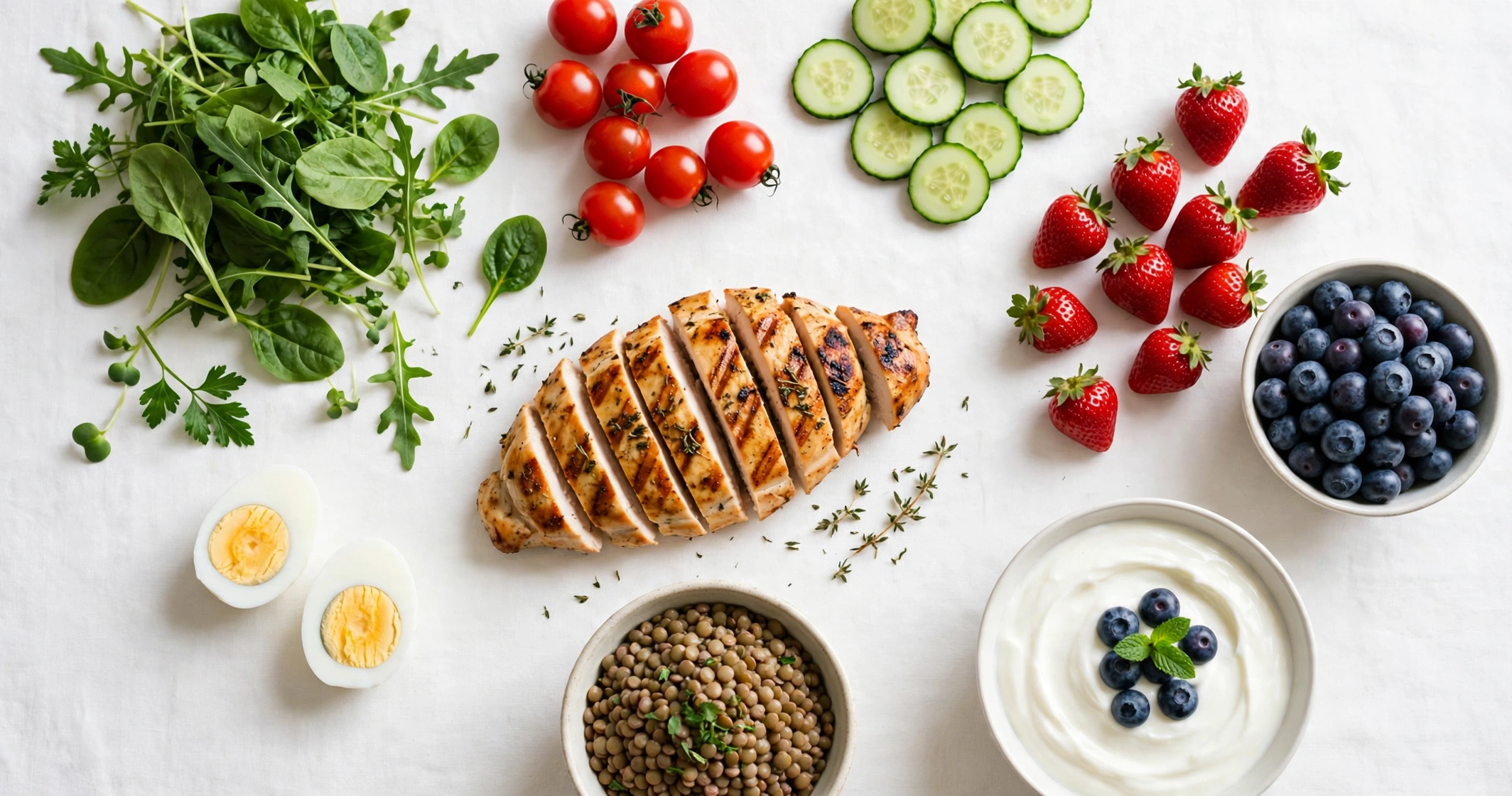
The best low-calorie foods for weight loss are high-volume, high-fibre foods that fill your plate without filling your calorie budget: leafy greens, cucumbers, berries, eggs, chicken breast, fish, Greek yoghurt, beans and lentils. They help you stay in a calorie deficit while feeling full, so weight loss feels sustainable instead of restrictive.
What makes a food genuinely helpful is not just a low number on the label. The best choices combine low energy density with fibre, water or protein, so a generous portion still costs few calories. Below are the 25 foods, plus portion ideas and the mistakes that undo a calorie deficit.
Why Low-Calorie Foods Work for a Calorie Deficit
Weight loss comes down to a simple principle: burn more energy than you eat — a calorie deficit. The problem is that a deficit built on tiny portions leaves most people hungry and ready to quit within a week. Low-calorie foods solve this because they let you eat a full, satisfying plate while still spending fewer calories than your body uses.
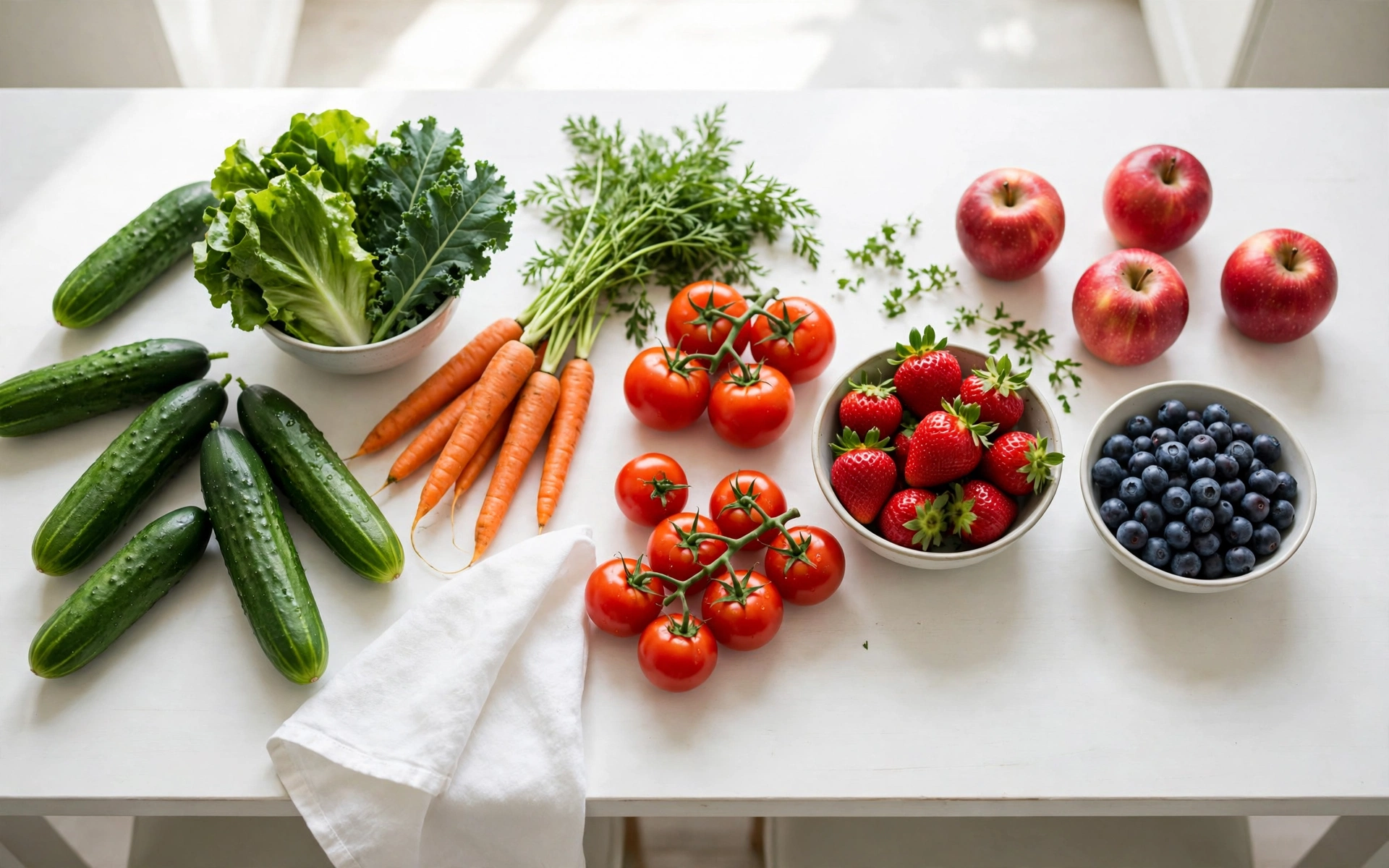
This works through energy density — the calories in a given weight of food. Foods rich in water and fibre, like vegetables and fruit, have low energy density, so you can eat a lot of them. Foods rich in fat or sugar have high energy density, so even a small amount carries many calories. Understanding calorie density helps weight loss last.
Three qualities make a low-calorie food truly filling:
- Water content: cucumber, lettuce and watermelon are mostly water, adding volume for almost no calories.
- Fibre: vegetables, fruit, beans and whole grains slow digestion and keep you full longer.
- Protein: eggs, fish, chicken and Greek yoghurt help you resist snacking between meals.
Before planning meals, find out roughly how many calories your body needs each day with our BMR and TDEE calculator, then track what you eat with the NutriCounter food tracker.
25 Best Low-Calorie Foods for Weight Loss
Below are 25 foods grouped by category. Calorie figures are approximate values per 100 grams, so you can compare them easily.
Vegetables
- Cucumber (about 15 kcal): crisp, refreshing and almost entirely water.
- Lettuce and leafy greens (about 15–25 kcal): spinach and lettuce add bulk for almost no calories.
- Tomatoes (about 18 kcal): juicy and versatile — great raw or roasted.
- Zucchini (about 17 kcal): mild and filling; try it spiralised as a pasta swap.
- Broccoli (about 34 kcal): high in fibre and vitamin C, and surprisingly filling.
Fruits
- Strawberries (about 32 kcal): sweet, high in vitamin C, far lighter than dessert.
- Grapefruit (about 42 kcal): juicy and refreshing when you want something sweet and light.
- Apples (about 52 kcal): fibre-rich, portable and satisfying.
- Blueberries (about 57 kcal): small but packed with flavour and antioxidants.
- Watermelon (about 30 kcal): mostly water, so a big slice feels generous.
Lean Proteins
- Eggs (about 70 kcal each): cheap, versatile and very filling per calorie.
- Chicken breast (about 165 kcal): lean, high in protein, easy to cook in bulk.
- White fish, e.g. cod (about 82 kcal): light and mild, rich in protein, with very little fat.
- Greek yoghurt, non-fat (about 59 kcal): thick and creamy — a smart sour-cream swap.
- Tofu (about 76 kcal): absorbs any dish's flavour and adds protein cheaply.
Whole Grains and Legumes
- Lentils, cooked (about 116 kcal): rich in fibre and protein; a small portion fills you.
- Black beans, cooked (about 132 kcal): filling, affordable and great in soups and salads.
- Oats, cooked (about 68 kcal): a warm breakfast that stops mid-morning hunger.
- Quinoa, cooked (about 120 kcal): a complete protein with all essential amino acids.
- Popcorn, air-popped (about 31 kcal per cup): high in volume — skip the butter.
Snacks and Drinks
- Carrot sticks (about 41 kcal): crunchy and sweet; great with hummus.
- Pickles (about 15 kcal): sharp and salty, adding flavour for almost no calories.
- Rice cakes (about 35 kcal each): light and crisp; top with cottage cheese or tomato.
- Green tea (0 kcal, unsweetened): warm, calorie-free — a good swap for sugary drinks.
- Sparkling water with lemon (0 kcal): fizzy and refreshing — a good soft-drink swap.
How to Build a Low-Calorie Plate That Keeps You in a Calorie Deficit
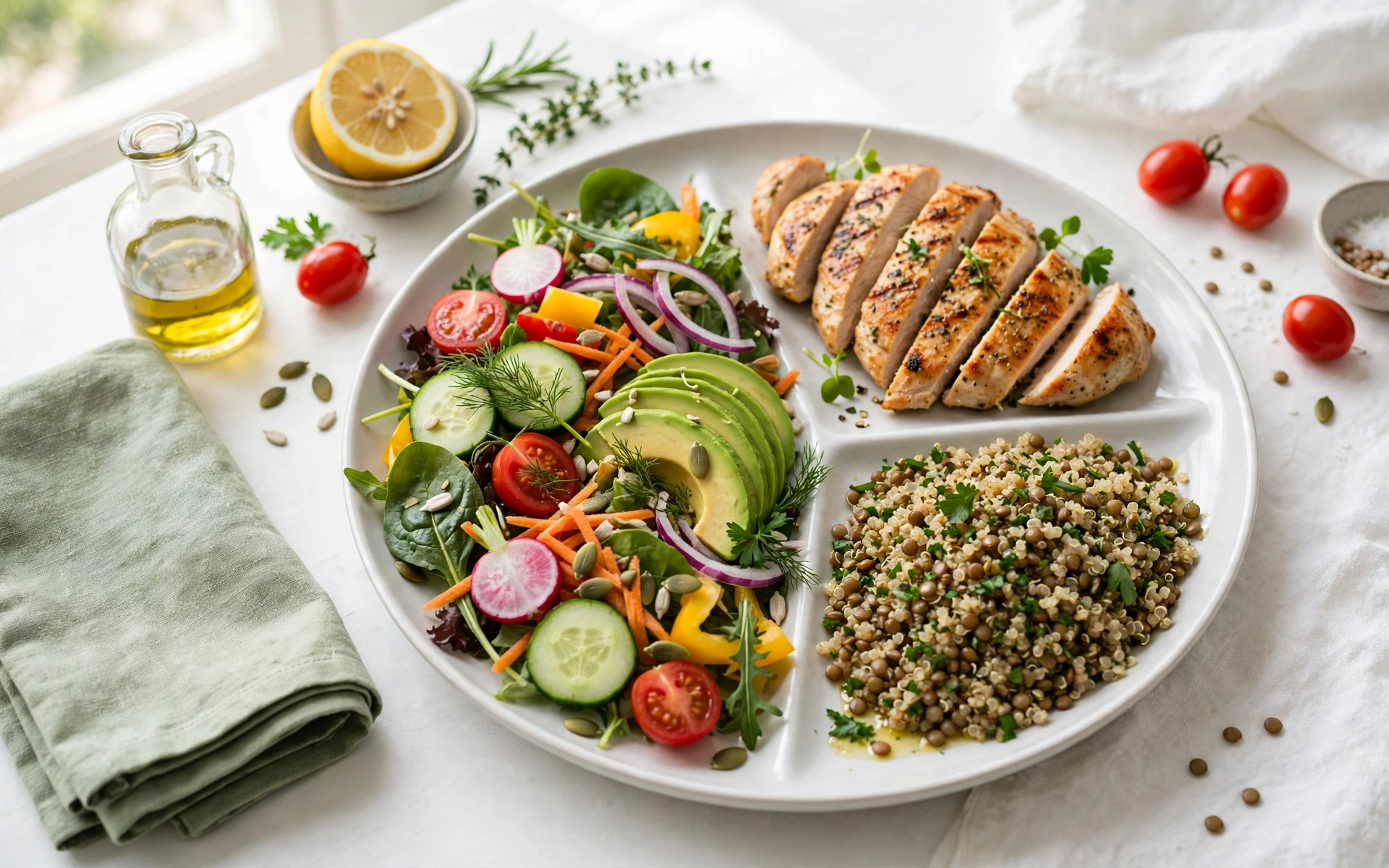
A simple plate formula makes healthy eating automatic. Fill half your plate with vegetables or salad, a quarter with lean protein, and a quarter with whole grains or legumes. Add a little healthy fat, such as olive oil or nuts, and you have a complete, filling meal.
Try these practical habits:
- Start with salad or soup: a vegetable starter takes the edge off hunger.
- Keep protein at every meal: protein is the most filling nutrient, so anchor every meal around it.
- Choose whole over processed: whole foods are usually less calorie-dense than processed ones.
- Drink water first: a glass of water before meals helps you notice real hunger.
Unsure how big your deficit should be? Read our guide on what a calorie deficit is and how to set one safely.
Common Mistakes That Break Your Calorie Deficit
Many people eat healthy foods yet still struggle to lose weight, usually because of quiet mistakes. The first is liquid calories: sugary coffee drinks, juice and alcohol add hundreds of calories without filling you. The second is cooking oil — one tablespoon adds around 120 calories, and it is easy to pour three.
Other traps include snacking straight from the packet, and eating "healthy" foods in unlimited amounts. Nuts, avocado and olive oil are nutritious but energy-dense, so measure them. One off-plan meal does not ruin progress — what matters is the average over weeks.
Key Takeaways
- Low-calorie foods let you eat generously while staying in a calorie deficit.
- Choose foods rich in water, fibre and protein.
- Build your plate as half vegetables, a quarter protein and a quarter whole grains.
- Watch liquid calories and cooking oil — calories without fullness.
- Track your food for a few weeks so your deficit is based on real numbers.
Frequently Asked Questions
How many calories counts as "low-calorie"?
As a rough guide, a food is usually called low-calorie when it provides about 40 calories or fewer per 100 grams — most vegetables fall into this range. The exact cut-off matters less than the pattern: favour foods from the low end.
Can I eat unlimited low-calorie foods and still lose weight?
Not quite. Low-calorie foods make a calorie deficit much easier, but they are not calorie-free, and large portions still add up. The real advantage is volume: a generous plate of vegetables, salad and lean protein can fit your target. Watch portions of the higher-calorie items, such as chicken, oats and quinoa.
What are the best low-calorie snacks?
The best low-calorie snacks combine crunch, flavour and staying power: carrot sticks with yoghurt dip, cucumber slices, strawberries or blueberries, air-popped popcorn, rice cakes with cottage cheese, or pickles. Avoid snacking straight from large packets — portions vanish fast.
Do low-calorie foods really keep you full?
Yes, when you choose the right ones. Foods rich in water, fibre and protein are the most filling per calorie — which is why vegetables, fruit, eggs, fish and legumes work so well. A plate built from these foods is large and slow to digest, keeping hunger away far longer than a small portion of an energy-dense food.
Is it safe to eat very few calories to lose weight faster?
No. A very large deficit may speed up weight loss in the short term, but it often causes tiredness, muscle loss and intense hunger that leads to overeating later. Most adults do best with a moderate deficit of roughly 300–500 calories per day below maintenance. If you have a medical condition, speak to a doctor or dietitian first.
How do I know if I am in a calorie deficit?
Track what you eat and weigh yourself regularly over several weeks. First estimate your daily maintenance calories with a TDEE calculator, then eat a little less than that amount each day. If your weight trends slowly downwards over two to four weeks, you are in a deficit. If it stays flat, eat slightly less or move a little more.




Comments (0)
No comments yet. Be the first to share your thoughts!
Leave a comment