
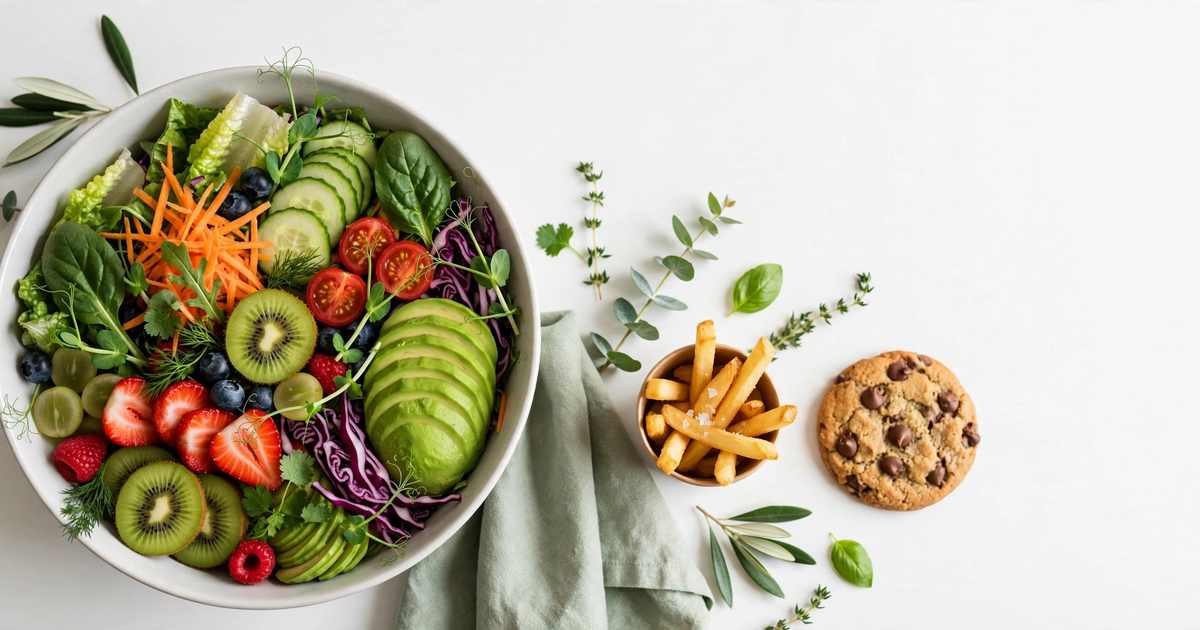
Calorie density is the number of calories in a given weight of food, usually measured per 100 grams. Low-density foods like vegetables, fruits, broth-based soups, and cooked whole grains are bulky but light in calories — so you can eat generous portions, feel comfortably full, and still take in fewer total calories, making weight loss easier without constant hunger.
If you have ever finished a small 300-calorie snack and still felt hungry, you have run into the problem that calorie density solves. Weight loss is not only about how many calories you eat, but about how much food those calories come packaged in — two meals can hold identical calories while one leaves you stuffed and the other sends you back to the fridge an hour later.
The difference is calorie density. Once you understand it, losing weight stops feeling like a war against your appetite. This guide covers what calorie density means, what the research says, and how to redesign your meals so you eat more, feel fuller, and still lose weight.
What Is Calorie Density?
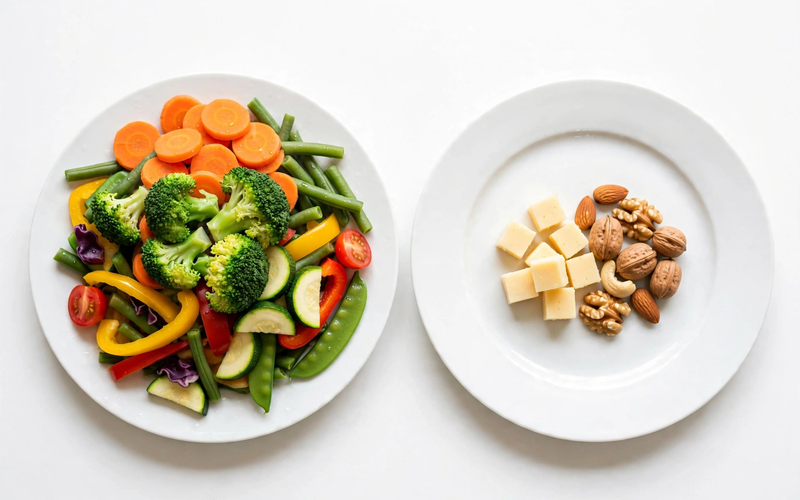
Calorie density is simply how many calories a food contains per unit of weight — most often kilocalories per 100 grams. A high-density food packs many calories into a small, light package. A low-density food spreads few calories across a large, heavy, water-rich package.
Compare two snacks: 100 grams of cucumber holds roughly 15 calories, while 100 grams of potato chips holds more than 500. Most of that gap comes from three things: water, fiber, and fat. Water and fiber add weight and bulk with almost no calories, while fat is the most calorie-dense nutrient at 9 calories per gram — more than double the 4 per gram in protein or carbohydrates.
The concept was popularized by researcher Barbara Rolls and her work on volumetrics: the finding that people eat a fairly consistent weight of food each day, regardless of calories. Lower the average calorie density of your diet, and your calorie intake falls automatically — without eating less food.
Calorie Density and Weight Loss: The Science
Your stomach has no calorie counter, but it does have stretch receptors that signal fullness. A large volume of food triggers them, so low-density foods bring comfortable fullness on a smaller calorie budget.
This is why calorie density matters so much for sustainable weight loss:
- Fullness without the calorie bill. A big bowl of vegetable soup can satisfy as deeply as a small handful of crackers, for a fraction of the calories.
- Fiber slows everything down. High-fiber foods take longer to chew and digest, giving your brain time to register fullness.
- Less reliance on willpower. Diets most often fail from hunger, not lack of knowledge — see why crash diets fail and what actually works.
- Your habits stay intact. You keep eating normal-sized, satisfying meals; you simply change what is on the plate.
Find your personal calorie target with a BMR and TDEE calculator, then build meals around low-density foods to stay comfortably under it. It also pairs well with portion control without counting calories.
The Calorie Density Scale: Foods Ranked
Researchers usually group foods into four calorie-density bands. You do not need to memorize numbers — just learn which band your everyday foods fall into:
Very low density (under ~0.6 kcal per gram)
Most vegetables, most fruits, and broth-based soups. Treat these as "eat freely" foods and pile them on.
Low density (~0.6–1.5 kcal per gram)
Cooked whole grains, beans and lentils, potatoes, lean meats and fish, low-fat dairy, and tofu. These form the satisfying backbone of a meal.
Medium density (~1.5–4 kcal per gram)
Breads, bagels, dried fruit, cheese, hummus, and fattier meats. Perfectly fine in normal portions, but the calories add up quickly.
High density (over ~4 kcal per gram)
Crackers, chips, chocolate, pastries, butter, cooking oils, and nuts. Small amounts carry big calorie loads — measure these instead of eating straight from the package.
7 Practical Ways to Eat More Food for Fewer Calories
- Start with soup or salad. A broth-based soup or large green salad before the main course pre-fills your stomach with very few calories, so you naturally eat less of what follows.
- Bulk up dishes with vegetables. Add peppers, mushrooms, zucchini, or spinach to pasta, stir-fries, and curries for the same satisfying bowl with fewer calories per bite.
- Choose whole fruit over juice or dried fruit. An orange fills you up; orange juice barely registers. Dried fruit is fruit with the water removed — and far higher in density.
- Change the cooking method. Bake, steam, or air-fry instead of deep-frying: a potato baked in its skin is low density; as fries it is medium-high.
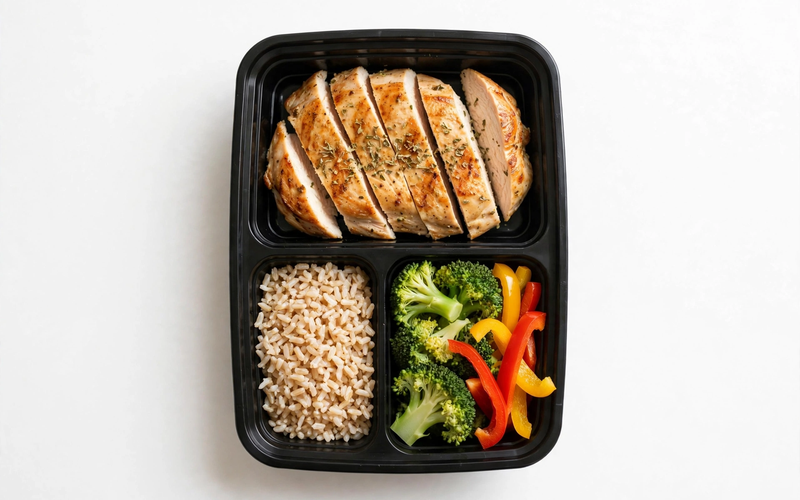
- Pick lean proteins. Chicken breast, white fish, tuna in water, and legumes keep density low while protein keeps you full — a food tracker makes the difference visible within days.
- Respect the "healthy but dense" foods. Nuts, seeds, olive oil, avocado, and dark chocolate are nutritious but calorie-dense — enjoy them in measured amounts, not as the base of the meal.
- Keep smart snacks ready. Air-popped popcorn, veggie sticks with hummus, and fresh fruit beat chips and candy — see healthy snacks under 200 calories for ideas.
A Sample Low-Density Day of Eating
A full, satisfying day might look like this: oatmeal with berries and banana for breakfast; a large lentil-and-vegetable soup with whole-grain bread for lunch; an apple and a measured handful of almonds as a snack; and stir-fried chicken with double vegetables over brown rice for dinner. The pattern: big volumes, water-rich foods, protein at every meal, fats as flavor rather than fuel.
Do You Still Need to Count Calories?
Calorie density does not replace the calorie deficit — you still need to eat fewer calories than you burn to lose weight (see what a calorie deficit is and how to do it safely). Think of calorie density as the strategy that makes the deficit livable: generous, enjoyable meals instead of tiny, joyless ones.
Some people track both for a few weeks to learn their average density, then relax once the habit sticks. Others never count and simply apply the principles. Choose the path you can sustain for years, not weeks.
One caution: pushing fat extremely low can leave meals unsatisfying and reduce absorption of fat-soluble vitamins. Keep some dietary fat daily — as a measured addition, not the main event.
- Calorie density means calories per unit of food weight; water and fiber lower it, fat raises it.
- People tend to eat a consistent weight of food daily, so lowering density lowers calorie intake automatically.
- Build meals around very-low-density foods (vegetables, fruits, broth soups) with measured fats and lean proteins.
- It is a strategy for making a calorie deficit sustainable — not a replacement for the deficit itself.
Frequently Asked Questions
Can I eat unlimited low-density foods and still lose weight?
Not literally unlimited, but it is very hard to overeat leafy greens, cucumbers, berries, or broth-based soup — most people feel full long before the calories add up, which is why the approach works.
Are nuts bad because they are calorie-dense?
No. Nuts are nutritious and linked to good health outcomes, but at around 6 calories per gram they are calorie-dense, so portion size matters. A small measured handful is a great snack; eating straight from a large bag is where calories quietly pile up.
Does drinking water with meals lower calorie density?
Water inside food — as in soups, fruits, and cooked grains — lowers calorie density and increases fullness. Drinking water alongside a meal is good for hydration but does not change the food's density the way water-rich foods do.
Is calorie density the same as the glycemic index?
No. Calorie density measures calories per weight of food; the glycemic index measures how quickly a food raises blood sugar. Watermelon, for example, is very low in calorie density but scores high on the glycemic index — they answer different questions.
Do I still need to count calories?
Many people lose weight on these principles alone at first. If progress stalls, a couple of weeks of tracking with a nutrition tool often reveals hidden high-density items — cooking oils, creamy dressings, extra cheese — pushing you over your target.
Comments (0)
No comments yet. Be the first to share your thoughts!
Leave a comment