
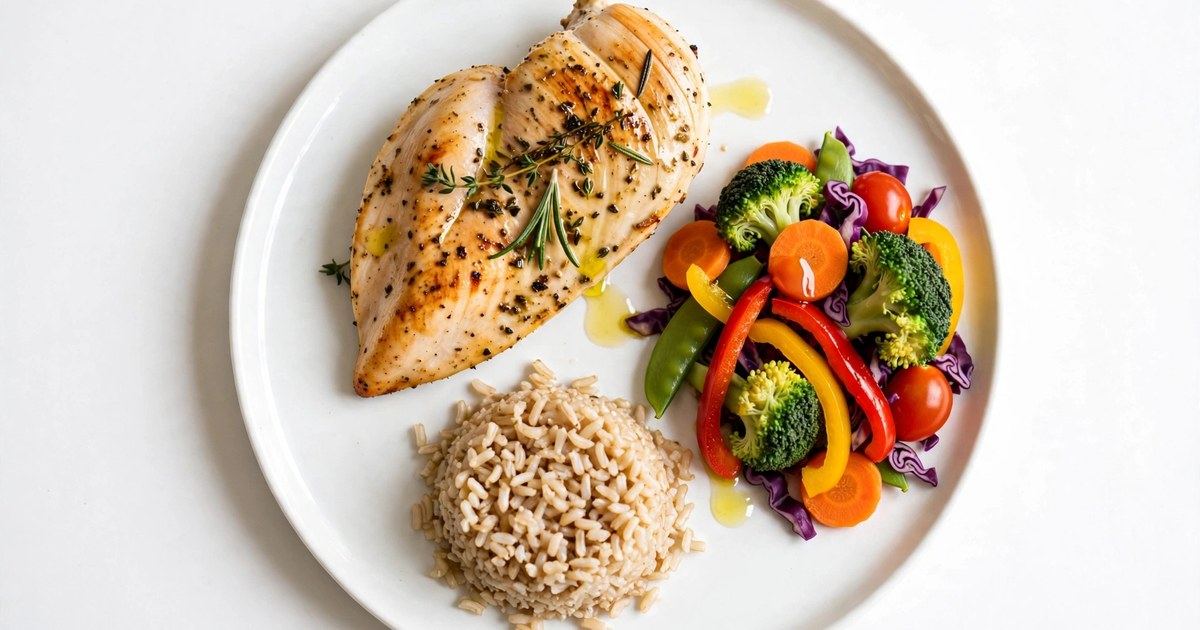
Portion control without counting calories is easy with the hand-portion method: your palm measures protein, your fist measures vegetables, your cupped hand measures carbs, and your thumb measures fats. This built-in visual system keeps meals balanced and portions in check — no food scale, app, or math required.
If the thought of weighing every gram of food makes you want to give up on healthy eating entirely, you are not alone. Portion control without counting calories is not a compromise — for many people it is the most sustainable strategy. Calorie counting works in theory, but in real life it collides with busy schedules, restaurant meals, and the simple fact that nobody wants to turn every dinner into a math problem.
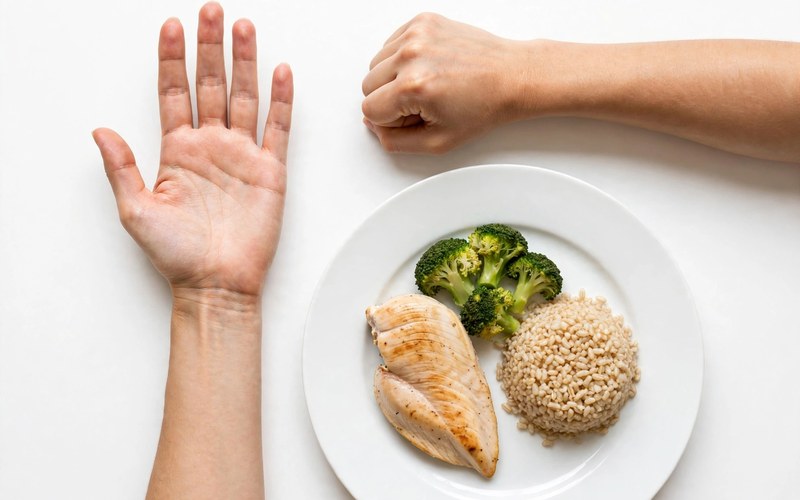
This guide shows you how to use your own hand as a portion guide, why calorie tracking fails for so many people, and how to handle restaurants, snacks, and the most common portion traps — all without opening a tracking app.
Why Counting Calories Fails for So Many People
Calorie counting is precise in theory but fragile in practice. Nutrition research consistently shows that the best eating plan is the one people actually follow — and meticulous food logging has one of the highest dropout rates of any approach.
Here is where it usually breaks down:
- It takes too much time. Logging every ingredient, every drizzle of oil, and every sauce adds daily administrative work that most people abandon within weeks.
- Restaurant food cannot be weighed. You cannot put a restaurant plate on a scale, and published calorie counts for restaurant dishes can be wildly off.
- It creates social friction. Weighing food at a family dinner or on vacation feels awkward and quickly becomes unsustainable.
- It can feed an unhealthy mindset. For some people, tracking every number slides from awareness into obsession. A visual method keeps the focus on balance, not digits.
- It ignores hunger signals. You can hit your calorie target and still feel unsatisfied — or eat past fullness because the app says you have room left.
None of this means calories do not matter — they do. Knowing your approximate calorie needs is still useful background knowledge. You just do not need to track them meal by meal to keep your portions in check.
Portion Control Without Counting Calories: The Hand-Portion Method
The hand-portion method turns your own hand into a measuring tool. Because hand size is roughly proportional to body size, portions automatically scale to you — larger people get larger portions, smaller people get smaller ones.
Here is the system for each meal:
- Protein — 1 to 2 palms. A piece of chicken, fish, tofu, or lean meat about the size and thickness of your palm equals one serving — roughly 20–30 grams of protein. Most adults do well with one to two palms per meal.
- Vegetables — 1 to 2 fists. A fist-sized mound of vegetables at each meal adds fiber and volume for very few calories. This is the easiest lever for eating less without feeling deprived.
- Carbs — 1 to 2 cupped hands. Rice, pasta, potatoes, fruit, or bread: one cupped handful equals one serving. One cupped hand suits most meals; very active people may need two.
- Fats — 1 to 2 thumbs. Oils, butter, nut butters, and cheese are calorie-dense. Your thumb, from tip to first knuckle, is about a tablespoon — the right amount for most meals.
That is the entire system: 1–2 palms of protein, 1–2 fists of vegetables, 1–2 cupped hands of carbs, 1–2 thumbs of fats. No scale, no app, no arithmetic.
How to Build a Meal With Your Hands
- Start with vegetables: add your fist or two of vegetables first.
- Then add your palm or two of protein.
- Then your cupped hand of carbs and your thumb of fats.
- Still hungry after 15–20 minutes? Add more vegetables or protein — rarely more carbs or fats.
If you want to check a food's nutrition profile once, look it up in a nutrition database — then go back to your hands for daily life.
The Plate Method: A Backup Visual System
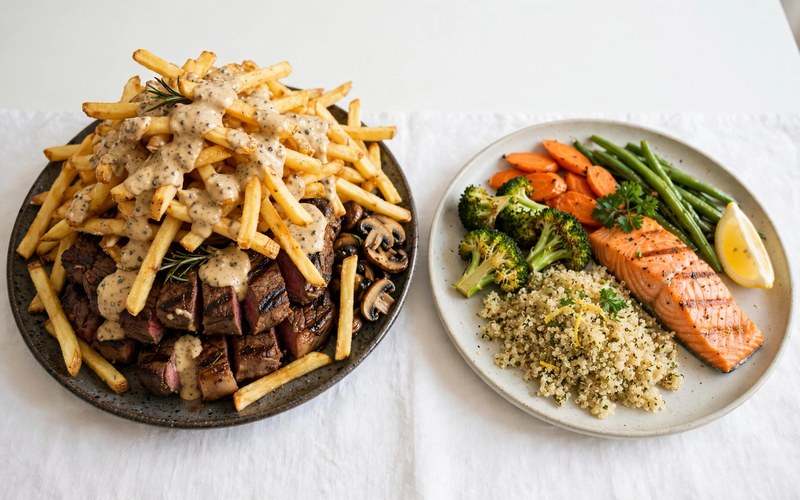
If hand portions feel fiddly at first, the plate method is even simpler. Take a standard plate — not an oversized one — and divide it visually:
- Half the plate: vegetables or salad. The bigger this half, the lighter the meal.
- One quarter: protein. About your palm's worth of meat, fish, eggs, or legumes.
- One quarter: whole grains or starchy vegetables. Your cupped hand of rice, quinoa, or potatoes.
- On the side: water. Drink water or an unsweetened beverage with the meal — not sugary drinks.
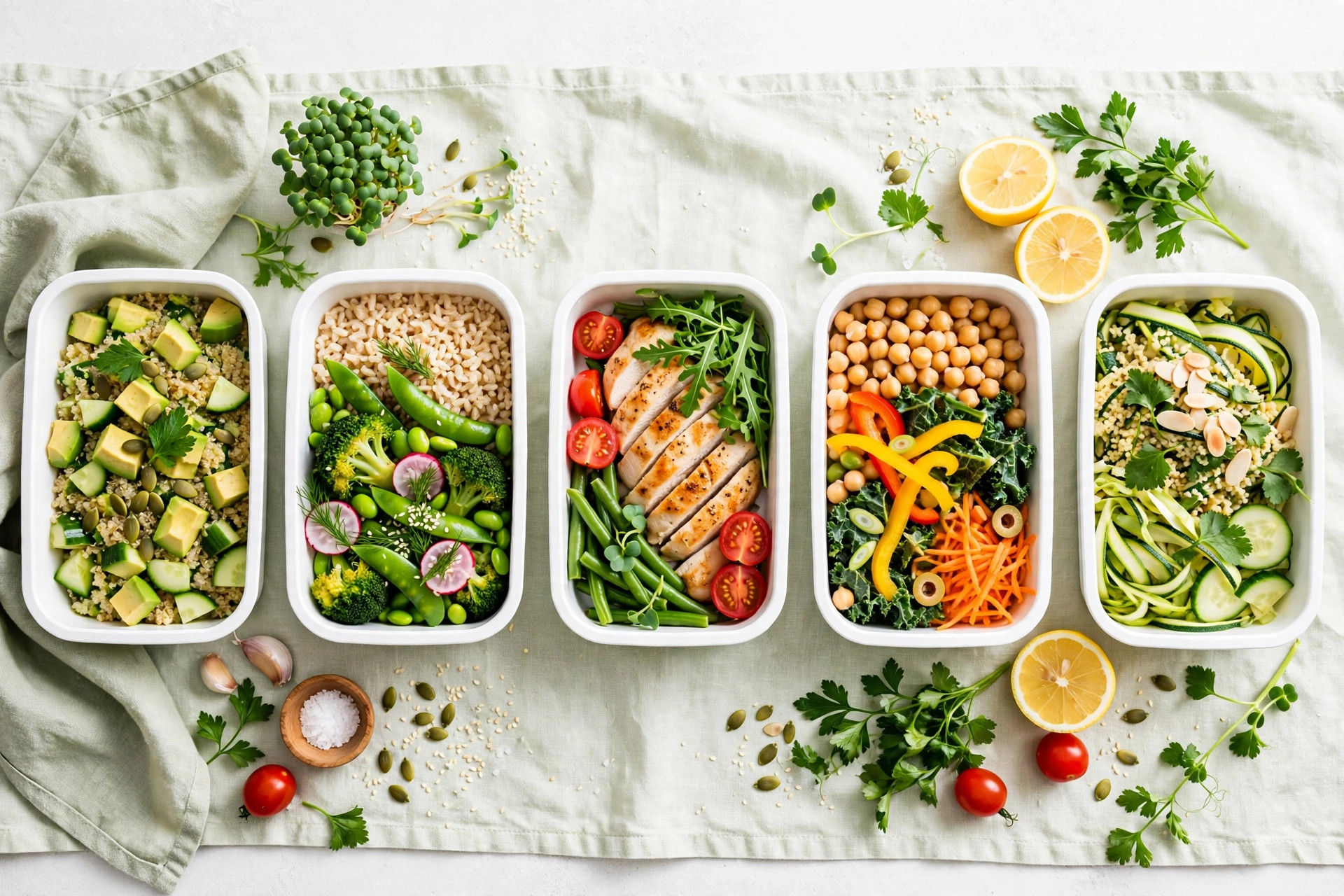
Use both systems together: hands for portion sizes, the plate for layout. Prepping meals in portion-sized containers makes it easier still, since the measuring happens just once.
Eating Out: Portion Control Without Counting Calories at Restaurants
Restaurant portions are often two to three times a standard serving. You cannot weigh food at the table, but you can outsmart the plate:
- Box half before you start. Ask for a takeout container when your food arrives and pack half away immediately. Out of sight, out of mind.
- Order an appetizer as your main. Appetizer portions are often closer to a sensible serving size.
- Estimate with your hands. Your palm, fist, and thumb work at a restaurant table exactly as they do at home — and nobody will notice.
- Sauces and dressings on the side. Restaurant sauces can double a meal's calories. Dip your fork in the sauce, then spear the food.
- Decide about the bread basket in advance. Mindless nibbling before you are even hungry adds up fast. If you want it, enjoy a piece — then move it away.
- Stop at 80% full. Pause halfway, drink some water, and check whether you are satisfied. Restaurant plates are designed to be finished, not to be the right size.
Mindful Eating Cues That Make Portions Stick
Portion control fails most often between the plate and the stomach. These cues slow you down so your fullness signals can catch up:
- Eat without screens. Distracted eating consistently leads to larger portions. Give the meal 15 minutes of your full attention.
- Put your fork down between bites. This simple pause stretches the meal and lets satiety hormones do their work.
- Actually taste the first bites. Most people barely register them. Starting slowly sets the pace for the whole meal.
- Rate your hunger 1 to 10, before and after. Start eating around 3–4 (genuinely hungry) and stop around 6–7 (comfortably satisfied, not stuffed).
- Wait 20 minutes before seconds. Fullness signals lag about 20 minutes behind eating. Still hungry? Then reach for vegetables or protein.
Common Portion Mistakes to Avoid
- Drinking your calories. Sodas, juices, fancy coffees, and alcohol can add hundreds of calories with almost no fullness. This is the single biggest portion mistake most people make.
- Treating healthy foods as unlimited. Nuts, olive oil, nut butters, dried fruit, and smoothies are nutritious — and very calorie-dense. The thumb rule applies to them too.
- Using oversized plates and bowls. The same portion looks tiny on a big plate and generous on a small one. Smaller dishware makes your brain register the meal as more substantial.
- Eating straight from the bag or box. A portion you cannot see cannot be judged. Always serve snacks into a bowl first.
- Finishing your plate out of habit. Clean-plate conditioning runs deep. It is perfectly fine to leave food — or save it for later.
- Skipping meals, then overeating. Arriving at dinner ravenous destroys any portion strategy. Regular, balanced meals are the foundation. If you want to check your numbers for a week or two, a food tracker works as training wheels — not a life sentence.
Key Takeaways
- Portion control without counting calories is realistic — and for many, more sustainable than tracking every bite.
- The hand method: 1–2 palms of protein, 1–2 fists of vegetables, 1–2 cupped hands of carbs, 1–2 thumbs of fats per meal.
- Calorie counting often fails because of time, social friction, restaurant guesswork, and all-or-nothing thinking — not lack of willpower.
- Use the plate method as backup: half vegetables, a quarter protein, a quarter whole grains, water on the side.
- At restaurants: box half the meal first, order sauces on the side, and stop at 80% full.
- Slow down, ditch the screens, and let fullness catch up — mindful eating makes every portion strategy work better.
Comments (0)
No comments yet. Be the first to share your thoughts!
Leave a comment