
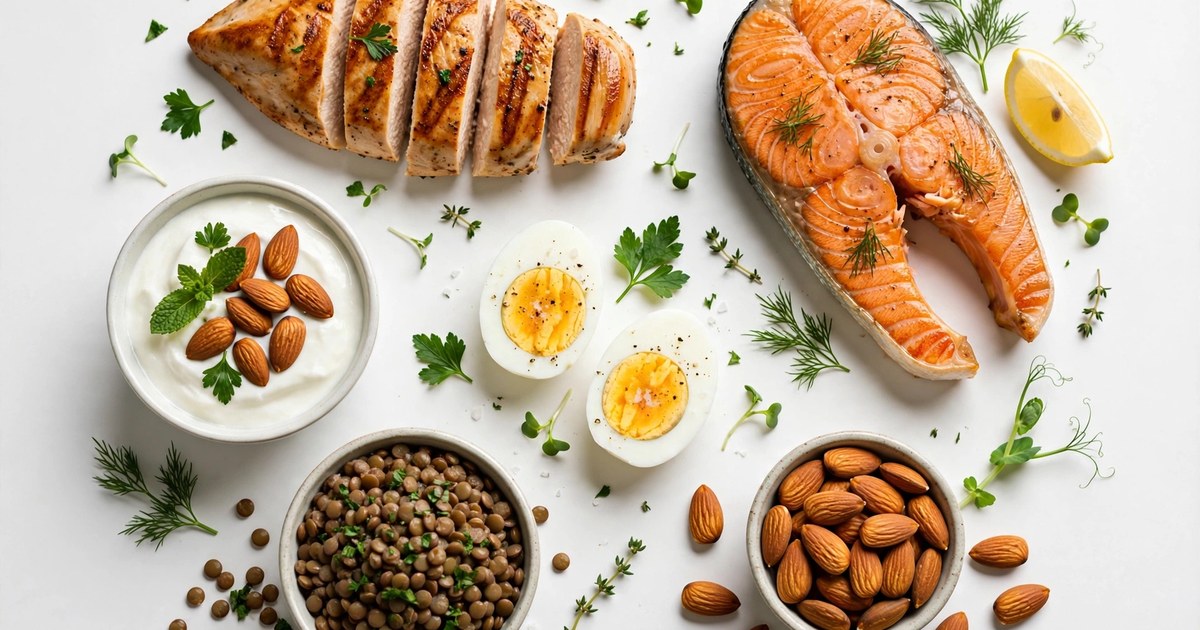
Most people need between 1.2 and 2.0 grams of protein per kilogram of body weight per day to lose fat effectively while preserving muscle. That is roughly 85–140 grams daily for a 70 kg person. Spread your protein across 3–4 meals, combine it with a moderate calorie deficit and some resistance training, and fat loss becomes noticeably easier to sustain.
If you are trying to lose weight, you have probably heard the same advice everywhere: eat more protein. But the question of how much protein for fat loss really works is more nuanced than most headlines suggest. Eat too little and you risk losing muscle along with fat. Eat a sensible amount and you protect your metabolism, feel fuller for longer, and make your calorie deficit far easier to stick to.
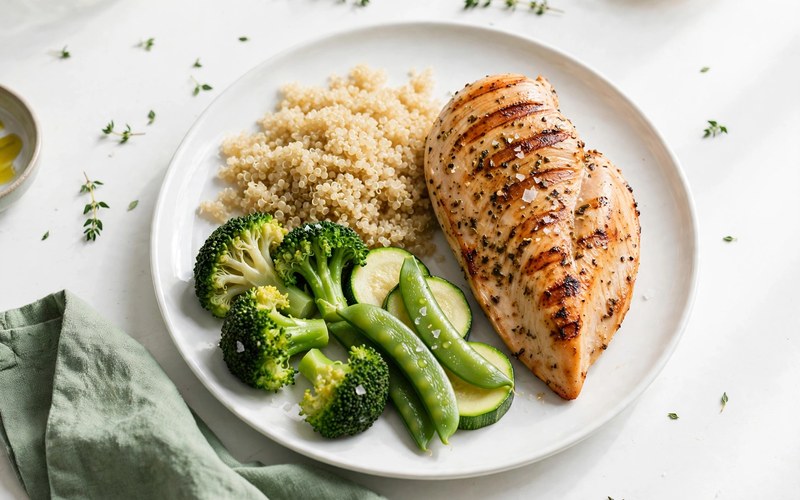
In this guide, we break down the protein ranges supported by nutrition science, show you how to calculate your personal target, and share practical ways to hit it without living on plain chicken breast. This is general guidance for healthy adults — not medical advice. If you have kidney disease or another medical condition, talk to your doctor before changing your protein intake.
Why Protein Matters More During Fat Loss
When you eat fewer calories than you burn — a calorie deficit — your body does not only burn fat. Without enough protein, it can also break down muscle tissue for energy. That is a problem for three reasons:
- Muscle keeps your metabolism higher. Muscle tissue burns more calories at rest than fat tissue does. Losing muscle can slow your daily calorie burn and make further weight loss harder.
- Protein is the most filling nutrient. It increases satiety hormones and reduces ghrelin, the hunger hormone. People who eat more protein consistently report fewer cravings and snack less.
- Protein costs more energy to digest. Your body burns roughly 20–30% of protein calories just digesting it, compared to 5–10% for carbohydrates and 0–3% for fat. This effect, called the thermic effect of food, is small but real.
In short, protein does not magically burn fat — but it protects the muscle and fullness that make fat loss sustainable. Before setting any protein target, it helps to know your calorie baseline. You can estimate it quickly with our BMR and TDEE calculator, and if you are new to the concept, read our guide to what a calorie deficit actually is.
How Much Protein for Fat Loss: The Real Numbers
Protein needs are usually expressed in grams per kilogram of body weight per day (g/kg). Here are the ranges nutrition researchers and professional bodies generally work with:
Sedentary adults: at least 0.8 g/kg
The widely used minimum, the recommended dietary allowance (RDA), is 0.8 grams of protein per kilogram of body weight per day for sedentary adults. For a 70 kg person, that is about 56 grams. This amount is designed to prevent deficiency, not to optimize body composition — and most experts consider it too low for anyone actively trying to lose fat.
Active people losing fat: 1.2–2.0 g/kg
For active adults — especially those in a calorie deficit and doing resistance training — most evidence points to roughly 1.2 to 2.0 grams per kilogram per day as the practical range for preserving muscle during fat loss. Within that range, people who lift weights or train regularly tend to do best at the upper end.
Quick reference for a 70 kg (154 lb) person:
- 1.2 g/kg = about 84 g of protein per day (lightly active, modest deficit)
- 1.6 g/kg = about 112 g of protein per day (regular training, the sweet spot for most)
- 2.0 g/kg = about 140 g of protein per day (hard training, aggressive deficit)
A simple starting point for most people is 1.6 g/kg of body weight. If you are very overweight, use your goal or lean body weight rather than your current weight so the target stays realistic. As a rough check on where you stand today, try logging a normal day of eating with a food and calorie tracker — most people are surprised by how little protein they actually eat.
When and How to Spread Your Protein
Your daily total matters far more than timing, but spreading protein evenly helps. Each meal triggers muscle protein synthesis — the repair process that keeps muscle intact — and there is a ceiling per meal. Research suggests about 25–40 grams of protein per meal is enough to max out that signal for most people.
Practical distribution for a 112 g daily target:
- Breakfast: 25–30 g — Greek yogurt, eggs, or a protein smoothie
- Lunch: 30–35 g — chicken, tuna, tofu, or lentils with a grain
- Snack: 15–20 g — cottage cheese, a handful of nuts, or roasted chickpeas
- Dinner: 30–35 g — fish, lean meat, or a hearty bean chili
Front-loading protein at breakfast is especially useful because it tends to reduce evening snacking, which is where many calorie deficits fall apart. You do not need a shake within 30 minutes of your workout — total daily intake beats the so-called anabolic window for almost everyone.
Best Protein Sources for Fat Loss
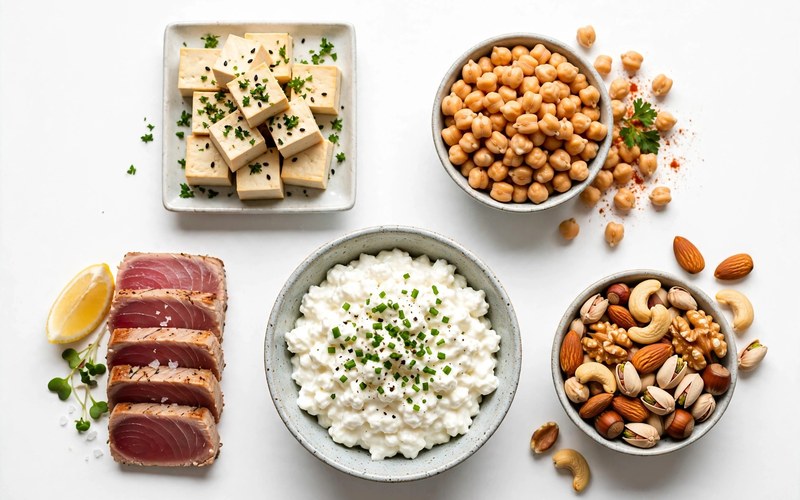
The best protein source is one you will actually eat regularly. Aim for a mix of these, prioritizing lean and minimally processed options:
Animal-based
- Chicken breast, turkey breast (about 30 g protein per 100 g cooked)
- Fish and seafood — tuna, salmon, shrimp, cod
- Eggs and egg whites
- Greek yogurt, cottage cheese, and skyr
- Lean beef or pork in moderation
Plant-based
- Lentils, chickpeas, and black beans
- Tofu, tempeh, and edamame
- Quinoa and other whole grains
- Nuts and seeds — calorie-dense, so watch portions
If you mostly eat plants, combining different sources through the day (for example, beans plus grains) covers the full range of essential amino acids. Pairing higher-protein meals with fiber-rich foods is a smart move: fiber also supports fullness, as we explain in our article on fiber benefits for weight loss and gut health.
Common Mistakes to Avoid
- Chasing protein but ignoring calories. A 400-calorie protein bar does not help a deficit. Protein works within your calorie budget, not instead of it.
- Putting all protein in one meal. One giant dinner cannot do what three protein-rich meals can for muscle protection.
- Assuming more is always better. Above roughly 2.0–2.2 g/kg, extra protein offers little additional benefit for fat loss and just displaces other nutrients.
- Forgetting liquid calories. Protein shakes are convenient, but sugary coffees and sodas can quietly erase your deficit.
Key Takeaways
- For fat loss, aim for roughly 1.2–2.0 g of protein per kg of body weight per day; 1.6 g/kg is a solid starting point for most active people.
- Spread protein across 3–4 meals of 25–40 g to protect muscle and stay full.
- Protein only works inside a calorie deficit — track your intake to see where you stand.
- Combine higher protein with resistance training for the best body-composition results.
- Choose protein sources you enjoy and can sustain; consistency beats perfection.
- This is general guidance, not medical advice — check with a professional if you have a health condition.


Comments (0)
No comments yet. Be the first to share your thoughts!
Leave a comment