
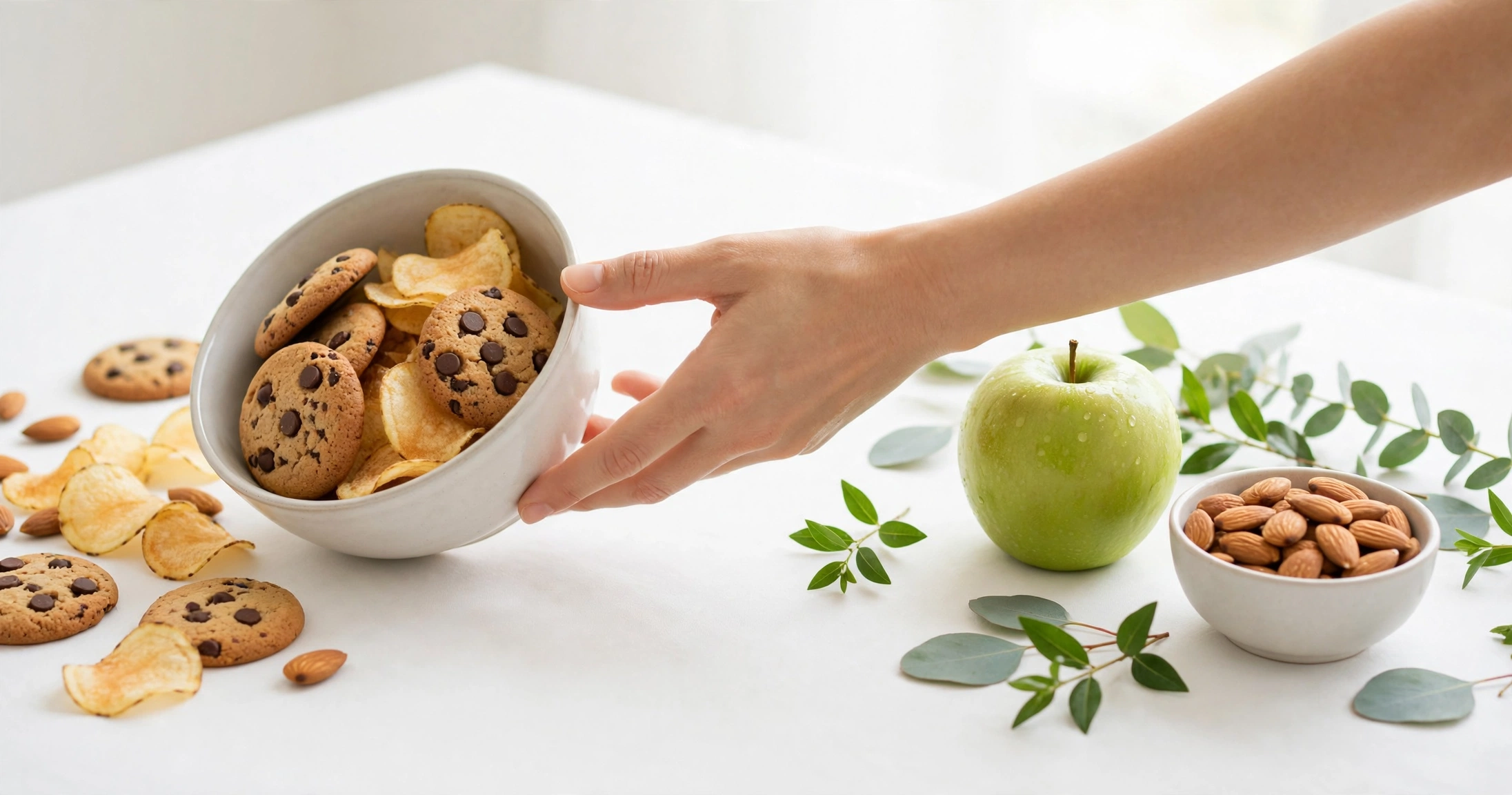
To stop stress eating, start by pausing before you reach for food and asking whether you feel hunger or emotional tension. Stress raises the hormone cortisol, which research suggests can intensify cravings for sugary, high-fat comfort foods. Noticing your triggers, swapping the snack habit for a short walk or breathing exercise, and keeping a food-mood journal can break the cycle.
If you have ever opened a bag of chips after a hard day without planning to, you are not alone. Stress eating is one of the most common eating patterns, and it has nothing to do with willpower. But when it happens daily, it can quietly add extra calories, drain your energy, and leave you feeling frustrated. The good news: emotional eating is a habit, and habits can be rewired.

How Stress Eating Works: Why Pressure Makes You Crave Junk Food
When life feels overwhelming, your body releases stress hormones, including cortisol. In short bursts these hormones actually suppress appetite - the classic fight-or-flight response. But chronic stress keeps cortisol elevated, and research suggests this can increase appetite and specifically drive cravings for sugary, high-fat comfort foods.
Eating tasty foods triggers dopamine, a feel-good brain chemical that briefly dampens the stress response. Your brain learns the shortcut fast: bad day, cookies, relief. Over time the connection becomes automatic, and you may head for the kitchen at the first sign of tension without deciding to. Understanding this biology reframes stress eating as a learned coping strategy rather than a personal failure - and a learned strategy can be unlearned.
Emotional Hunger vs. Physical Hunger: How to Tell the Difference
One of the most powerful steps to stop stress eating is learning to tell emotional hunger from physical hunger. They arrive very differently, and once you know the signs, the craving loses much of its power:
- Emotional hunger comes on suddenly. Physical hunger builds gradually as hours pass since your last meal.
- Emotional hunger craves specific comfort foods - chocolate, pizza, ice cream. Physical hunger is open to many options, including a plain salad or soup.
- Emotional hunger is felt above the neck - a mental craving, a taste in your mouth. Physical hunger shows up as a growling stomach or low energy.
- Emotional hunger does not stop when you are full. Physical hunger naturally fades once you have eaten enough.
- Emotional hunger is followed by guilt. Satisfying physical hunger leaves you feeling content.
Next time a craving strikes, pause for 60 seconds: would you eat a bowl of plain rice right now? If only brownies will do, that is emotional hunger. A food tracker can reveal the pattern - logging meals alongside your mood makes the link between stressful days and snack-heavy evenings clear.
10 Science-Backed Ways to Stop Stress Eating
You do not need a total lifestyle overhaul. Small, repeatable actions beat ambitious plans - try these strategies one or two at a time.
1. Pause and name the emotion
When a craving hits, stop for a minute and label the feeling: stressed about tomorrow's meeting, or bored and restless. Naming an emotion - psychologists call it affect labeling - can reduce its intensity and weaken the urge to eat.
2. Drink water and wait ten minutes
Thirst often disguises itself as hunger, and cravings peak and fade like waves. A glass of water plus a ten-minute timer gives the urge a chance to pass. Many people find it gone before the timer ends.
3. Take a five-minute walk
Movement is one of the fastest natural stress relievers. A short walk lowers tension and gives your brain the same mood lift it wanted from food.
4. Keep a food-mood journal
Note what you eat, when, and how you felt before and after. Within a week or two, patterns emerge - perhaps the 4 p.m. work slump or late-night scrolling. Once you see the trigger, you can plan a different response for that moment.

5. Do not skip meals
Skipping breakfast or lunch to save calories usually backfires. An under-fueled brain has weaker impulse control and stronger cravings under stress, so eat regular, balanced meals with protein and fiber.
6. Restructure your food environment
Willpower is weakest when you are stressed, so do not rely on it. Keep trigger foods out of the house or out of sight, and place fruit, nuts, or yogurt where the chips used to be. The easiest craving to beat is the one you never see.
7. Get enough sleep
Poor sleep raises hunger hormones and lowers impulse control, making stress eating far more likely. Read how sleep affects your weight to see why one short night sharpens next-day cravings - and aim for seven to nine hours.
8. Build a non-food comfort menu
Write down five-minute comforts that do not involve eating: herbal tea, stretching, calling a friend, stepping outside, a favorite song. When tension strikes, choose from the menu instead of opening the fridge.
9. Practice the plate pause
If you do start eating emotionally, you can still interrupt the autopilot. Serve the food on a plate, sit down, and taste the first few bites slowly - often you will realize you are not even enjoying it.
10. Start your day with intention
Mornings set the tone for how you handle stress all day. A calm morning routine for energy - daylight, gentle movement, a real breakfast - builds resilience before pressure arrives, so evening cravings lose their power.
If past attempts failed, extreme restriction may be the reason. As explained in why crash diets fail, sustainable habits beat short-term diets every time.
When to Seek Professional Help
Self-help strategies work for most everyday stress eating. But seek professional support if you regularly feel out of control around food, eat in secret, eat to the point of discomfort, or use food as your only way to cope with emotions. These can be signs of binge eating or another eating disorder. A registered dietitian, therapist, or your doctor can help you build healthier coping tools - asking for help means you take your health seriously.
Key Takeaways
- Stress eating is driven by cortisol and learned reward patterns - not a lack of willpower.
- Emotional hunger arrives suddenly, craves specific comfort foods, and does not stop at fullness; physical hunger builds gradually.
- The pause-and-name technique, a ten-minute wait, and short walks are simple, research-supported first steps.
- Regular meals, enough sleep, and a trigger-free food environment remove the conditions that feed the habit.
- A food-mood journal reveals your personal triggers so you can plan a different response.
- If eating feels out of control, reach out to a dietitian, therapist, or doctor.
Frequently Asked Questions
Q: Why do I crave sugar when I am stressed?
A: Stress raises cortisol, which can increase appetite and push you toward high-sugar, high-fat foods. These foods briefly trigger dopamine, a feel-good chemical that calms the stress response. Your brain remembers the relief and builds an automatic craving loop.
Q: How can I tell if I am really hungry or just stressed?
A: Ask whether you would eat a plain, boring meal like steamed vegetables. If only chocolate or chips sound appealing, it is likely emotional hunger. Physical hunger builds gradually and fades after eating enough, while emotional hunger hits suddenly.
Q: Will skipping meals help me stop stress eating?
A: No - skipping meals usually makes it worse. An under-fueled body has weaker impulse control and stronger cravings, especially under stress. Regular, balanced meals with protein and fiber keep your energy stable and reduce the risk of evening binges.
Q: How long does it take to break the stress-eating habit?
A: There is no fixed timeline; it depends on how deeply the habit is wired and how consistently you practice new responses. Many people notice real improvement within a few weeks of using strategies like pause-and-name and food-mood journaling. Focus on progress, not perfection.
Q: Should I keep comfort foods out of the house?
A: For many people, yes. Restructuring your food environment is one of the most effective strategies because it removes the need for willpower. You do not have to ban foods forever - just keep them out of easy reach so eating stays a choice, not a reflex.
Disclaimer: This article offers general guidance and is not a substitute for professional medical advice. If you have concerns about your eating habits, please consult a qualified healthcare professional.




Comments (0)
No comments yet. Be the first to share your thoughts!
Leave a comment