
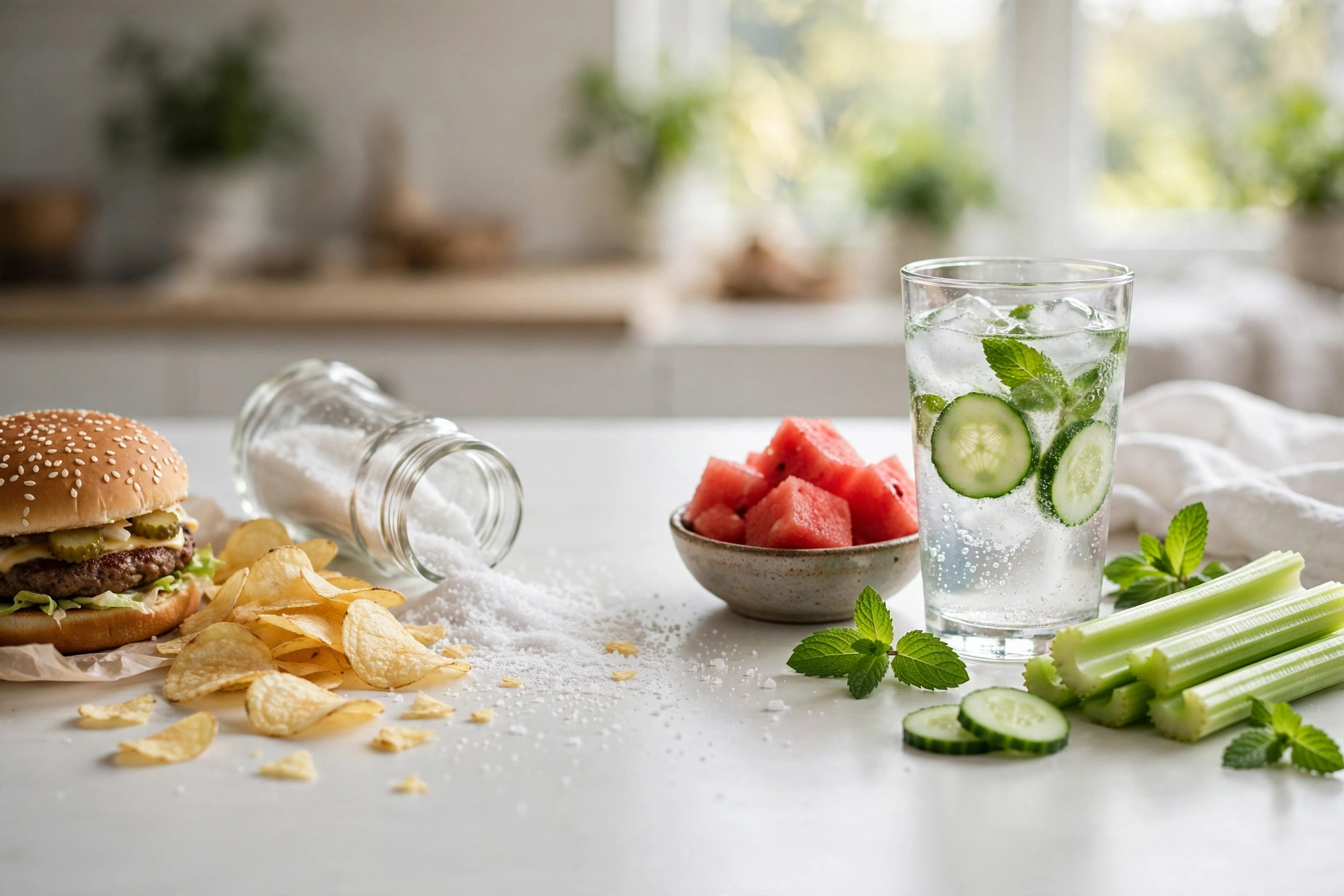
Water retention is the buildup of excess fluid in your body's tissues, usually triggered by too much sodium, not drinking enough water, high-carb meals, hormonal shifts, or sitting too long. It causes bloating, puffiness, and sudden weight swings of 1–2 kg. Cutting back on salt, staying hydrated, and moving more usually reverses it within days.
You ate reasonably yesterday — yet this morning your stomach feels swollen, your rings feel tight, and the scale is up a kilo. That overnight "weight gain" is almost never fat: gaining a kilogram of body fat takes roughly 7,700 calories of surplus. What changed overnight is water.
Water retention is one of the most common reasons people feel bloated for no clear reason — and everyday cases are usually harmless and reversible. This guide explains what causes it, how to tell it apart from fat gain, and the practical steps that help your body release the extra fluid.
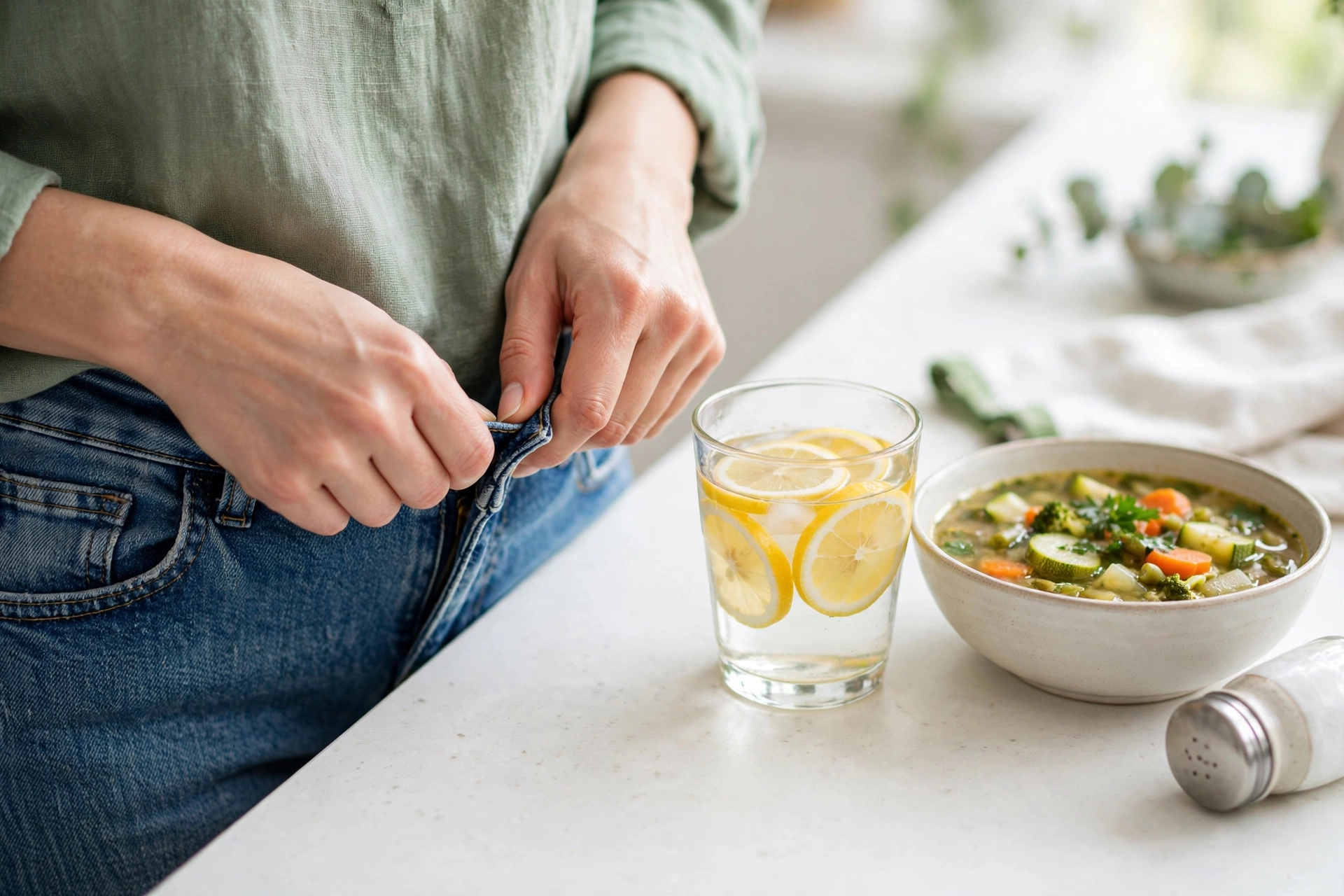 What Is Water Retention (and Why It Causes Bloating)?
About 60% of your body weight is water. Water retention happens when the balance between fluid inside your cells and in the spaces around them tips, and extra fluid collects in your tissues — most visibly in the belly, face, hands, ankles, and feet.
Your kidneys are the main regulators: when they sense low fluid or high sodium, they hold water to keep blood volume stable. Hormones like aldosterone and cortisol influence this too, which is why stress, poor sleep, and hormonal cycles can all leave you puffy.
Your body stores carbs as glycogen in muscles and liver, each gram bound to roughly 3–4 grams of water. That is why one high-carb meal can make you wake up noticeably heavier — the "weight" is water, not fat.
7 Common Causes of Water Retention
Most everyday water retention comes down to one of these:
1. Too much sodium
Sodium makes your body hold water — it is basic chemistry. A single salty restaurant meal, a bag of chips, or processed ready-meals can push your sodium far above the roughly 2,300 mg per day that health authorities recommend, and you will feel it the next morning. Processed foods are the biggest source, and they often hide hidden sugars in everyday foods too.
2. Not drinking enough water
It sounds backwards, but drinking too little water can cause water retention. When your body senses dehydration, it clings to the fluid it has. People who barely drink water during the day often notice their bloating improves once they hydrate properly — see how much water you really need to find your target.
3. High-carb meals and sugary foods
Refilling glycogen stores pulls water into your muscles, so big pasta dinners, desserts, and sugary drinks can add a kilo or more of water weight overnight. This is temporary and reverses as the glycogen is used up.
4. Hormonal changes
Many women notice bloating in the days before their period, when estrogen and progesterone fluctuate; hormonal birth control can have a similar effect. This type is cyclical and usually fades within a few days.
5. Sitting or standing too long
Gravity pulls fluid downward, so long desk days, flights, or standing all day can leave ankles swollen by evening. Regular movement keeps fluid circulating instead of pooling.
6. Stress, poor sleep, and high cortisol
Cortisol affects how your kidneys handle sodium and water, so chronic stress and short, restless nights can both increase fluid retention.
7. Hot weather and long travel
Heat expands blood vessels and makes the body hold more fluid — combine it with hours of sitting on a plane or in a car, and puffy ankles and a bloated belly are the classic result.
Note: some blood pressure drugs, anti-inflammatory painkillers, and hormonal medications list fluid retention as a side effect — if swelling appeared after starting one, talk to your doctor rather than changing anything yourself.
How to Reduce Water Retention: 10 Practical Fixes
- Cut back on sodium. Cook more at home, read labels, and go easy on processed foods, pickles, soy sauce, and salty snacks — flavor food with herbs, lemon, and spices instead.
- Drink more water. Sip steadily through the day rather than chugging a liter at once; pale-yellow urine means you are on track.
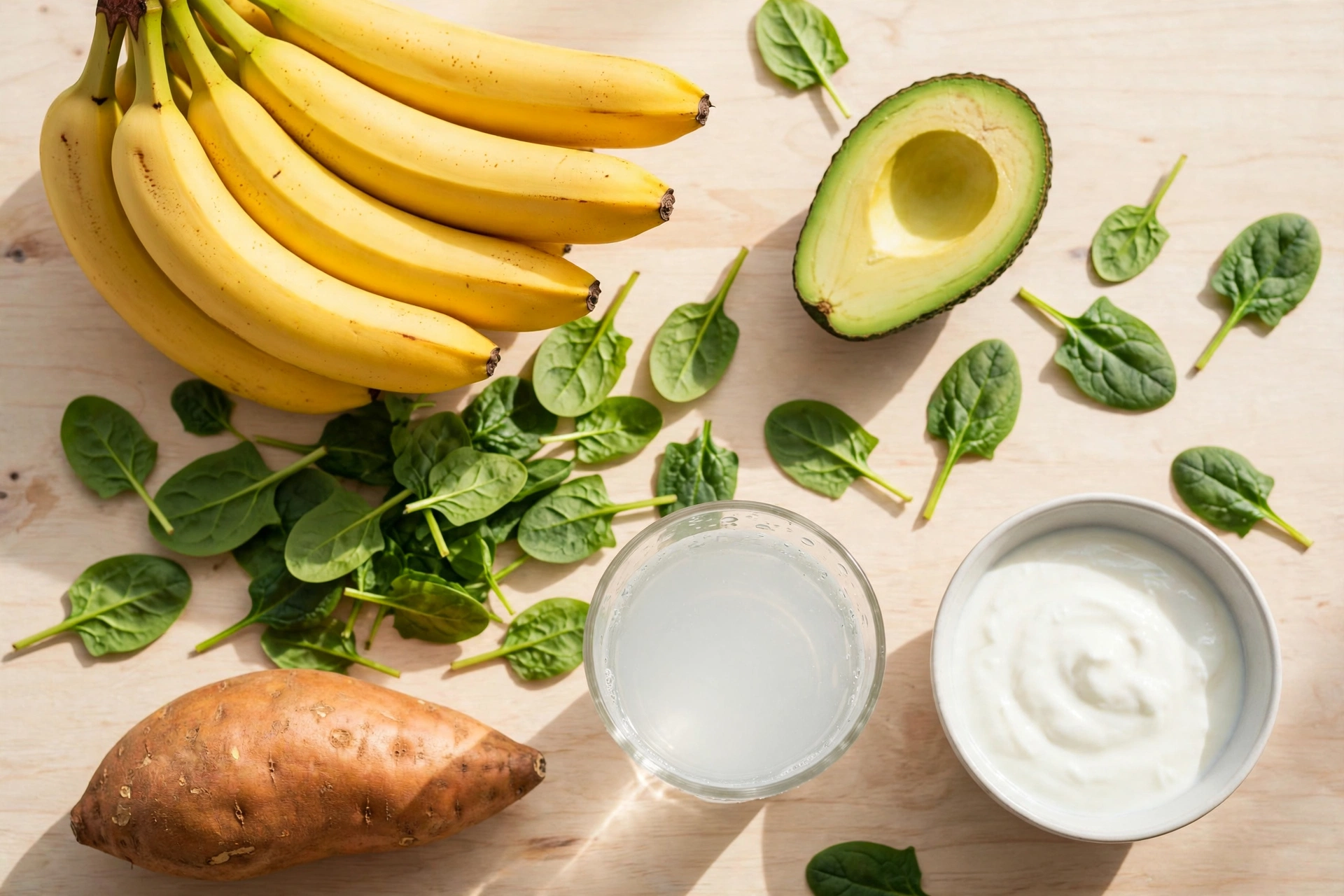
- Eat potassium-rich foods. Potassium helps balance sodium's effects. Bananas, spinach, avocados, sweet potatoes, beans, and yogurt are all strong sources.
- Move every day. Even a 20–30 minute walk helps your muscles pump excess fluid back into circulation. Sitting all day is one of the fastest routes to swollen ankles.
- Moderate refined carbs. Smaller portions of pasta, bread, and sweets mean smaller glycogen-related water swings — see our guide to portion control without counting calories.
- Get enough magnesium. Magnesium supports fluid balance; nuts, seeds, leafy greens, and whole grains are good sources.
- Sleep 7–9 hours and manage stress. Both keep cortisol in check so your kidneys regulate fluid normally.
- Elevate your legs. If your ankles swell by evening, lying with your legs raised for 10–15 minutes helps pooled fluid drain.
- Eat enough protein. Very low protein intake can contribute to fluid buildup; include a protein source at every meal.
- Track patterns, not daily noise. Use a food tracker for a week to spot which meals precede your bloat.
 Water Retention vs. Fat Gain: How to Tell the Difference
This distinction changes what you should do:
- Speed: water weight appears overnight or within a day or two; real fat gain takes weeks of sustained overeating.
- Location: water retention often shows as puffiness in the face, fingers, and ankles, or a belly that feels tight and swollen; fat gain is more evenly distributed.
- Feel: pressing a finger into a water-swollen ankle may leave a brief dent; fat does not do that.
- Reversibility: water weight can drop 1–2 kg in a few days of lower sodium and good hydration; fat loss is gradual, roughly 0.5 kg per week at a healthy pace.
Rule of thumb: if the scale jumped a kilo or more overnight after a salty meal, a carb-heavy dinner, or a poor night's sleep, it is water — just return to normal eating and it will pass.
When to See a Doctor About Water Retention
Mild, occasional water retention is normal. But see a doctor if swelling is persistent, severe, or one-sided — or comes with shortness of breath, chest pain, or rapid unexplained weight gain over days. These can signal heart, kidney, or circulation problems needing professional evaluation, not a diet tweak.
- Key takeawaysWater retention is excess fluid in your tissues — the usual cause of overnight bloating, puffiness, and sudden 1–2 kg scale jumps.
- The most common triggers are high sodium, dehydration, high-carb meals, hormonal cycles, long sitting, stress, and heat.
- Less salt, more water, potassium-rich foods, daily movement, and good sleep help your body release extra fluid within days.
- Water weight appears and disappears fast; real fat gain is slow. See a doctor for persistent, severe, or one-sided swelling.
Frequently Asked Questions
Why do I feel bloated even though I didn't overeat?
Bloating without overeating is usually water retention, not food volume. A salty meal, a high-carb dinner, hormonal shifts, or a poor night's sleep can add a kilo or more of water overnight. Sudden puffiness in the face, fingers, or ankles points to fluid rather than food.
How quickly can I lose water weight?
Most everyday water weight drops within 2–4 days of less sodium, more water, and more movement. Weigh weekly and watch the trend rather than reacting to one weigh-in.
Does drinking more water really help reduce water retention?
Yes — paradoxically, mild dehydration makes your body cling to fluid. Drinking steadily through the day signals your kidneys to release the excess; aim for pale-yellow urine as a gauge.
Are diuretic teas or "water pills" a safe way to lose water weight?
They can dehydrate you and disturb your electrolyte balance — risky, especially with certain medications or conditions — and they do not reduce body fat. Stick to the steps above and talk to a doctor before using any diuretic product.
Can water retention hide my fat loss on the scale?
Absolutely — a salty meal or hard workout can add enough water to mask a week of fat loss on the scale. That is why weekly averages and measurements matter more than any single weigh-in.




Comments (0)
No comments yet. Be the first to share your thoughts!
Leave a comment