
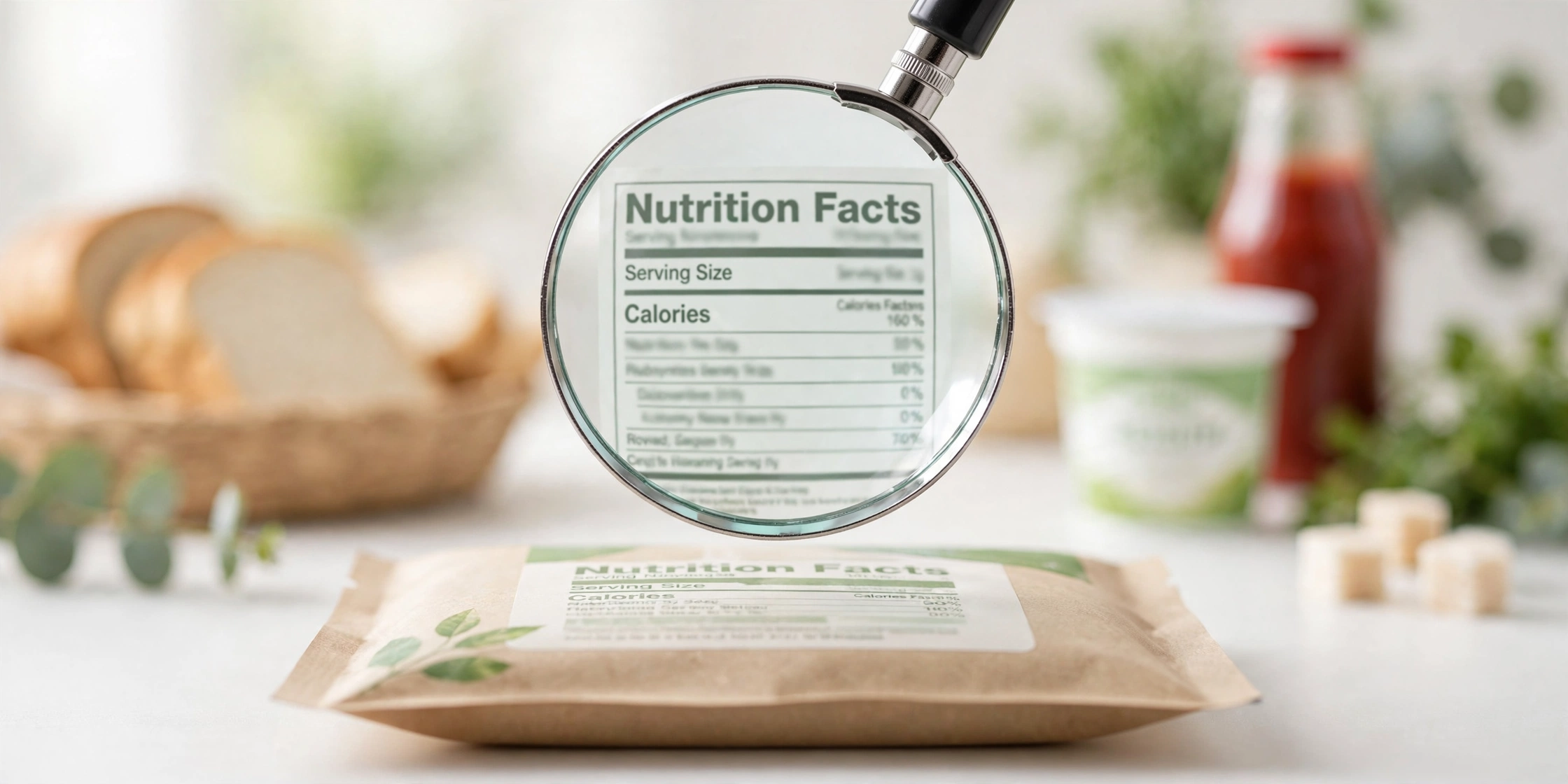
Hidden sugars are added sweeteners manufacturers disguise under dozens of label names — from high-fructose corn syrup to maltodextrin. They lurk in bread, sauces, flavored yogurt, sweetened chai and "healthy" snacks. Check the ingredient list and "added sugars" line on nutrition labels, and aim for the shortest ingredient list with no sweetener in the first three ingredients.
Walk down any supermarket aisle and you'll find sugar wearing a costume. The nutrition label on a "healthy" granola bar, a loaf of whole-wheat bread, or a bottle of pasta sauce can hide several teaspoons of added sugar under names most shoppers don't recognize. You're not eating more dessert — you're eating dessert disguised as dinner.
The problem isn't the sugar you add to your tea. It's the sugar added before the food ever reaches your kitchen. Manufacturers add sweeteners to improve taste, texture, and shelf life, and they rarely call it plain "sugar." Learning to decode these labels is one of the fastest ways to eat better without giving up the foods you love.
What Are Hidden Sugars — and Why Should You Care?
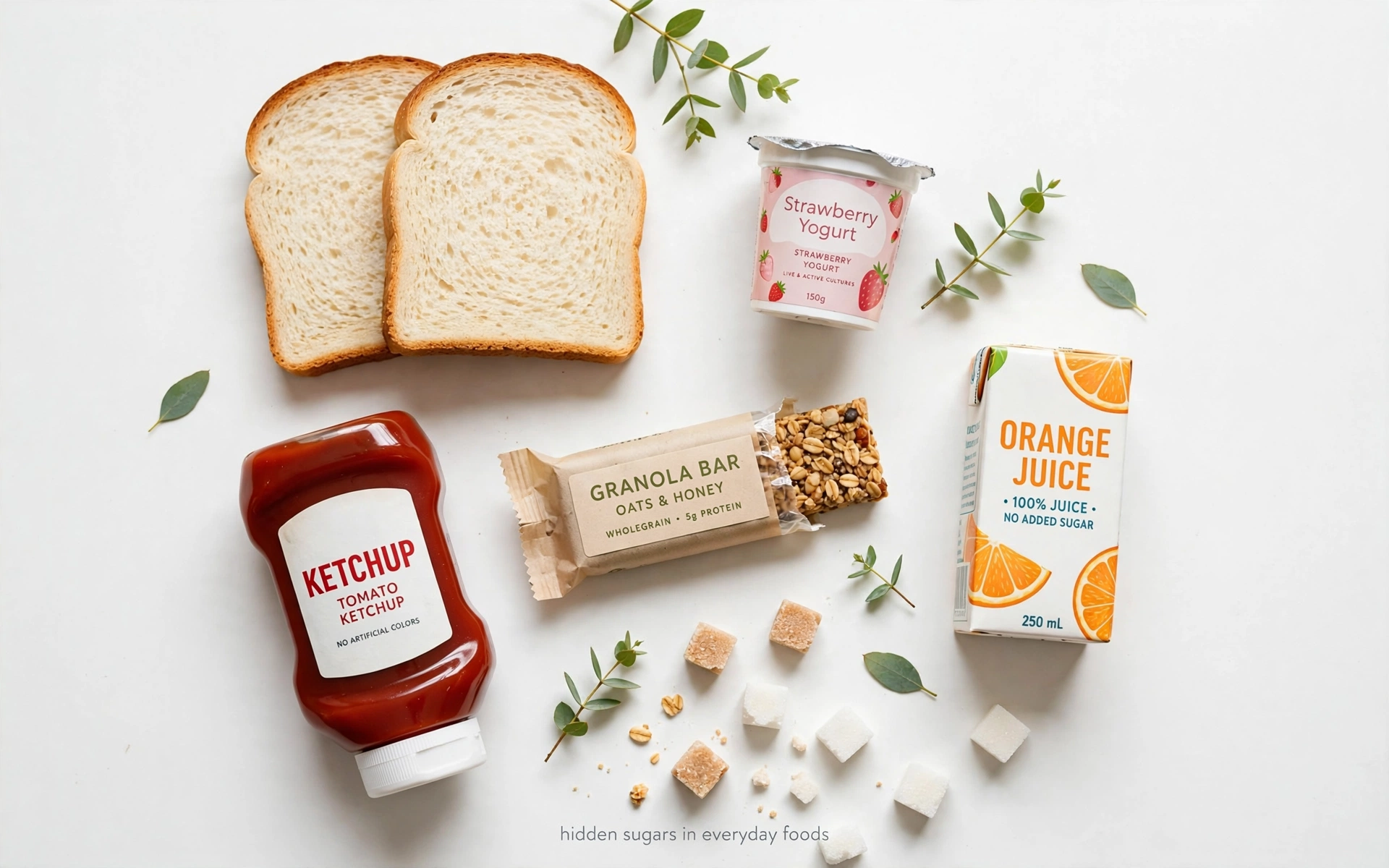
Hidden sugars are added sweeteners that don't taste — or read — like obvious sugar. A tablespoon of ketchup can carry a teaspoon of sugar. A small flavored yogurt can match a candy bar. A glass of sweetened chai made outside the home often contains more sugar than a soft drink.
Too much added sugar is linked to weight gain, energy crashes, dental problems, and a higher risk of type 2 diabetes and heart disease. Health authorities generally suggest keeping added sugars to a small share of your daily calories — roughly 6 teaspoons (about 25 grams) a day for women and 9 teaspoons (about 36 grams) for men, according to widely cited dietary guidelines. One sweetened beverage can blow through that budget before noon.
Spotting hidden sugars matters because you can't manage what you can't measure. Once you learn the common disguises, a quick glance at a label tells you everything. If you want to see how sugar fits into your personal numbers, our nutrition calculator breaks down your daily targets in seconds.
The Many Names Hidden Sugars Hide Behind
Ingredients are listed by weight, and manufacturers sometimes split sugar into several types so "sugar" doesn't appear first. Any ingredient ending in "-ose" is a sugar, but the list goes much further. Watch for these common names:
- Classic sugars: sucrose, dextrose, fructose, glucose, maltose, lactose
- Syrups: high-fructose corn syrup, corn syrup, corn syrup solids, rice syrup, brown rice syrup, barley malt, golden syrup, malt syrup
- "Natural" sweeteners: honey, agave nectar, maple syrup, molasses, coconut sugar, date syrup
- Processed-sounding ones: maltodextrin, evaporated cane juice, cane crystals, fruit juice concentrate, invert sugar, caramel, treacle, demerara, turbinado
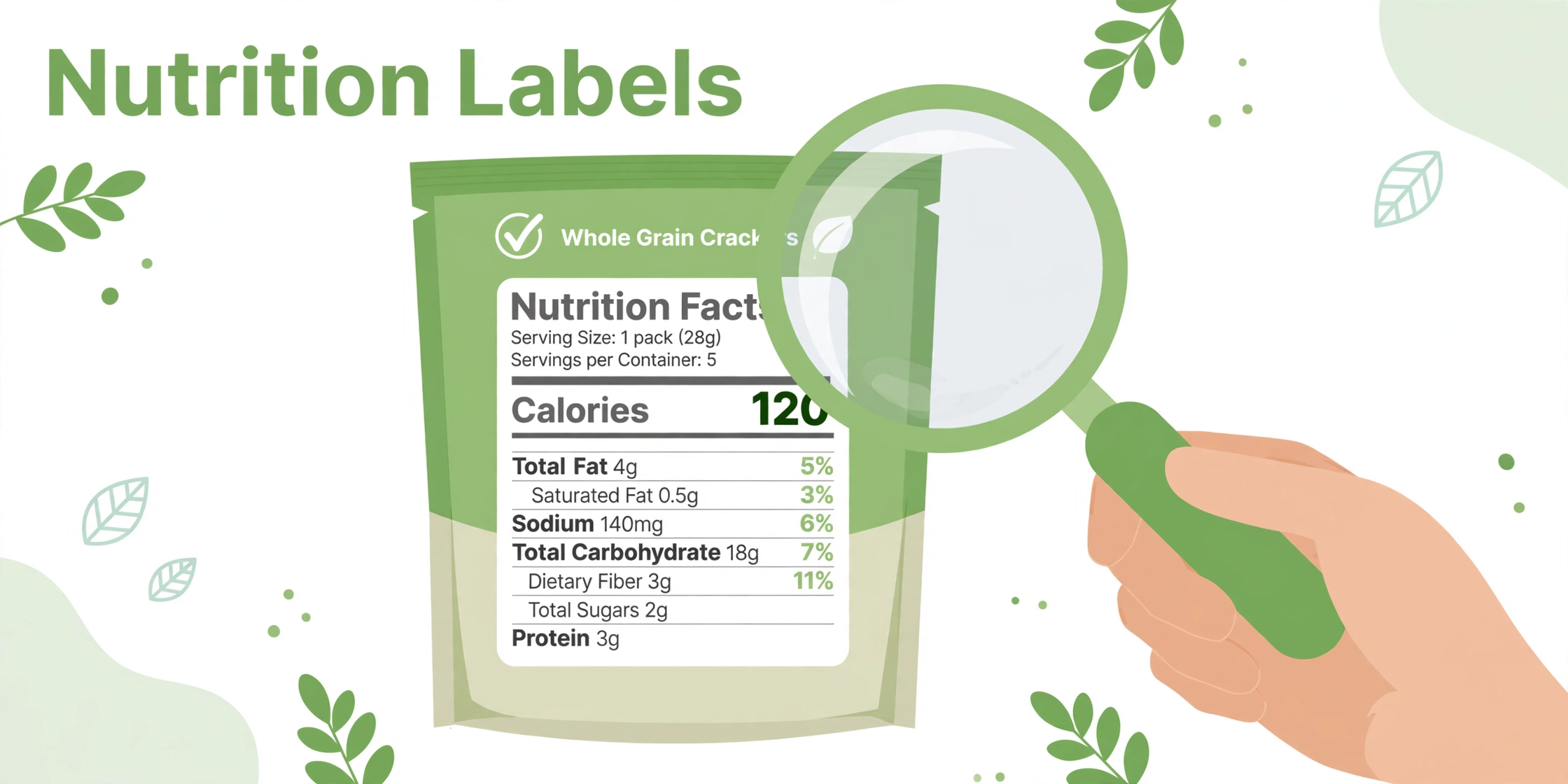
Seeing three or four of these in one ingredient list is a red flag: the product may contain more total sugar than a dessert. Our beginner's guide to reading nutrition labels walks through the full label line by line.
Hidden Sugars in Everyday Foods: Real Examples
These everyday items are the most common sugar traps:
- Bread and breakfast cereals: Many commercial breads list sugar, glucose syrup, or honey among the first ingredients. Some breakfast cereals marketed to families are one-third sugar by weight.
- Flavored yogurt and flavored milk: A fruit-flavored yogurt cup can contain 4–6 teaspoons of added sugar. Plain yogurt with fresh fruit is the safer pick.
- Sweetened chai and coffee drinks: Roadside or café chai is often boiled with generous sugar; flavored lattes and iced coffees can rival soft drinks.
- Juices and "fruit drinks": Even 100% juice concentrates natural sugars without the fiber of whole fruit. "Fruit drinks" and nectars usually add more on top.
- Ketchup, pasta sauce, and salad dressings: A serving of ketchup can hold a full teaspoon of sugar; jarred pasta sauces often list sugar as the second or third ingredient.
- Granola bars and "protein" bars: Marketed as healthy snacks, many are held together with glucose syrup, honey, and chocolate coatings.
- Biscuits, rusks, and packaged namkeen: Sweet biscuits are obvious, but many savory crackers and rusks contain added sugar too.
- Condiments and ready meals: Barbecue sauce, sweet chili sauce, and frozen ready meals frequently hide sugar high on the label.
How to Spot Hidden Sugars on a Label in 30 Seconds
Just a 30-second routine:
- Check the "added sugars" line. Many nutrition labels now separate added sugars from total sugars. Compare it against your daily budget.
- Scan the first three ingredients. Ingredients appear in descending order of weight. If any sweetener from the list above appears in the top three, the product is sugar-heavy.
- Count the sweeteners. Multiple sugar names in one list usually mean one thing: lots of sugar in total.
- Look at sugar per 100 g. As a rough rule, more than 15 g of sugar per 100 g is high; under 5 g per 100 g is low. Compare similar products side by side.
- Watch the serving size. A label showing "8 g sugar per serving" means little if the serving is unrealistically small and you'll eat three.
Want to see how these numbers fit your day? Calculate your daily calorie needs, then use the food tracker to log what you actually eat — hidden sugars become visible fast.
Simple Swaps That Cut Hidden Sugars Without Misery
Cutting hidden sugars doesn't mean bland food. Small swaps add up:
- Flavored yogurt → plain yogurt with fresh fruit and a pinch of cinnamon
- Sweetened chai → chai with half the sugar, then gradually less; try cardamom or ginger for flavor
- Breakfast cereal → oats topped with nuts and banana
- Jarred pasta sauce → compare labels and pick the one with no added sugar, or make a quick tomato sauce at home
- Soft drinks and fruit drinks → sparkling water with lemon, or whole fruit
- Granola bars → a handful of nuts and dates (dates are sweet, but they're whole fruit with fiber)
- Ketchup → choose a no-added-sugar version, or use mustard and fresh tomato
Reduce gradually rather than quitting overnight — your taste buds adjust in a couple of weeks.
Key takeaways
- Hidden sugars are added sweeteners disguised under 60+ different label names.
- Bread, sauces, flavored yogurt, sweetened chai, juices, and snack bars are the biggest everyday traps.
- Check "added sugars," scan the first three ingredients, and count how many sweeteners appear.
- Over 15 g sugar per 100 g is high; under 5 g per 100 g is low.
- Swap gradually — plain yogurt, half-sugar chai, and oats beat cold-turkey quitting.
- Track your intake for a week and the hidden sugars reveal themselves.
Frequently Asked Questions
Are natural sweeteners like honey and agave healthier than white sugar?
Not meaningfully. Honey, agave, and maple syrup contain tiny amounts of minerals, but your body processes their sugars almost identically to white sugar. They still count fully toward your added-sugar intake, so use them sparingly rather than freely.
Is fruit sugar (fructose) bad for you?
The fructose in whole fruit is packaged with fiber, water, and nutrients, which slows absorption and keeps portions self-limiting — that's fine for most people. The problem is concentrated fructose in syrups, juices, and sweetened products, where large amounts arrive without fiber.
How much added sugar per day is actually okay?
Widely cited guidelines suggest limiting added sugars to roughly 6 teaspoons (25 g) daily for women and 9 teaspoons (36 g) for men. Start by reading labels for a week — most people are surprised how quickly sweetened drinks and snacks use up that budget.
Do "sugar-free" products have hidden sugars?
Often, yes — just different ones. Sugar-free products may use sugar alcohols (like sorbitol or xylitol) or intense sweeteners, and some still contain sugary syrups. Always read the ingredient list rather than trusting the front-of-pack claim.
Why do manufacturers add sugar to savory foods like bread and sauce?
Sugar improves browning, texture, moisture retention, and shelf life — and it makes products taste better, which sells more. That's why even foods that don't taste sweet can carry surprising amounts.
What's the single fastest way to cut hidden sugars?
Cut sweetened drinks first — sodas, sweetened chai, flavored coffees, and fruit drinks are usually the biggest source. Replacing just one daily sweetened drink can remove several teaspoons of sugar from your day with almost no effort.
Comments (0)
No comments yet. Be the first to share your thoughts!
Leave a comment