
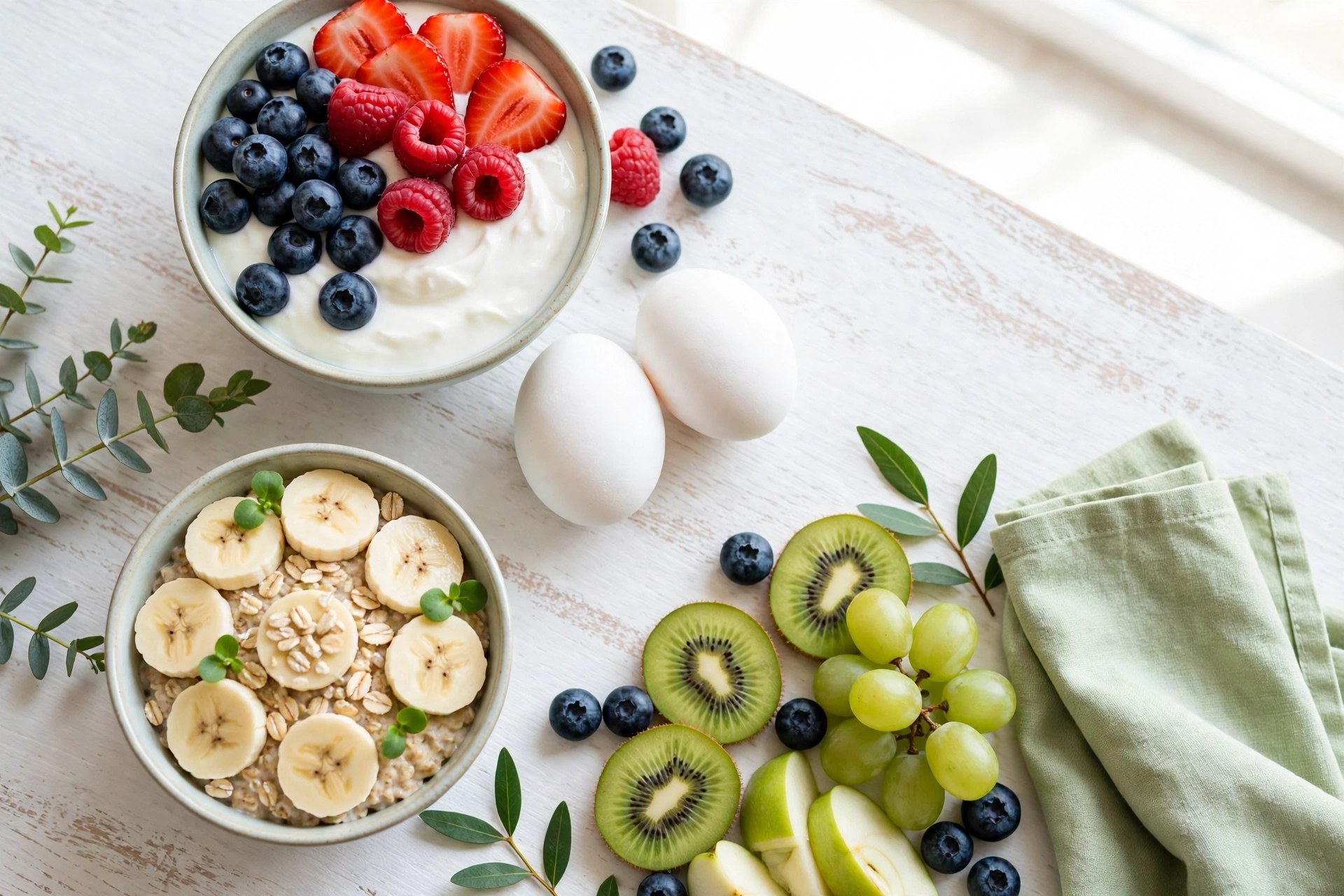
The best breakfast for weight loss is high in protein and fibre, moderate in calories (roughly 300–450 calories), and filling enough to keep you satisfied until lunch. Think eggs, Greek yogurt, oats, or cottage cheese with fruit or whole grains. It will not burn fat by itself, but it makes a calorie deficit much easier to stick to.

Why breakfast matters in a calorie deficit
Weight loss comes down to a calorie deficit — consistently eating slightly fewer calories than your body burns. Breakfast is your first chance each day to set that up well. A breakfast built around protein and fibre helps in three ways: it keeps you full for longer, steadies your energy so you are less likely to reach for biscuits at 11 a.m., and gives you a solid base of nutrients before the day gets busy.
Skipping breakfast is not automatically bad, but if you skip it and then overeat at lunch, the deficit disappears. The goal is not to eat breakfast because a rule says so; it is to choose a morning meal that genuinely supports your calorie deficit without leaving you hungry. If you are unsure how many calories you need, the BMR & TDEE calculator gives you a personal starting point.
What makes a breakfast filling?
A filling breakfast usually combines at least two of these three elements:
- Protein (20–30 g): eggs, Greek yogurt, cottage cheese, or a scoop of protein powder. Protein is the most satiating nutrient and helps protect muscle while you lose weight.
- Fibre (5–10 g): oats, berries, chia seeds, whole-grain bread, or vegetables. Fibre adds bulk and slows digestion.
- Volume and water content: fruit, vegetables, and foods cooked with water (like porridge) let you eat a satisfying portion for relatively few calories.
Fat is not the enemy — a little healthy fat from nuts, seeds, or avocado improves flavour and satiety — but it is calorie-dense, so portions matter. A tablespoon of peanut butter is about 90–100 calories — two is a small meal on its own.
12 best breakfast ideas for weight loss
Every idea below is built around protein and fibre, takes under 15 minutes, and works out at roughly 300–450 calories. Mix and match them across the week.
1. Greek yogurt bowl with berries and nuts
Top 200 g of plain Greek yogurt with a handful of mixed berries and a tablespoon of chopped walnuts or almonds. Around 300 calories and 25 g of protein, with fibre and healthy fats from the berries and nuts. Choose plain yogurt — flavoured versions often contain as much sugar as a dessert.
2. Scrambled eggs on whole-grain toast
Two scrambled eggs on one slice of whole-grain toast with a side of spinach or sliced tomato. Roughly 350 calories and 20 g of protein. Eggs are one of the most filling breakfast foods, and a little olive oil or butter adds flavour without much cost.
3. Overnight oats with chia and fruit
Combine 40 g of oats, a tablespoon of chia seeds, milk, and cinnamon in a jar the night before, then top with sliced banana or berries in the morning. About 350–400 calories with around 12 g of protein and plenty of fibre.
4. Berry protein smoothie
Blend a scoop of protein powder with a cup of frozen berries, a handful of spinach, and milk or water. Around 300 calories and 25–30 g of protein. Smoothies only fill you up if they contain protein and fibre — a fruit-only smoothie is basically sugar water.
5. Cottage cheese with peach and seeds
A bowl of 200 g cottage cheese with sliced peach (or pear) and a tablespoon of pumpkin seeds. Roughly 300 calories and about 25 g of protein. Cottage cheese is one of the highest-protein breakfast options for its calories, and works sweet or savoury.
6. Avocado toast with a boiled egg
One slice of whole-grain toast topped with half a mashed avocado, a boiled egg, and a squeeze of lemon. Around 350 calories with 12 g of protein and plenty of fibre. Keep the avocado to half a fruit — a whole one adds roughly 230 calories.
7. Chia pudding with mango
Stir 3 tablespoons of chia seeds into milk with a little vanilla, leave overnight, and top with diced mango. About 350 calories, 10 g of protein, and 10 g of fibre. Chia seeds absorb liquid and expand, so a small portion feels surprisingly filling.

8. Vegetable omelette
Whisk two eggs with mushrooms, peppers, and spinach, and cook in a lightly oiled pan. Roughly 300 calories and 18 g of protein, with a big volume of vegetables for very few calories.
9. Porridge with apple and cinnamon
Cook 40 g of oats with water or milk and top with a diced apple, cinnamon, and a tablespoon of chopped nuts. Around 350–400 calories and 10 g of protein. Porridge is a classic: warm, filling, cheap, and easy to make in bulk.
10. Whole-grain toast with peanut butter and banana
One slice of whole-grain toast with a tablespoon of natural peanut butter and half a sliced banana. About 350 calories and 10 g of protein. Measure the peanut butter — it is easy to spread twice as much as you think.
11. Savoury breakfast bowl
A base of cooked quinoa or brown rice with a boiled egg, cucumber, tomato, and a spoonful of hummus. Roughly 400 calories and 15 g of protein. A great option if you prefer savoury food in the morning or want to use up dinner leftovers.
12. High-protein pancakes
Blend one egg, a banana, and 30 g of oats, then fry small pancakes in a lightly oiled pan. Serve with berries and a spoonful of Greek yogurt. Around 350 calories and 15 g of protein. They taste like a treat, but keep you full far longer than shop-bought pancakes with syrup.
What to avoid at breakfast
Some popular breakfasts make a calorie deficit much harder — high in calories, low in staying power:
- Sugary cereals and granola: many contain 10–15 g of sugar per small serving and leave you hungry within an hour.
- Pastries, croissants, and muffins: typically 300–500 calories of refined flour, sugar, and butter, with almost no protein or fibre.
- Fruit juice: a glass of orange juice has the sugar of three or four oranges but none of the fibre. Eat the fruit instead.
- Very large café breakfasts: a full cooked breakfast with bacon, sausage, and fried bread can reach 800–1,000 calories before you have started the day.
You do not have to ban these foods forever — a croissant on a Saturday is fine — but as a daily habit they work against you. If you love cereal, choose a plain whole-grain version and add protein, such as milk and a boiled egg on the side.
How to build your own weight-loss breakfast
Use this simple formula and you can build a filling breakfast from almost anything in your fridge:
- Pick a protein — eggs, Greek yogurt, cottage cheese, or protein powder (aim for 20–30 g).
- Add fibre — oats, fruit, vegetables, or whole-grain bread.
- Add a little healthy fat — nuts, seeds, or avocado, in a measured portion.
- Check the total — aim for roughly 300–450 calories. Logging your breakfast for a week in the nutrition tracker shows you exactly where the calories are coming from.
Once you know your daily calorie target from the BMR & TDEE calculator, breakfast should take up about 20–25% of it, leaving room for lunch, dinner, and a snack — exactly how a sustainable calorie deficit should feel: satisfied, not starving. For more on protein targets, see our guide on how much protein you need for fat loss.
Key takeaways
- The best breakfast for weight loss is high in protein (20–30 g) and fibre, around 300–450 calories, and keeps you full until lunch.
- Eggs, Greek yogurt, oats, and cottage cheese are the most reliable bases — build around them.
- Avoid sugary cereals, pastries, and fruit juice as daily habits; they are high in calories and low in staying power.
- Breakfast only helps if it supports your overall calorie deficit — track your intake for a week to see the real picture.
- Rotate your breakfasts so you enjoy them. A plan you like is a plan you will stick to.
Frequently Asked Questions
What is the best breakfast for weight loss?
The best breakfast for weight loss is high in protein and fibre and moderate in calories — roughly 300–450 calories. Good options include eggs on whole-grain toast, Greek yogurt with berries, or oats with fruit and nuts. These foods keep you full for hours, which makes it easier to stay in a calorie deficit without feeling hungry.
Should I skip breakfast to lose weight?
Skipping breakfast can work if it helps you eat fewer calories overall, and some people prefer it. But if skipping breakfast makes you very hungry and you overeat at lunch, it backfires. The best approach is the one you can sustain — if you enjoy breakfast, eat a filling, protein-rich one; if you do not, skip it and eat a balanced lunch instead.
How many calories should breakfast have when losing weight?
For most people aiming to lose weight, breakfast should be around 300–450 calories, or roughly 20–25% of your daily calorie target. Your exact number depends on your total daily needs, which you can estimate with a BMR and TDEE calculator. Very small breakfasts under 200 calories often leave you hungry and lead to snacking later.
Are oats good for weight loss?
Yes, oats are an excellent breakfast for weight loss. They are rich in soluble fibre, which slows digestion and keeps you full for hours, and they are inexpensive and versatile. To make oats even more filling, cook them with milk or add Greek yogurt, protein powder, or nuts so the meal contains enough protein as well as fibre.
Is fruit juice bad for weight loss?
Fruit juice is not ideal for weight loss because it contains the sugar of several pieces of fruit without the fibre that makes whole fruit filling. A glass of orange juice can contain 100–120 calories and still leave you hungry. Eating the whole fruit instead gives you the same vitamins with fibre that helps you feel full.





Comments (0)
No comments yet. Be the first to share your thoughts!
Leave a comment