
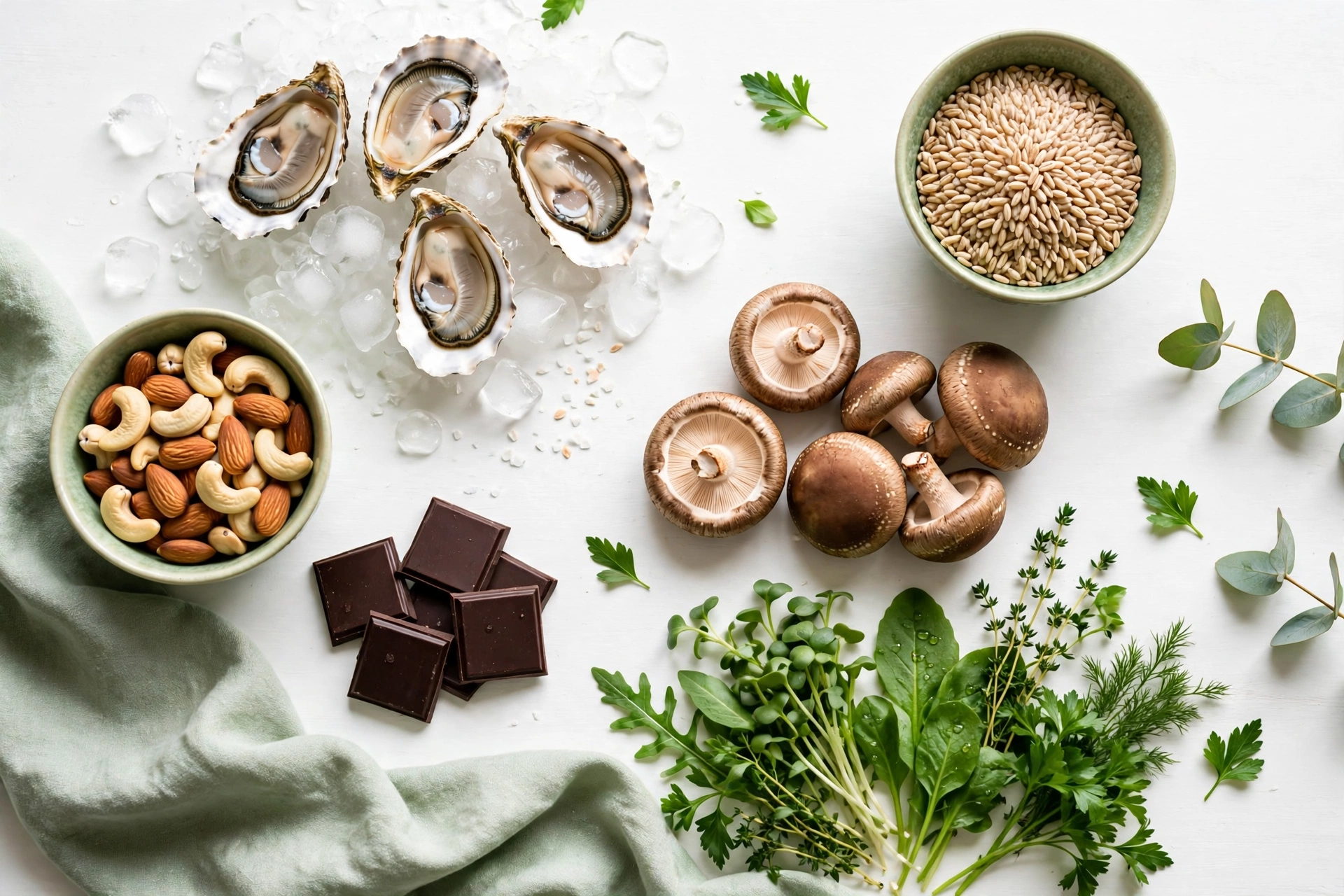
Copper is a trace mineral needed in small amounts to make red blood cells, support immunity, build collagen, and produce energy. Most healthy adults get enough from food. Deficiency is rare, but very restricted diets, gut problems, or long-term high-dose zinc supplements can cause it. Eat shellfish, nuts, seeds, whole grains, and dark chocolate to cover your needs safely.
 What copper does in your body
Copper works quietly behind the scenes, but it touches almost every system. It helps the enzymes that drive chemical reactions in your cells, and without enough of it those reactions slow down — felt as tiredness, weaker immunity, or slow healing.
Here are the main jobs copper supports:
- Red blood cell production: Copper helps your body use iron properly to build haemoglobin, the part of red blood cells that carries oxygen. Without it, iron can get stuck and unavailable, even when you eat enough iron.
- Immune function: Copper supports the white blood cells that fight infection. People with low copper tend to catch infections more easily and recover more slowly.
- Collagen formation: Collagen is the protein that gives strength to skin, blood vessels, bones, and connective tissue. Copper is needed to build and maintain it.
- Energy production: Copper is part of the enzymes in your mitochondria — the energy factories inside your cells — that turn food into usable energy.
- Brain and nerve health: Copper helps make neurotransmitters, the chemical messengers your brain uses to send signals, and it helps maintain the protective coating around nerves.
- Iron absorption: Copper helps move iron from storage into the bloodstream, so the two minerals work as a team rather than alone.
Your body cannot make copper, so you must get it from food — but you need only a small amount, and it is found in many everyday foods. Check your overall diet with the Nutrition tool or track what you eat with the Calorie Tracker.
Signs of copper deficiency
True copper deficiency is uncommon in healthy adults, because the body stores a small reserve and most diets include enough. It is more likely when absorption is reduced — for example with coeliac disease or other gut conditions, after certain stomach surgeries, or on a very restricted diet — or when high-dose zinc supplements are taken for a long time.
The signs are easy to miss because they overlap with other problems, especially iron deficiency. Watch for:
- Fatigue and weakness: Feeling tired even after enough sleep, or getting out of breath more easily than usual.
- Anaemia that does not improve with iron: Low red blood cell counts or pale skin that does not respond to iron alone can point to copper, since copper is needed to use iron properly.
- Frequent infections: Catching colds and other infections more often, or taking longer to recover.
- Pale skin: Copper helps produce melanin, the pigment that gives skin and hair their colour, so low copper can contribute to paler skin.
- Brittle hair and hair changes: Hair that breaks easily, loses its shine, or greys earlier than expected can be a subtle sign.
- Numbness or tingling: In more serious, long-term deficiency, nerve symptoms such as tingling in the hands and feet can appear.
- Weak bones: Over time, low copper can affect bone strength, since collagen is part of bone structure.
None of these signs alone proves a deficiency. If you have several, or anaemia that does not improve, talk to your doctor before taking any supplement — a blood test is the right way to find out what is going on.
Best food sources of copper
Food is the best and safest source of copper, and you do not need large portions — a small serving of shellfish or a handful of nuts can cover a good share of your daily needs.
 The richest copper foods
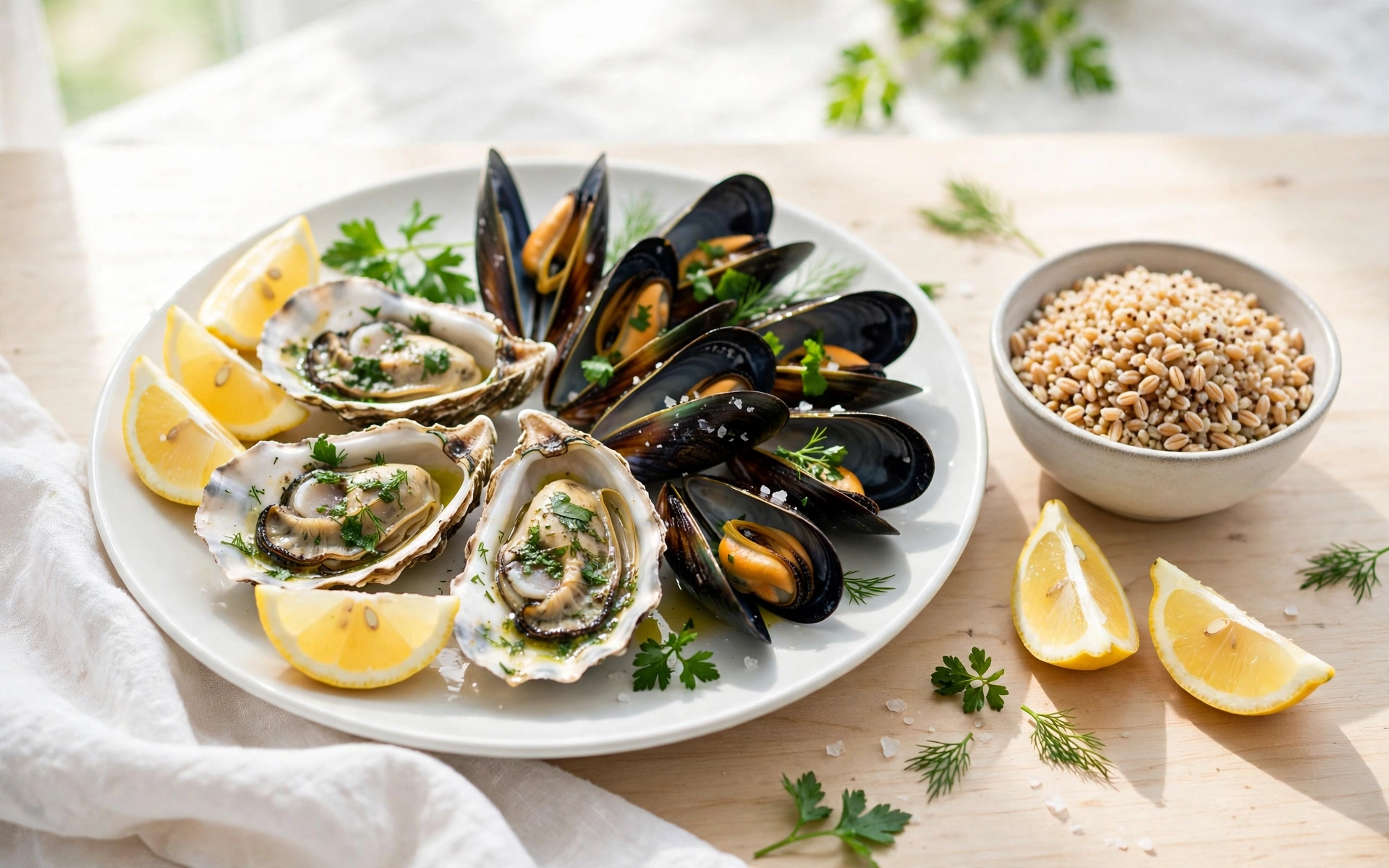
- Oysters and other shellfish: Oysters are one of the richest copper sources of all; crab, lobster, and mussels are also very good.
- Liver: Beef liver is extremely rich in copper, iron, and vitamin B12 — a small portion goes a long way.
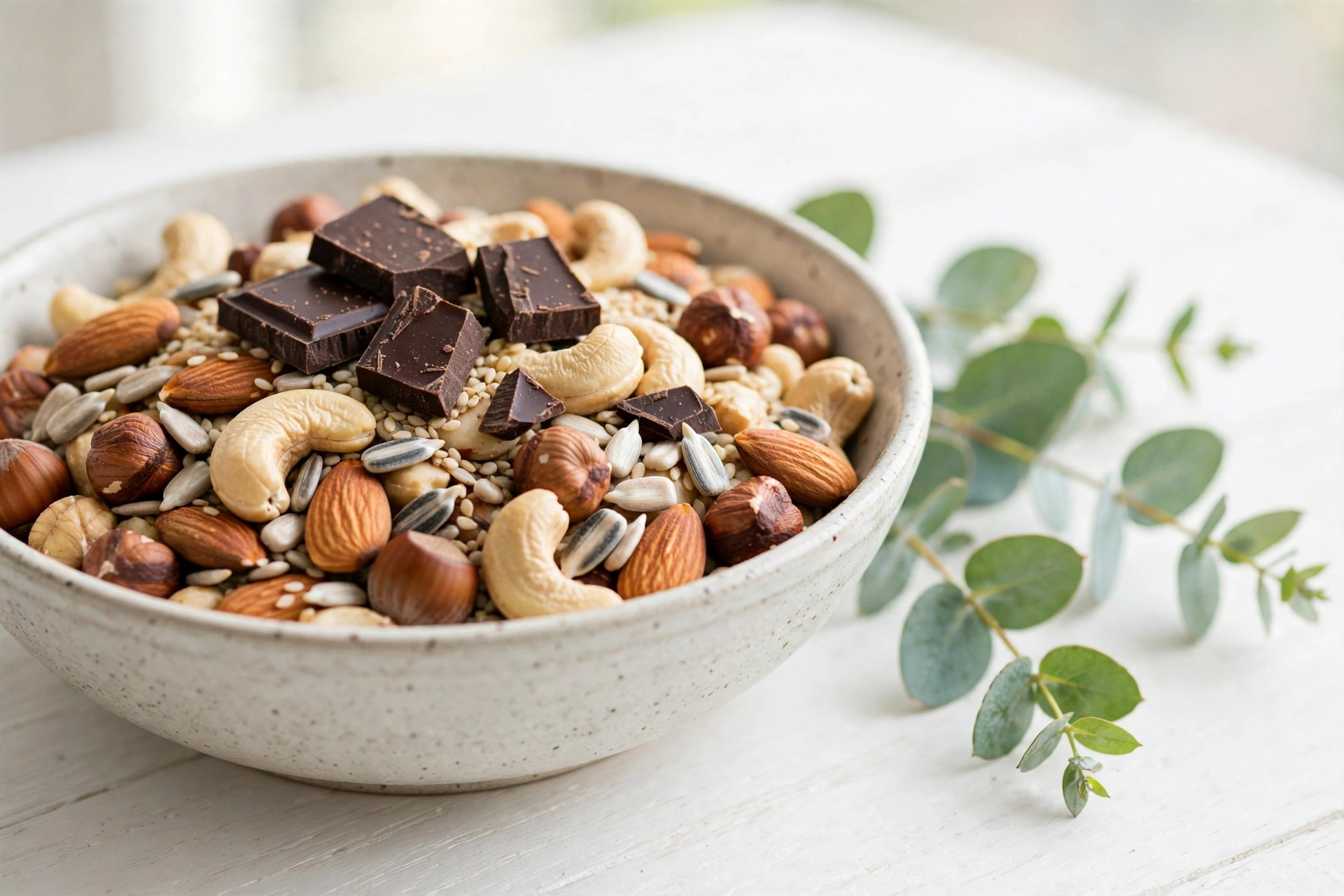
- Nuts and seeds: Cashews, almonds, hazelnuts, sesame seeds, and sunflower seeds are all good sources and easy to add to breakfast, salads, or snacks.
- Dark chocolate: Cocoa is naturally rich in copper, so a square or two of dark chocolate contributes.
- Mushrooms: Shiitake and other mushrooms add copper along with B vitamins and fibre, and work in almost any savoury dish.
- Whole grains: Whole wheat bread, oats, quinoa, and brown rice provide copper in modest amounts, and they add up across the day.
- Legumes: Chickpeas, lentils, and beans offer copper together with fibre, protein, and iron.
- Potatoes and leafy greens: Potatoes with their skins on, spinach, and kale add smaller amounts that still count toward your daily total.
An easy copper-rich day
A day like this covers copper naturally: oatmeal with cashews and dark chocolate for breakfast, a chickpea and spinach salad with wholegrain bread for lunch, a small handful of mixed nuts as a snack, and a mushroom stir-fry with quinoa — or a shellfish dish once or twice a week — for dinner.
For more, see our guide to iron-rich foods, benefits, and best sources — the two minerals work together.
Copper vs zinc: a balance that matters
Copper and zinc are partners that compete for the same doorway in your gut. When zinc intake is very high for a long time — usually from high-dose zinc supplements, not from food — it can block copper absorption and slowly push copper levels down. That is one of the most common causes of copper deficiency in otherwise healthy people.
The reverse is rarer, since copper supplements are seldom taken in such large doses. The lesson is simple: do not take high-dose single-mineral supplements for months without medical advice. A balanced diet, or a standard multivitamin if your doctor suggests one, keeps the two in balance far better.
Our guide to zinc benefits, deficiency, and best food sources explains the zinc side of this balance in detail, including how much zinc food normally provides.
Do you need a copper supplement?
For most people, the answer is no. Food covers copper needs easily, and supplements are only useful when a deficiency has been confirmed — for example by a blood test, or when a doctor has found a malabsorption problem or a medication that interferes with copper.
Too much copper from supplements can cause nausea, stomach pain, and, over time, liver problems. Copper from food has not been linked to these problems, because the body absorbs it more slowly and food portions are naturally limited. Food is the safe route; supplements are a medical decision.
Be especially careful if you already take a zinc supplement, a multivitamin that contains copper, or medicines that affect mineral absorption. Tell your doctor or pharmacist about everything you take, and do not combine several copper-containing products without asking first.
Key takeaways
- Copper is a trace mineral needed in small amounts for red blood cells, immunity, collagen, iron use, and energy.
- Deficiency is rare in healthy adults, but high-dose zinc, malabsorption, or very restricted diets can cause it.
- Watch for fatigue, anaemia that does not improve with iron, frequent infections, pale skin, and brittle hair.
- The best sources are oysters and shellfish, liver, cashews and other nuts, seeds, dark chocolate, mushrooms, whole grains, and legumes.
- Food is the safe route — supplements can cause nausea and liver problems in excess, so take them only if a doctor advises it.
- Keep copper and zinc in balance: avoid long-term high-dose zinc supplements without medical advice.
Frequently asked questions
1. What is copper good for?
Copper helps your body make red blood cells, supports the immune system, builds collagen for skin and bones, helps absorb iron, and supports energy production. It is a trace mineral, so you only need a small amount each day, and most of it comes from ordinary foods like nuts, shellfish, and whole grains.
2. What are the signs of copper deficiency?
The most common signs are fatigue, anaemia that does not improve with iron alone, frequent infections, pale skin, and brittle hair. Numbness or tingling can appear in more serious, long-term cases. Because these signs overlap with other conditions, a blood test and a doctor's advice are the right way to confirm a deficiency.
3. Which foods are highest in copper?
Oysters and other shellfish are the richest sources, followed by liver, cashews, almonds, sesame and sunflower seeds, dark chocolate, mushrooms, whole grains, and legumes. A handful of nuts or a serving of shellfish can cover a good share of your daily needs, so a varied diet usually provides enough.
4. Can too much zinc cause copper deficiency?
Yes. Zinc and copper compete for absorption in the gut, so long-term high-dose zinc supplements can block copper and slowly lower copper levels. This is one of the most common causes of copper deficiency in healthy people. Food zinc does not cause this problem — it is the high-dose supplements that matter, so do not take them for months without medical advice.
5. Do I need a copper supplement?
Most people do not. Food provides enough copper, and supplements are only needed when a deficiency has been confirmed by a doctor, for example with a blood test or a malabsorption condition. Too much copper from supplements can cause nausea and liver problems, so never take a copper supplement without medical advice.
6. Can I get too much copper from food?
It is very unlikely. The body absorbs copper from food more slowly, and normal food portions are naturally limited. Excess copper problems almost always come from supplements or contaminated water, not from a normal diet. Eating copper-rich foods like oysters, nuts, and dark chocolate in ordinary amounts is safe.



Comments (0)
No comments yet. Be the first to share your thoughts!
Leave a comment