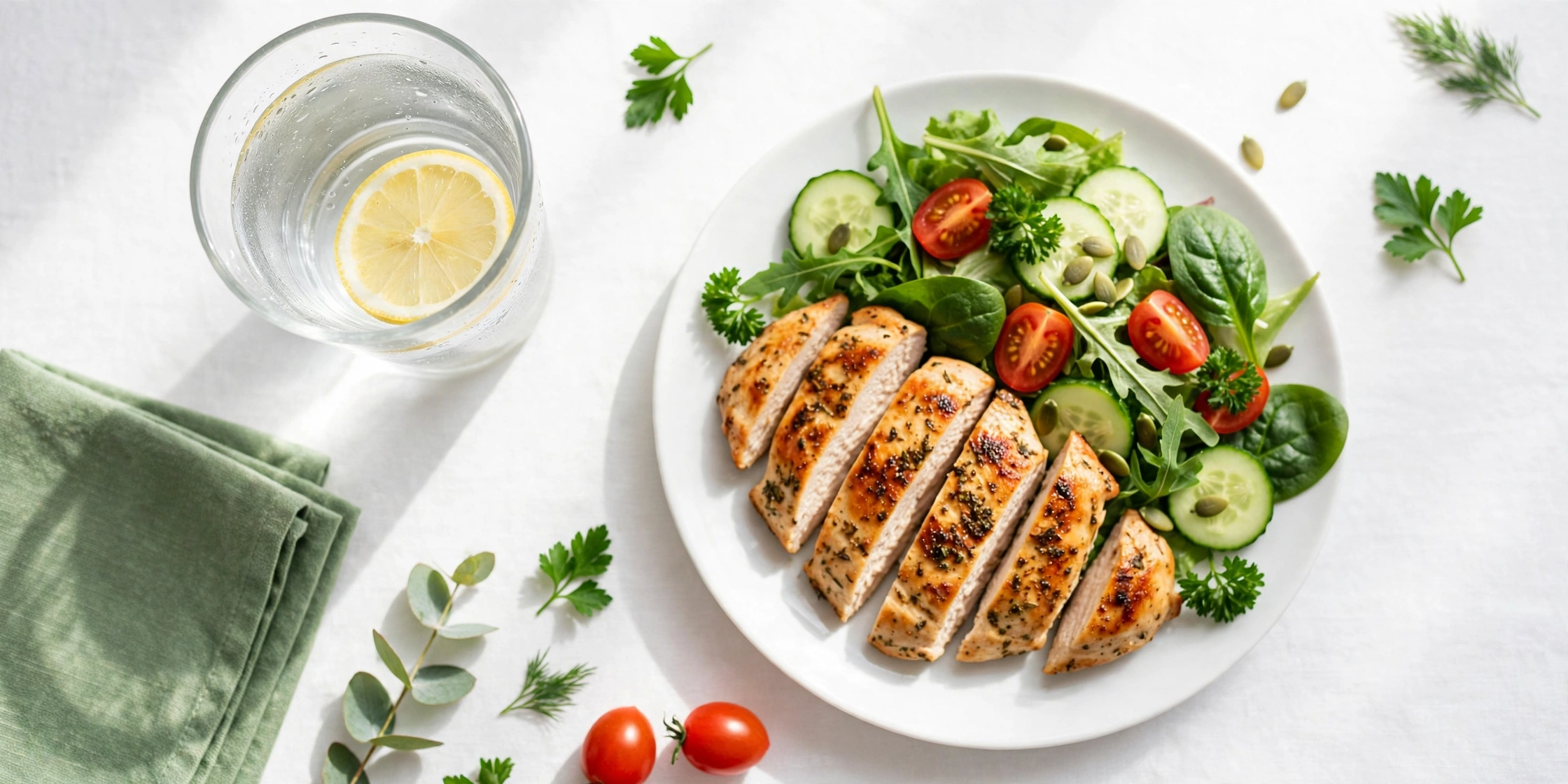
Drinking water during meals does not harm digestion for most people, and it can modestly help weight loss by filling you up so you eat less. Water does not dilute your stomach acid enough to slow digestion, and your stomach adjusts on its own. The real risk is not water — it is sugary drinks served with the meal.
 Does drinking water during meals dilute stomach acid?
The idea that water dilutes stomach acid sounds logical, but your stomach is built to handle it. Stomach acid is very strong — around pH 1.5 to 2 — and a glass or two of water raises that pH only slightly and briefly. Your stomach responds by producing more acid as needed, so digestion carries on normally. There is no good evidence that drinking a normal amount of water with a meal weakens digestion in healthy people.
The myth probably survives because it feels true: a full stomach with a lot of liquid can feel heavy, and people blame the water. In reality, the heaviness usually comes from the size of the meal, eating too fast, or very fatty foods — not from the glass of water beside the plate.
What happens to digestion when you drink water with food?
Water is not a bystander in digestion — it is part of the process. It helps you chew and swallow, softens food so stomach acid and enzymes can reach it, and carries dissolved nutrients through the gut. Fibre, in particular, needs water to do its job: without enough fluid, a high-fibre meal can leave you bloated and constipated instead of satisfied.
- Water helps soften food and move it smoothly through the digestive tract.
- It supports stomach acid and enzymes rather than working against them.
- It helps fibre absorb water and keep bowel movements regular.
- It prevents the mild dehydration that often shows up as tiredness or headaches after meals.
Drinking water during meals and weight loss
This is where a glass of water at the table genuinely helps. Water fills space in your stomach, which sends fullness signals to your brain — and people who drink water before or during a meal often eat a little less without trying. The effect is modest, not dramatic, but it adds up: saving even 50–100 calories at a meal, day after day, is a real contribution to a calorie deficit. Our guide on does drinking water help you lose weight looks at the evidence in detail.
The biggest win, though, is what water replaces. A glass of water has zero calories, while a soft drink or sweetened juice with the same meal can add 150 calories or more — and liquid calories barely register as fullness. Swapping one sugary drink a day for water is one of the simplest weight-loss changes there is, and you can track your daily water intake with the water intake calculator.
How to use water to eat less
- Drink a full glass of water 20–30 minutes before a meal, then sip during it.
- Eat slowly — it takes about 20 minutes for fullness signals to register.
- Keep a jug of water on the table instead of a bottle of soft drink.
- If you are still hungry after a meal, wait ten minutes and drink some water first — thirst is often mistaken for hunger.
The calories are in the drink, not the water
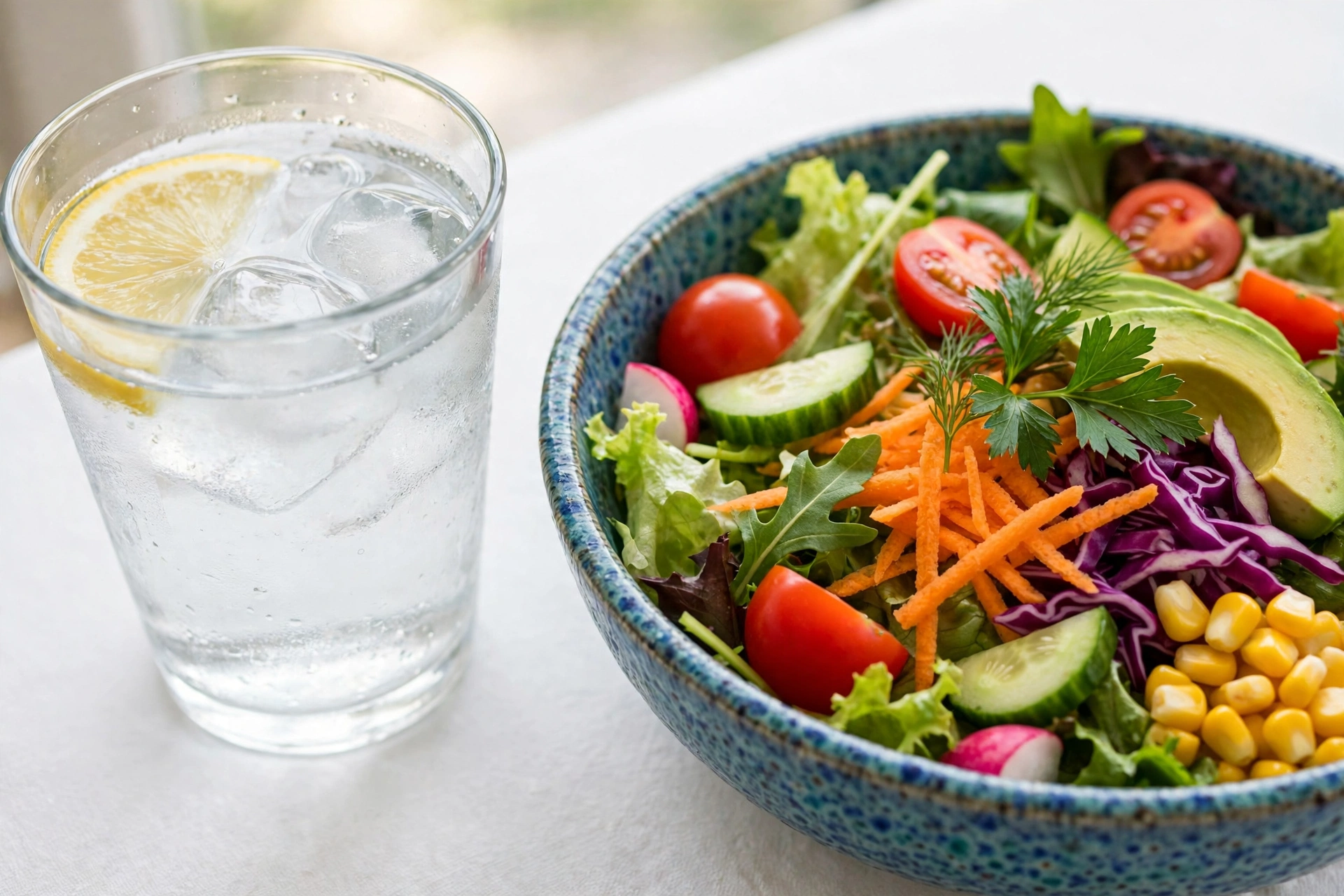
Smoothies, milkshakes, sweetened teas and alcohol all count towards your daily calories, even though they feel like drinks rather than food. A large sweetened coffee with a meal can contain as many calories as a small snack. Water, sparkling water and unsweetened tea are the only drinks that add nothing — which is why they are the best choice at the table when weight loss is the goal.
How much water should you drink with meals?
One glass of about 200–250 ml with each meal is a sensible guide for most adults, with more if the meal is salty, spicy or high in fibre. Your total daily needs depend on your size, activity and the weather, but there is no need to force down litres during a meal. Sip steadily through the day instead, and let thirst be your main guide. If you want the wider picture, check how your water intake fits into your overall calorie needs with the BMR and TDEE calculator and our guide to what a calorie deficit is and how to create one safely.
When water with meals can be a problem
For most people, water with meals is harmless — but there are exceptions. If you have acid reflux, a large volume of liquid with food can increase pressure in the stomach and make heartburn worse; smaller sips are usually fine. People who have had weight-loss surgery are often told to avoid drinking with meals, because liquid can wash food through the stomach too quickly and reduce fullness. And gulping a litre of water in one go with a big meal can leave anyone bloated and uncomfortable.
The practical rule is simple: sip, do not gulp. Small, steady sips during the meal help digestion without adding pressure, and most of your daily water should come between meals anyway.
 Key takeaways
- Drinking water during meals does not dilute stomach acid enough to harm digestion in healthy people.
- Water is part of digestion — it softens food, helps enzymes work and keeps fibre doing its job.
- A glass of water before or during a meal can help you eat a little less, supporting weight loss.
- The real calorie danger at the table is sugary drinks, not water — swapping them out saves 150 calories or more per meal.
- About one glass (200–250 ml) per meal is a sensible guide; sip steadily through the day.
- Sip, do not gulp — and take smaller sips if you have acid reflux or have had weight-loss surgery.
Frequently asked questions
Does drinking water during meals dilute stomach acid?
No, not in any way that matters. A glass or two of water raises stomach acidity only slightly and briefly, and your stomach simply produces more acid to compensate. There is no good evidence that drinking a normal amount of water with a meal weakens digestion in healthy people.
Is it better to drink water before or during a meal?
Both work, and you can do both. A glass of water 20–30 minutes before a meal may help you eat a little less, while sipping during the meal keeps food moving and helps you swallow comfortably. Avoid drinking a very large volume all at once, which can leave you bloated.
Can drinking water with meals help you lose weight?
Yes, modestly. Water fills space in your stomach, so you tend to eat a little less, and it replaces sugary drinks that would otherwise add calories. It is a helpful habit, not a magic solution — lasting weight loss still needs an overall calorie deficit, which you can plan with the BMR and TDEE calculator.
Should I avoid water with meals if I have acid reflux?
You do not need to avoid water, but smaller sips are better than large volumes, which can raise pressure in the stomach and worsen heartburn. Carbonated water can also make reflux worse for some people. If heartburn is frequent or severe, talk to your doctor.
How much water should I drink with each meal?
About one glass, or 200–250 ml, is a good guide for most adults. Your total daily needs depend on your size, activity level and the weather. Drink steadily through the day rather than forcing large amounts at mealtimes, and let thirst guide you.
Does cold water slow down digestion?
There is no good evidence that cold water slows digestion. Your body warms the water to body temperature quickly, and digestion continues normally. Some people simply find very cold drinks uncomfortable with a meal — room-temperature water is a perfectly good choice.



Comments (0)
No comments yet. Be the first to share your thoughts!
Leave a comment