

Yes, you can lose weight without exercise. Weight loss comes down to a calorie deficit — using more energy than you eat — and food creates that deficit far more easily than workouts do. Eat more protein, control portions, cut liquid calories, sleep well, and move more in daily life, and you can lose weight without setting foot in a gym.
 Why you can lose weight without a workout
Your body burns energy all day, even at rest — this is your total daily energy expenditure: the energy needed to stay alive, digest food, and move around. When you eat fewer calories than this total, your body covers the gap by using stored fat. That gap is called a calorie deficit, and it is the one requirement for weight loss.
Exercise raises your daily energy use, which is why it helps, but it is not the only way to create a deficit. A single large meal can easily add 800 calories, while an hour of brisk walking burns roughly 250 to 350 — so food is usually the bigger lever. The BMR and TDEE calculator estimates how many calories your body uses each day. For a fuller explanation, read our guide on what a calorie deficit is and how to create one safely.
Three food changes that create a calorie deficit
1. Eat protein at every meal
Protein is the most filling nutrient, and it helps you keep muscle while losing fat. Include a protein source at every meal: eggs or Greek yogurt at breakfast, chicken, fish, beans, lentils, or tofu at lunch and dinner. A protein-rich breakfast alone often cuts snacking later in the day. If you are unsure how much you need, see our guide on how much protein to eat for fat loss.
2. Control portions without counting everything
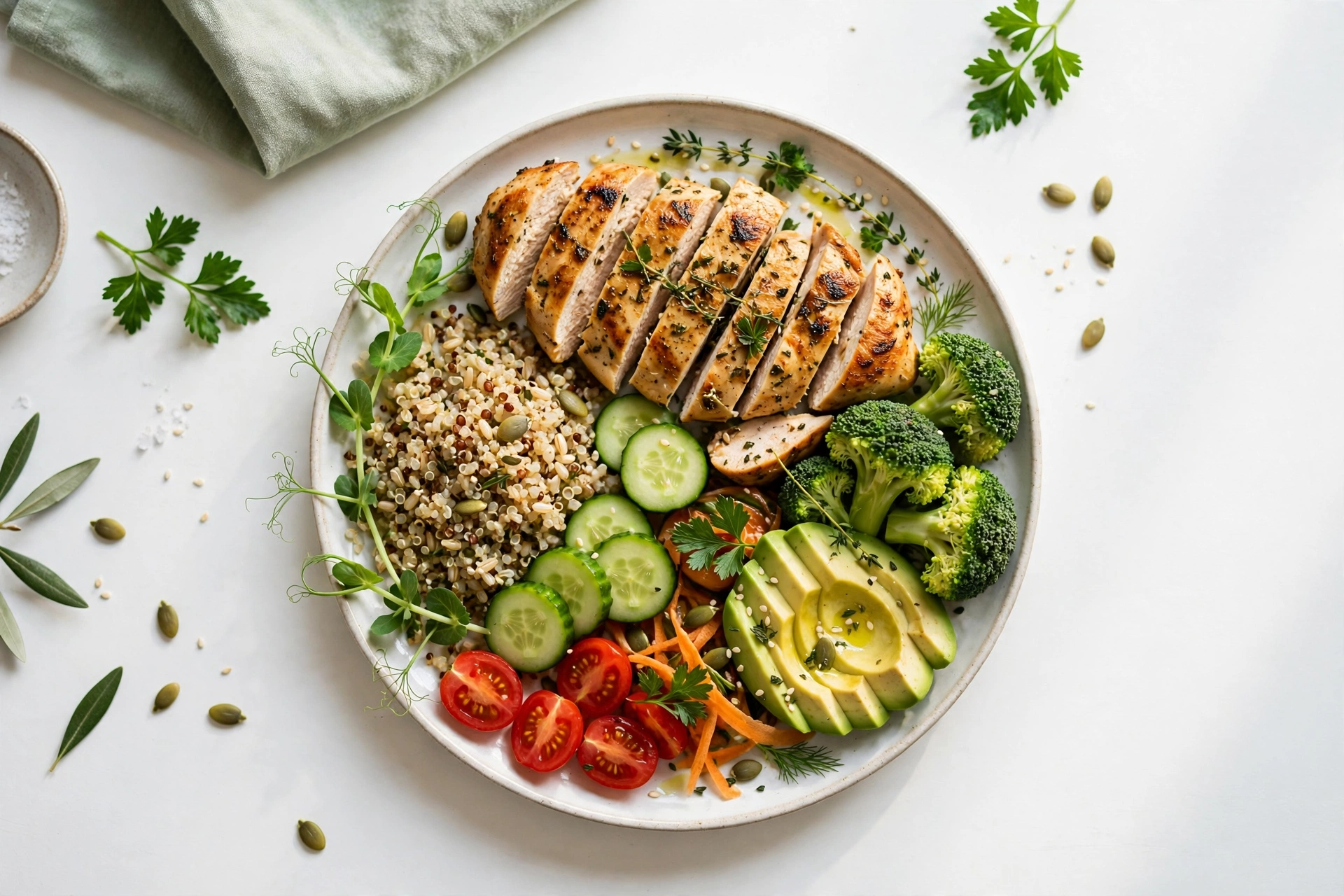
You do not need to weigh every gram of food. Fill half the plate with vegetables or salad, a quarter with protein, and a quarter with whole grains or starchy vegetables. Use smaller plates, serve food in the kitchen, and wait ten minutes before taking seconds. These small habits quietly cut hundreds of calories a day.
3. Cut liquid calories
Sugary drinks, juices, flavoured coffees, and alcohol add calories without filling you up. A large sweetened coffee can contain as many calories as a small meal. Swap them for water or unsweetened tea, and keep a bottle nearby — thirst is often mistaken for hunger. Add lemon, cucumber, or mint if plain water bores you. You can track your daily intake with the water tracker.
Change how — and when — you eat
4. Eat slowly and without screens
It takes about twenty minutes for fullness signals to reach your brain, so eating quickly or in front of a screen makes it easy to finish a large portion before you feel full. Put your fork down between bites and give your meal your full attention. Mindful eaters usually eat less and feel more satisfied afterwards.
5. Plan your meals ahead
Most overeating happens when you are hungry and nothing is ready to eat. Plan three meals and one or two snacks for the next day, keep healthy options visible, and shop with a list. Cooking a big pot of soup or grains at the weekend gives you ready-made lunches for days. A plan removes decisions when willpower is low — exactly when takeaway menus look most tempting.
6. Follow a regular eating schedule
Eating at roughly the same times each day helps your hunger settle into a rhythm. Three balanced meals and a planned snack, with a few hours between meals instead of grazing all day, work well for many people. Set a kitchen closing time — for example, no food after 8 or 9 pm — and brush your teeth to mark the end of eating. Our best eating schedule to lose weight guide shows a simple daily plan.
 Sleep, stress, and everyday movement
7. Sleep seven to nine hours
Short sleep raises the hunger hormone ghrelin and lowers leptin, which signals fullness — so tired people eat more and crave sweet, fatty foods. Aim for seven to nine hours, keep regular bed and wake times, and avoid screens in the last hour before bed. Good sleep is one of the most underrated weight-loss tools there is.
8. Manage stress before it manages your eating
Stress raises cortisol, which can increase appetite and push cravings toward comfort food. You cannot remove all stress, but you can change your response to it. A short walk, a few slow breaths, or ten minutes outside often breaks the urge to eat. If you always reach for food after a hard day, write down what you feel first — naming the feeling often weakens the craving.
9. Add everyday movement (NEAT)
You do not need a gym to move more. Walking, taking the stairs, standing while you work, cleaning, and gardening can add hundreds of calories of energy use a day. Walk while you phone, get off the bus one stop early, and stand up every hour. Ten minutes of walking after each meal also helps digestion and blood sugar.
What to do when your weight stalls
A plateau is normal. As you lose weight, your body needs fewer calories, so your original deficit slowly shrinks. First, be patient: weight can stay flat for two weeks even when fat loss continues, because water retention hides it. Then check the basics — portions may have crept up and snacks may have returned. Tracking food for a few days with the calorie tracker or the meal log usually shows where the extra calories come from. If everything looks right, trim about 100 to 200 calories a day or add a daily walk. Avoid crash diets: cutting too hard leads to hunger, muscle loss, and rebound weight gain.
Key takeaways
- Weight loss needs a calorie deficit, and food creates it more easily than exercise.
- Protein at every meal keeps you full and protects muscle.
- Smaller portions, fewer liquid calories, and planned meals cut calories.
- Seven to nine hours of sleep and lower stress reduce cravings.
- Everyday movement — walking, stairs, standing — adds up.
- Plateaus are normal: check portions, track for a few days, then adjust gently.
Frequently asked questions
Can you lose weight without exercise?
Yes. Weight loss depends on a calorie deficit, and you can create one through food alone. Exercise helps your health, fitness, and mood, and makes keeping weight off easier, but it is not required to lose weight.
How big should my calorie deficit be?
A moderate deficit of about 300 to 500 calories a day suits most people and leads to steady, sustainable loss of roughly 0.5 kg per week. Larger deficits can work short term but often cause hunger, tiredness, and muscle loss. Use the BMR and TDEE calculator to find your maintenance level first, then subtract from there.
How fast will I lose weight without exercise?
Most people lose about 0.5 to 1 kg per week with a steady moderate deficit. Faster loss is possible at the start, partly from water, but it usually slows down. If the scale barely moves for two to three weeks, review portions and tracking before changing anything drastic.
Will I lose muscle if I don't exercise?
Some muscle loss is possible, but you can limit it by eating enough protein — around 1.6 to 2.2 grams per kilogram of body weight a day for most active adults — and by staying generally active with walking and daily movement. Even simple bodyweight exercises at home, such as squats and push-ups, help protect muscle.
What is the easiest way to cut calories without feeling hungry?
Start with protein and fibre: vegetables, salads, soups, whole grains, beans, and lean protein add volume to meals for relatively few calories. Drink water before meals, eat slowly, and cut liquid calories first, since those calories never fill you up. Planning meals ahead also removes impulsive high-calorie choices.
Do I need to count calories forever?
No. Many people count calories for a few weeks to learn portion sizes and spot hidden calories, then switch to plate rules and habits that keep them on track. If your weight creeps back up, a short period of tracking with a calorie log usually shows what changed and gets you back on course.






Comments (0)
No comments yet. Be the first to share your thoughts!
Leave a comment