

Yes, eggs can be good for weight loss. One large egg has about 70 calories and around 6 grams of protein, so eggs are filling for very few calories. They work best as part of a balanced diet inside a calorie deficit, where you eat slightly fewer calories than your body burns each day.

Why eggs can help with weight loss
Eggs are one of the most practical weight-loss foods because they combine three useful qualities: high protein, low calorie density, and real nutrients. A food that keeps you full on few calories makes it easier to stay in a calorie deficit without feeling hungry all day. That is the whole challenge of losing weight — not willpower, but finding meals that satisfy you on fewer calories.
Protein keeps you full for longer
Protein is the most filling of the three macronutrients, and eggs are a complete protein, meaning they provide all nine essential amino acids your body cannot make on its own. A protein-rich breakfast tends to reduce hunger later in the morning, which can mean fewer snacks and smaller portions at lunch. Many people find that swapping a sugary breakfast for eggs changes the whole day, because the mid-morning crash and the cravings that come with it simply do not arrive. If you want to know how much protein your own plan needs, read our guide on how much protein you need for fat loss.
Low in calories, high in volume
Two large eggs give you about 140 calories and 12 grams of protein. Compare that with a pastry or a sweetened breakfast cereal, which can easily pass 300 or 400 calories while leaving you hungry again within an hour. Eggs give you a real, satisfying portion for a modest number of calories, which is exactly what a calorie deficit needs. You are not eating less food — you are choosing foods that give you more fullness per calorie.
Packed with nutrients
Eggs also supply vitamin B12, vitamin D, choline, selenium, and lutein. Choline supports normal liver function and brain health, while lutein is linked to eye health. This matters during weight loss, because when you eat fewer calories, every calorie should work harder for you. A food that delivers protein and micronutrients together is a better deal than a food that delivers calories alone.
How eggs fit into a calorie deficit
Eggs alone do not cause weight loss. Weight loss happens when you consistently eat fewer calories than you burn — a state called a calorie deficit. Eggs help because they make that deficit easier to live with: they are filling, quick to cook, cheap, and easy to plan around. The egg is a tool, not a magic food, and it works best when the rest of the day is built around the same idea.
Before changing your portions, it helps to know your numbers. Use our BMR and TDEE calculator to estimate how many calories your body burns each day, then track what you actually eat with our calorie tracker. For a full step-by-step explanation, read what a calorie deficit is and how to create one safely. A modest deficit of a few hundred calories a day is more sustainable than a drastic cut, and it is far more likely to last.
- Start with your maintenance calories — the number of calories that keeps your weight steady.
- Aim for a small daily deficit — enough to lose weight gradually, not so large that you feel exhausted or constantly hungry.
- Build meals around protein — eggs, lean meat, fish, beans, or Greek yogurt at each meal.
- Keep the foods you enjoy — a plan you hate is a plan you quit.
How many eggs a day?
For most healthy adults, one to three eggs a day fits comfortably into a balanced diet. There is no single number that suits everyone, because the right amount depends on the rest of your diet, your total calories, and your health. Eggs contain dietary cholesterol, but for most people dietary cholesterol has a much smaller effect on blood cholesterol than saturated fat and overall diet quality do.
If you have high cholesterol, heart disease, or diabetes, talk to your doctor about how many eggs make sense for you. The same advice applies if you take cholesterol-lowering medication. A practical approach for everyone else is to vary your protein sources across the week — eggs on some days, fish, chicken, beans, or yogurt on others — rather than eating eggs at every single meal.
What eggs do for your morning
Breakfast is where eggs do their best work. A breakfast built around eggs and vegetables keeps blood sugar steadier than a breakfast built around refined sugar, and steady energy means fewer cravings before lunch. People who eat a protein-rich breakfast often report that they snack less and find it easier to make good choices later in the day. None of this requires a complicated recipe: two boiled eggs, a slice of whole-grain bread, and a tomato can be ready in minutes.

How to eat eggs for weight loss
How you cook eggs matters as much as how many you eat. The cooking method decides whether your eggs stay a low-calorie food or turn into a high-calorie one, so choose methods that add flavour without adding much fat.
Best methods
- Boiled — no added fat at all, easy to prepare in advance, and perfect for snacks and salads.
- Poached — cooked in simmering water, soft and satisfying with nothing added.
- Scrambled in a non-stick pan — use a light spray of oil or a small amount of cooking spray instead of a large knob of butter.
- Baked or as an omelette — fill with spinach, mushrooms, tomatoes, peppers, or herbs for volume without many calories.
Methods to use sparingly
- Fried in butter — butter adds a lot of calories and saturated fat for very little extra fullness.
- Fried in a pool of oil — the egg absorbs the oil, and the calories climb quickly.
- Loaded with cheese and bacon — the egg is no longer the problem; the additions are.
What to avoid adding to eggs
Eggs themselves are rarely the reason a breakfast becomes high in calories. The extras are. A spoonful of butter, a handful of grated cheese, two rashers of bacon, and a white roll can double or triple the calories of the eggs underneath them. None of these foods is forbidden, but when the goal is weight loss, they deserve a smaller role.
- Butter and cream — use a light spray of oil, or cook in a good non-stick pan.
- Processed meats — bacon and sausage add salt, saturated fat, and many calories; save them for occasional meals.
- Large amounts of cheese — a little grated cheese adds flavour, but a heavy layer adds hundreds of calories.
- White bread and pastries on the side — swap for whole-grain bread or extra vegetables.
- Sugary sauces — ketchup and sweet chilli sauce add sugar; try hot sauce, mustard, herbs, or salsa instead.
A simple sample day with eggs
You do not need a strict meal plan to make eggs work for weight loss. One egg-based meal a day, usually breakfast, is enough to feel the difference. Here is what a simple day can look like:
- Breakfast: two boiled eggs, whole-grain toast, and a tomato and cucumber salad.
- Lunch: a large salad with grilled chicken or chickpeas, olive oil, and lemon.
- Snack: Greek yogurt with berries, or an apple with a handful of nuts.
- Dinner: baked fish or lentils with roasted vegetables and a small portion of rice.
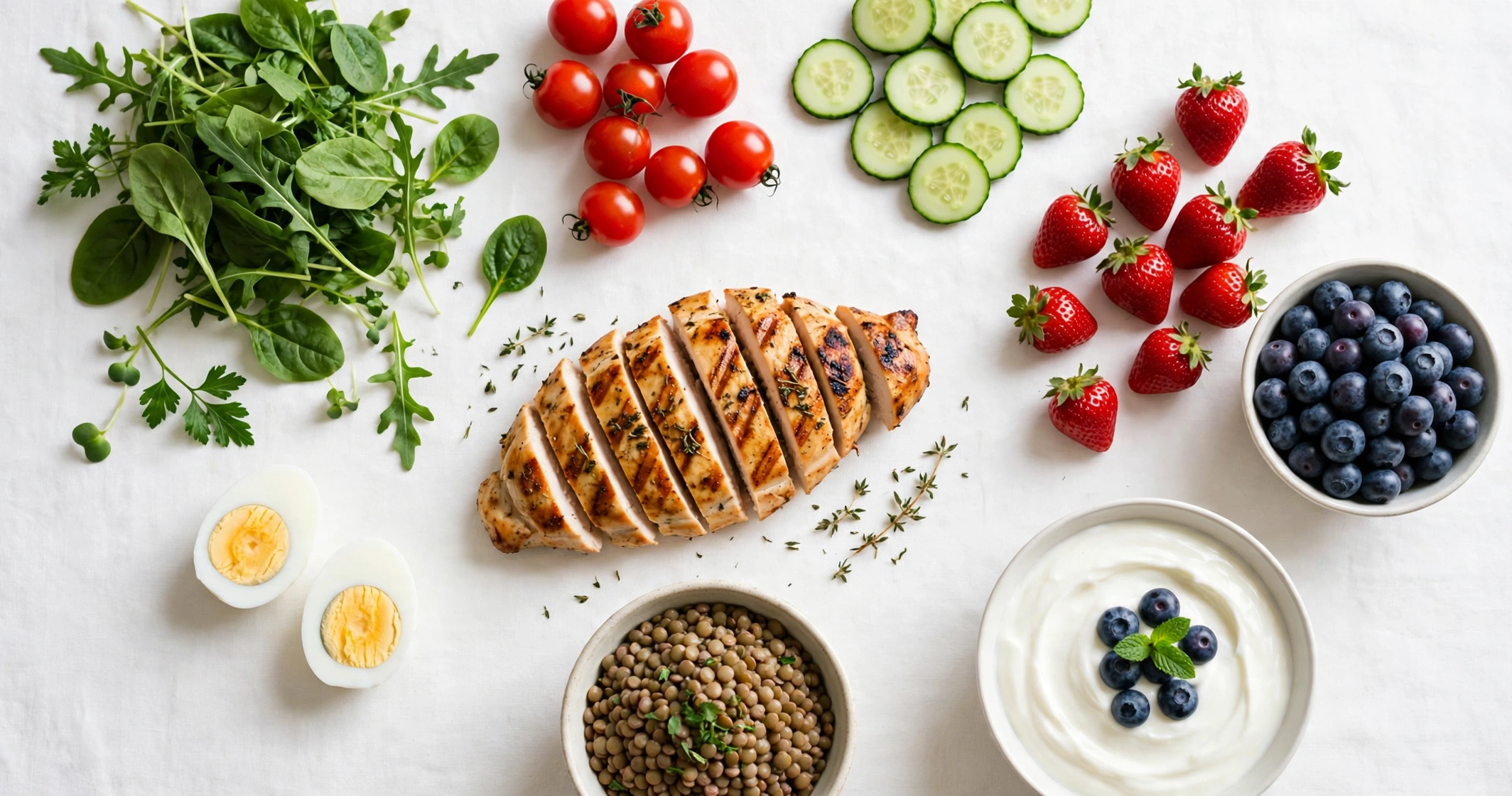
Notice that the day is built around protein and vegetables at every meal, with room for foods you enjoy. Eggs are the easy win at breakfast; the rest of the day follows the same pattern without feeling like a diet.
Key takeaways:
- Eggs are high in protein and low in calories — about 70 calories and 6 grams of protein each.
- They help weight loss by keeping you full, which makes a calorie deficit easier to maintain.
- One to three eggs a day suits most healthy adults as part of a varied diet.
- Boiled, poached, or lightly scrambled eggs are best; frying in butter adds many calories.
- Watch the extras — cheese, bacon, butter, and white bread — more than the eggs themselves.
Frequently Asked Questions
Are eggs good for weight loss?
Yes, eggs can support weight loss because they are high in protein and low in calories, which helps you feel full for longer. They work best inside a calorie deficit, where you eat slightly fewer calories than you burn. Eggs alone do not cause weight loss, but they make a lower-calorie diet much easier to follow.
How many eggs can I eat a day to lose weight?
For most healthy adults, one to three eggs a day fits well into a balanced, calorie-controlled diet. The right number depends on your total calories and the rest of your diet. If you have high cholesterol or heart disease, ask your doctor what amount is right for you.
Is it better to eat eggs in the morning for weight loss?
Eating eggs at breakfast is often the most helpful choice, because a protein-rich breakfast can reduce hunger and snacking later in the day. That said, eggs can help at any meal. The most important thing is your total daily calories and protein, not the exact time you eat eggs.
Are boiled eggs better than fried eggs for weight loss?
Yes. Boiled and poached eggs add no extra fat, so they stay low in calories. Fried eggs cooked in butter or a lot of oil absorb the fat and carry many more calories. If you like fried eggs, use a non-stick pan with a light spray of oil instead of butter.
Can I eat eggs every day?
Most healthy adults can eat eggs daily as part of a varied diet. It is still a good idea to vary your protein sources across the week, with fish, chicken, beans, lentils, or yogurt on some days. Variety gives you a wider range of nutrients and keeps meals interesting.
Do eggs raise cholesterol?
Eggs contain dietary cholesterol, but for most people dietary cholesterol has a smaller effect on blood cholesterol than saturated fat and overall diet quality. Eating eggs in moderation, as part of a diet rich in vegetables, whole grains, and healthy fats, is considered fine for most healthy adults. If you have a cholesterol condition, follow your doctor's advice.





Comments (0)
No comments yet. Be the first to share your thoughts!
Leave a comment