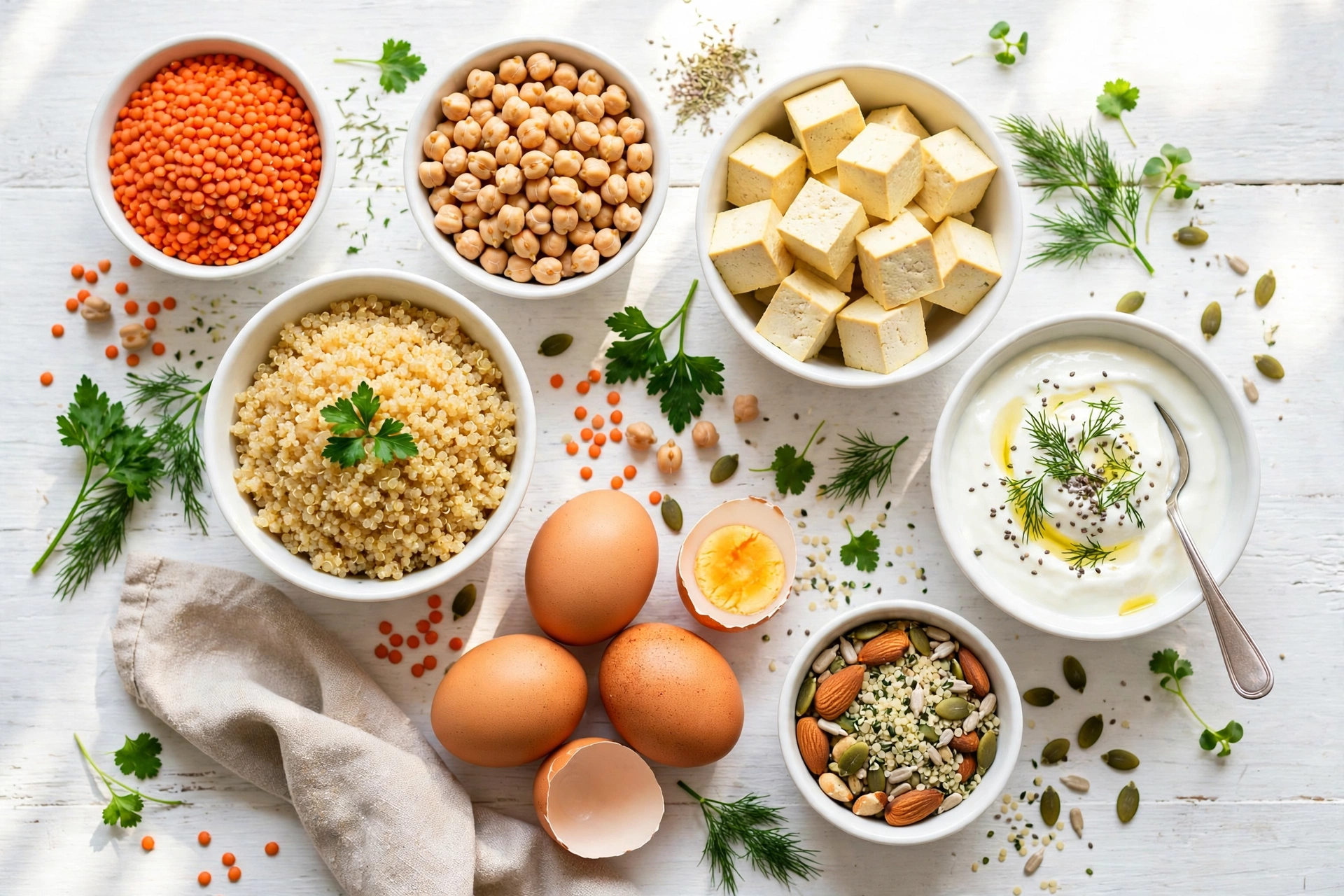
Quick answer: High protein vegetarian foods such as lentils, chickpeas, Greek yogurt, paneer, tofu, quinoa, and edamame deliver roughly 8–20 grams of protein per serving. Because they combine protein with fiber, they keep you feeling full for hours. This guide ranks the 15 best vegetarian protein sources and shows how to build satisfying, muscle-friendly meals from them.
Eating enough protein without meat is easier than most people think. Many high protein vegetarian foods match or beat eggs on a per-serving basis, and their natural fiber slows digestion so you stay satisfied long after the meal. Whether you're fully vegetarian, cutting back on meat, or training hard and need extra protein, this guide covers the 15 best sources — with honest protein counts, smart pairing tips, and simple meal ideas that actually fill you up.
 Key Takeaways
- The leaders: tempeh, lentils, paneer, edamame, chickpeas, Greek yogurt, and tofu deliver roughly 8–20g of protein per serving.
- Why they fill you up: protein plus fiber slows digestion and steadies hunger signals — a combination most snacks can't match.
- Complete protein is simple: pair legumes with grains across the day (rice with dal, hummus with whole-grain pita). You don't need every amino acid in a single meal.
- Watch the extras: fried or cheese-heavy options add calories quickly, so track portions with the NutriCounter tracker and keep protein goals from becoming a calorie surplus.
Why High Protein Vegetarian Foods Keep You Fuller
Protein is the most filling of the three macronutrients. Research consistently finds that higher-protein meals lower hunger hormones and raise fullness signals more than equal-calorie, carb-heavy meals. Vegetarian protein sources add a second advantage: fiber. Beans, lentils, and chickpeas slow stomach emptying even further, which is why a bowl of dal with rice keeps you satisfied far longer than the same calories from white bread. That one-two punch also explains why fiber-rich foods support weight loss and gut health at the same time.
Volume and chewing matter too. Whole vegetarian foods — crunchy edamame, chewy tempeh, thick Greek yogurt — take longer to eat and digest than shakes or bars, giving fullness signals time to reach your brain.
The 15 Best High Protein Vegetarian Foods
Protein figures below are approximate values for common servings — exact numbers vary by brand and preparation. All are naturally meat-free and easy to find in most grocery stores.
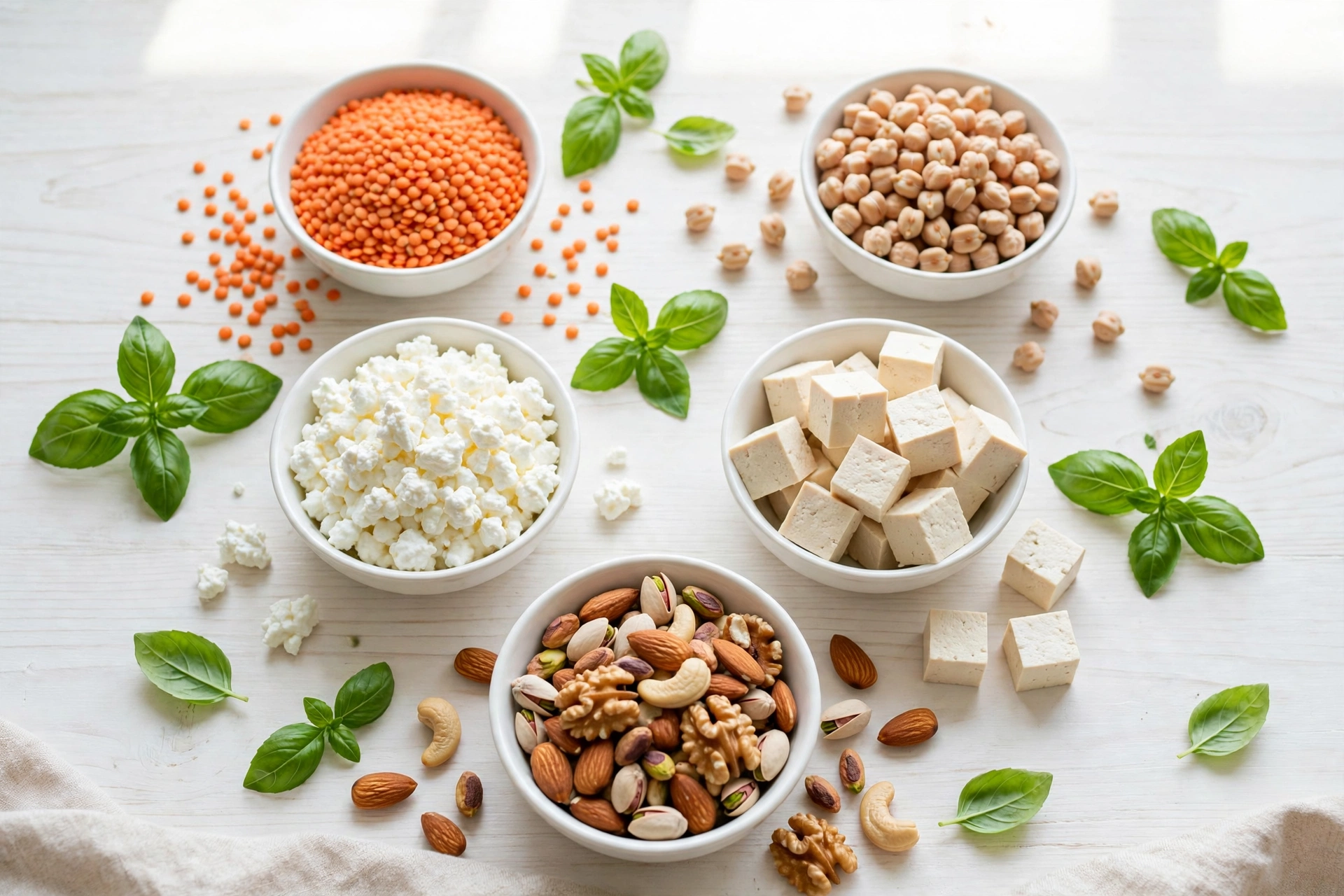
- Tempeh (~19g per 100g). Fermented soybeans pressed into a firm, nutty cake — the highest-protein food here. Slice and pan-fry for salads, wraps, and stir-fries.
- Lentils (~9g per 100g cooked). Red, green, or brown lentils cook in 20 minutes with no soaking. Perfect for dals, soups, and salads.
- Paneer (~18g per 100g). Firm fresh cheese that holds up in curries and grills. See also our guide to 10 high-protein desi foods for building muscle.
- Edamame (~11g per 100g cooked). Young soybeans, steamed and lightly salted — a genuinely filling snack and a great salad topper.
- Chickpeas (~9g per 100g cooked). The backbone of hummus and chana masala. One cup also delivers about 12g of fiber.
- Black beans and kidney beans (~9g per 100g cooked). Cheap, hearty, and versatile — the base of great chili, burrito bowls, and bean salads.
- Greek yogurt (~10g per 100g). Strained thick for roughly double the protein of regular yogurt. Choose plain and add your own fruit.
- Cottage cheese (~11g per 100g). Mild and creamy — excellent in sweet bowls or on savory toast.
- Firm tofu (~8g per 100g). Press, season boldly, and bake or fry until crisp. Takes on any flavor, from soy-garlic to tikka spices.
- Quinoa (~4.5g per 100g cooked). A seed that cooks like a grain and brings all nine essential amino acids. Use it anywhere you'd use rice.
- Soy milk (~3.5g per 100ml). The only plant milk that rivals dairy on protein. Pick unsweetened to avoid added sugar.
- Pumpkin seeds (~9g per 30g handful). Crunchy and mineral-rich — sprinkle over salads, oats, and yogurt.
- Hemp seeds (~10g per 30g serving). Mild and nutty; stir into smoothies or oatmeal for an effortless boost.
- Peanuts (~7g per 30g handful). Technically a legume and one of the most protein-dense snacks. Natural peanut butter counts too — just watch portions.
- Oats (~5g per 40g serving). Top oatmeal with Greek yogurt, peanut butter, and seeds, and breakfast alone can pass 20g of protein.
How to Combine High Protein Vegetarian Foods for Complete Nutrition
Most plant proteins are "incomplete," meaning they're low in one or more essential amino acids. The fix is simpler than old advice suggested: you don't need to combine foods in every single meal. Eating a variety of high protein vegetarian foods across the day — grains plus legumes plus seeds — gives your body all the amino acids it needs.
 Classic pairings make this effortless: rice with dal or rajma, hummus with whole-grain pita, peanut butter on whole-wheat toast, or black beans with corn tortillas. Dairy and soy (paneer, yogurt, tofu, tempeh, edamame) are complete proteins on their own, so including even one of them daily covers your bases. If you want to check how your meals stack up, look up any food's full nutrition profile in the NutriCounter nutrition database.
Simple High-Protein Meal Ideas
- Breakfast: Greek yogurt with oats, peanut butter, and pumpkin seeds (~25g protein).
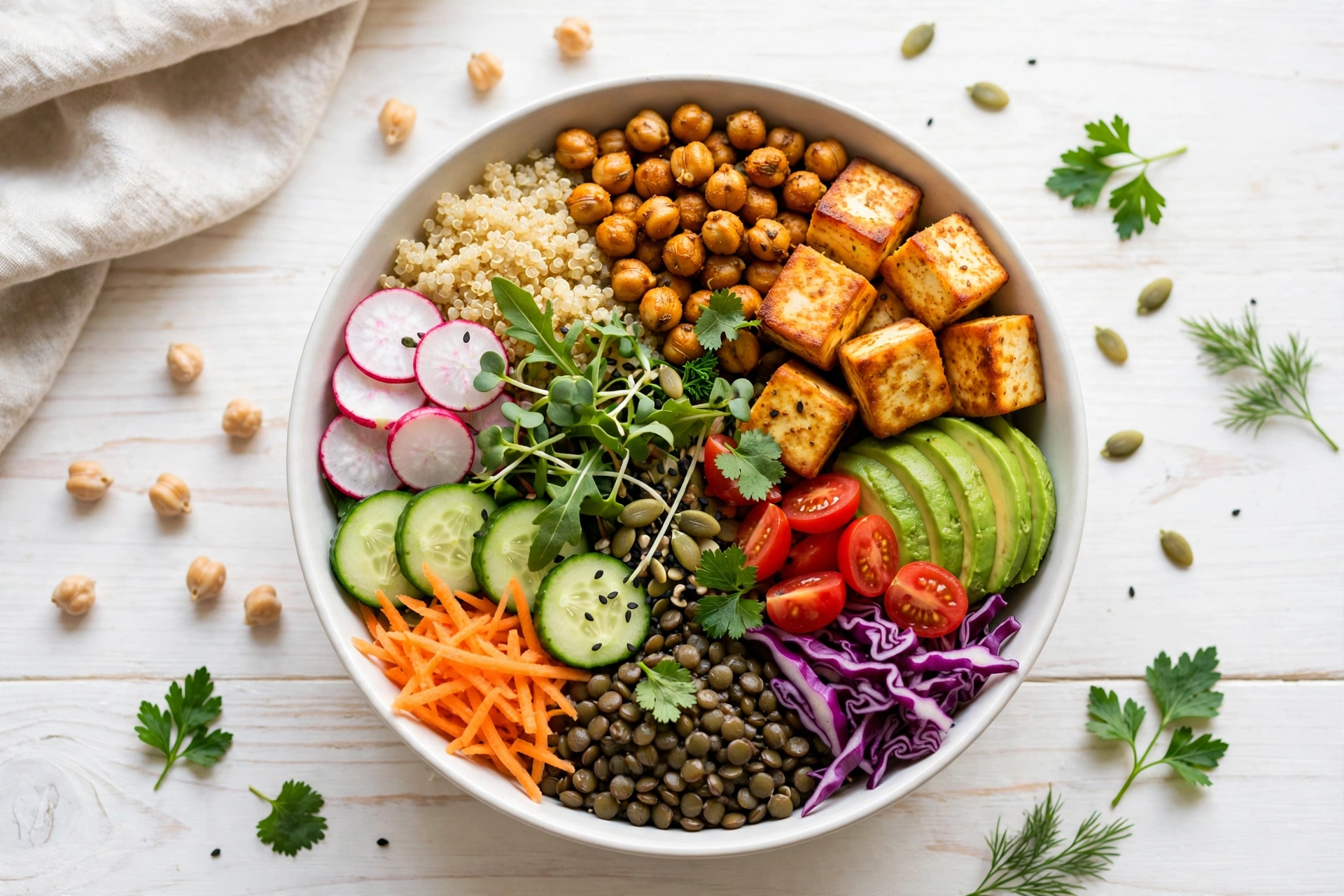
- Lunch: Quinoa buddha bowl with roasted chickpeas, edamame, and tahini dressing (~22g protein).
- Dinner: Palak paneer or tofu tikka with brown rice and dal (~25g protein).
- Snacks: Roasted edamame, a handful of peanuts, or cottage cheese with fruit (~8–12g protein each).
These are rough estimates — exact totals depend on your portions. Logging a few typical days shows you exactly where you stand and which meals need a boost.
Mistakes That Stall Your Protein Goals
Three traps catch vegetarians most often. First, relying on cheese alone — protein-rich, but calories add up fast without much fiber. Second, skipping legumes over gas or prep time; rinsing canned beans and starting with small portions of lentils solves most of this. Third, eating "vegetarian" junk — fries and pastries are meat-free but won't keep you full. Build plates around the 15 foods above, and protein takes care of itself.
Getting enough protein without meat isn't a compromise — with the right staples, it's simply how satisfying eating works. Stock your kitchen with lentils, beans, tofu or paneer, yogurt, and seeds, and every meal starts with a protein head start.


Comments (0)
No comments yet. Be the first to share your thoughts!
Leave a comment