
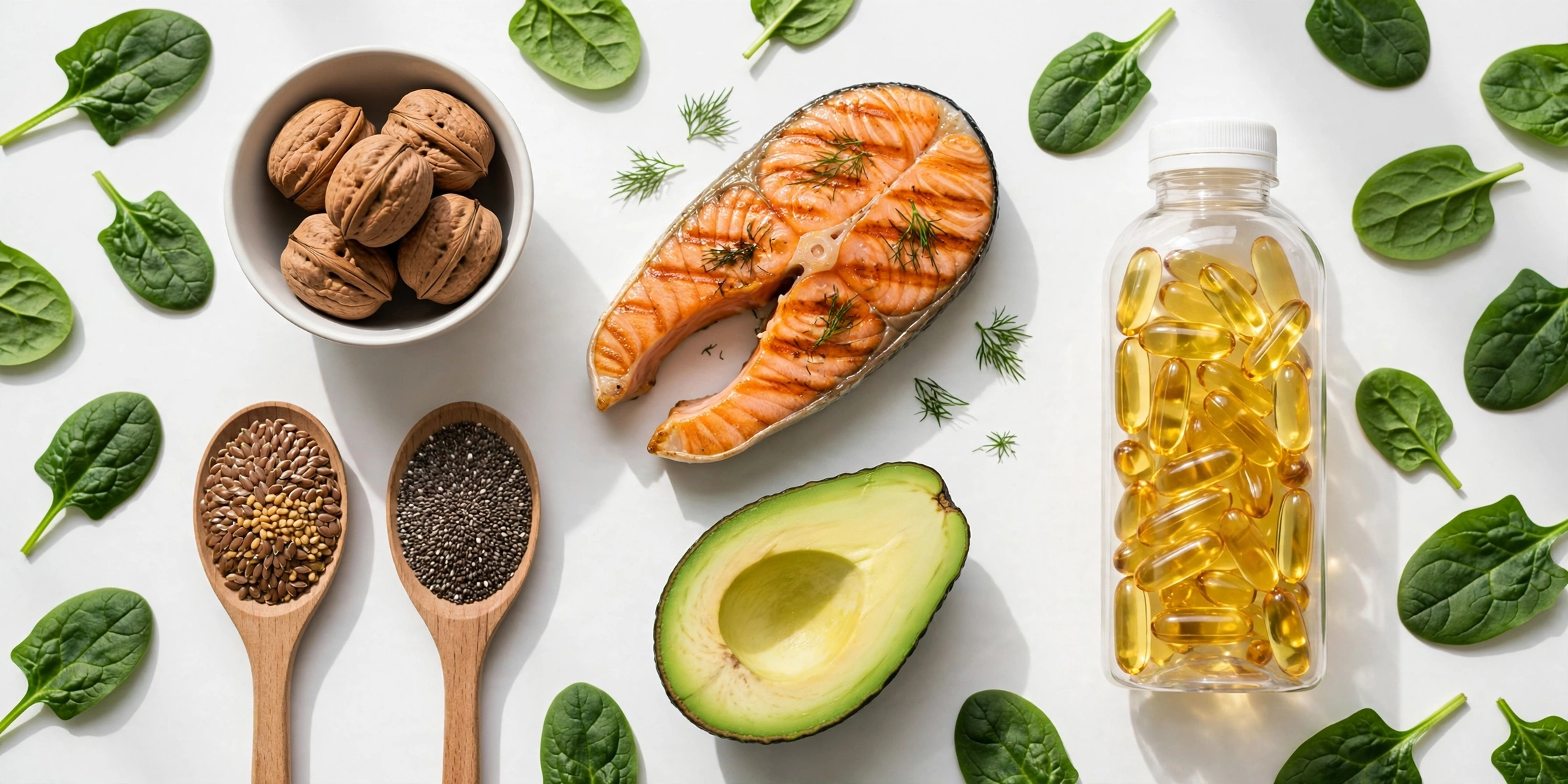
Omega-3 fatty acids support heart, brain, and eye health and help keep inflammation in balance. Most adults benefit from about 250–500 mg of combined EPA and DHA per day — roughly what two servings of fish per week provide — while the plant omega-3 ALA has a separate daily target of about 1.1 grams for women and 1.6 for men.
Omega-3 benefits are among the most talked-about claims in nutrition — but what do these fats actually do for your body, and how much do you need? This guide covers the evidence-backed omega-3 benefits, the best food sources with serving ideas, sensible daily targets, and how to choose a supplement without wasting money.
You'll learn what the three main omega-3s (ALA, EPA, and DHA) are, which benefits hold up scientifically, how to get enough from food — including vegetarian options — and what to check on a supplement label, plus who should talk to a doctor before taking high doses.
What Are Omega-3 Fatty Acids?
Omega-3 fatty acids are a family of polyunsaturated fats your body needs but cannot make efficiently on its own, which is why nutritionists call them essential. Three types matter most for human health: ALA (alpha-linolenic acid), found mainly in plant foods; EPA (eicosapentaenoic acid) and DHA (docosahexaenoic acid), found mainly in fatty fish and algae.
The key difference is what your body can do with each. EPA and DHA are the forms your tissues use directly. ALA must first be converted into EPA and then DHA — and in humans that conversion is inefficient, with only a small fraction of ALA making the full journey. That's why people who eat no fish need to pay extra attention to their omega-3 strategy, as we'll cover below.
If you want a broader refresher on dietary fats first, our healthy fats vs unhealthy fats guide explains where omega-3s fit into the bigger picture.
Evidence-Backed Omega-3 Benefits
Omega-3s have been studied for decades. Here's what the evidence actually supports — stated carefully, without miracle claims.
Heart health
The strongest evidence surrounds the heart. EPA and DHA help maintain healthy triglyceride levels and support normal blood pressure, and regular fish consumption is associated with better cardiovascular outcomes in large population studies. They are not a substitute for medication or an overall heart-healthy lifestyle, but they rank among the better-supported nutrients in cardiology research.
Brain health and mood
DHA is a major structural component of the brain. Adequate intake is linked to healthy cognitive function across the lifespan, and several studies associate higher omega-3 intake with better mood, including in depression research. Evidence for preventing cognitive decline is promising but not yet conclusive — treat bold marketing claims with skepticism.
Eye health
DHA is also highly concentrated in the retina, where it supports the structure of photoreceptor cells. Getting enough omega-3s — especially DHA — is considered part of good long-term eye nutrition, and adequate intake during pregnancy and infancy supports normal visual development in children.
Inflammation balance
EPA and DHA are converted by the body into signaling molecules called resolvins and protectins that help resolve inflammation once an infection or injury has passed. In plain terms, omega-3s don't simply "switch off" inflammation — they help the body's inflammatory response start and finish properly. This is one reason they're studied in conditions where chronic, low-grade inflammation plays a role.
Pregnancy and early development
DHA is in high demand during pregnancy and breastfeeding because the developing baby's brain and eyes need it. Health authorities in many countries advise pregnant women to eat low-mercury fatty fish regularly, or to discuss an algae-based DHA supplement with their doctor if they don't eat fish.
Best Food Sources for Real Omega-3 Benefits
Food first is the golden rule: fish delivers EPA and DHA in the form your body uses directly, along with protein, vitamin D, and selenium. Here are the standouts, with practical serving ideas:
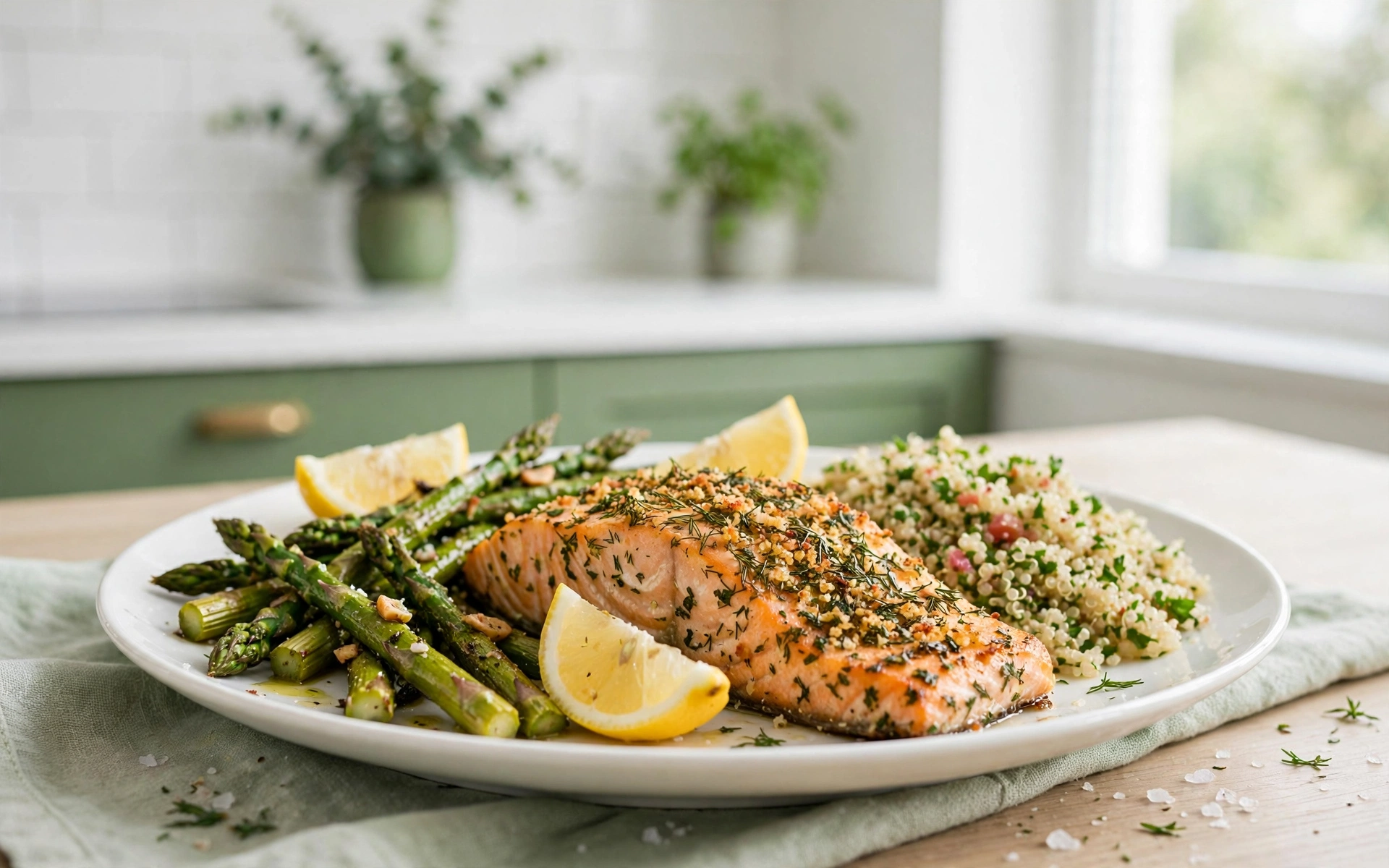
- Salmon — the classic: a palm-sized fillet (120–150 g), baked or grilled, covers much of the week's target. Canned salmon costs less and works too.
- Mackerel — one of the richest sources; try it smoked on whole-grain toast or grilled with lemon.
- Sardines — cheap, sustainable, eaten bones-and-all for calcium; great on salads or toast with mustard.
- Herring, anchovies, and trout — all solid; anchovies melt into pasta sauces without a fishy taste.
- Walnuts — the best nut source of ALA; a small handful (30 g) on oatmeal or salads.
- Ground flaxseeds — a tablespoon in smoothies or porridge; buy ground or grind yourself, as whole seeds pass through undigested.
- Chia seeds — another ALA star; try overnight chia pudding or a spoonful in lemon water.
- Hemp seeds — mild-tasting; sprinkle over soups and grain bowls.
Look up any food's nutrient profile with the food nutrition lookup tool, and track weekly fish intake with the nutrition tracker.
How Much Omega-3 Do You Need Per Day?
There is no single official RDA for EPA and DHA in most countries, which is why recommendations vary. Still, the guidance most often cited for general adult health is:
- 250–500 mg of combined EPA + DHA per day — the amount linked to general health benefits in research reviews, and roughly what two servings of fatty fish per week provide.
- About 1.1 g of ALA per day for women and 1.6 g for men — the adequate intake levels set for the plant-based omega-3.
Higher doses (1–4 g of EPA+DHA daily) are sometimes used under medical supervision for conditions like very high triglycerides — therapeutic doses, not DIY targets. Considering more than ~1 g of EPA+DHA daily from supplements? Talk to your doctor first.
Fatty fish is also one of few meaningful food sources of vitamin D — see our vitamin D deficiency guide.
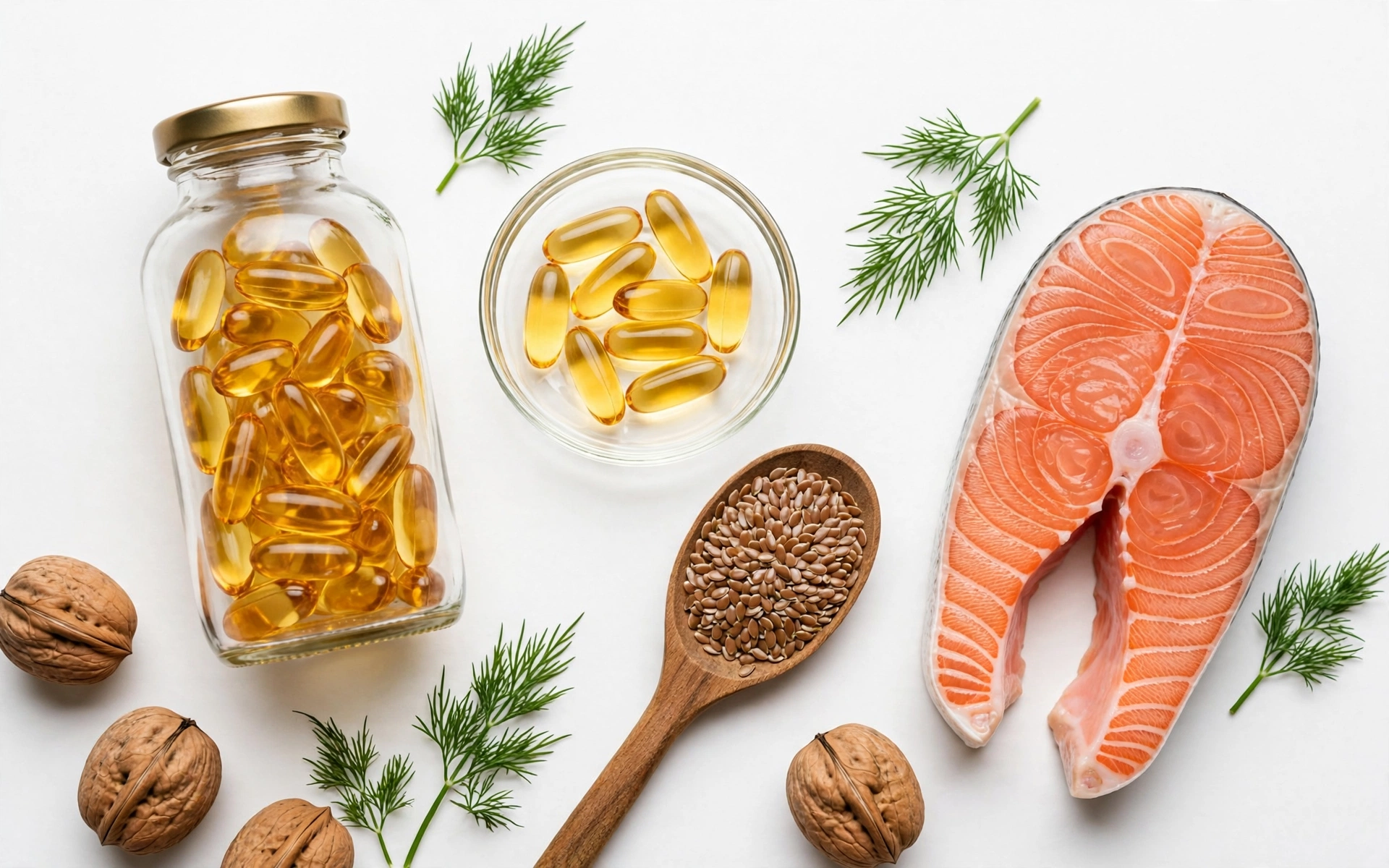
Omega-3 Supplements: Fish Oil, Krill Oil, and Algae Oil
If you rarely eat fish, a supplement can fill the gap — but not all omega-3 products are equal.
Fish oil
The most common and studied option. A standard capsule may list 1,000 mg of fish oil but contain only 300 mg of EPA+DHA — the front-of-bottle number isn't what matters. Check the facts panel for actual EPA and DHA content.
Krill oil
From tiny crustaceans; its omega-3s come mainly in phospholipid form, which some research suggests absorbs efficiently. Capsules are smaller but pricier per milligram of EPA+DHA than fish oil, and unsuitable with shellfish allergies.
Algae oil
The vegetarian/vegan choice: algae is where fish get their omega-3s. Typically provides DHA (some add EPA), is free of ocean contaminants, and has no fishy aftertaste.
What to look for on the label
- EPA + DHA per capsule — the real dose; ignore total "fish oil" milligrams.
- Third-party testing — IFOS, USP, or NSF seals mean independent purity and heavy-metal checks.
- Form — natural triglyceride form ("TG"/"rTG") is considered well absorbed; ethyl ester ("EE") is cheaper and still effective.
- Freshness — rancid oil smells strongly fishy and may do more harm than good; store cool and dark, don't stockpile for years.
Who Should Be Careful With Omega-3 Supplements?
Omega-3s are safe for most people at food-level and standard supplement doses, but a few groups should check with a doctor first:
- People on blood thinners (e.g. warfarin) — omega-3s mildly thin the blood; combined with anticoagulants, bleeding risk can rise. The most important caution.
- Upcoming surgery — surgeons often advise pausing omega-3s a week or two beforehand.
- Fish or shellfish allergies — choose algae oil over fish or krill oil.
- Pregnancy and breastfeeding — omega-3s are valuable; choose purified low-mercury products or algae oil and confirm with your doctor.
Common side effects are mild: fishy burps, slight nausea, or loose stools. Taking capsules with a meal that contains some fat usually solves the burps and improves absorption.
Key Takeaways
- Omega-3 benefits center on heart, brain, eyes, and healthy inflammation balance — EPA and DHA are the forms your body uses directly.
- Aim for ~250–500 mg combined EPA+DHA daily (two weekly servings of fatty fish), plus 1.1–1.6 g ALA from plant foods.
- Best sources: salmon, mackerel, sardines, herring, trout (EPA/DHA); walnuts, ground flaxseeds, chia, hemp seeds (ALA).
- Supplementing? Check actual EPA+DHA per capsule, choose third-party tested products, consider algae oil if vegetarian/vegan.
- On blood thinners or facing surgery? Talk to your doctor first.
Frequently Asked Questions
What's the difference between ALA, EPA, and DHA?
ALA is the plant-based omega-3 found in flaxseeds, chia seeds, and walnuts. EPA and DHA are the marine omega-3s found in fatty fish and algae, and they're the forms your body uses directly. Your body can convert ALA into EPA and DHA, but the conversion is inefficient, so fish eaters get EPA and DHA more reliably from food.
How much omega-3 do I need per day?
For general health, the commonly cited target is 250–500 mg of combined EPA+DHA per day — about what two weekly servings of fatty fish provide. For the plant-based ALA, the adequate intake is roughly 1.1 g daily for women and 1.6 g for men. Higher therapeutic doses should only be taken under medical supervision.
Can I get enough omega-3 without eating fish?
You can cover the ALA target easily with walnuts, ground flaxseeds, chia seeds, and hemp seeds. For EPA and DHA, though, plant foods alone usually fall short because ALA conversion is limited. Vegetarians and vegans should consider an algae-based DHA supplement — algae is where fish get their omega-3s in the first place.
Are omega-3 supplements safe?
Yes, for most people at standard doses. Mild side effects like fishy burps or slight nausea are the most common complaints and usually disappear when capsules are taken with meals. The main exception is people on blood-thinning medication, who should consult their doctor first because omega-3s can increase bleeding risk.
When is the best time to take an omega-3 supplement?
With a meal that contains some fat — breakfast, lunch, or dinner all work. Fat in the meal improves absorption and reduces fishy burps. Consistency matters more than timing: taking it at the same meal each day is the easiest way to build the habit.



Comments (0)
No comments yet. Be the first to share your thoughts!
Leave a comment