
Direct answer: Collagen is a structural protein that supports skin, joints, bones, and connective tissue. Your body makes it naturally, and a balanced diet rich in protein and vitamin C supports production. Collagen supplements may help some people, but they are not essential, and results vary.
Collagen is the most abundant protein in the human body. It acts like scaffolding, giving strength and structure to your skin, tendons, ligaments, cartilage, and bones. As you age, your body produces less of it, which is one reason skin loses firmness and joints may feel stiffer. The good news is that everyday food choices and healthy habits can support your body's own collagen production, and supplements are only one optional piece of the puzzle.
This guide explains what collagen does, which foods genuinely support it, and what the evidence says about supplements — without hype or miracle claims.

What Is Collagen?
Collagen is a family of proteins made mainly from three amino acids: glycine, proline, and hydroxyproline. Your body builds it from the protein you eat, with help from vitamin C, zinc, and copper. Without enough of these building blocks, collagen production slows down.
There are many types of collagen, but a few do most of the work:
The main types of collagen
- Type I: the most common type, found in skin, bones, tendons, and ligaments.
- Type II: found mainly in cartilage, the flexible tissue that cushions your joints.
- Type III: found in skin, muscles, and blood vessels, often alongside Type I.
- Type IV: found in the thin layers that support skin and organs.
Most collagen supplements are made from hydrolyzed collagen, also called collagen peptides. These are broken-down fragments that your body can absorb and use as amino acids, just like the protein from food.
Collagen Benefits for Skin, Joints, and Bones
Research on collagen is growing, and results are promising for some areas, though not dramatic or guaranteed. Here is what is reasonably supported:
Skin health and hydration
Collagen gives skin its firmness and elasticity. Some studies link regular collagen peptide intake over several weeks with modest improvements in skin hydration and elasticity. Results differ between people, and no supplement can replace sun protection, sleep, and a balanced diet.
Joint comfort and mobility
Cartilage relies on collagen for its structure. Some people with joint discomfort report feeling better after taking collagen peptides for a few months, and some studies support small improvements. Collagen is not a treatment for joint disease, and persistent joint pain deserves professional advice.
Bone strength
Bones are not just calcium — about a third of bone mass is collagen, which gives bones flexibility so they are less brittle. Enough protein, calcium, and vitamin D matters far more for bone health than any single supplement, though collagen may play a supporting role in a healthy diet.
Muscles, hair, and nails
Because collagen supplies glycine and proline, it can contribute to the amino acids your body uses for muscle maintenance. Some people also notice stronger nails or healthier-looking hair, though this evidence is weaker and often anecdotal. A varied, protein-adequate diet remains the foundation.
Best Food Sources for Collagen Benefits
Strictly speaking, only animal foods contain collagen itself, because plants do not make it. But plant foods still matter enormously, because vitamin C and other nutrients are essential for your body to build its own collagen. The smartest approach combines both: collagen-containing foods plus collagen-building nutrients.
Foods that contain collagen
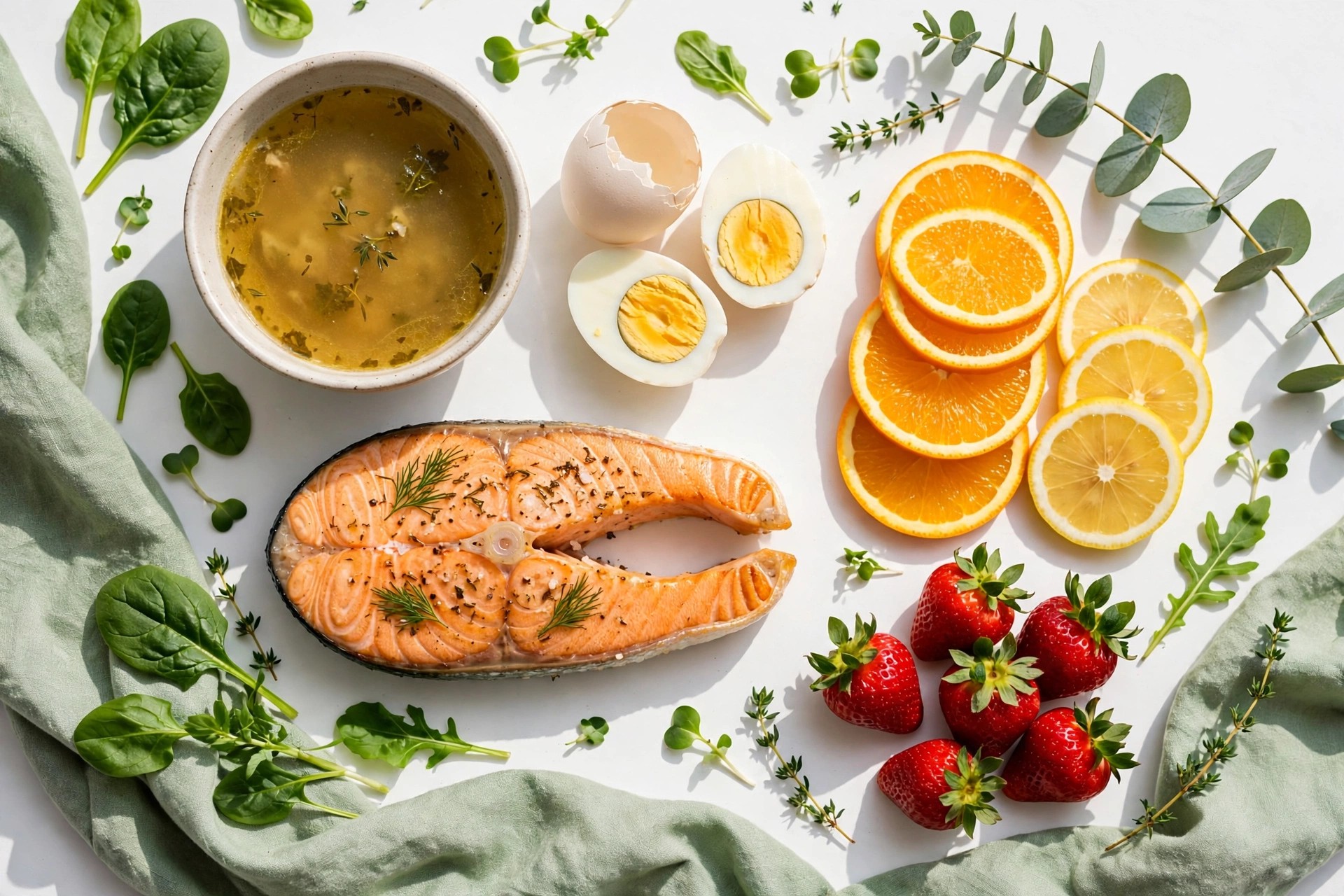
- Bone broth: made by simmering bones and connective tissue, bone broth is rich in collagen, gelatin, and amino acids. It is an easy, affordable way to add collagen to soups and stews.
- Chicken skin and slow-cooked meat: cuts cooked with skin, bones, and connective tissue — such as roast chicken, oxtail, or slow-cooked stews — naturally contain collagen.
- Fish and seafood: fish skin and sardines eaten whole provide collagen, and marine collagen supplements are usually made from fish skin and scales.
- Eggs: egg whites are rich in proline, one of the key amino acids used to build collagen.
- Gelatin: the cooked form of collagen, found in traditional jellies and desserts, and used as a thickener.
Foods that help your body make collagen
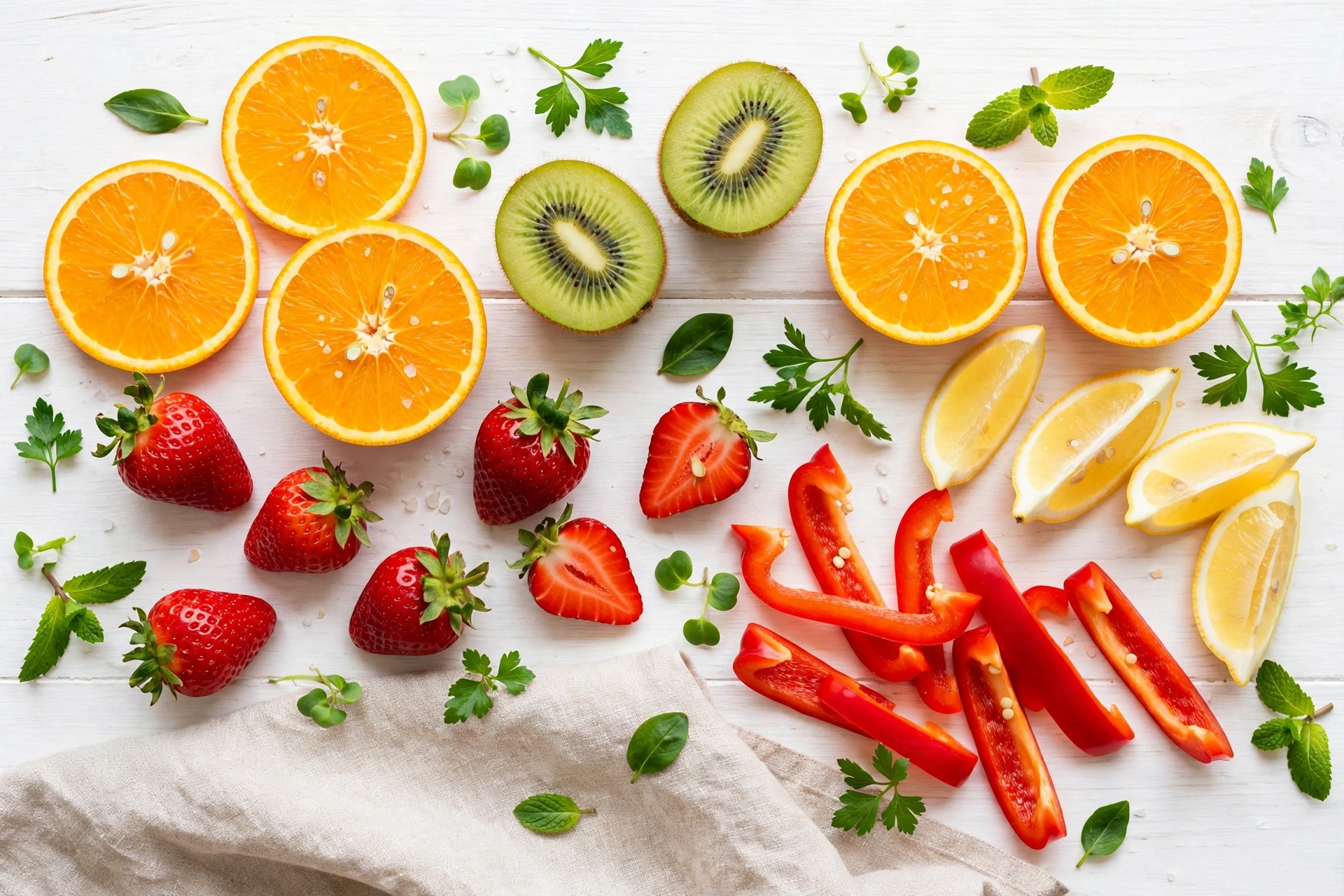
- Vitamin C-rich foods: citrus fruit, bell peppers, strawberries, kiwi, and broccoli. Vitamin C is essential for collagen synthesis, and deficiency leads to weak connective tissue. For more on this nutrient, see vitamin C benefits, deficiency, and food sources.
- Protein-rich foods: lean meat, fish, eggs, dairy, lentils, and beans supply the amino acids collagen is built from. If you are unsure how much protein you need, see how much protein you need for fat loss.
- Zinc and copper sources: shellfish, chickpeas, lentils, nuts, seeds, and whole grains support the enzymes involved in collagen formation.
- Colourful vegetables: leafy greens, tomatoes, carrots, and peppers add antioxidants that help protect existing collagen from damage.
Habits that protect collagen
- Protect your skin from the sun: ultraviolet light breaks down collagen faster than almost anything else. Daily sunscreen is one of the most effective collagen-protecting habits.
- Avoid smoking: smoking damages collagen and reduces blood flow to the skin.
- Limit added sugar: very high sugar intake promotes glycation, a process that stiffens collagen fibres.
- Sleep well and manage stress: poor sleep and chronic stress impair tissue repair in general.

Collagen Supplements: Do They Really Work?
Collagen supplements are among the most popular supplements in the world, but the honest answer is nuanced: they may help some people modestly, they are not essential, and they are not magic.
Most studies use hydrolyzed collagen peptides at roughly 5 to 10 grams per day for 8 to 12 weeks. Results for skin hydration, elasticity, and joint comfort are generally small but positive. Effects on hair, nails, and gut health are far less established. Importantly, your body does not send collagen peptides directly to your skin or joints — it breaks them down into amino acids and uses them where needed, like protein from food.
That means a collagen supplement cannot compensate for a poor diet. If your overall protein intake is low, fixing that matters more. If you already eat plenty of protein and vitamin C, a supplement may add only a small benefit.
How to choose a collagen supplement
- Pick hydrolyzed collagen peptides: these are easier to absorb than intact collagen or gelatin.
- Check the source: bovine collagen (from cattle) is rich in Types I and III; marine collagen (from fish) is mostly Type I; chicken collagen provides Type II. Choose based on your goal, and check for allergies.
- Look for third-party testing: supplement quality varies widely. A product tested by an independent lab is more trustworthy than one with only marketing claims.
- Watch for added sugar: flavoured collagen powders and gummies often contain significant added sugar — plain, unflavoured powder is usually the better choice.
- Be patient: if you try a supplement, allow at least 8 to 12 weeks before judging results, and keep expectations modest.
People who are pregnant, breastfeeding, taking medication, or managing a medical condition should check with a healthcare professional before starting any supplement. If you want to check whether your overall diet supports your goals, the calorie calculator can help you estimate your daily needs.
Key Takeaways
- Collagen is a structural protein that supports skin, joints, bones, and connective tissue, and your body makes less of it with age.
- The best collagen strategy starts with food: protein-rich foods, vitamin C, zinc, and copper, plus bone broth, fish, and eggs.
- Protecting collagen matters as much as building it — sunscreen, not smoking, and limiting excess sugar all help.
- Collagen supplements may offer modest benefits for skin and joints, but they are optional, not essential, and results vary.
- Choose tested, low-sugar products if you supplement, and give them at least 8 to 12 weeks before judging.
Frequently Asked Questions
What is collagen, and why does it matter?
Collagen is the main structural protein in your body, giving strength to skin, bones, tendons, ligaments, and cartilage. It matters because it keeps tissues firm, flexible, and resilient. As production declines with age, skin may lose firmness and joints may feel less comfortable, which is why diet and habits that support collagen get so much attention.
Can I get enough collagen from food alone?
Yes, for most people. A diet with adequate protein, plenty of vitamin C, and foods like bone broth, fish, and eggs gives your body everything it needs to make collagen. Supplements are optional, not required, and food provides other nutrients that powders do not.
Do collagen supplements really work for skin?
Some studies show modest improvements in skin hydration and elasticity after 8 to 12 weeks of collagen peptides, but results vary and are not dramatic. Supplements work best alongside sun protection, good sleep, and a balanced diet, not as a replacement for them.
Are collagen supplements safe?
Collagen peptides are generally well tolerated, with occasional mild digestive discomfort reported. However, supplement quality varies, and some products may contain allergens or contaminants. Choose third-party tested products, and check with a healthcare professional if you are pregnant, breastfeeding, or taking medication.
How long does it take to see results from collagen?
Most studies run for 8 to 12 weeks before measuring changes, so that is a realistic minimum trial period. If you notice no difference after three months, the supplement may simply not add much for you, and focusing on diet and lifestyle is likely more useful.
This article is general information only and is not medical advice. Supplement quality varies between brands, and individual needs differ. If you have a health condition, are pregnant or breastfeeding, or take medication, please check with a healthcare professional before starting a supplement or making major dietary changes.




Comments (0)
No comments yet. Be the first to share your thoughts!
Leave a comment