
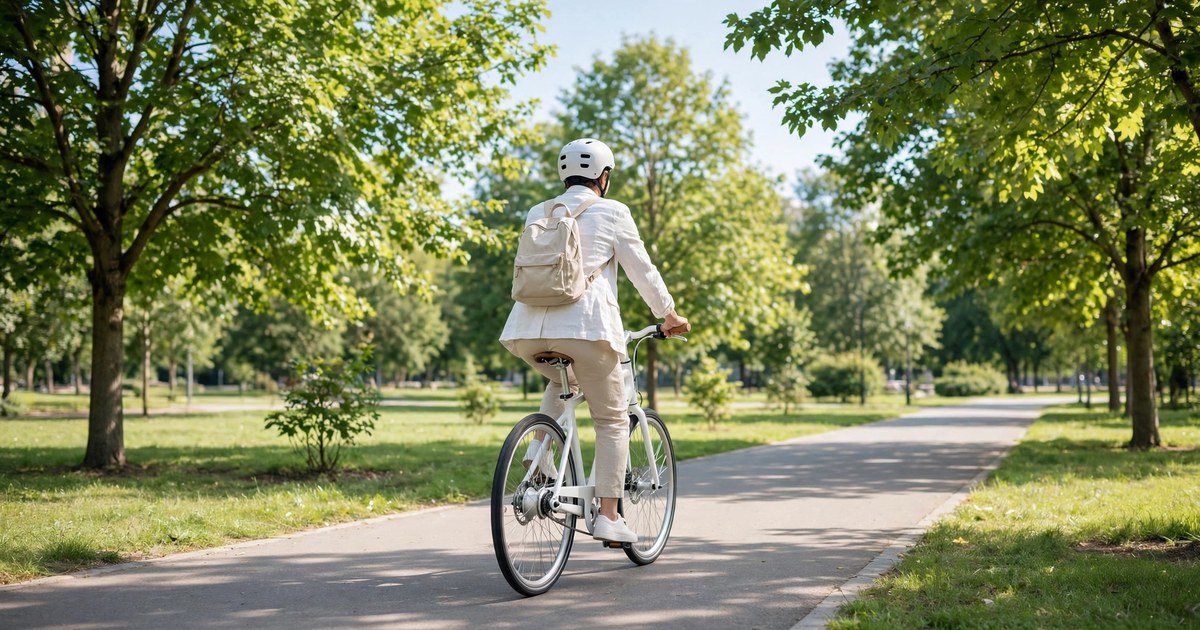
Cycling for weight loss works well because it burns a lot of calories while staying gentle on your knees. A steady 30–45 minute ride, 3–4 times a week, burns hundreds of calories per session and helps build a calorie deficit — no expensive bike needed, just a working bike and a safe route.
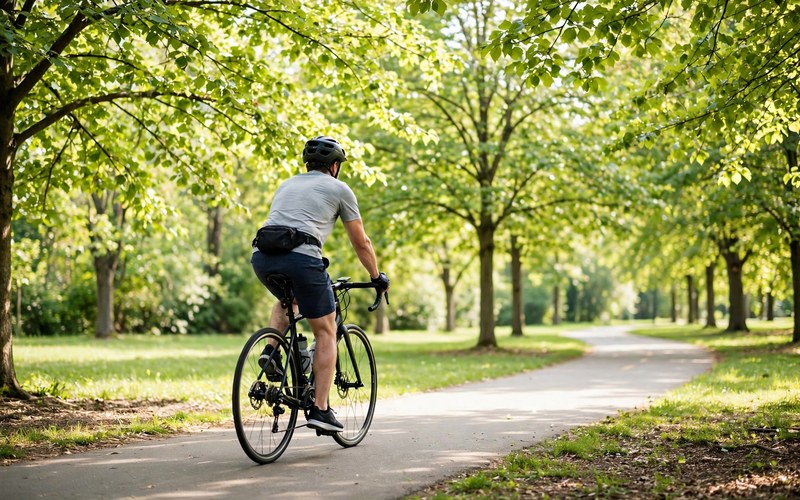
How many calories does cycling burn?
The calories you burn cycling depend on your weight, speed, terrain, and effort. As a rough guide, an average adult burns about:
- Leisurely cycling (under 10 mph / 16 km/h): roughly 240–350 calories per hour.
- Moderate cycling (10–12 mph / 16–19 km/h): roughly 400–500 calories per hour.
- Brisk cycling (12–14 mph / 19–22 km/h): roughly 500–650 calories per hour.
- Fast cycling (14–16 mph / 22–26 km/h): roughly 650–850 calories per hour.
These are estimates, not exact numbers — heavier riders burn more, hills burn more, and a headwind burns more. What matters most is the total across the week. Three moderate rides of 45 minutes add up to roughly 1,200–1,500 calories burned, which is a meaningful contribution to a calorie deficit. If you want a personal estimate, the exercise calorie calculator lets you enter your weight and ride time and see an estimate for your own body.
For comparison, cycling burns more per hour than walking at a moderate pace and is similar to a steady jog — but with far less impact on your joints. That is why it suits people who find running uncomfortable, or who are carrying extra weight and want a workout they can actually stick with. Our comparison of calories burned walking, running, cycling and swimming puts the numbers side by side.
How cycling for weight loss works
Weight loss comes down to a calorie deficit — using slightly more energy than you take in from food, day after day. Cycling helps on both sides of that equation: it burns calories directly, and it builds leg and glute muscles that raise your daily energy use a little. It also improves your fitness, so the same ride feels easier over time and you can go further or faster for the same effort.
But cycling alone will not cancel out overeating. A single ride can burn 400–600 calories, while a large takeaway meal can easily contain 1,000 or more. That is why cycling works best when paired with sensible eating — not a crash diet, just a modest, sustainable deficit. Use the BMR & TDEE calculator to find your daily calorie target, then let cycling create part of the gap and food choices create the rest.
One more benefit: cycling is easy to fit into real life. Riding to work, to the shops, or to school counts just as much as a dedicated workout. People who build cycling into their daily routine tend to keep it up far longer than people who rely on willpower alone to get to the gym.
How to start cycling for weight loss
Starting is simpler than most beginners think. You do not need to be fit first — cycling itself builds the fitness.
1. Get a bike that fits
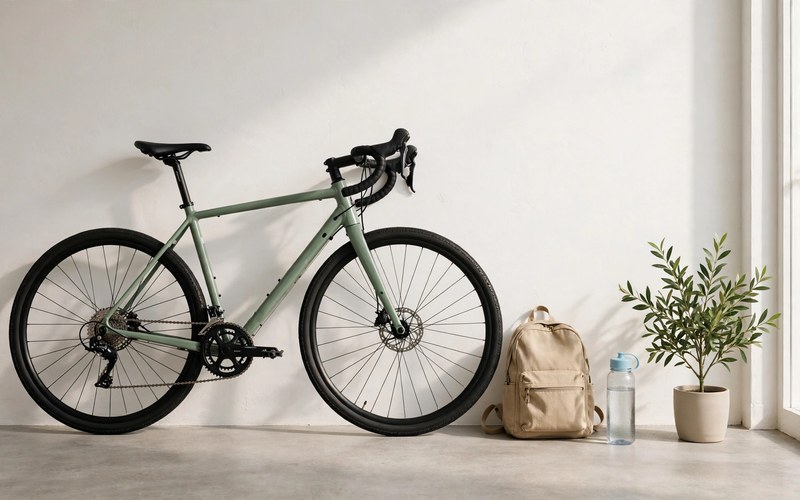
Any working bike will do: a city bike, a hybrid, a mountain bike, or a road bike. What matters is fit. When you sit on the saddle, your leg should be almost straight at the bottom of the pedal stroke, with a slight bend in the knee. A saddle set too low is the most common beginner mistake — it strains the knees and wastes energy. If you are buying used, a local bike shop can check the size for you in minutes.
2. Start short and build slowly
Your first rides should feel easy. Begin with 15–20 minutes on flat ground, 2–3 times in your first week, and add about 10 minutes per week. Going too hard too soon is the fastest way to sore knees, saddle pain, and giving up. Slow, steady progress beats heroic first rides every time.
3. Wear a helmet and be visible
A helmet is non-negotiable, even on quiet streets. Bright clothing or a reflective vest helps drivers see you, and lights are essential if you ride at dawn or dusk. A basic repair kit — a spare tube, tyre levers, and a small pump — means a flat tyre is a ten-minute fix, not a ruined ride.
4. Pick flat, safe routes first
Choose quiet streets, park paths, or dedicated cycle lanes for your first rides. Avoid busy roads until you are confident with traffic, signalling, and braking. A pleasant route matters more than a fast one — you will ride far more often if you actually enjoy where you ride.
A beginner cycling plan for weight loss
Here is a simple four-week plan. Ride 3–4 times a week, with at least one rest day between rides. Keep every ride at a pace where you can still talk in short sentences — that is the fat-burning, sustainable zone for beginners.
- Week 1: 3 rides of 15–20 minutes on flat ground. Focus on getting comfortable on the bike, not on speed.
- Week 2: 3 rides of 20–30 minutes. Add one gentle hill or a slightly longer route.
- Week 3: 4 rides of 30 minutes. Try one ride with a few short faster bursts of 1–2 minutes, with easy pedalling in between.
- Week 4: 4 rides of 30–45 minutes, including one longer weekend ride of 45–60 minutes at an easy pace.
After week 4, keep adding roughly 10% to your total weekly riding time. Mix in variety: one longer easy ride, one ride with short faster intervals, and one or two steady rides. Variety keeps your body adapting and keeps boredom away. Track your rides and your food in the nutrition tracker so you can see the whole picture — exercise and eating together.
What to eat when cycling for weight loss
Food is half the equation, and cycling makes it easier, not harder. A few simple rules work well:
- Eat enough, not too little: undereating makes rides feel miserable and slows recovery. Aim for a modest deficit of about 300–500 calories a day, not a crash diet.
- Prioritise protein: protein helps repair muscles after rides and keeps you full. Aim for a protein source at every meal — eggs, yogurt, beans, chicken, or fish.
- Fuel longer rides: for rides under an hour, water is usually enough. For rides over 60–90 minutes, bring a banana or an energy bar and drink regularly.
- Hydrate before you feel thirsty: even mild dehydration makes a ride feel much harder. Carry a water bottle and sip every 10–15 minutes.
Avoid the classic trap of rewarding every ride with a large treat. A 45-minute ride burns roughly 400 calories — a big slice of cake and a milky coffee can replace all of it in minutes. Enjoy treats, but keep them occasional and separate from the ride itself.
Common mistakes beginners make
- Riding too hard, too soon: going flat-out on day one leads to soreness and burnout. Easy, regular rides build fitness faster than occasional heroic ones.
- Saddle too low: a low saddle strains knees and wastes power. Raise it until your leg is nearly straight at the bottom of the pedal stroke.
- Ignoring rest days: muscles rebuild on rest days. Riding hard every day without recovery stalls progress and invites injury.
- Only counting the ride: cycling burns calories, but weight loss still needs a calorie deficit. Track food as well as rides for the first few weeks.
- Skipping the warm-up: start each ride gently for the first 5–10 minutes, especially on cold mornings, to let muscles and joints warm up.
Key takeaways
- Cycling for weight loss burns roughly 400–600 calories an hour at a moderate pace, while staying gentle on your joints.
- Weight loss still needs a calorie deficit — cycling creates part of it, sensible eating creates the rest.
- Start with 15–20 minute rides, 3 times a week, and add about 10 minutes per week.
- Any working bike that fits will do; a helmet and safe, flat routes matter more than expensive gear.
- Build cycling into daily life — commuting or errands by bike — and it becomes a habit you keep.
Frequently Asked Questions
How many calories does cycling burn in 30 minutes?
For an average adult, 30 minutes of moderate cycling burns roughly 200–300 calories, depending on weight, speed, and terrain. Leisurely cycling burns less (around 120–175 calories), while brisk cycling can burn 300–400 calories in the same time. Your weight matters a lot — heavier riders burn more, because moving a heavier body takes more energy.
Is cycling good for weight loss?
Yes, cycling is one of the best exercises for weight loss because it burns a lot of calories, builds leg muscle, and is gentle on the joints, so most people can do it regularly without pain. It works best when combined with a modest calorie deficit from food. Cycling alone rarely causes weight loss if eating stays the same, because it is easy to eat back the calories you burn.
How often should I cycle to lose weight?
Most beginners do well with 3–4 rides a week, adding up to 150–200 minutes of cycling. Start with 15–20 minute rides and build gradually. Consistency matters more than any single long ride — three regular rides a week beat one exhausting weekend ride, because steady habits are what create a lasting calorie deficit.
Is cycling better than walking for weight loss?
Cycling burns more calories per hour than walking at a moderate pace, so it can create a calorie deficit faster in the same amount of time. But walking is easier to fit into a day and gentler still on the body, and the best exercise is the one you will actually do every day. Many people combine both — walking daily and cycling a few times a week — for the best results.
Do I need a special bike to lose weight cycling?
No, any working bike is fine for weight loss — a city bike, hybrid, or mountain bike all burn calories. What matters far more is that the bike fits you, so set the saddle height correctly and make sure the brakes work. An expensive road bike is not required; comfort and reliability are what keep you riding week after week.





Comments (0)
No comments yet. Be the first to share your thoughts!
Leave a comment