
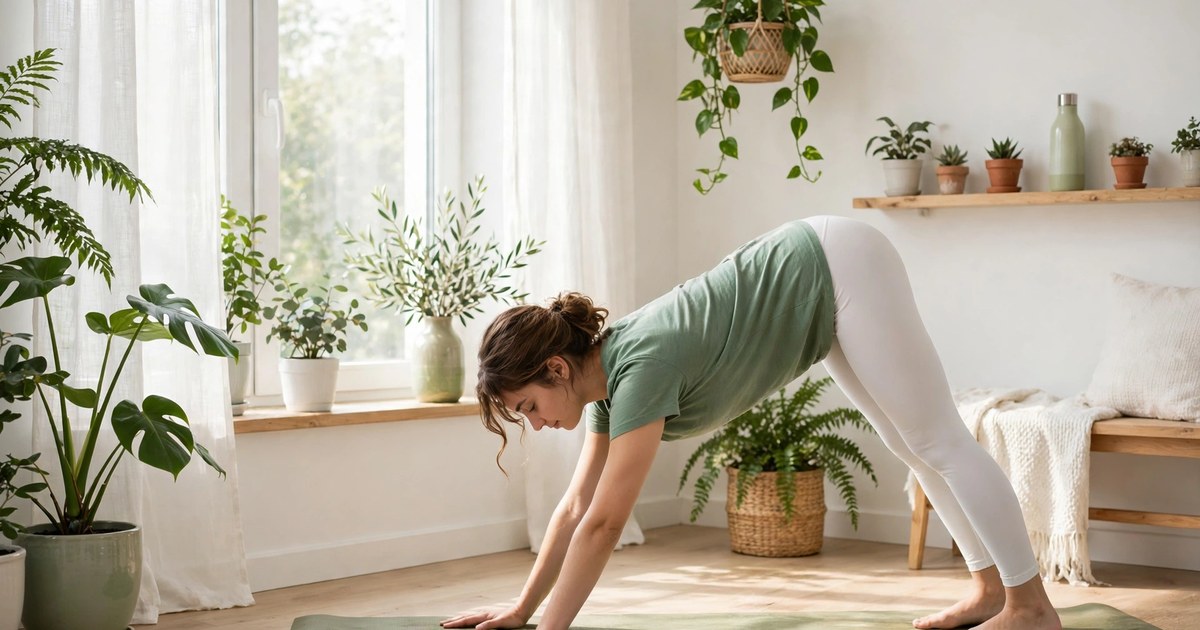
Yes — yoga for weight loss can work, but not in the way most people expect. Yoga alone rarely burns as many calories as running or cycling, yet it supports weight loss in other powerful ways: it builds strength and flexibility, lowers stress-related eating, improves body awareness, and helps you stick to a healthier routine. Combined with balanced eating and regular movement, it can be a genuinely useful part of a weight-loss plan.
How Yoga for Weight Loss Actually Works
Weight loss comes down to a simple principle: over time, you need to use slightly more energy than you take in. Yoga contributes to that equation in several ways at once, which is why it can be more effective than its calorie burn alone suggests.
First, active yoga styles build lean muscle. Muscle tissue uses more energy at rest than fat tissue, so a stronger body burns a little more throughout the day. Second, yoga improves balance, posture and mobility, which makes other exercise feel easier and reduces the risk of giving up because of stiffness or minor aches. Third, and perhaps most importantly, yoga changes how you relate to food and stress.
Many people eat more when they are stressed, tired or rushed. Yoga's slow breathing and mindful movement calm the nervous system, and regular practitioners often report noticing hunger and fullness cues more clearly. That awareness makes it easier to stop eating when you are satisfied rather than stuffed — a small shift that adds up over weeks and months.
 Yoga for Weight Loss: What the Evidence Actually Says
Research on yoga and weight management is encouraging but honest about its limits. Studies generally find that people who practise yoga regularly tend to gain less weight over time than those who do not, and that yoga can support modest weight loss when combined with dietary changes. It is not a magic fat-burning tool, and no single pose melts belly fat — spot reduction is a myth.
What yoga does unusually well is adherence. The best exercise for weight loss is the one you actually keep doing. Yoga is low-impact, can be done at home with no equipment, and suits almost every fitness level, so beginners are far more likely to stay consistent than with a punishing workout programme they dread.
If you want a clearer picture of your own energy needs, try the BMR and TDEE calculator to estimate how many calories your body uses each day. That number makes it much easier to plan meals and activity realistically instead of guessing.
Best Types of Yoga for Weight Loss
Not all yoga is equal when your goal is weight loss. Gentle, slow styles are wonderful for stress relief and flexibility, but the more active styles will build strength and burn more energy. Here is how the main styles compare for beginners:
Vinyasa Flow
Vinyasa links breath with continuous movement, flowing from pose to pose. It raises your heart rate, builds upper-body and core strength, and is usually the best starting point for weight loss because it combines movement with mindfulness.
Power Yoga
Power yoga is a faster, more athletic form of vinyasa. It is a genuine workout: expect to sweat, build strength and challenge your stamina. It is best tackled after a few weeks of gentler practice, so you learn safe alignment first.
Hatha Yoga
Hatha is slower and holds poses for longer. It burns less energy per session, but it is excellent for beginners learning the foundations, improving flexibility and building the habit of regular practice.
Restorative and Yin Yoga
These slow, deeply relaxing styles will not burn many calories, but they still earn a place in a weight-loss plan. By lowering stress and improving sleep, they help control the cravings and late-night snacking that often undo daytime progress.
A sensible weekly mix might be two or three active sessions (vinyasa or power) plus one gentle session (hatha, yin or restorative) for recovery.
 A Beginner's 20-Minute Yoga for Weight Loss Routine
You do not need an hour, a studio or fancy equipment. This simple routine works at home with just a mat and comfortable clothes. Move slowly, breathe deeply, and never force a stretch into pain.
- Centring and breathing (2 minutes): Sit comfortably, close your eyes, and take slow, deep breaths. Let your shoulders drop and your mind settle.
- Gentle warm-up (3 minutes): Neck rolls, shoulder rolls, cat-cow stretches and slow spinal twists to wake up the body.
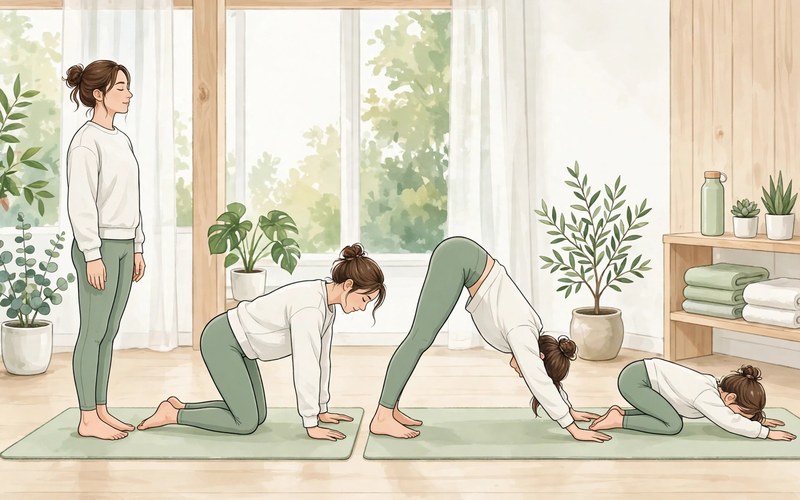
- Sun salutations (5 minutes): Flow through two or three rounds of sun salutations, linking each movement to a breath. This warms the muscles and raises your heart rate gently.
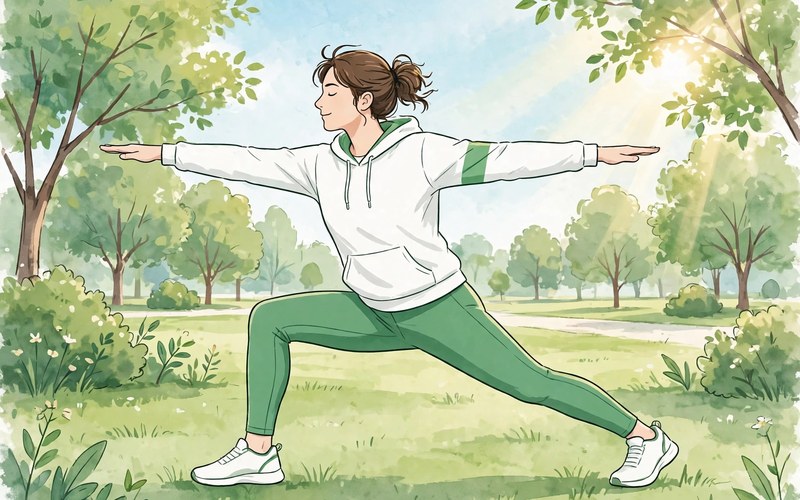
- Standing strength sequence (6 minutes): Warrior I, Warrior II, chair pose and a plank hold. These build leg, core and upper-body strength — the muscles that support everyday movement and calorie burn.
- Cool down and relaxation (4 minutes): Seated forward fold, gentle twists, then lie flat for final relaxation, breathing naturally and letting the body recover.
Start with three sessions per week and build up gradually. As your strength and confidence grow, you can extend the standing sequence or add a second round of sun salutations. For more no-equipment ideas, see our guide to home workouts with no equipment.
Yoga Alone Is Not Enough — Pair It With Smart Habits
Yoga works best as one part of a broader plan. Keep these supporting habits in mind:
- Eat mostly whole foods: Vegetables, lean protein, whole grains and healthy fats keep you full for longer than processed snacks, making a modest calorie deficit far easier to sustain.
- Stay active through the day: Walking, taking the stairs and short movement breaks add up. Use the exercise calculator to see how everyday activities contribute to your daily energy use.
- Protect your sleep: Poor sleep raises appetite hormones and cravings. A short evening yoga session can help you wind down and sleep better.
- Be patient and consistent: Healthy weight loss is usually slow — roughly half a kilo per week for most people. Yoga teaches exactly the patience and self-compassion that make long-term change possible.
Key takeaways:
- Yoga supports weight loss through strength, stress reduction, better body awareness and consistency — not just calorie burn.
- Active styles like vinyasa and power yoga burn the most energy; gentle styles help with stress, sleep and recovery.
- Three 20-minute sessions per week is a realistic, sustainable starting point for beginners.
- Pair yoga with balanced eating, daily walking and good sleep for the best results.
- There is no spot reduction: no pose targets belly fat alone, but whole-body progress is real.
A Final Word for Beginners
If you have never done yoga before, start gently and without comparison. Everyone in a class or video was once a beginner, and flexibility is a result of yoga, not a requirement for it. If you have a medical condition, are pregnant, or have joint or back problems, check with your doctor or a qualified instructor before starting a new programme. Done regularly and kindly, yoga can become the habit that makes every other healthy choice a little easier.



Comments (0)
No comments yet. Be the first to share your thoughts!
Leave a comment