
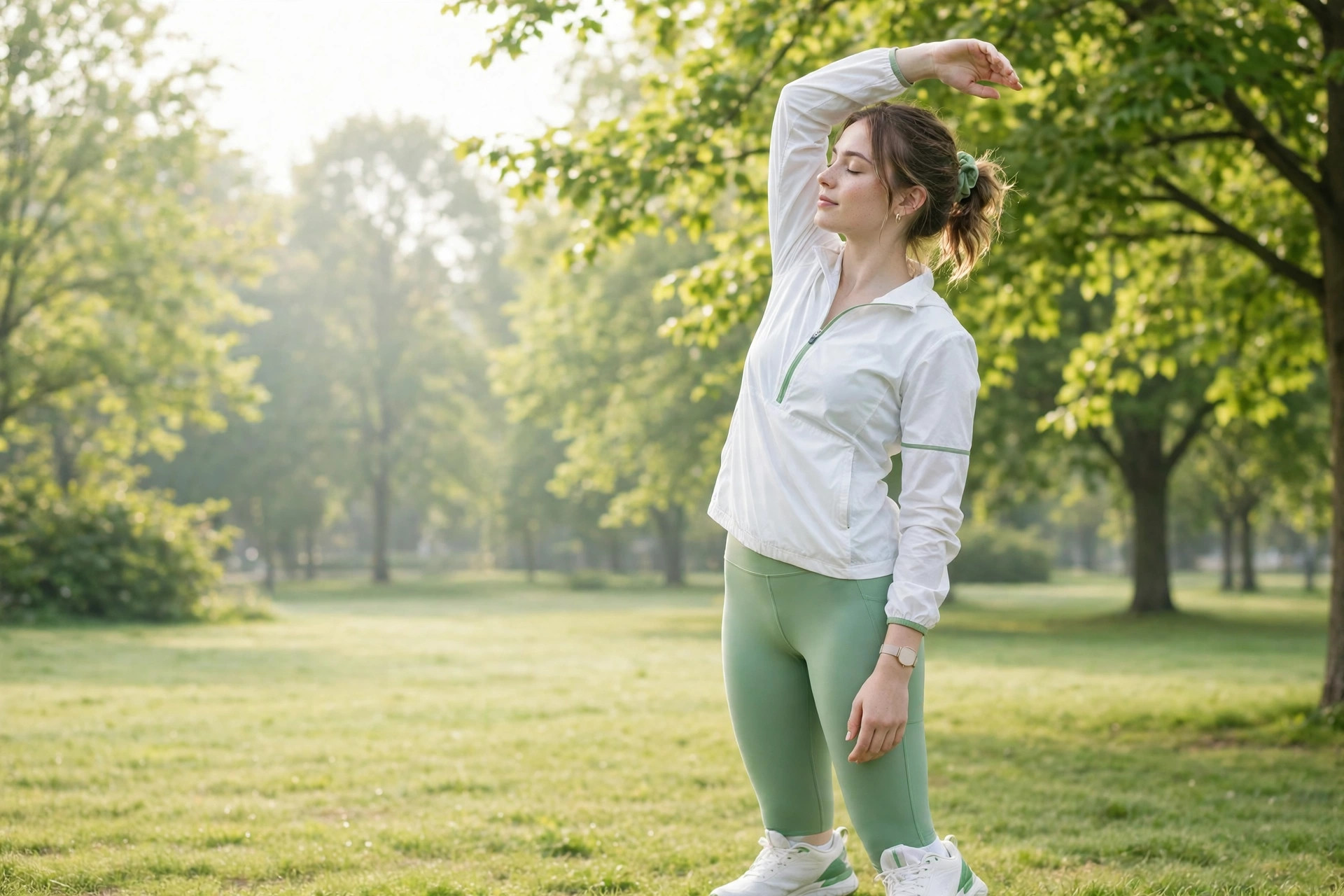
Stretching after exercise helps your muscles relax, restores a comfortable range of motion, and eases the tight feeling that often follows a workout. A short, gentle session of static stretches — held for 20 to 30 seconds each — is the most useful approach for most people, and it works best while your muscles are still warm.
Key takeaways
- Stretch after your workout, when your muscles are warm — not as a cold warm-up.
- Use gentle static stretches after exercise, holding each one for 20–30 seconds.
- Save dynamic, movement-based stretches for before exercise.
- Stretch the muscles you actually trained, plus any area that feels tight.
- A stretch should feel like a mild pull, never sharp or sudden pain.
 Why Stretching After Exercise Matters
During a workout, your muscles contract again and again and can finish feeling short and tight. Stretching after exercise gives them a chance to lengthen, helps your heart rate and breathing settle gradually, and gives you a few calm minutes to notice how your body feels. Many people find that a gentle cool-down makes the next day feel easier, although stretching alone will not prevent all soreness. Think of it as one part of recovery, not a cure: sleep, food, and rest days matter just as much. If you use the exercise tool to plan your sessions, a short stretch routine is an easy habit to add at the end of each one.
Static vs Dynamic: Stretching After Exercise the Right Way
Dynamic stretches move your joints through their range of motion — think leg swings, arm circles, and gentle walking lunges. They raise your body temperature and prepare your muscles to work, so they belong before exercise, as part of a warm-up. Static stretches, by contrast, hold one position while the muscle lengthens slowly. They suit the end of a workout, when your muscles are warm and you want to relax. Our 10-minute warm-up routine shows how dynamic moves fit in before training. After training, switch to static holds: move into each stretch slowly, keep breathing normally, and stop as soon as you feel a mild pull.
A 10-Minute Stretching After Exercise Routine
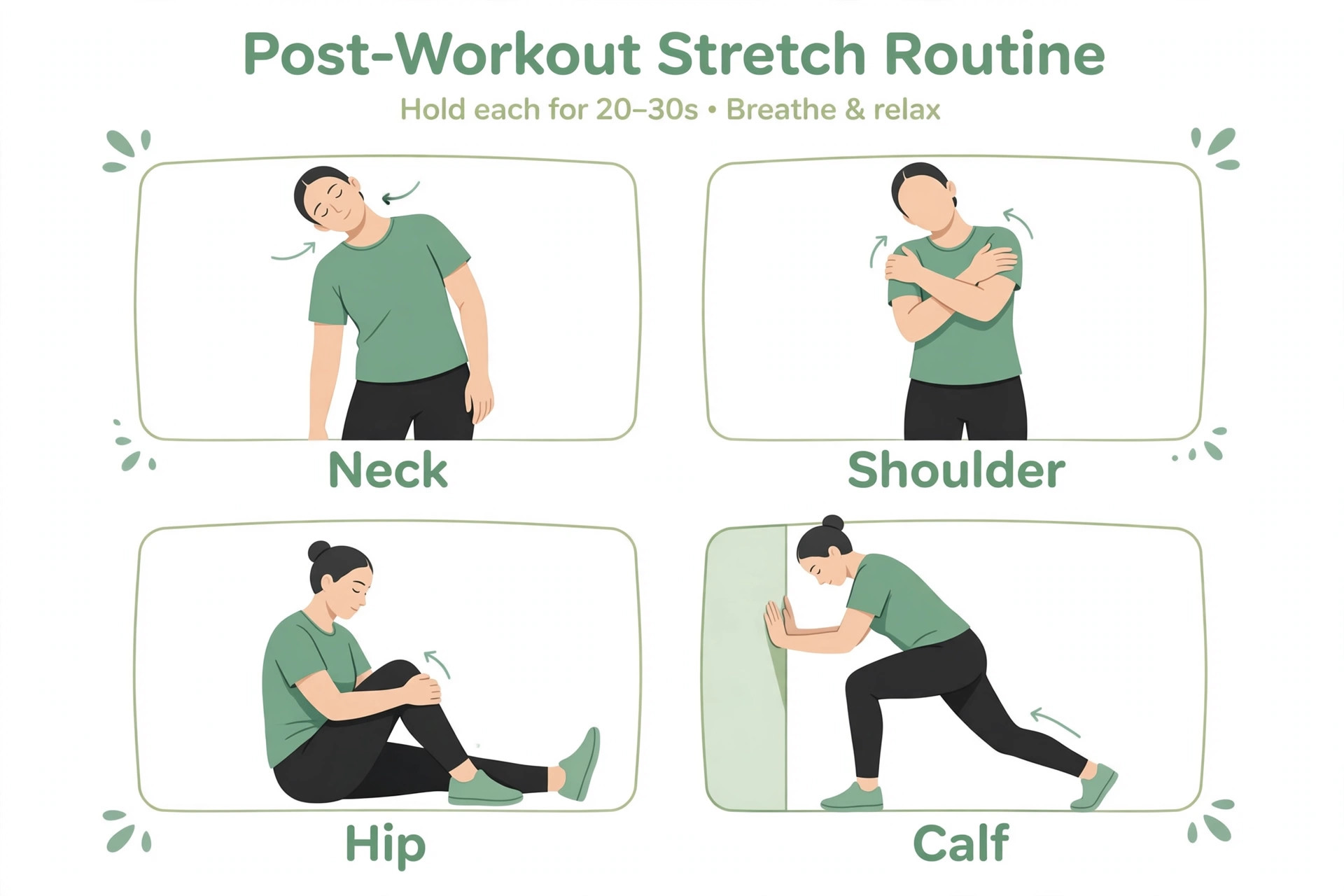
This routine takes about ten minutes and needs no equipment. Move slowly between stretches, breathe normally, and hold each one for the time given. If a stretch feels uneven from side to side, spend a little longer on the tighter side, but never force it.
- Neck release (30 seconds each side): sit or stand tall, gently tilt your right ear toward your right shoulder, and relax your arms. Repeat on the left.
- Shoulder cross-body stretch (30 seconds each side): bring one arm across your chest and hold it lightly with the other hand, keeping your shoulders down.
- Chest opener (30 seconds): clasp your hands behind your back, gently lift them, and open your chest while standing tall.
- Standing quadriceps stretch (30 seconds each side): hold a wall or chair for balance, bend one knee, and gently pull that foot toward your glutes.
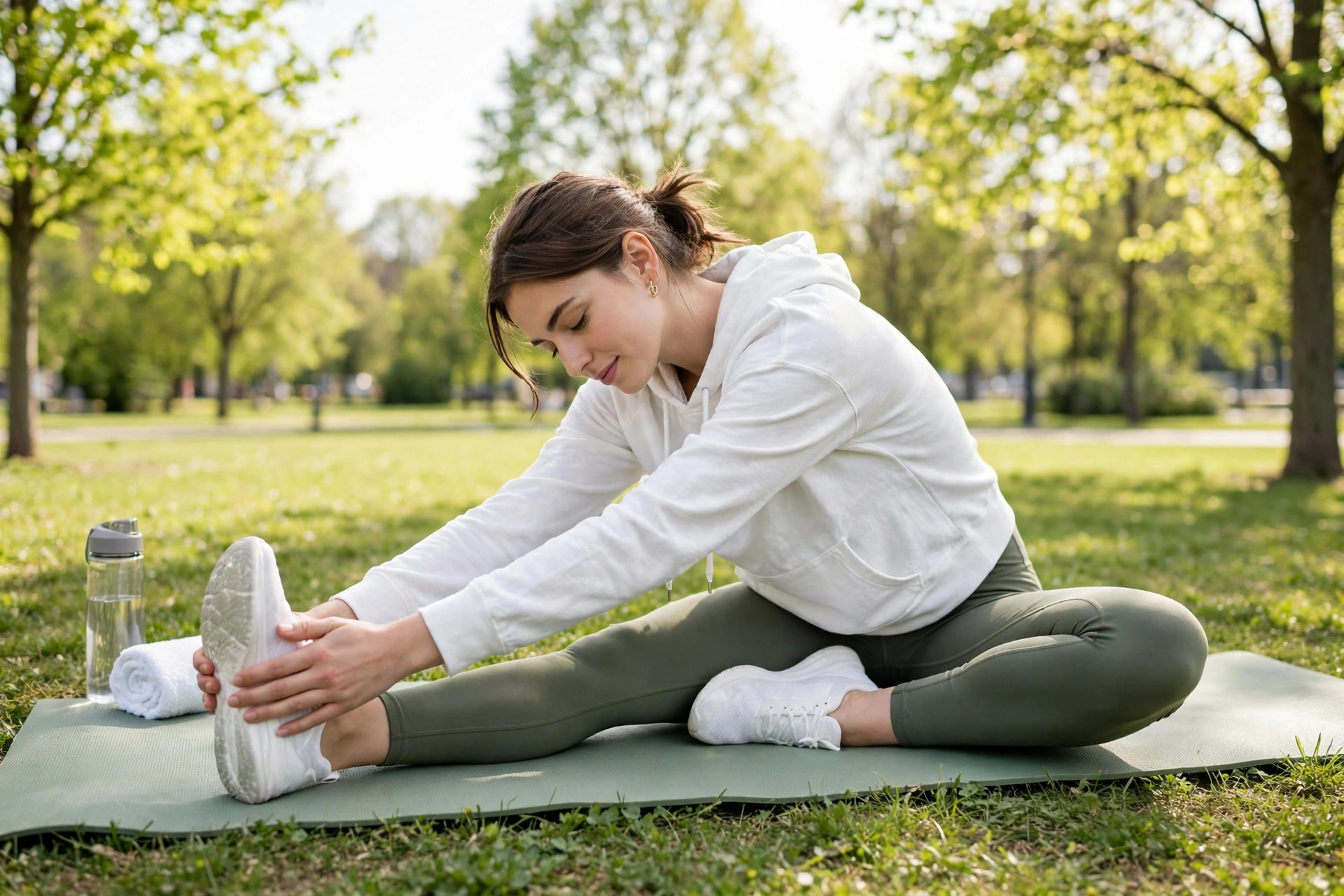
- Seated hamstring stretch (30 seconds each side): sit with one leg straight and the other foot tucked in, then hinge forward gently from your hips.
- Hip flexor stretch (30 seconds each side): step into a low lunge, tuck your pelvis slightly, and ease your hips forward until you feel a gentle stretch at the front of the hip.
- Glute stretch (30 seconds each side): lying on your back, cross one ankle over the opposite knee and gently draw the lower leg toward you.
- Calf stretch (30 seconds each side): face a wall, step one foot back, press the heel into the floor, and lean forward with a straight back leg.
Finish with one minute of slow, deep breathing in a comfortable seated or lying position, letting your shoulders and jaw relax.
 Stretching for Runners vs Strength Training
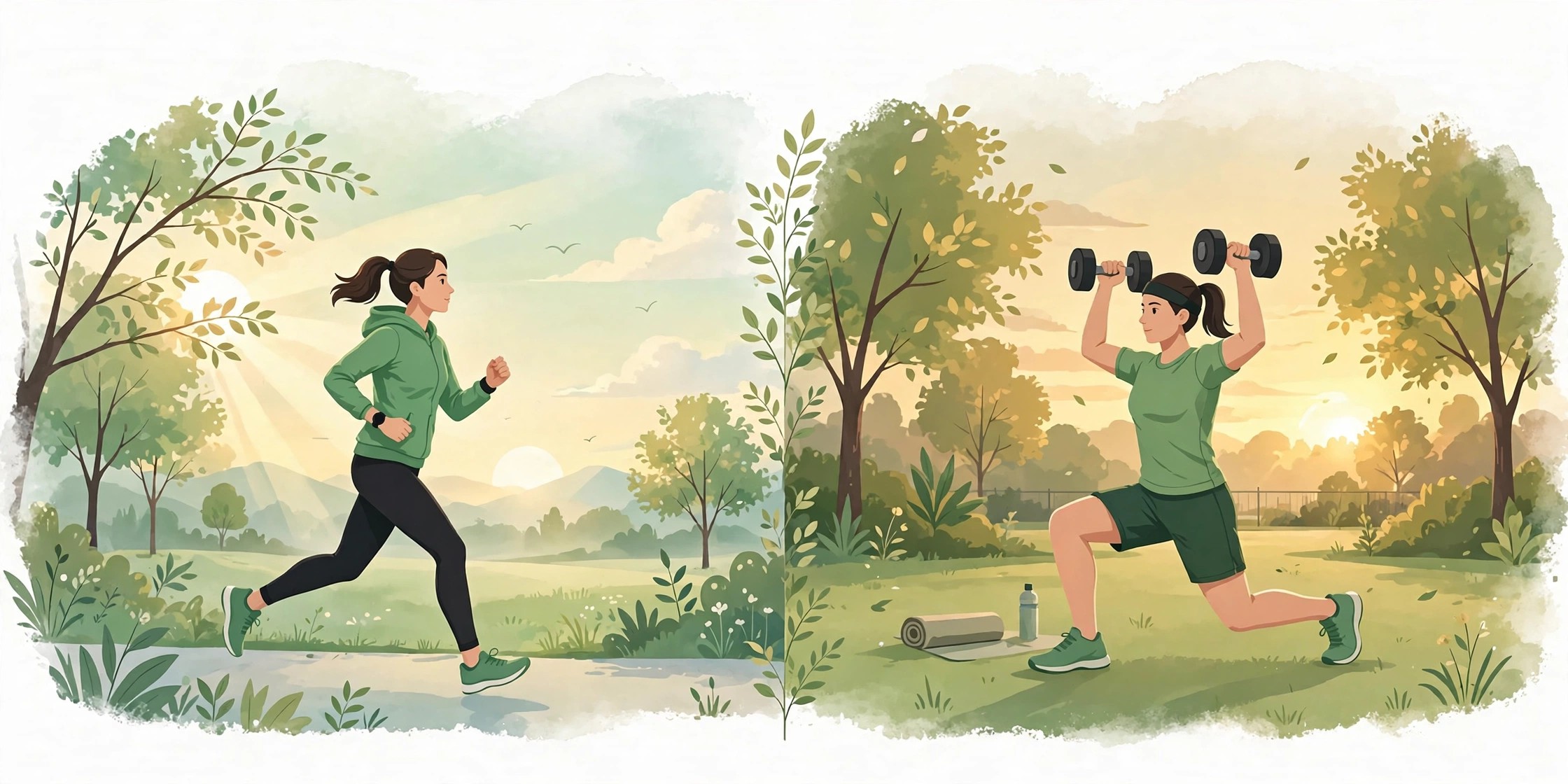
Runners tend to tighten most in the calves, hamstrings, hip flexors, and glutes, so those areas deserve the most attention after a run. Add the hip flexor and calf stretches from the routine above, and do not skip the glutes — tight glutes often show up as lower-back or knee discomfort. Strength training is different: stretch the muscles you trained that day. After a leg session, focus on quads, hamstrings, and glutes; after an upper-body session, focus on the chest, shoulders, and lats. In both cases, recovery also includes refuelling well — see our guide to post-workout nutrition: what to eat after exercise.
Flexibility vs Mobility, Explained Simply
Flexibility is how far a muscle can lengthen when it is stretched passively, for example when you hold a hamstring stretch. Mobility is how well you can move a joint actively and with control, such as squatting deeply while keeping your heels down and your chest up. You need both: flexibility gives you the available range, and mobility lets you use that range while moving. Static stretching mainly improves flexibility. Mobility improves when you combine stretching with strength work through a full range of motion and regular movement practice, such as controlled squats, lunges, and shoulder rotations.
Common Mistakes to Avoid
- Bouncing: bouncing in a stretch can trigger a protective tightening reflex and may strain the muscle. Move in slowly and hold still instead.
- Stretching cold muscles: deep static stretches before a workout, when muscles are cold, are less effective and less comfortable. Warm up first, or save static stretches for after.
- Holding your breath: breathing normally helps muscles relax. If you catch yourself holding your breath, ease off the stretch a little.
- Forcing past pain: more is not better. A mild pull is enough; sharp, sudden, or joint pain means you have gone too far.
- Only stretching favourites: it is easy to stretch what already feels flexible and skip the tight spots. Give the tight areas the most time.
When to Stop and Get Advice
Stop stretching and seek advice from a qualified health professional if you feel sharp pain, pain inside a joint, numbness or tingling, swelling, or pain that does not settle after a few days. The same applies if you are recovering from an injury or surgery. This article gives general information only and is not medical advice — when in doubt, get checked before continuing.
Frequently Asked Questions
How long should I stretch after exercise?
Aim for about 10 minutes, holding each static stretch for 20 to 30 seconds. That is enough for most people after a regular workout. If you trained very hard or feel especially tight, you can add a few extra minutes, but there is no need to stretch for half an hour.
Should I stretch every day?
You can stretch gently every day if it feels good, even on rest days. Daily stretching suits people who sit a lot or feel stiff in the morning. Just keep it gentle on rest days and skip any stretch that causes pain.
Does stretching after exercise prevent muscle soreness?
Stretching may ease tightness and help you feel looser, but it does not reliably prevent delayed-onset muscle soreness. Soreness is a normal response to hard or unfamiliar training. Sleep, balanced food, and gradual increases in training load help more than stretching alone.
Is it better to stretch before or after exercise?
Do both, but use different types. Before exercise, use dynamic stretches that move your body and warm your muscles. After exercise, use static stretches that hold a position while your muscles are warm and ready to relax.
What should I do if a stretch hurts?
Ease out of the stretch straight away and do not push through it. Mild tension is normal, but sharp, stabbing, or joint pain is a warning sign. If the pain keeps coming back or does not settle, stop and get advice from a qualified professional.





Comments (0)
No comments yet. Be the first to share your thoughts!
Leave a comment