

Yes — dancing can help you lose weight. A 70 kg person burns roughly 150–600 calories per hour dancing, depending on style and intensity: slow ballroom burns about 150–200 calories an hour, while fast styles like Zumba or hip-hop burn 400–600. Start with two or three 30-minute sessions a week, and build up from there.
Dancing is one of the few workouts that does not feel like a workout. The music carries you, the steps keep your mind busy, and before you know it, half an hour has passed. That is why it works so well for weight loss: people stick with exercise they enjoy, and dancing is fun, social, and easy to start at home with no equipment at all.
You do not need to be a good dancer, a partner, a studio, or special clothes — just some music, a bit of floor space, and the willingness to move. This guide covers how many calories dancing burns by style, which styles burn the most, how dancing compares with walking and running, and a simple 4-week beginner plan to get you started.
 How many calories does dancing burn?
Calorie burn depends mainly on your body weight, the dance style, and how intensely you move. A 70 kg person dancing for an hour can expect roughly:
- Slow ballroom / waltz: roughly 150–200 calories per hour
- Salsa / social dancing: roughly 300–400 calories per hour
- Zumba / aerobic dance: roughly 400–500 calories per hour
- Hip-hop / street dance: roughly 400–600 calories per hour
These are estimates, not exact figures — your real burn depends on your weight, how fast you move, how much of the time you keep moving, and how much of your body is involved. A heavier person burns more, a lighter person less, and a high-energy session with jumps and big arm movements burns far more than a slow dance with long pauses. To see how dancing fits your daily calorie needs, use our BMR and TDEE calculator to find your maintenance calories, then check our exercise calorie calculator.
Weight loss comes from a calorie deficit over weeks, not one dance session. Dancing helps create that deficit, but what you eat matters just as much: an hour of Zumba burns roughly the calories in a small meal, so pairing dance with sensible eating works far better than dance alone.
Which dance styles burn the most calories?
Intensity is what matters most, not the name of the style. The styles that burn the most share the same features: a fast tempo, big whole-body movements, jumps or quick footwork, and very little standing still. Hip-hop and Zumba top the list because they keep you moving hard for the whole song, with arms, legs and core all working at once.
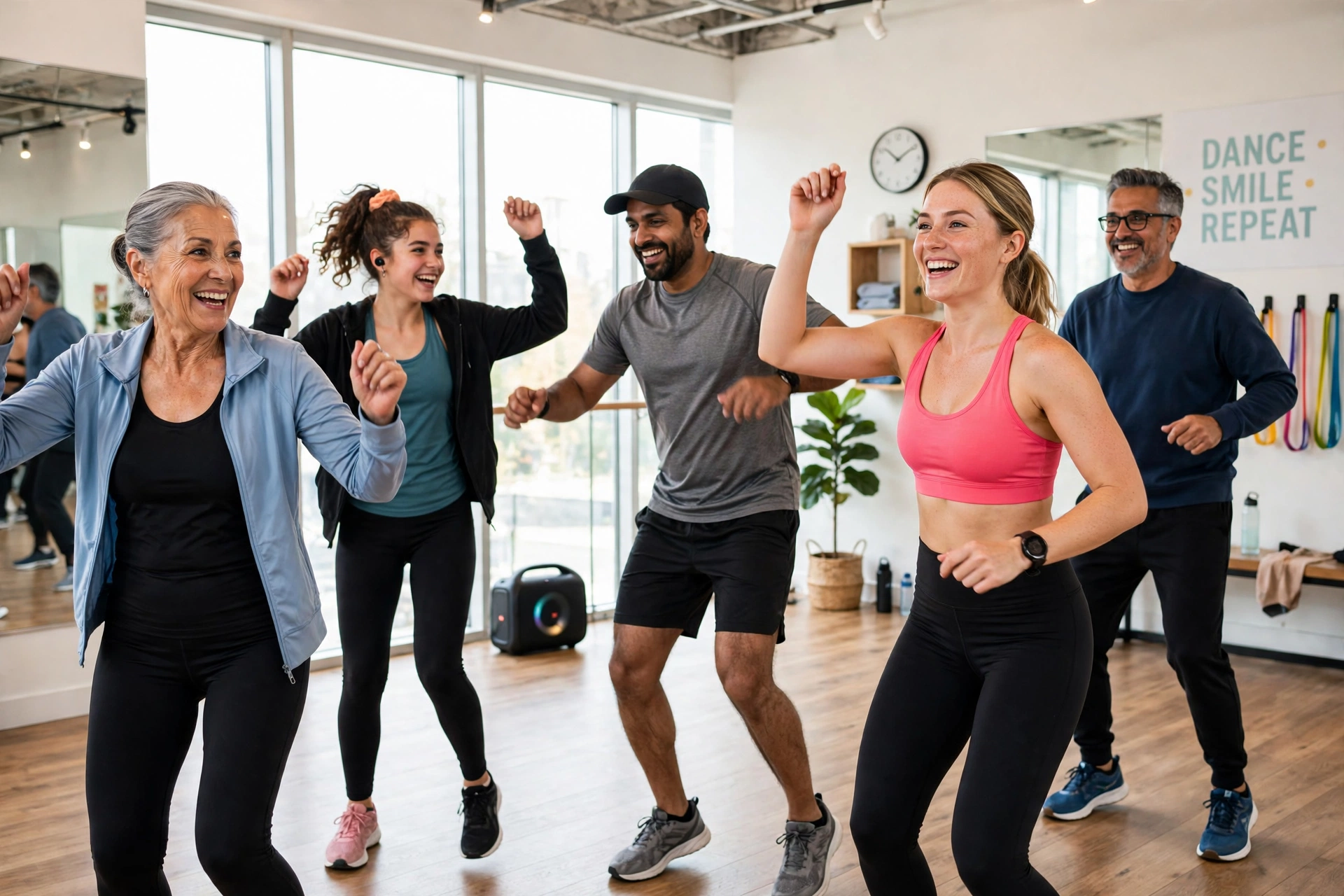
Salsa, swing and other social dances sit in the middle. They are lively and keep your heart rate up, but they include pauses, partner turns and slower moments, so the average burn is lower than a non-stop aerobic dance class. Slow ballroom, waltz and gentle folk dancing burn the least — but they still beat sitting, and they build balance and coordination.
The honest truth is that the best style for weight loss is the one you actually enjoy. The highest-burn style in the world burns zero calories if you quit after a week. If you love salsa, dance salsa three times a week. If Zumba makes you smile, do Zumba. Consistency beats intensity every time.
Dancing vs walking and running
How does dancing compare with the two most popular weight-loss exercises? For a 70 kg person, the rough hourly burn looks like this:
- Brisk walking (about 5 km/h): roughly 200–250 calories per hour — gentle on the joints and easy to do every day, but a lower burn.
- Dancing (Zumba or hip-hop): roughly 400–600 calories per hour — similar to running, and far more fun for most people.
- Running (moderate, about 8 km/h): roughly 500–600 calories per hour — the highest burn of the three, but harder on the knees, and many people give up quickly.
Dancing sits between walking and running on calorie burn, but it wins on enjoyment — and enjoyment keeps you going after week three, when motivation fades. If you want a low-impact day between dance sessions, our guide to walking for weight loss is a good companion workout. On another day, our jump rope guide pairs well with dancing.
A beginner plan: your first 4 weeks
Dance three times a week, for about 30 minutes a session, with at least one rest day between sessions. Warm up for 5 minutes first — march in place, roll your shoulders, and do gentle side steps — and cool down for 5 minutes at the end with slow walking and light stretches.
Week 1: learn the basics
Dance twice for 20–30 minutes. Follow a beginner dance workout video or a simple salsa basics lesson, and focus on learning the steps, not on speed. It is normal to feel uncoordinated at first — everyone does.
Week 2: add a third session
Dance three times for 30 minutes. Try a second style — if week 1 was salsa, try a Zumba-style class this week. You should feel more confident with the basic steps now.
Week 3: add intensity
Dance three times for 30 minutes, but pick faster songs and use bigger arm movements. Add a few minutes of faster dancing in the middle of each session to raise your heart rate.
Week 4: build to 45 minutes
Dance three or four times for 30–45 minutes. Try a live class — online or in person — to see how a full session feels. You are now dancing regularly.
After week 4, keep dancing three to four times a week and slowly increase session length or intensity. If you miss a day, just pick up where you left off — one missed session does not undo three good weeks.
 Tips to maximise fat loss from dancing
- Pair dancing with a calorie deficit. Use our BMR and TDEE calculator to find your maintenance calories, then eat slightly below that number. Dance alone will not outwork a large surplus.
- Keep moving for the whole session. Short water breaks are fine, but long pauses between songs cut your burn. Queue up a playlist in advance so the music never stops.
- Mix fast and slow styles. Alternate a high-energy Zumba or hip-hop session with a slower salsa or ballroom session. Variety keeps it interesting and works different muscles.
- Track your sessions. Note how long you danced and how hard it felt, and check the exercise calorie calculator to see what that adds up to over a week.
- Add strength work twice a week. A short bodyweight session — squats, lunges, push-ups — protects your muscles while you lose fat and improves your dancing.
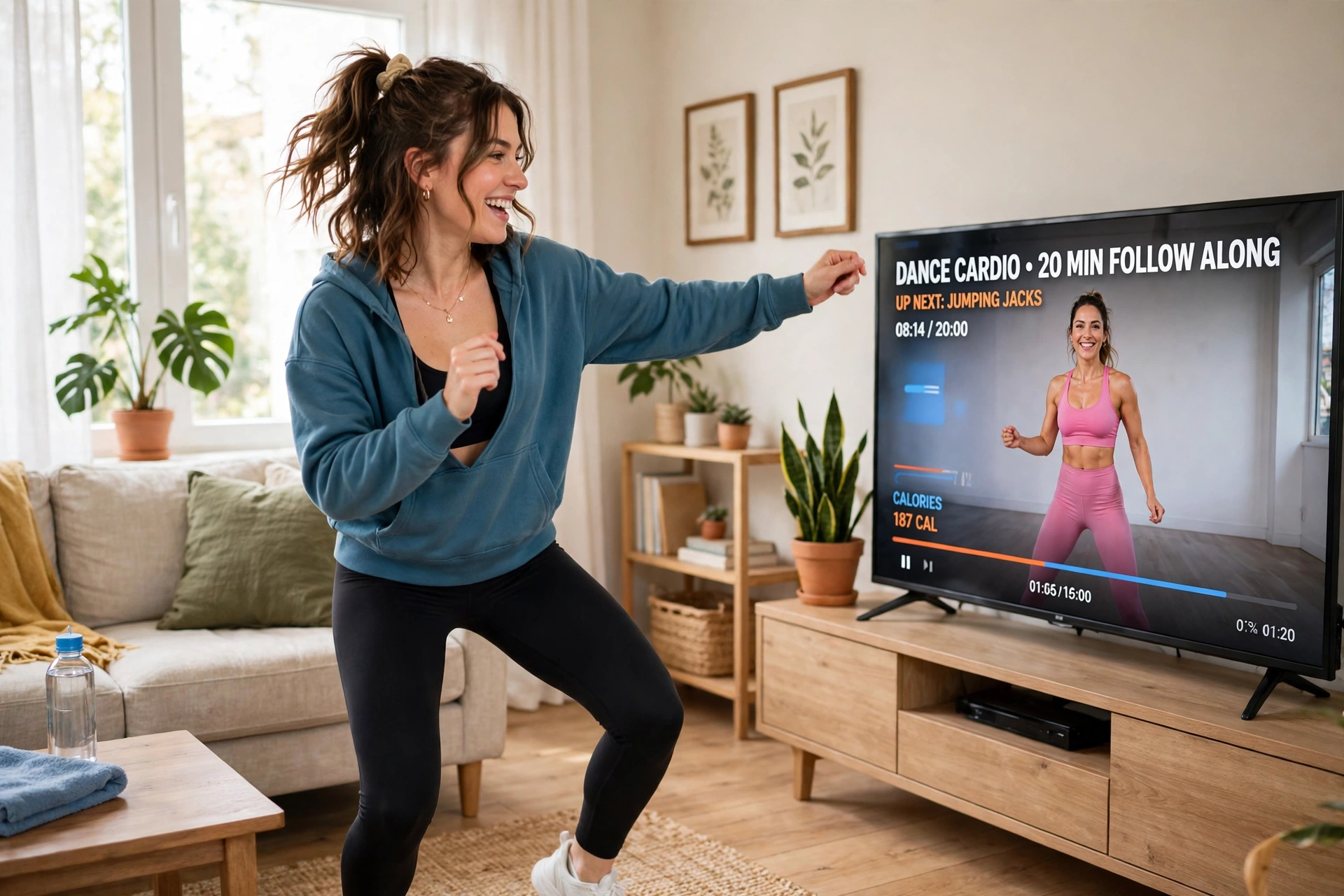
- Dance at home — it counts. A living-room dance session burns the same calories as the same moves in a gym — no class or studio needed.
Who should be careful with dancing?
Dancing suits most people, but choose your style with care if you have joint problems. Gentle styles like slow ballroom or low-impact Zumba are kind to knees and ankles, while high-impact styles with jumps are harder on them. Wear supportive shoes with good grip, dance on a smooth, non-slip floor, and avoid hard concrete.
If you have a heart condition, high blood pressure, balance problems, or you are pregnant, check with your doctor before starting a vigorous dance routine. Stop and rest if you feel sharp joint pain, dizziness, or chest discomfort, and seek medical advice if it persists. Sore muscles after your first sessions are normal; sharp joint pain is not.
Key takeaways
- A 70 kg person burns roughly 150–600 calories per hour dancing, depending on style and intensity.
- Zumba and hip-hop burn the most (roughly 400–600 per hour); slow ballroom burns the least (roughly 150–200).
- Dancing burns about as many calories as running, and more than brisk walking — and people stick with it longer.
- Start with two or three 30-minute sessions a week and build up over 4 weeks.
- The best dance style is the one you enjoy enough to keep doing.
- Pair dancing with a calorie deficit — dance alone will not outwork a large surplus.
- Choose gentle styles and good shoes if you have knee or ankle problems.
Frequently asked questions
How many calories does dancing burn in 30 minutes?
A 70 kg person burns roughly 200–300 calories in 30 minutes of fast dancing such as Zumba or hip-hop, and roughly 75–100 calories in 30 minutes of slow ballroom. The exact number depends on your weight, the style, and how hard you move. Use our exercise calculator to estimate your own burn based on your weight and session length.
Is dancing good for losing belly fat?
Dancing burns calories and improves fitness, which helps with overall fat loss, but no exercise targets belly fat specifically. Fat loss happens across the whole body when you keep a calorie deficit over weeks. Dancing plus sensible eating is a strong combination for losing weight, including around the waist.
Can you lose weight by dancing at home?
Yes. Dancing at home burns the same calories as the same moves in a studio, as long as you keep moving for the full session. Follow a dance workout video, make a playlist of fast songs, and clear enough floor space to move safely. Many people lose weight this way because it is free, private, and easy to fit into a busy day.
How often should beginners dance to lose weight?
Start with two or three 30-minute sessions a week, with rest days in between. After a few weeks, build up to three or four sessions of 30–45 minutes. Regular sessions matter more than long ones — three 30-minute dances a week beat one exhausting two-hour session followed by a week off.
Is Zumba or salsa better for weight loss?
Zumba usually burns more calories because it is a non-stop aerobic workout with fast, whole-body movements. Salsa burns less per hour but is still a real workout, and many people find it more fun and easier to keep up socially. The best choice is the style you enjoy enough to do three times a week, every week.
Is dancing bad for your knees?
Most dance styles are gentle on the knees when done with good shoes on a suitable floor. Low-impact styles like slow ballroom or gentle Zumba are the kindest option. High-impact styles with lots of jumping can stress the knees, especially on hard floors. If you already have knee problems, start with gentle styles, avoid jumping, and ask your doctor first.




Comments (0)
No comments yet. Be the first to share your thoughts!
Leave a comment