
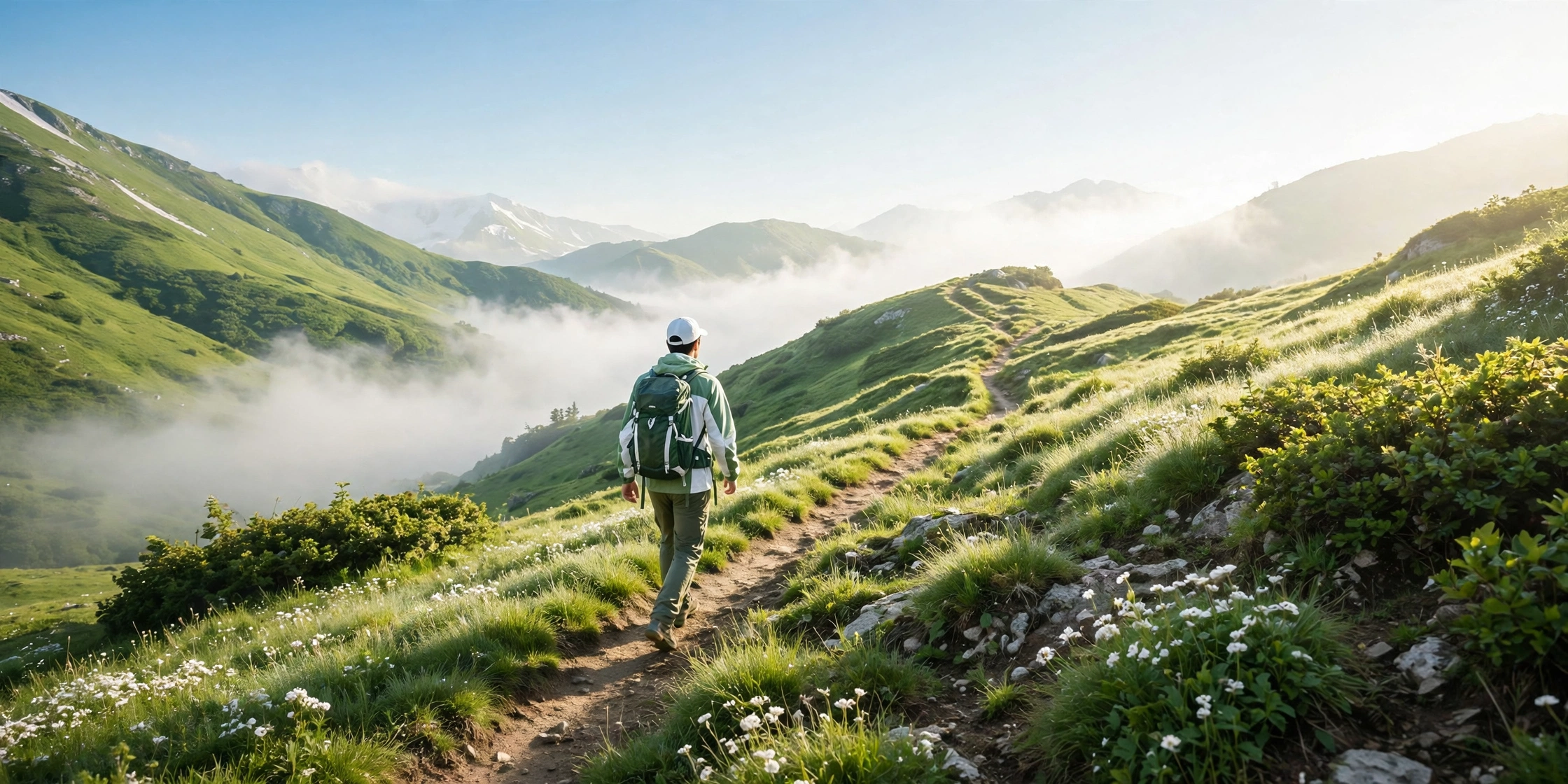
Hiking burns roughly 400 to 700 calories per hour for most adults, depending on your weight, the steepness of the trail, and your pace. A hilly two-hour hike can burn 800 to 1,400 calories — similar to a long run, but far kinder to your knees.
How many calories does hiking burn?
Hiking is one of the most effective — and most enjoyable — ways to burn calories, because it combines steady cardio with the resistance of climbing uphill. The exact number depends on three things: your body weight, the steepness of the trail, and your pace.
As a rough guide, a person weighing around 70 kg burns about 400–450 calories per hour on a flat trail, and 550–650 per hour on a steep trail. Someone weighing 90 kg burns roughly 500–550 per hour on flat ground and 700–800 on steep terrain. A backpack weighing 5–10 kg adds another 5–10 percent. These are estimates, but close enough to plan with. For a personal estimate, use the exercise calorie calculator, and check your daily calorie needs with the BMR and TDEE calculator.
Two two-hour hikes a week can burn 1,600 to 2,800 extra calories — roughly half a kilogram of body fat every one to two weeks, without any dieting. Add a modest calorie deficit and results come faster. For help setting it safely, read our guide on how to calculate your calorie deficit for safe weight loss.
Why hiking works so well for weight loss
Most exercise for weight loss fails for one simple reason: people stop doing it. Hiking solves that problem because it does not feel like exercise. You are outdoors, moving through beautiful places, and the time passes quickly. Many people who hate the gym happily hike for three hours.
Hiking is also easy on your body. Walking uphill builds leg and glute strength and raises your heart rate without the pounding impact of running — a good choice if you carry extra weight, have sore knees, or are returning to exercise after a break. Time in nature also lowers stress, which means fewer stress-driven cravings.
How to start hiking for weight loss: an 8-week beginner plan
You do not need to be fit to start hiking — you need a plan that builds fitness gradually, so your body adapts without injury. This eight-week plan works for most healthy beginners; if you have a medical condition, check with your doctor first.
Weeks 1–2: easy and short
Walk flat, well-marked trails for 30–45 minutes, two or three times a week, at a pace where you can still talk. Bring water, even for short walks.
Weeks 3–4: add gentle hills
Increase to 45–60 minutes on trails with gentle slopes, carrying a light daypack with water and a snack. You should feel pleasantly tired at the end, not exhausted.
Weeks 5–6: go longer
Build up to one hike of 90 minutes to two hours each weekend, plus two shorter walks during the week, walking briskly on the flat sections. This is where the calorie burn really climbs.
Weeks 7–8: make it a routine
By now you should be hiking three times a week, with one hike of two to three hours. Try a new trail each week, and consider joining a local hiking group. Add distance or steepness slowly — no more than about 10 percent a week.
If you already walk regularly, you can start further along this plan. And if walking is new to you, our guide to walking for weight loss is a good place to begin before you hit the trails.
What to wear and pack for a hike
You do not need expensive equipment to start, but a few basics matter.
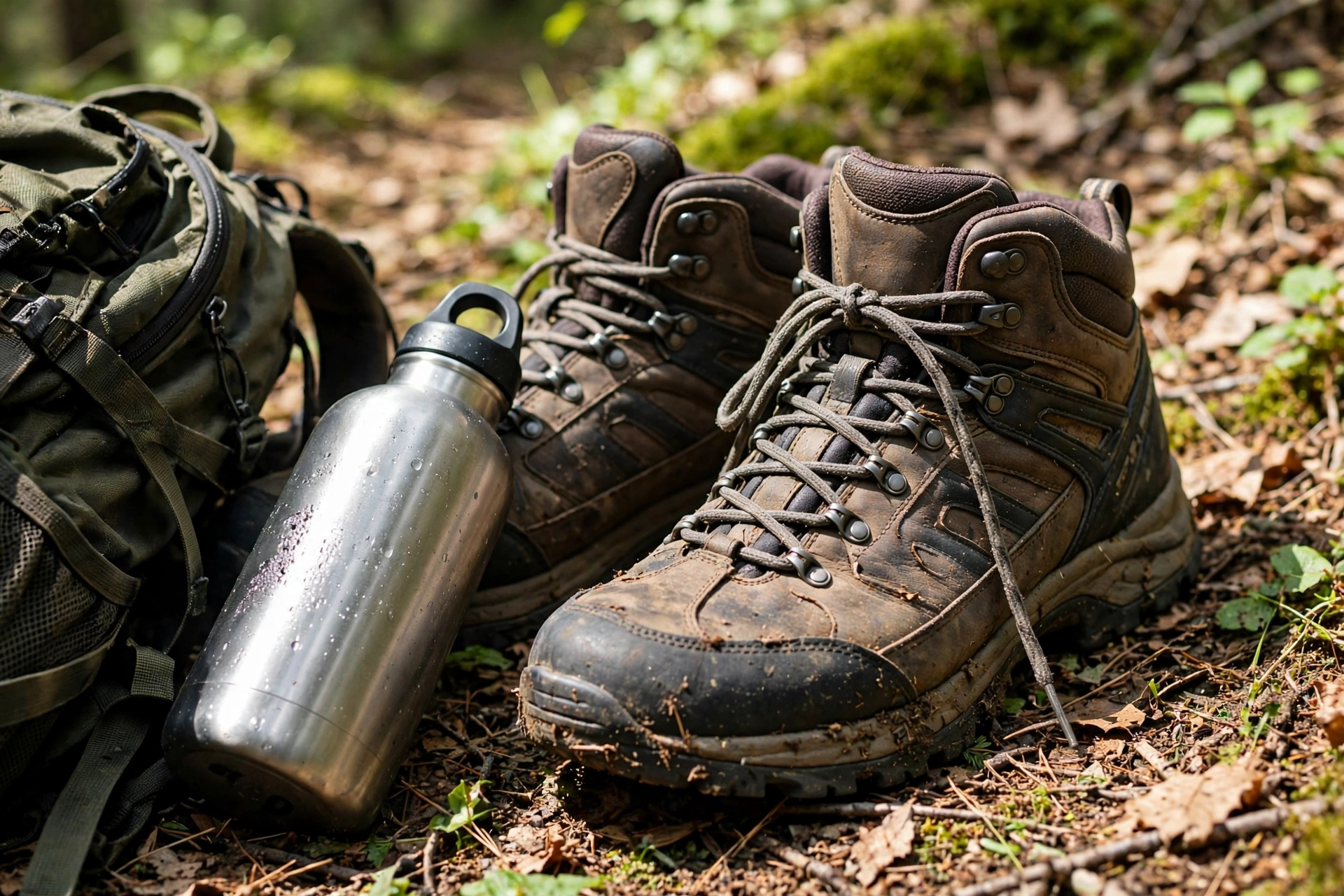
- Footwear: hiking shoes or boots with grip and ankle support. Break them in first — new boots on a long trail mean blisters.
- Clothing: moisture-wicking layers you can add or remove. Avoid cotton, which stays wet with sweat.
- Backpack: a small daypack (15–25 litres) for water, snacks, and a first-aid kit.
- Water: at least half a litre per hour of hiking, more in hot weather.
- Snacks: something portable and filling — a banana, a handful of nuts, or a granola bar.
- Sun protection: sunscreen, a hat, and sunglasses, even on cloudy days.
- Navigation: a charged phone with an offline map of the trail.
- First aid: plasters for blisters, any personal medication, and a basic kit.
What to eat before and after a hike
For a hike under an hour, just eat normally and stay hydrated. For longer hikes, eat a balanced meal one to two hours before you set off — slow-release carbohydrates with some protein, such as porridge with fruit or wholegrain toast with eggs. Avoid a heavy, fatty meal right before walking uphill.
On hikes over 90 minutes, eat a small snack every hour to stop the ravenous hunger that leads to overeating later. After a long hike, eat a proper meal within a couple of hours — protein for recovery, carbohydrates to replace the energy used.
One warning: do not "reward" a hike with a huge meal that wipes out the calories you burned. A two-hour hike might burn 1,000 calories — a large burger, fries, and a milkshake can easily exceed that. Enjoy a good meal afterwards, but keep it reasonable.
Staying safe on the trail
Tell someone where you are going and when you expect to be back, especially alone. Check the weather before you leave, stay on marked trails, and start early so you finish in daylight. Carry a phone with a full battery.
Sore muscles the day after a hike are normal, especially in the first few weeks. Sharp joint pain, dizziness, or chest pain are not — stop, rest, and get help if you feel them. Walking downhill is often harder on the knees than walking up, so take short steps and use walking poles if your knees are sensitive.
Key takeaways
- Hiking burns roughly 400–700 calories per hour, depending on your weight, the terrain, and your pace.
- A hilly two-hour hike can burn 800–1,400 calories, with less impact on your knees than running.
- Start with short, flat trails and add no more than about 10 percent distance a week.
- Carry water, wear proper shoes, and snack hourly on longer hikes.
- Two hikes a week plus a modest calorie deficit means steady, sustainable weight loss.
- The best exercise is the one you enjoy enough to keep doing.
Frequently asked questions
How many calories do you burn hiking for one hour?
Most adults burn roughly 400 to 700 calories per hour: at around 70 kg, about 400–450 on flat ground and 550–650 on steep trails; at 90 kg, about 500–800. A heavy backpack adds 5–10 percent.
Is hiking better than walking for weight loss?
Yes, hiking usually burns more calories than walking on flat ground, because hills and uneven terrain make your muscles work harder — a hilly hike can burn 50–100 percent more per hour. Flat walking is still excellent exercise, though; the best choice is the one you will do regularly.
How often should I hike to lose weight?
Aim for two to three hikes a week, including one longer hike of two hours or more — roughly 1,600–2,800 extra calories a week, which supports steady weight loss with a sensible calorie deficit. On other days, a daily walk keeps your activity up.
Do I need special shoes to start hiking?
Comfortable trainers with good grip are fine for short, flat trails. For longer or steeper hikes, proper hiking shoes or boots with ankle support and a grippy sole are worth it. Whatever you wear, break it in with short walks first to avoid blisters.
Can hiking help with belly fat?
No exercise targets belly fat specifically — fat loss happens across the whole body. But hiking burns a lot of calories, builds leg muscle, and is easy to sustain for months, so with a modest calorie deficit it reduces body fat, including around the waist, over time.
Is hiking safe for beginners who are overweight?
Yes — walking is low-impact and you control the pace, so hiking is one of the safest exercises for beginners carrying extra weight. Start with short, flat trails, wear supportive shoes, take breaks when you need them, and build up gradually. Check with your doctor first if you have a medical condition.






Comments (0)
No comments yet. Be the first to share your thoughts!
Leave a comment