

Eating late at night does not automatically make you gain weight. What matters most is how many calories you eat in total over the whole day, not the exact hour on the clock. However, late-night eating often leads to extra calories, poorer food choices, and disrupted sleep, which can make weight gain more likely over time. A consistent, sensible eating schedule is one of the simplest tools for keeping your weight under control.
If you have ever found yourself standing in front of the fridge at 11 pm, you are not alone. Evening hunger is extremely common, and it is often driven less by real physical hunger and more by tiredness, habit, boredom, or a day of undereating. Understanding why this happens — and how to handle it — matters far more than feeling guilty about a single late snack.
What the Science Actually Says About Eating Late
For a long time, the popular rule was simple: never eat after a certain hour. The science is more nuanced than that. Weight gain happens when you consistently eat more calories than your body burns. If a late-night meal fits within your daily calorie needs, it will not by itself turn into body fat.
That said, researchers have repeatedly found that people who eat a large share of their calories late in the evening tend to gain more weight over time. The reason is usually behavioural rather than magical: late eaters tend to eat more overall, choose more calorie-dense foods, and sleep worse. Your body also appears to handle food slightly less efficiently late at night, when insulin sensitivity is naturally lower and your body is preparing for rest.
The honest summary is this: the clock is not the villain, but late-night eating creates conditions that make overeating easy. That is why meal timing is a useful weight-loss tool, even though total calories remain the deciding factor. To understand your own calorie needs, you can estimate them with the BMR and TDEE calculator and learn how a safe calorie deficit works.
Why Late-Night Eating Often Leads to Weight Gain
Late eating does not cause weight gain in isolation, but it is linked to several habits that do:
- Extra calories on top of the day's meals. Most late-night snacks are additions, not replacements. A bowl of crisps or ice cream after dinner can easily add several hundred calories you did not plan for.
- Poorer food choices. When you are tired, willpower is low and the brain craves quick energy: salty, sweet, and fatty foods. Few people crave a salad at midnight.
- Mindless eating. Evening snacks are often eaten in front of the television or phone, so you barely register how much you have eaten.
- Disrupted sleep. A heavy, spicy, or very large meal close to bedtime can cause discomfort and reflux, leading to poorer sleep. Poor sleep raises hunger hormones and cravings the next day, creating a cycle.
- Skipped meals earlier in the day. People who skip breakfast or eat too little during the day often arrive at the evening genuinely ravenous, then overeat at night.
The Best Eating Schedule to Lose Weight
There is no single perfect schedule that works for everyone, but the best eating schedule to lose weight follows a few consistent principles. It front-loads energy earlier in the day, keeps meal times regular, and leaves a comfortable gap before sleep:
- Eat a proper breakfast and lunch. When your daytime meals are satisfying and rich in protein and fibre, evening hunger drops dramatically.
- Keep meal times consistent. Eating at roughly the same times each day helps regulate hunger hormones and prevents the "starving by 9 pm" trap.
- Make dinner satisfying, not tiny. A balanced dinner with protein, vegetables, and a moderate portion of whole grains or potatoes keeps you full without being heavy.
- Finish eating 2 to 3 hours before bed. This gap gives your body time to digest, improves sleep quality, and naturally cuts off the riskiest snacking window.
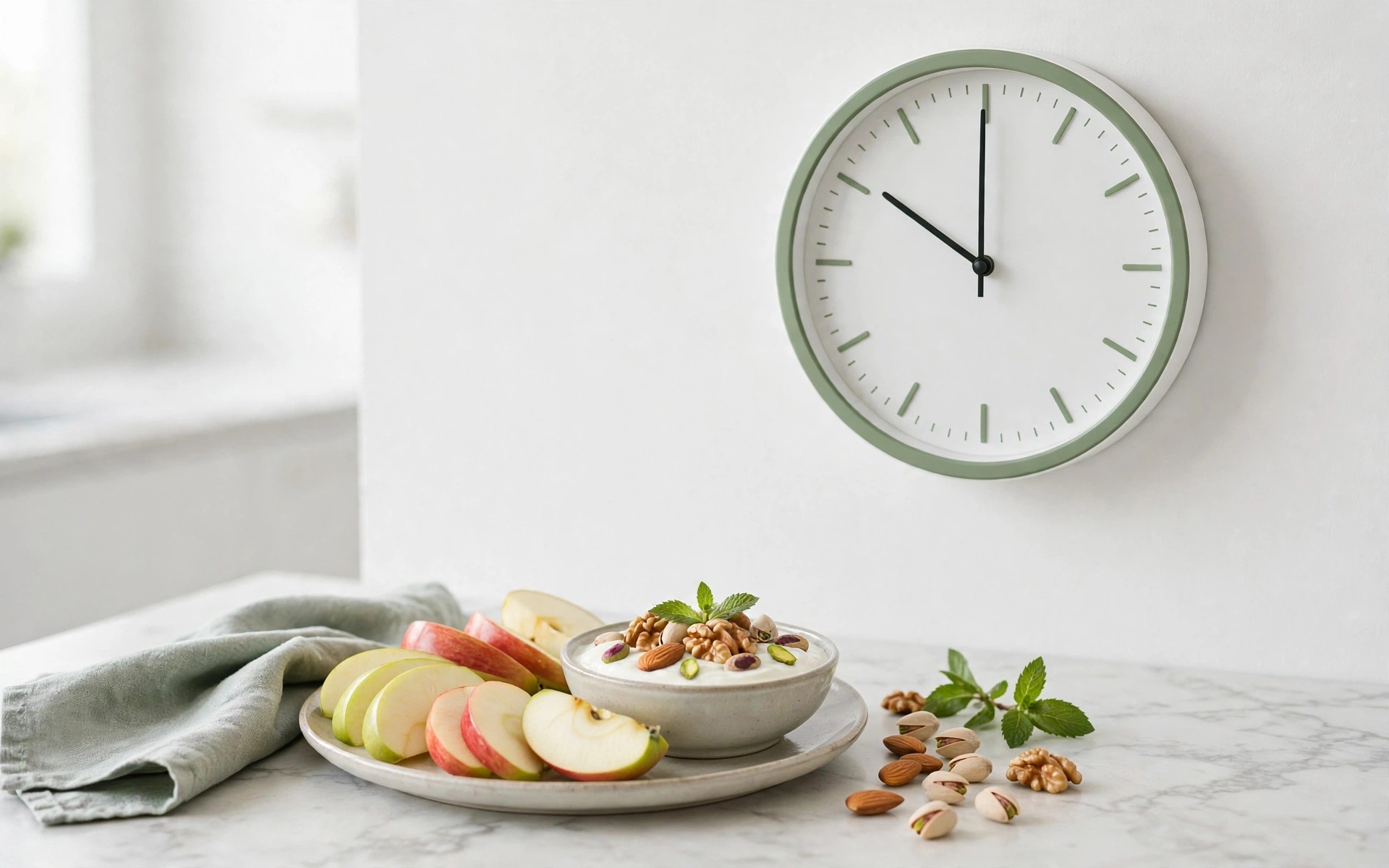
- Plan an evening snack if you need one. If you genuinely feel hungry, plan it: fruit with yoghurt, a small handful of nuts, or herbal tea. A planned snack beats an unplanned raid on the kitchen.
Keeping track of what you actually eat in the evening can be eye-opening. Logging your meals for a week with a meal log often reveals patterns — such as a daily 10 pm snack habit — that are easy to fix once you see them. For more on timing, read our guide to the best time to eat for weight loss.

Practical Tips for Evening Eating
- Brush your teeth after dinner. It is a simple psychological signal that eating is finished for the day.
- Keep tempting snacks out of sight. If crisps and sweets are not on the counter, you are far less likely to reach for them.
- Drink first. Thirst is often mistaken for hunger. A glass of water or herbal tea before a snack helps you judge real hunger.
- Pre-portion snacks. Eat from a small bowl, never straight from the packet.
- Fix the real cause. If you snack from boredom, replace the habit with a walk, a book, or a phone call. If you snack from tiredness, an earlier bedtime helps more than any diet rule.
- Do not skip meals to "save calories" for the evening. It almost always backfires into bigger evening portions.
When Eating Late Is Fine
Late eating is not always a problem. Shift workers, people who train in the evening, and anyone with an irregular schedule may need to eat late — and that is perfectly fine, as long as total daily intake stays in check. In these cases, the same principles apply: choose balanced meals, watch portion sizes, and keep a consistent pattern where possible. The goal is a sustainable routine, not a rigid curfew.
Key takeaways:
- Eating late does not automatically cause weight gain — total daily calories matter most.
- Late-night eating often adds unplanned calories, worse food choices, and poorer sleep.
- The best eating schedule to lose weight is consistent: satisfying daytime meals, a balanced dinner, and a 2–3 hour gap before bed.
- A planned, portioned evening snack is far better than unplanned midnight grazing.
- Track your evening eating for a week — awareness alone often fixes the habit.
Frequently Asked Questions
Does eating after 8 pm make you gain weight?
No, not by itself. Weight gain depends on your total calorie intake over the day and over weeks, not on a single cutoff time. However, eating after 8 pm often means extra, unplanned calories and poorer food choices, which is why it is linked to weight gain in practice.
What is the best eating schedule to lose weight?
The best eating schedule to lose weight is one you can stick to: regular meal times, satisfying meals earlier in the day, a balanced dinner, and finishing eating 2 to 3 hours before bed. Front-loading more of your calories earlier in the day and keeping a consistent routine tends to reduce evening overeating.
Is it bad to eat right before bed?
Eating a large, heavy, or spicy meal right before bed can disturb your sleep and cause discomfort or reflux. A small, light snack is usually fine if you are genuinely hungry, but a big meal late at night is best avoided for both sleep quality and weight control.
What should I eat if I am hungry late at night?
Choose something light, portioned, and rich in protein or fibre: Greek yoghurt with berries, a small handful of nuts, fruit, cottage cheese, or herbal tea. Avoid large portions of crisps, sweets, or fried foods, which add many calories without keeping you full.
Can I lose weight even if I eat late sometimes?
Yes, absolutely. Occasional late eating will not ruin your progress as long as your overall calorie intake stays within your target and your general pattern is balanced. Consistency over weeks matters far more than perfection on any single evening.






Comments (0)
No comments yet. Be the first to share your thoughts!
Leave a comment