
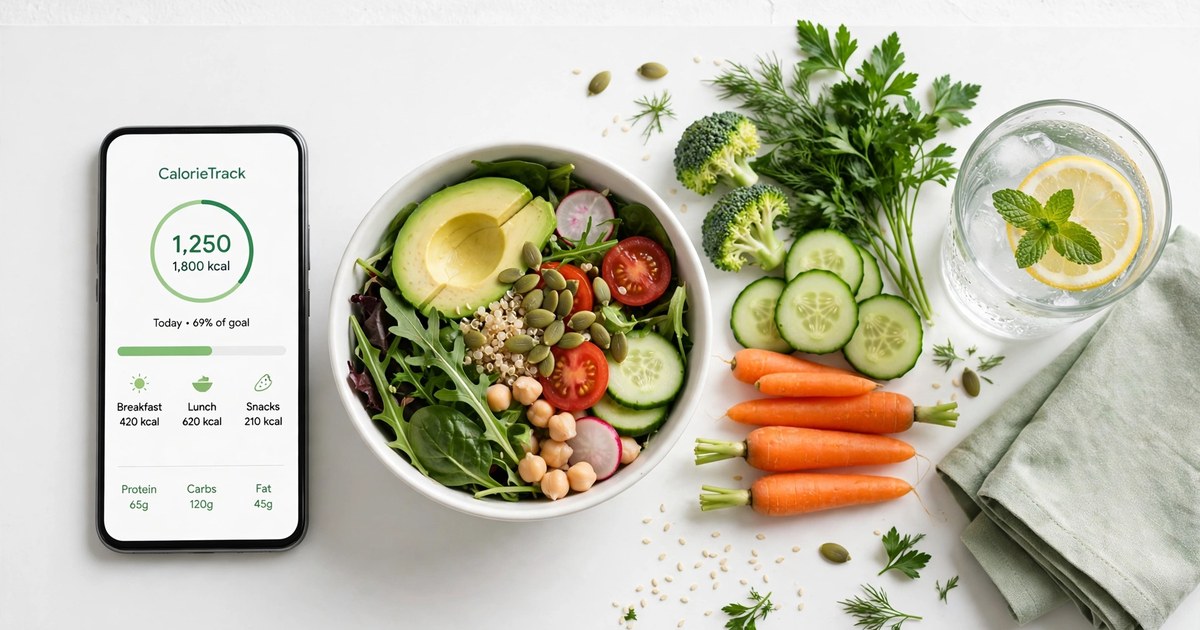
A calorie counter online is a free tool that lets you log what you eat and drink, add up the calories, and compare your total with a daily target based on your age, weight, height, and activity. Used consistently, it turns vague eating habits into clear numbers — and that clarity helps most people lose weight and keep it off.

Key Takeaways
- A calorie counter online turns your daily eating into numbers you can see, compare, and adjust.
- Start with your maintenance calories (TDEE), then subtract a modest 300–500 calories for steady weight loss.
- Logging honestly matters more than logging perfectly — small errors are fine, missing days are not.
- Free tools are enough for most people; you do not need a paid app to track calories well.
- Weigh your food for the first few weeks — eyeballed portions are usually larger than you think.
- Review your weekly average, not single days, and adjust your target every few weeks as your weight changes.
What Is a Calorie Counter Online?
A calorie counter online is a website or app where you search for foods, enter your portion sizes, and see the calories add up through the day. Most counters also track protein, carbohydrates, and fat, and many include a large food database so you can log a home-cooked meal, a restaurant dish, or a packaged snack in seconds. The idea is simple: you cannot manage what you do not measure, and a tracker makes the measuring almost effortless.
Unlike a paper diary, an online counter remembers your frequent foods, saves your recipes, and shows your running total instantly. When you can see that a large latte and a muffin already used up a third of your day's calories before lunch, you make a different choice at lunch. Our free calorie tracker works exactly this way: search, log, and watch your day take shape.
How to Use a Calorie Counter Online, Step by Step
Getting started takes about ten minutes, and the habit gets easier every day. Here is the process that works for most people:
- Set up your profile. Enter your age, sex, height, current weight, and activity level. The counter uses these to estimate your daily calorie needs.
- Find your maintenance calories. This is your TDEE — the calories you burn in a typical day. You can estimate it with a BMR and TDEE calculator if your counter does not do it for you.
- Set your target. For weight loss, subtract 300–500 calories from your maintenance level. A smaller deficit is slower but far easier to live with.
- Log everything for two weeks. Every meal, snack, drink, and cooking oil. This is your learning phase, not a test — the goal is awareness, not perfection.
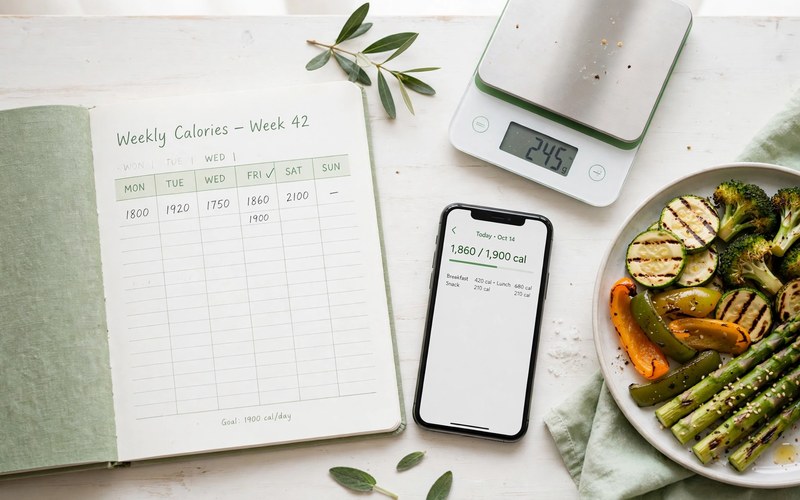
- Check your weekly average. One high day does not ruin a week. Compare your average intake with your average weight trend over two to three weeks, then adjust by 100–200 calories if needed.
For a deeper look at building the daily habit, read our guide on how to keep a calorie log and lose weight — it covers the practical routines that make logging stick past the first week.
Setting Your Daily Calorie Target
Your target is the single most important number in calorie tracking, and it is worth getting roughly right. If your maintenance level is 2,200 calories, a target of 1,700–1,900 calories gives you a moderate deficit that supports a loss of roughly 0.25–0.5 kg per week. That pace sounds slow, but it adds up to 12–25 kg over a year — and it is a pace most people can actually maintain.
Two guardrails matter. First, do not drop below about 1,200 calories a day for women or 1,500 for men without medical supervision; below that, it becomes hard to get enough nutrients. Second, recalculate your target every few weeks or after every 5 kg lost, because a smaller body burns fewer calories. A target that worked at your starting weight will eventually stop working, and that is normal, not failure.
Choosing the Best Free Calorie Counter Online
You do not need to pay to track calories well. A good free calorie counter online should have a large food database, barcode search if it offers an app, the ability to save your own meals and recipes, and a clear daily summary that shows calories and macronutrients at a glance. It should also let you review your history, so you can spot patterns over weeks.
Be wary of counters that push extreme targets, shame you for going over, or hide basic features behind a paywall. The best tool is the one you will actually open every day. If a simple web-based tracker fits your routine better than a feature-packed app, use the simple one — consistency beats features every time.
Common Mistakes When Tracking Calories
- Forgetting drinks and cooking fats. Sugary drinks, alcohol, milky coffees, and cooking oil can add hundreds of calories a day without filling you up.
- Guessing portion sizes. A kitchen scale for two weeks is eye-opening; most people underestimate portions by a noticeable amount.
- Only logging "good" days. Skipped days hide the very patterns you need to see. Log the pizza too — honest data beats a pretty diary.
- Treating the target as a pass-or-fail test. Landing within 100 calories of your target is a win. Perfection is not required for progress.
- Never adjusting the target. Your needs change as you lose weight. A plateau often just means your old target is now your maintenance level.
How to Stay Consistent With Calorie Tracking
Most people quit tracking because it feels like a chore, not because it does not work. Make it easier: log meals right after eating, save your regular breakfasts and lunches as favourites, and pre-log your day in the morning when you already know what you will eat. A routine that takes five minutes a day is one you can keep for months.
It also helps to judge yourself weekly, not daily. Weight fluctuates with water, salt, and hormones, so a single day's scale reading tells you very little. Look at your weekly average weight and your weekly average calories together — when both move in the right direction, you are on track, even if one day looks messy.
Note: this article is general information only, not medical advice. If you are pregnant, breastfeeding, under 18, have diabetes, an eating disorder, or any medical condition, or you take medication that affects weight or appetite, talk to a doctor or registered dietitian before changing your diet or starting calorie tracking.
Frequently Asked Questions
Is there a truly free calorie counter online?
Yes. Several web-based calorie counters are free, including the NutriCounter tracker, and they cover the essentials: a food database, daily totals, and macronutrient tracking. Paid versions usually add extras like barcode scanning or detailed reports, but you do not need them to lose weight.
How many calories should I eat to lose weight?
Most adults do well with a daily deficit of 300–500 calories below their maintenance level (TDEE). You can estimate your TDEE with a BMR and TDEE calculator, then refine your target over two to three weeks by watching your weight trend. Stay above about 1,200 calories a day for women or 1,500 for men unless a doctor advises otherwise.
Do I need to weigh my food to track calories?
Not forever, but weighing food for the first two to three weeks is very helpful. It trains your eye, so later estimates are much more accurate. After that, many people can estimate common portions well enough and only weigh foods that are easy to get wrong, like rice, pasta, and cooking oil.
What if I go over my calorie target one day?
Nothing bad happens. One day over target does not undo weeks of progress, just as one salad does not cause weight loss. Look at your weekly average instead, and simply return to your target the next day rather than skipping meals to "make up for it."
How long should I track calories?
Track daily until the habit feels automatic and you understand your typical portions — usually at least a month or two. Many people then switch to tracking a few days a week as a check-in, or return to full tracking whenever their weight starts creeping up.






Comments (0)
No comments yet. Be the first to share your thoughts!
Leave a comment