

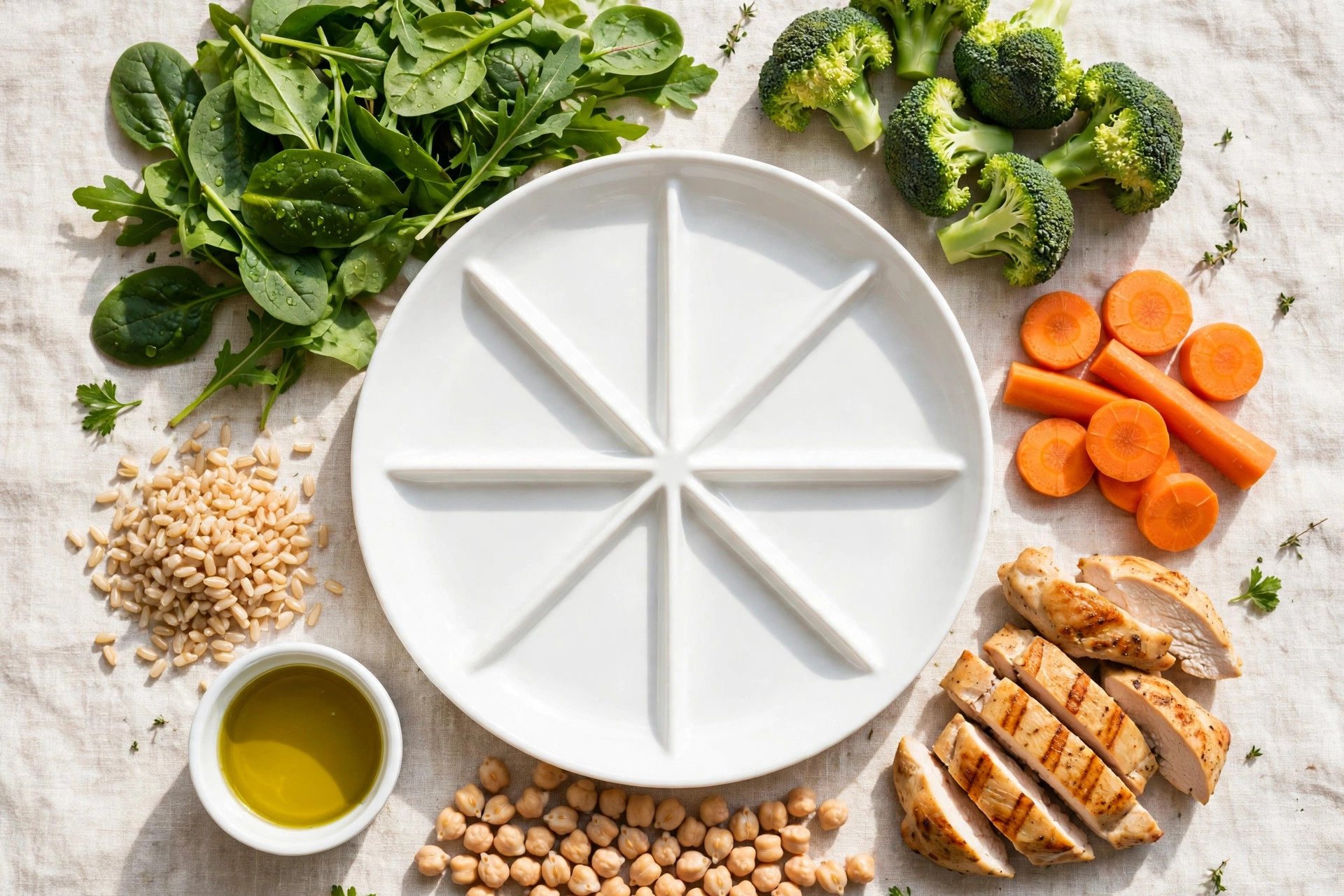
A balanced plate is simple to build: fill half your plate with vegetables, a quarter with protein, and a quarter with whole grains or starchy vegetables, then add a small amount of healthy fat. This formula gives you fibre, protein, and steady energy in one meal, without counting a single calorie.
What Is a Balanced Plate?
A balanced plate is not a strict diet. It is a visual guide that helps you put together meals that keep you full, energised, and satisfied. Instead of weighing food or tracking every bite, you use the proportions on your plate as your guide. That makes it easy to use at home, at work, or in a restaurant.
The idea works because each part of the plate does a different job. Vegetables add volume, fibre, and nutrients for very few calories. Protein helps you stay full and supports your muscles. Whole grains and starchy vegetables give you lasting energy. Healthy fats add flavour and help your body absorb certain vitamins. Together, they make a meal that feels complete.
The Simple Balanced Plate Formula
Picture your plate divided into sections:
- Half the plate: vegetables. Fresh, cooked, roasted, or in a salad — aim for variety and colour. Leafy greens, broccoli, carrots, peppers, tomatoes, and green beans all work well.
- A quarter of the plate: protein. Chicken, fish, eggs, beans, lentils, tofu, or lean meat. Protein is what keeps you feeling full long after the meal.
- A quarter of the plate: whole grains or starchy vegetables. Brown rice, whole-wheat bread, oats, quinoa, potatoes, or sweet potatoes.
- Plus a little healthy fat. A drizzle of olive oil, a handful of nuts, some avocado, or a spoonful of seeds.
You do not need to measure these sections precisely. A rough visual split is enough. If your plate looks mostly like vegetables with a palm-sized portion of protein and a fist-sized portion of grains, you are on the right track.
Why Proportions Matter More Than Perfection
No single meal has to be perfect. What matters is the overall pattern across your day and week. If lunch is a little heavier on grains, make dinner heavier on vegetables. The balanced plate is a flexible guide, not a pass-or-fail test, and that flexibility is exactly why it works in real life.
Choosing Your Protein
Protein is the anchor of a balanced plate. It slows digestion, steadies your appetite, and helps you avoid the hungry-again-in-an-hour feeling that follows a meal made only of refined carbohydrates.
Good everyday choices include chicken, turkey, fish, eggs, yoghurt, beans, lentils, chickpeas, and tofu. Fatty fish such as salmon or sardines also provide healthy fats. Plant proteins like beans and lentils are especially useful because they add fibre as well as protein, which makes them very filling.
Try to vary your protein across the week rather than eating the same one every day. That variety gives you a wider range of nutrients and keeps meals interesting. If you eat meat, balance it with several plant-based meals each week.
Choosing Your Carbohydrates
Carbohydrates are not the enemy of a balanced plate — the type matters. Whole grains and starchy vegetables release energy slowly, so you feel steady rather than getting a quick spike followed by a crash.
- Whole grains: brown rice, oats, quinoa, whole-wheat bread and pasta, bulgur.
- Starchy vegetables: potatoes, sweet potatoes, corn, peas, and squash.
- Use refined grains in smaller amounts: white bread, white rice, and pastries can still fit in, but they are less filling, so keep the portion modest.
A useful rule is to keep the grain portion to about a quarter of the plate. That leaves plenty of room for vegetables while still giving you enough energy to get through the afternoon.
Healthy Fats: Small Amount, Big Difference
Fat often gets a bad reputation, but healthy fats are an essential part of a balanced plate. They make vegetables taste better, help you absorb vitamins A, D, E, and K, and add satisfaction to a meal.
Good sources include olive oil, avocado, nuts, seeds, and oily fish. Because fats are calorie-dense, a little goes a long way — a drizzle of oil, a small handful of nuts, or a quarter of an avocado is usually enough.
What About Drinks?
Drinks are the forgotten part of the plate. Water is the best everyday choice: it hydrates you without adding sugar or calories. Sparkling water, unsweetened tea, and black coffee also work well for most people.
Sugary drinks, on the other hand, can quietly undo an otherwise balanced meal. A large sweetened drink can contain as much sugar as a dessert, without making you feel full at all. If you enjoy juice or sweetened drinks, treat them as an occasional extra rather than your default with meals.
Portion Cues Without Counting Calories
If you do not want to count calories, your hands give you a surprisingly reliable guide:
- Protein: about the size and thickness of your palm.
- Whole grains or starchy vegetables: about a cupped handful, or a fist-sized amount.
- Vegetables: two open handfuls, or half the plate.
- Healthy fats: about a thumb-sized amount of oil or butter, or a small handful of nuts.
These cues adjust naturally to your body size, which is one reason they work better than one-size-fits-all portion rules. For more ideas on eating well without tracking numbers, see our guide to portion control without counting calories.
Balanced Plate Examples
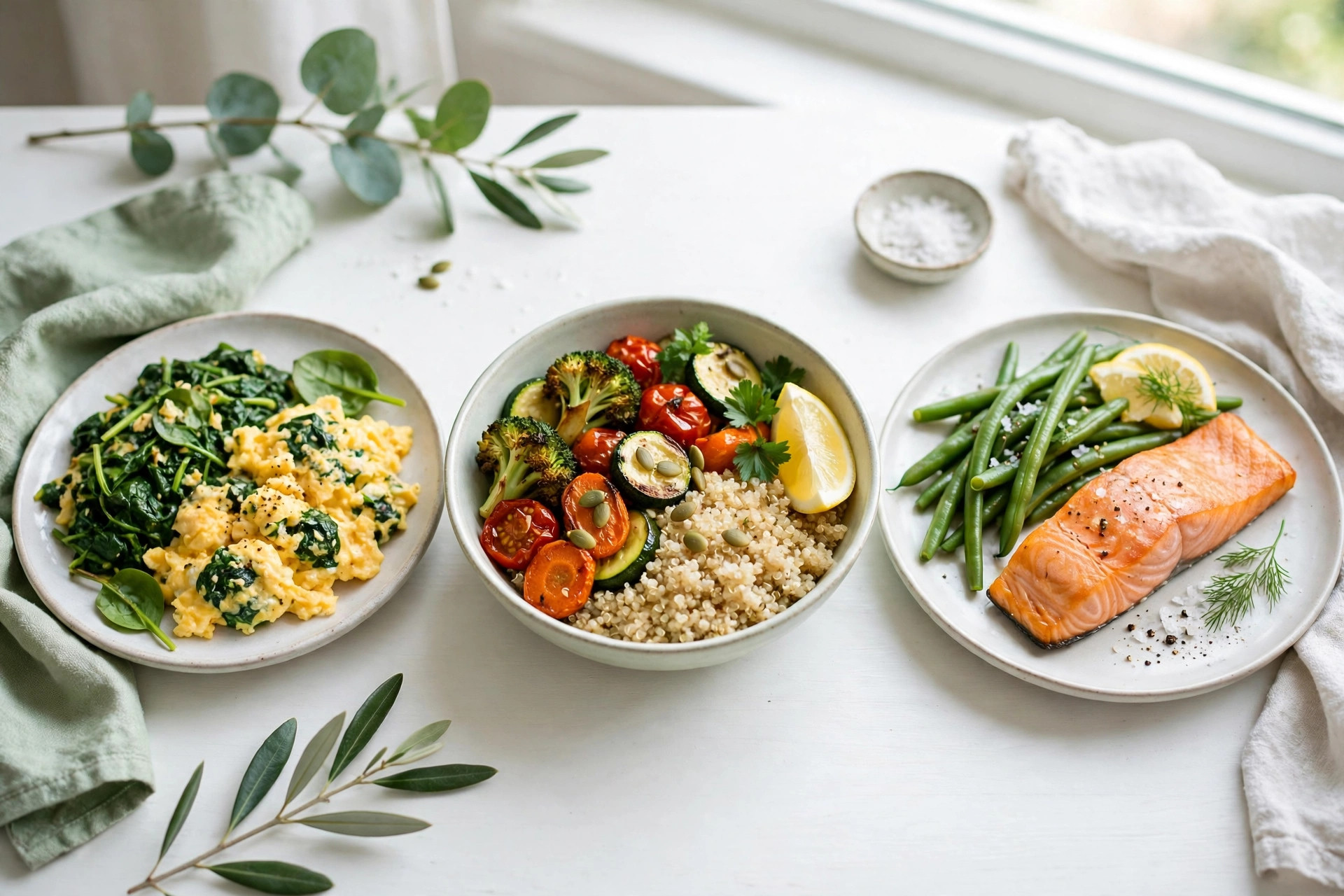
Here is what the formula looks like in real meals:
Breakfast
Scrambled eggs with spinach and tomatoes, a slice of whole-wheat toast, and a few berries on the side. The vegetables and fruit fill half the plate, the eggs provide protein, and the toast provides lasting energy.
Lunch
A grain bowl with quinoa, grilled chicken or chickpeas, roasted broccoli and carrots, and a drizzle of olive oil with lemon. Add a handful of leaves and you have a complete, filling lunch that travels well to work.
Dinner
Baked salmon or lentils, brown rice, and a large serving of steamed green beans and roasted sweet potato. Finish with a small salad dressed with olive oil. This is a classic balanced plate: colourful, filling, and simple to cook.
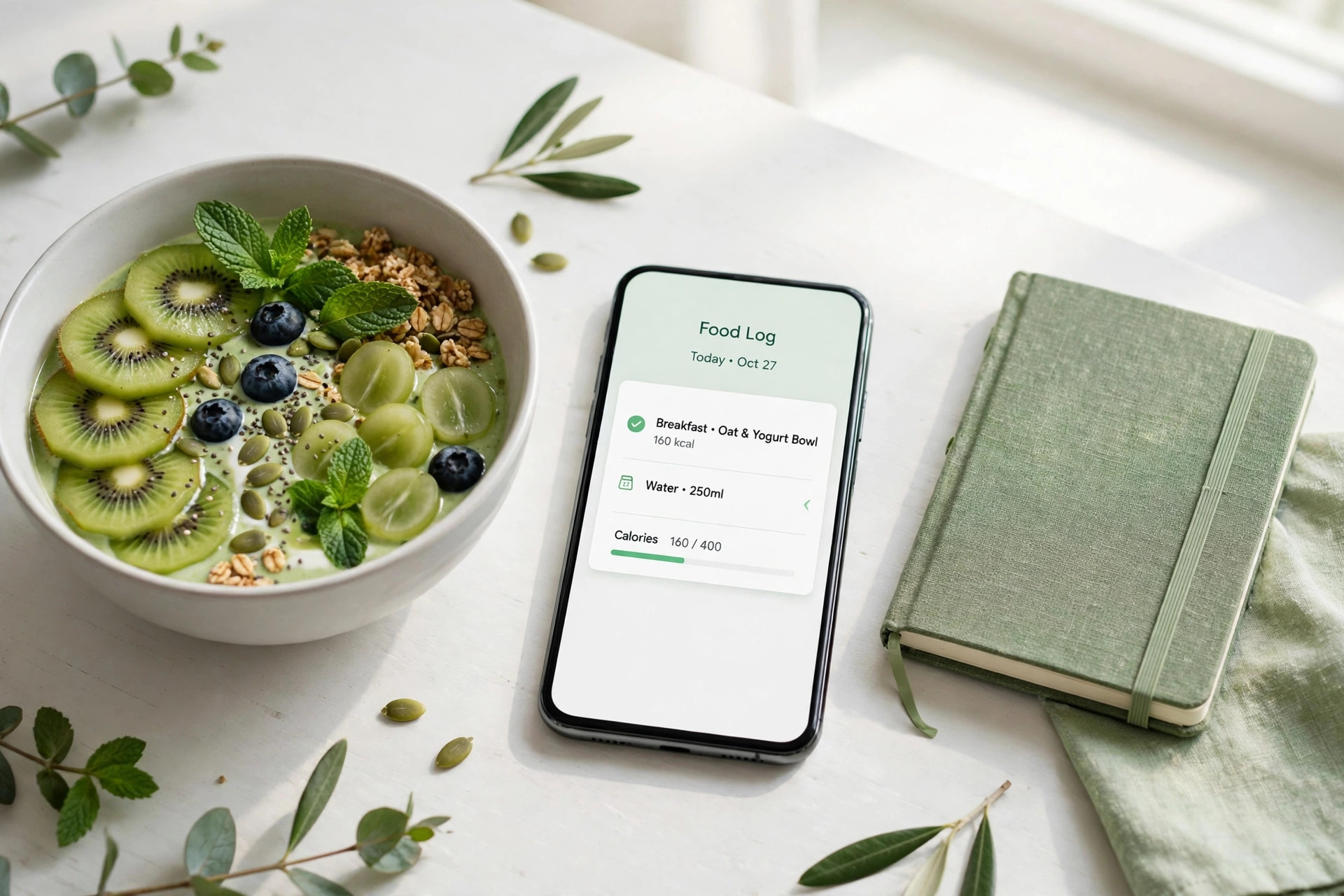
If you want to keep track of how your meals stack up over the week, the NutriCounter meal log and food tracker make it easy to record what you ate and spot patterns — without turning every meal into a maths problem.
Common Mistakes to Avoid
- Skipping vegetables. A plate of only meat and rice, however tasty, misses the fibre and volume that keep you full.
- Letting grains take over. A huge mound of pasta with a token side salad is the most common imbalance — flip the proportions.
- Forgetting protein at breakfast. A breakfast of only toast or cereal often leads to mid-morning hunger. Add eggs, yoghurt, or nuts.
- Going too low on fat. Completely fat-free meals can feel unsatisfying and make vegetables bland. A little healthy fat helps a lot.
- All-or-nothing thinking. One unbalanced meal does not ruin anything. Just return to the formula at the next meal.
Your 3-Step Starter Plan
- Start with vegetables. At your next meal, fill half the plate with vegetables or salad first, before adding anything else. This one change alone transforms most plates.
- Add protein and grains. Fill a quarter with a protein you enjoy and a quarter with a whole grain or starchy vegetable. Keep portions roughly palm- and fist-sized.
- Make it a habit for one week. Use the formula at one meal a day for a week, then expand to two meals. If you like planning ahead, our meal prep guide for beginners shows how to prepare balanced meals in advance so the healthy choice is also the easy choice.
Key Takeaways
- Fill half your plate with vegetables, a quarter with protein, and a quarter with whole grains or starchy vegetables.
- Add a small amount of healthy fat, such as olive oil, nuts, or avocado.
- Use your hand as a portion guide: palm for protein, fist for grains, two handfuls for vegetables.
- Drink water as your default, and keep sugary drinks occasional.
- No meal has to be perfect — aim for the pattern across the whole week.
Building a balanced plate is a skill, not a diet. Learn the formula, practise it for a week, and healthy eating starts to feel automatic rather than effortful.



Comments (0)
No comments yet. Be the first to share your thoughts!
Leave a comment