
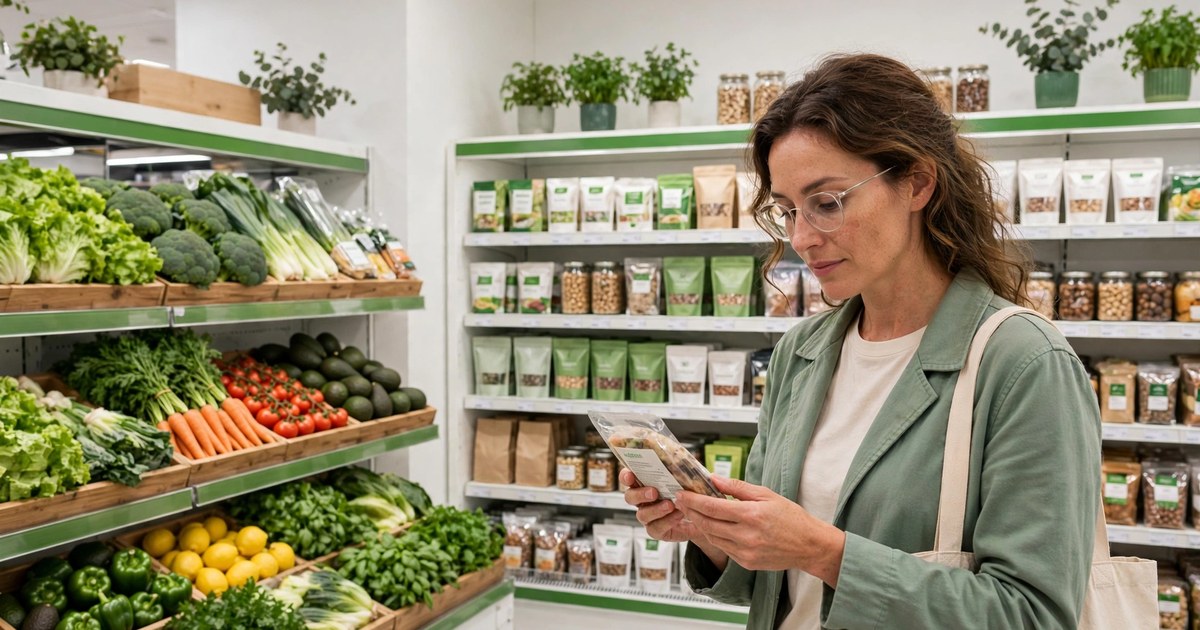
Before you buy a packaged food, check the ingredients list first, then the nutrition panel. Ingredients are listed in order of weight, so the first few items tell you what the food is mostly made of. Compare sugar, salt, fibre and fat per 100 grams, not just per serving, and you can judge a product in under a minute.
Most of us shop in a hurry. We grab familiar brands, trust the front of the pack, and only wonder later why a "healthy" cereal left us hungry an hour later. The good news is that you do not need a nutrition degree to shop well. You need a simple routine, applied consistently, and a little scepticism about marketing words on the front of the packet.
This guide shows you how to check food ingredients nutrition quickly, what to look for, what to ignore, and how to use free online tools to double-check a product before it goes into your basket.
 Food ingredients nutrition: what the label really tells you
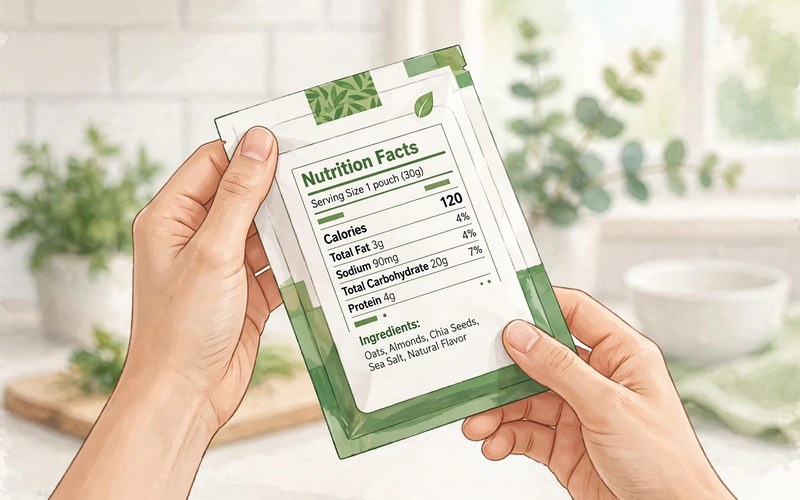
A food label has two parts that matter most: the ingredients list and the nutrition table. The front of the pack is advertising. The back is information. Always turn the pack over.
The ingredients list is ordered by weight, from highest to lowest. If sugar, glucose syrup or refined flour appears first or second, that ingredient dominates the product, whatever the brand name suggests. A short, recognisable list is usually a good sign, but a long list is not automatically bad — some long lists are simply herbs, spices and whole foods.
How to read the ingredients list
- Start at the top: the first three ingredients make up most of the product.
- Watch for sugar in disguise: glucose, fructose, maltodextrin, cane syrup, honey and fruit juice concentrate are all forms of sugar.
- Check the type of fat: look for oils and fats named clearly, and be cautious with products high in saturated fat.
- Look for whole foods first: whole wheat, oats, lentils, nuts and vegetables as early ingredients are encouraging signs.
- Note allergens and additives: allergens are usually highlighted, and additives are listed by name or number.
How to read the nutrition table
Compare products per 100 grams or per 100 millilitres, because serving sizes differ between brands and can make an unhealthy product look light. Check energy, total and added sugars, salt, saturated fat, fibre and protein. A product can be low in fat but very high in sugar, or low in sugar but very high in salt, so look at the whole picture rather than a single number.
For a deeper explanation of serving sizes and daily reference values, see how to read nutrition labels before your next shop.
How to check food ingredients nutrition in 5 minutes
Use this routine in the aisle. It takes a little longer at first, but soon becomes automatic.
- Turn the pack over. Ignore the front claims for a moment and read the back.
- Read the first three ingredients. Ask yourself: are these foods I recognise, and would I cook with them at home?
- Scan sugar and salt per 100 grams. Compare similar products side by side rather than judging one number alone.
- Check fibre and protein. Higher fibre and reasonable protein usually mean a food will keep you fuller for longer.
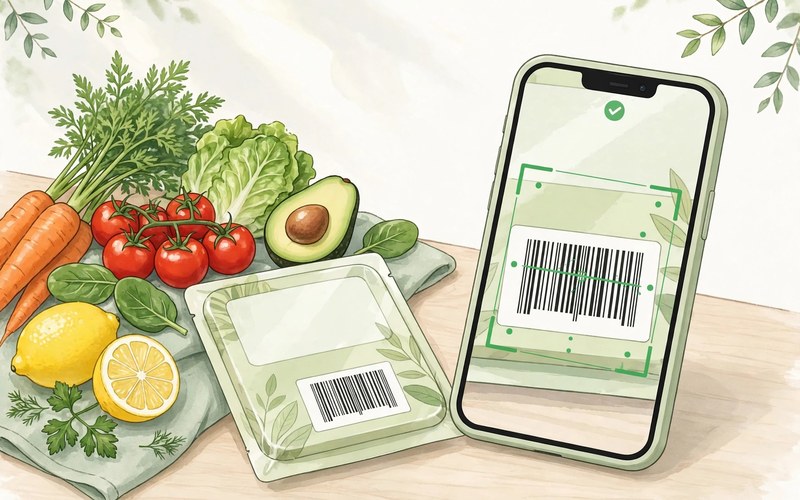
- Look up what you are unsure about. Use a food nutrition lookup to check a food's calories and nutrients, or a nutricion ingredients calculator approach: enter the food, check the numbers, and compare it with a plainer alternative.
- Decide by comparison, not perfection. Choose the better of the realistic options, not an ideal product you will never buy again.
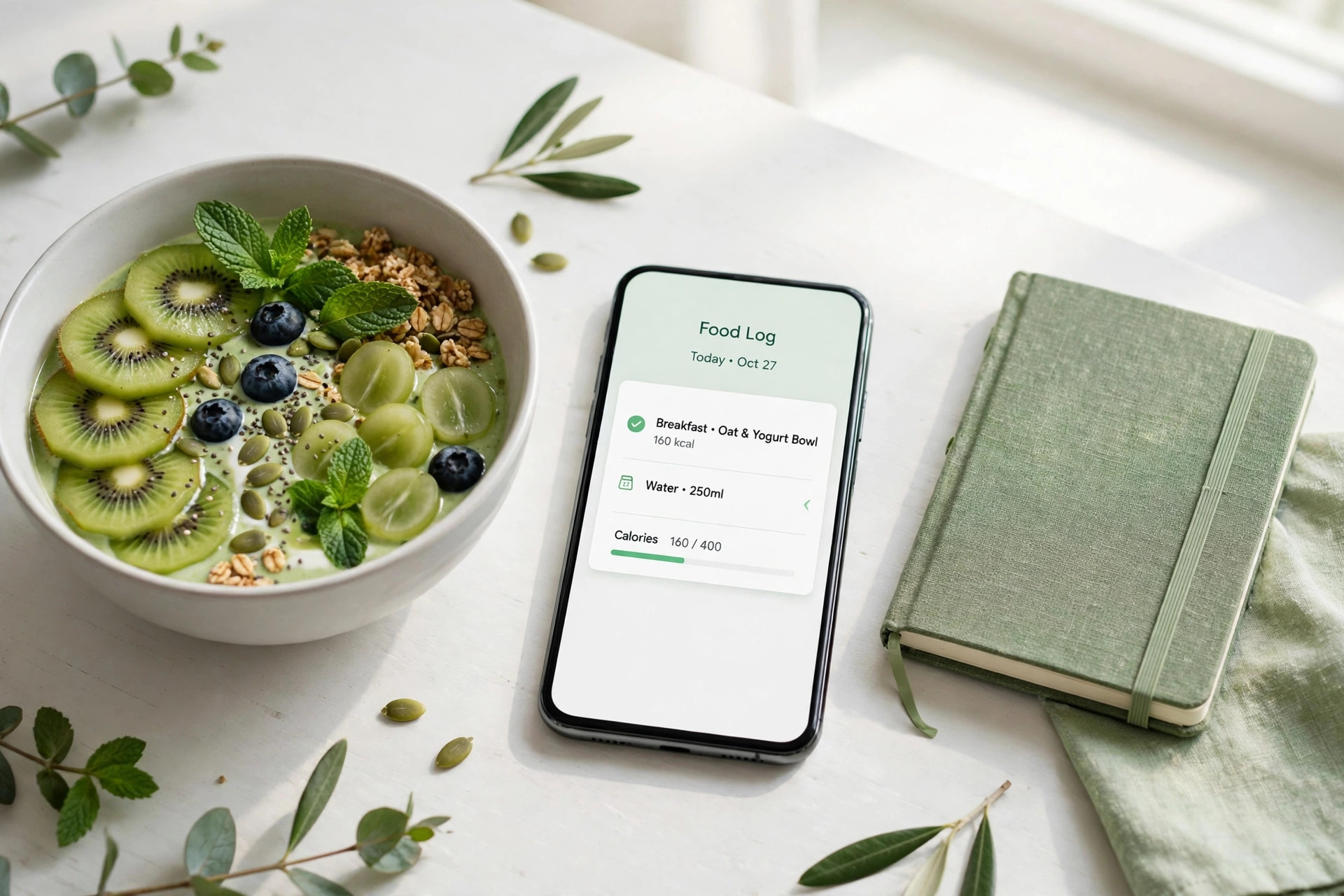
If you track your meals, you can also log the product in a calorie and nutrition tracker to see how it fits your day as a whole. One food never makes or breaks a diet; the pattern across the week is what matters.
Food ingredients nutrition red flags and marketing traps
Marketing language is not regulated in the same way as the ingredients list. Words like "natural", "light", "made with whole grains" and "no added sugar" can all be technically true and still misleading.
- "No added sugar" is not sugar-free: the product may still contain a lot of naturally occurring sugars from fruit juice or dried fruit.
- "Whole grain" may mean only a little: check whether a whole grain is actually the first ingredient.
- "Low fat" often means higher sugar: when fat is removed, sugar or starch is often added for flavour and texture.
- "Protein" bars and drinks vary enormously: some are closer to sweets with added protein than to a balanced snack.
- Health halos mislead: a green packet, a picture of fruit, or a fitness claim does not change the ingredients inside.
 Shopping smarter without overthinking every product
You do not need to analyse every single item. Focus your effort where it counts: breakfast cereals, breads, sauces, snacks, ready meals and drinks. These are the categories where sugar, salt and refined flour most often hide, and where a small swap makes a real difference.
Build a short list of trusted staples you have already checked — a bread, a yoghurt, a cereal, a cooking oil and a few snacks. Once those are settled, shopping becomes faster, and you only need to check new products. When you try something new, compare it with your staple rather than starting from scratch.
A quick example
Imagine two tomato sauces. One lists tomatoes first, then onion, garlic and olive oil, with a small amount of salt. The other lists tomato paste, sugar, glucose syrup and salt near the top. The first is clearly the better everyday choice, even if the second has a brighter label and a lower price. Price matters, of course, but the cheapest product is not always the best value for your health.
Key takeaways:
- Ingredients are listed by weight — the first three ingredients matter most.
- Compare sugar, salt, fat, fibre and protein per 100 grams, not per serving alone.
- Marketing words on the front are not a substitute for the label on the back.
- Use a nutrition lookup tool when unsure, and compare similar products side by side.
- Choose the better realistic option, and keep a list of staples you trust.
Checking food ingredients nutrition before you buy is a small habit with a large payoff. It protects you from misleading claims, helps you understand what you are really eating, and makes healthier shopping feel calm rather than confusing. Start with one category on your next shop, and let the habit grow from there.





Comments (0)
No comments yet. Be the first to share your thoughts!
Leave a comment