
Short answer: To fall asleep fast, get out of your head and into your body: try the 4-7-8 breathing method, run a body scan or "cognitive shuffle," keep your bedroom cool, dark, and quiet, stop watching the clock, and write tomorrow's worries down before bed. Most people fall asleep within 10–20 minutes once the racing thoughts settle.
Why Your Mind Races at Bedtime
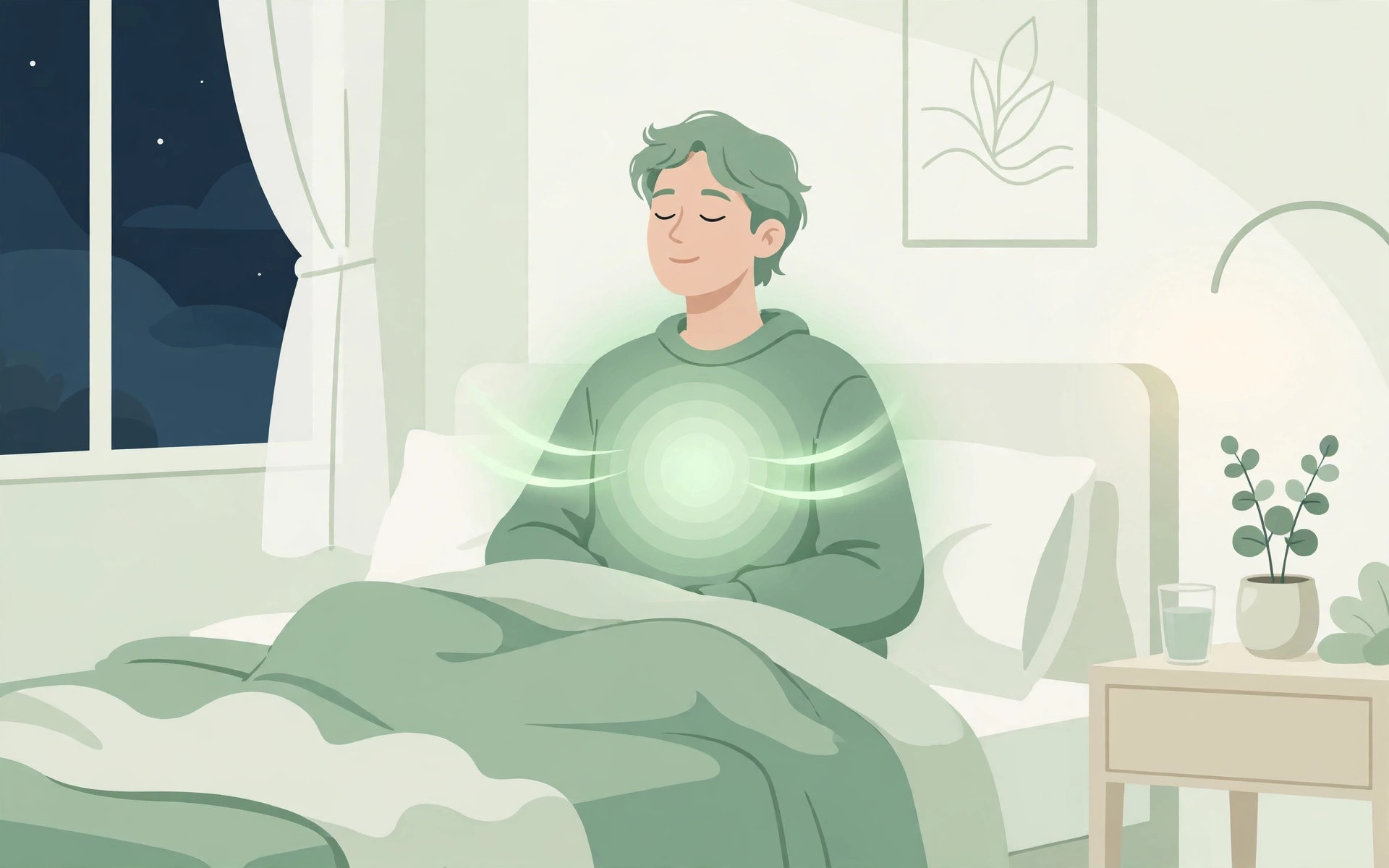
When the lights go out, distractions disappear — and your brain finally has time to process everything you ignored all day. Unfinished tasks, conversations you replayed, worries about tomorrow: they all rush in at once. This mental hyperarousal is one of the most common reasons people lie awake. Your nervous system is still in "alert" mode, and sleep requires the opposite: a calm, winding-down body.
The good news is that a racing mind is a trainable problem. The tips below work because they each do one of three things: slow your breathing and heart rate, redirect your attention away from rumination, or remove the environmental triggers that keep your brain alert.
How to Fall Asleep Fast: The 12 Proven Tips
1. Know what "normal" looks like
Taking 10–20 minutes to fall asleep is completely normal. Falling asleep in under 8 minutes regularly, on the other hand, can be a sign of sleep debt — your body is crashing, not sleeping well. Stop treating 15 minutes of wakefulness as a failure; that pressure alone can add minutes to the clock.
2. Try the 4-7-8 breathing method
Breathe in quietly through your nose for 4 seconds, hold for 7 seconds, then exhale slowly through your mouth for 8 seconds. Repeat 3–4 cycles. The long exhale activates your parasympathetic nervous system — the "rest" branch — which slows your heart rate and makes your eyelids feel heavy. It is one of the simplest ways to learn how to fall asleep fast without any equipment.
3. Use the cognitive shuffle
Pick a random letter and slowly visualize unrelated objects starting with it: apple, airplane, anchor, avocado… The images must be random and boring. This gentle mental task occupies your brain's language centers just enough to block anxious loops, while being too dull to keep you awake. Many people drift off before finishing the alphabet.
4. Do a 2-minute body scan
Starting at your forehead, move your attention slowly down through your body: eyes, jaw, shoulders, arms, hands, chest, stomach, legs, feet. At each point, consciously release the tension you find. Most of us carry far more muscle tension to bed than we realize, and deliberately letting it go sends a powerful "safe to sleep" signal to the brain.
5. Make the room cool, dark, and quiet
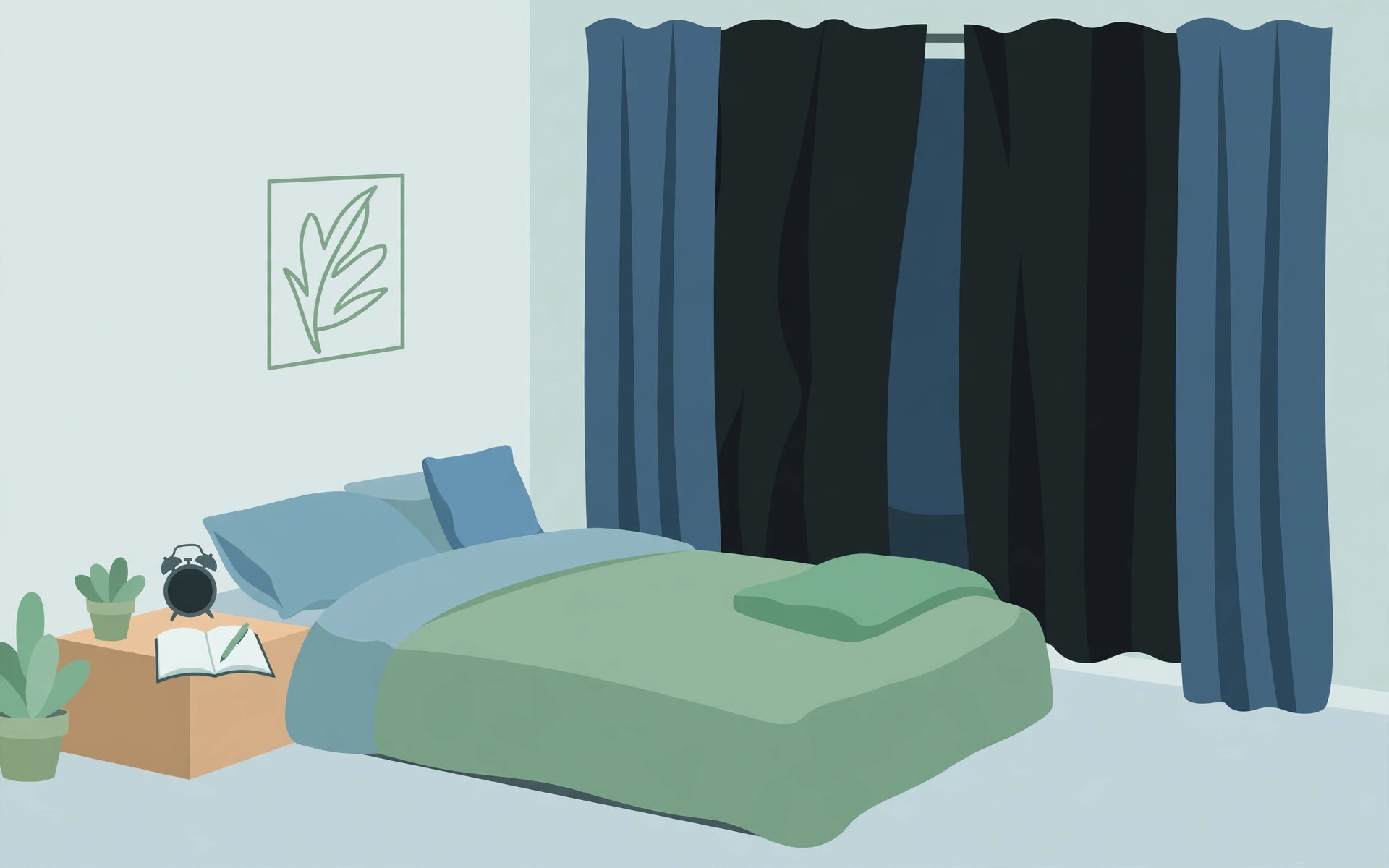
Your core body temperature needs to drop about 1°C for sleep onset. A cool room (around 18–20°C / 65–68°F) helps that happen faster. Darkness matters just as much: even dim light can suppress melatonin. Use blackout curtains or a sleep mask, and block or mask noise with earplugs or a fan. Small bedroom upgrades like these are covered in more depth in our guide to sleep hygiene habits for better sleep.
6. Set a caffeine cutoff
Caffeine has a half-life of roughly 5–6 hours, which means the coffee you drank at 3 PM is still half-present at 9 PM. Set a personal cutoff — for most people, no caffeine after 12–2 PM — and remember it hides in tea, chocolate, energy drinks, and some painkillers. Alcohol deserves the same caution: it may make you drowsy, but it fragments sleep and fuels 3 AM wake-ups.
7. Put screens away 30–60 minutes before bed
Blue light is only part of the story — the bigger problem is that feeds, news, and messages keep your brain in reactive mode. A screen curfew of 30–60 minutes gives your mind time to power down. Swap the scroll for a book, a podcast, or a calm conversation. If you want the full picture of what screens do to your rest, read how screen time affects your sleep.
8. Keep a worry journal by the bed
Give racing thoughts an exit route. Spend 5 minutes writing down everything on your mind — tomorrow's tasks, unresolved conversations, vague worries — plus the next concrete step for each. Your brain keeps rehearsing these items because it fears forgetting them; once they are on paper, it can let go. This single habit resolves bedtime rumination for a surprising number of people.
9. Stop watching the clock
Checking the time every few minutes turns sleep into a performance with a deadline. Turn the clock face away, put the phone out of reach, and remind yourself of tip #1: 20 minutes of quiet rest is normal. Clock-watching raises anxiety, and anxiety is the opposite of drowsiness.
10. If you're awake after ~20 minutes, get up
Lying in bed frustrated trains your brain to associate the bed with wakefulness. If 20 minutes have passed and you are still alert, get up, go to another dimly lit room, and do something calm and boring — read a dull book, fold laundry — until you feel sleepy. Then return to bed. This resets the bed = sleep association.
11. Eat a magnesium-rich evening snack
Magnesium plays a role in muscle relaxation, and evening foods like bananas, almonds, pumpkin seeds, oats, and yogurt provide it alongside sleep-friendly carbs and protein. Keep the snack light (a small bowl) so digestion does not keep you up. Track how evening meals affect your rest with the NutriCounter sleep tracker, and explore your personal patterns with the AI Nutrition Coach.
12. Wake up at the same time every day
This is the most underrated tip on the list. A fixed wake time — even on weekends — anchors your circadian rhythm and builds healthy sleep pressure through the day, so you actually feel drowsy at bedtime. Consistency of wake time matters more than consistency of bedtime. Understanding the science helps: read sleep cycles explained — REM and deep sleep to see how timing shapes your night.
What If You Still Can't Fall Asleep?
One bad night is not a crisis — sleep drive usually compensates the next evening. Keep the same wake time, get daylight in the morning, move your body during the day, and avoid compensating with long naps (keep them under 20–30 minutes, before 3 PM). If sleepless nights become a pattern of 3+ nights per week for several weeks, it is time to take it more seriously.
When to See a Doctor
See a healthcare professional if you regularly struggle to fall asleep for more than 30 minutes, wake frequently and cannot return to sleep, feel excessively sleepy during the day, snore loudly or gasp in your sleep, or if poor sleep is affecting your mood, work, or health. Chronic insomnia is treatable — cognitive behavioral therapy for insomnia (CBT-I) is the first-line, evidence-based treatment and outperforms sleeping pills long-term. You deserve rest, and help exists.
Key takeaways
- Falling asleep within 10–20 minutes is normal; under 8 minutes often signals sleep debt, not great sleep.
- Slow your body down with 4-7-8 breathing, a body scan, or the cognitive shuffle to break rumination loops.
- Make the bedroom cool (18–20°C), dark, and quiet, and stop watching the clock.
- Cut caffeine after early afternoon, limit alcohol, and put screens away 30–60 minutes before bed.
- Keep a worry journal, get up after ~20 minutes of wakefulness, and anchor everything with a fixed wake time.
Frequently asked questions
How long should it take to fall asleep?
For most adults, 10–20 minutes is the healthy range. Consistently falling asleep in under 8 minutes usually means you are carrying sleep debt. Regularly taking longer than 30 minutes to fall asleep, several nights a week, is worth discussing with a healthcare professional.
Does the 4-7-8 breathing method really help you fall asleep?
It helps many people. The extended exhale stimulates the vagus nerve and shifts your nervous system toward rest, lowering heart rate and calming racing thoughts. It works best as part of a wind-down routine rather than a one-night miracle — give it a few nights of practice.
Should I stay in bed if I can't fall asleep?
No — if you are still awake after about 20 minutes, get up and do something calm in dim light until you feel drowsy. Staying in bed while frustrated teaches your brain to link the bed with wakefulness, which makes future nights harder.
Can food really help me fall asleep faster?
A light evening snack with magnesium-rich foods like bananas, almonds, or oats can support relaxation, and going to bed neither stuffed nor hungry helps. But no food guarantees fast sleep — the biggest levers remain light exposure, consistent timing, caffeine, and a calm mind.
When should I talk to a doctor about not being able to fall asleep?
Talk to a doctor if sleeplessness happens 3 or more nights a week for several weeks, if you feel very sleepy during the day, or if snoring, gasping, or low mood are involved. CBT-I (cognitive behavioral therapy for insomnia) is the recommended first treatment for chronic insomnia.






Comments (0)
No comments yet. Be the first to share your thoughts!
Leave a comment