
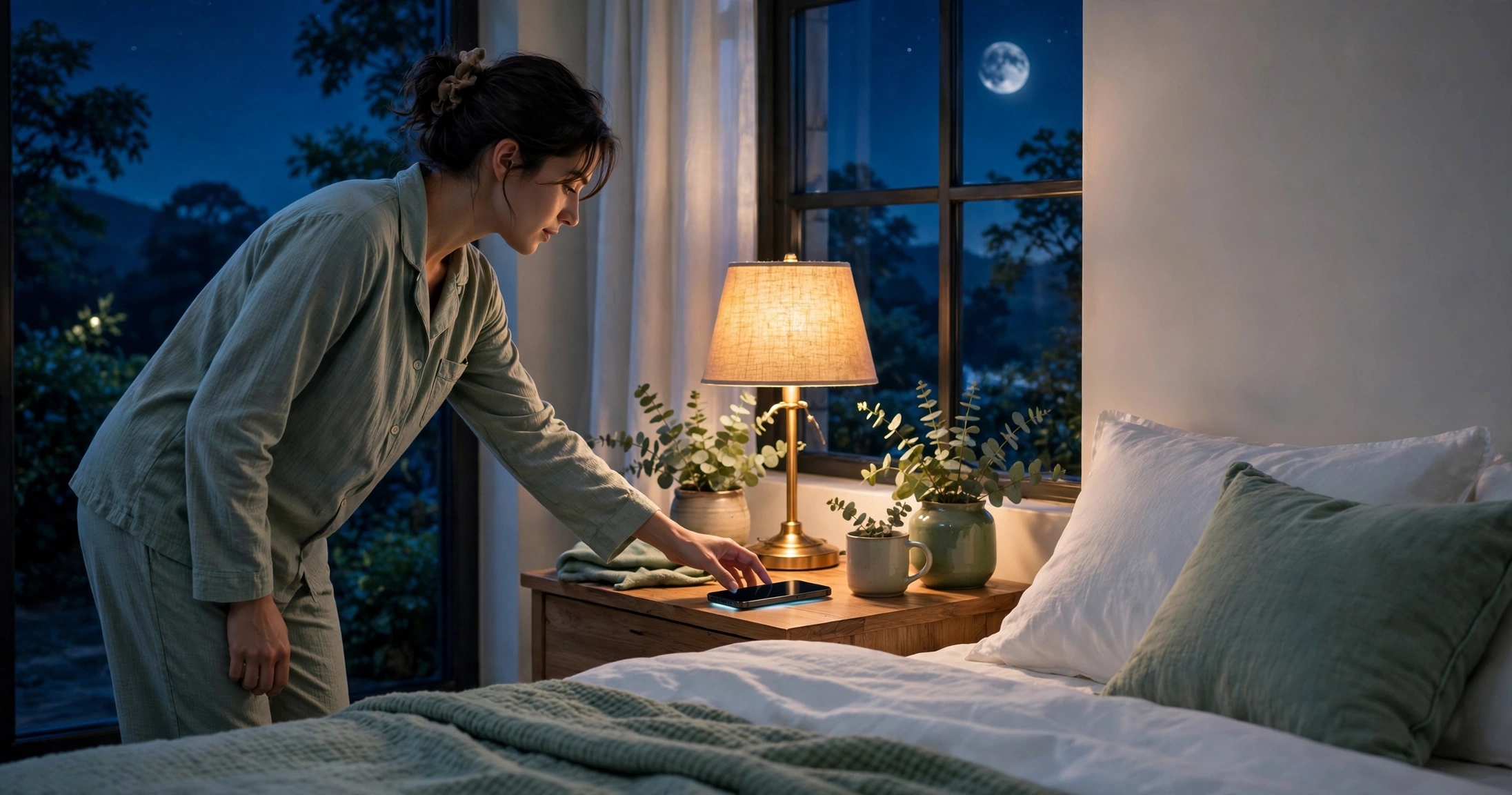
The short answer: Late-night screen time and sleep don't mix. The blue light from phones, tablets, and TVs delays melatonin, while stimulating content keeps your brain alert. The result is later bedtimes, lighter sleep, and harder mornings. To fix it: dim your screens, set a digital curfew, and swap scrolling for a calming wind-down routine.
Key takeaways
- Screen time and sleep are connected through two channels: blue light (which delays melatonin release) and mental stimulation (which keeps your brain alert).
- Using screens within the hour before bed is linked to later sleep onset and lighter, less restorative sleep.
- You don't have to give up screens — a digital curfew, dimmer displays, and a calm wind-down routine make a big difference.
- Better sleep improves energy, focus, appetite control, and weight management the next day.
How Screen Time and Sleep Interact
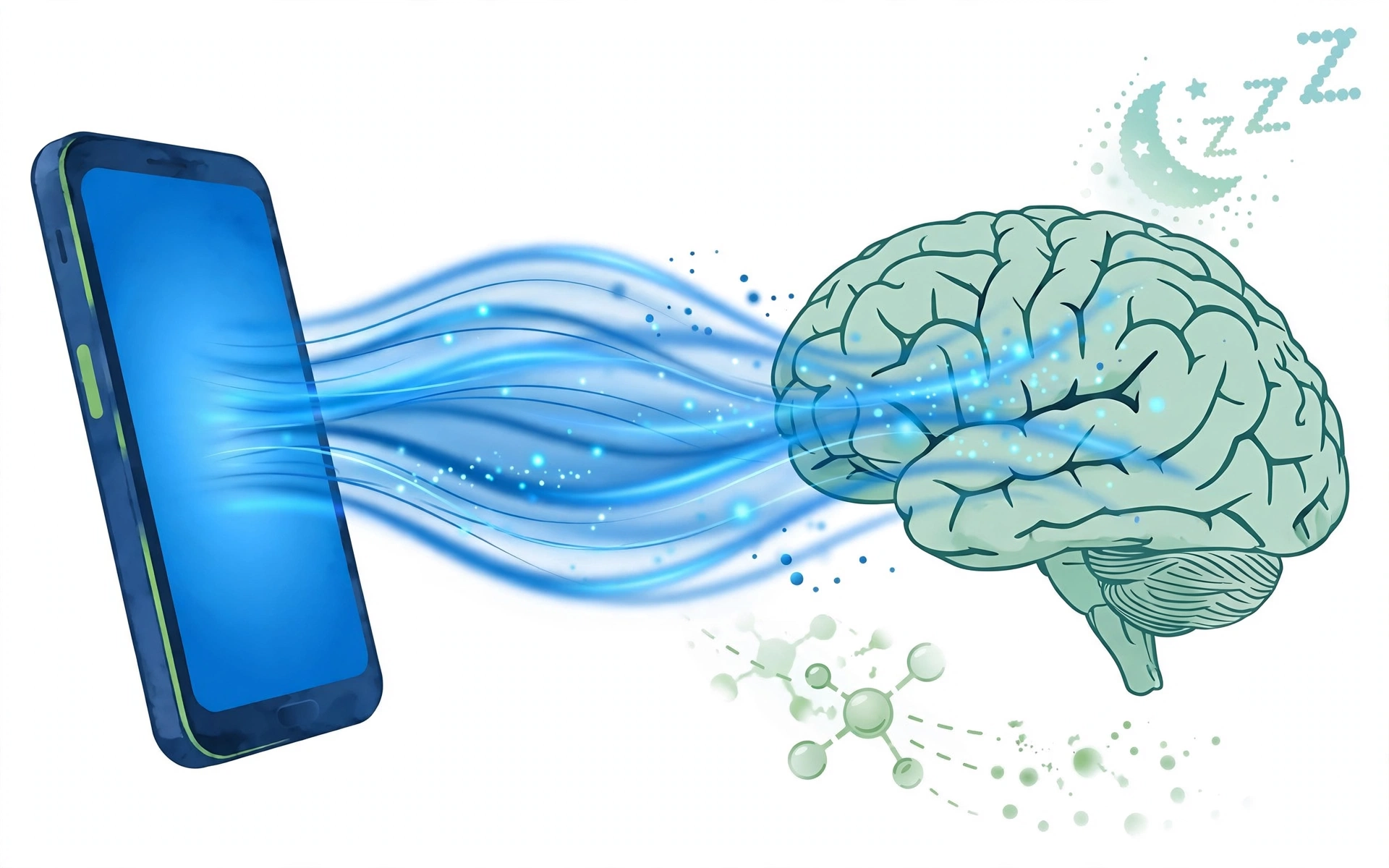
To understand the link between screen time and sleep, it helps to know how your body decides it's time to sleep. As evening falls, your brain releases melatonin, a hormone that signals drowsiness and prepares your body for rest. Light is the main cue that controls this process — bright light suppresses melatonin, while darkness lets it rise.
Phone, tablet, laptop, and TV screens all emit light rich in the blue wavelengths that are especially effective at suppressing melatonin. When you scroll in bed or watch TV until lights-out, you're essentially telling your brain it's still daytime. Melatonin release is delayed, your internal clock shifts later, and you feel wide awake even though you're tired. Researchers call this "social jetlag" pattern one of the most common side effects of modern evening screen habits.
But light is only half the story. The content on your screen matters just as much. News feeds, social media arguments, work emails, and fast-paced shows trigger emotional reactions and mental engagement. Your brain can't switch from an argument in the comments section to deep sleep in five minutes — it needs a buffer to power down. This is why many people fall asleep with their phone in their hand, only to wake up feeling unrefreshed.
Screen Time and Sleep Quality: What the Evidence Shows
Most of us focus on how much sleep we get, but screen time affects how well we sleep too. People who use screens late into the night tend to fall asleep later and spend more of the night in lighter sleep stages, with less of the deep, restorative sleep that repairs muscles and consolidates memory. Even if the total hours look fine on paper, the quality often isn't.
There are also a few less obvious effects worth knowing about:
- More nighttime wake-ups. Notifications buzzing on your nightstand can fragment your sleep even if you don't fully wake up to check them.
- Vivid, anxious dreams. Emotionally charged content before bed can make dreams more intense and leave you feeling restless in the morning.
- Morning grogginess. A delayed internal clock means your alarm goes off during what your body still considers nighttime — hence the snooze-button struggle.
The good news: these effects are reversible. Studies on sleep hygiene consistently find that reducing evening screen exposure is one of the fastest ways to improve both how quickly you fall asleep and how rested you feel the next day. If you're working on better sleep hygiene habits for better sleep, managing screens is the single highest-leverage change you can make.

Why Screen Time and Sleep Affect Your Whole Day
Poor sleep doesn't stay in the bedroom — it follows you into everything you do. When screen time and sleep habits collide, the fallout shows up the next morning: lower energy, weaker focus, stronger cravings for sugary and salty snacks, and less motivation to move. It's a genuine chain reaction.
Sleep loss also affects hunger hormones. Short or fragmented sleep raises ghrelin (the "I'm hungry" hormone) and lowers leptin (the "I'm full" hormone), which is one reason poor sleepers tend to eat more the next day. If you've been wondering how sleep affects your weight, nighttime screen habits are a common hidden culprit.
This is also where the rest of your routine matters. A morning routine for energy is much easier to stick to when you actually slept well, and staying active with the exercise tracker gets harder when you're running on five hours of shallow sleep. Fixing the evening often fixes the morning.
7 Practical Ways to Fix Your Nighttime Screen Habits
You don't need to throw your phone away. Small, consistent changes to how you use screens in the evening can noticeably improve your sleep within a week or two. Here's where to start:
1. Set a digital curfew
Pick a time — ideally 30 to 60 minutes before bed — when recreational screens go off. Put the phone on a charger outside the bedroom if you can. This single habit removes both the blue light and the mental stimulation in one move.
2. Dim and warm your displays
Turn on night mode or a blue-light filter on all your devices, and lower the brightness in the evening. It won't solve everything, but it reduces the light signal telling your brain to stay awake.
3. Silence the bedroom
Switch your phone to Do Not Disturb or airplane mode at night. If you use your phone as an alarm, buy a cheap alarm clock instead — it's one of the best sleep investments you can make.
4. Build a wind-down routine
Replace scrolling with something genuinely relaxing: reading a physical book, stretching, journaling, or a warm shower. A consistent routine trains your brain to recognize these cues as "sleep is coming."
5. Keep work off the couch
Checking work email at 11 PM is a fast track to a racing mind. Set a boundary: work apps close when the workday ends. Your inbox will still be there in the morning.
6. Be selective about evening content
If you do watch something before bed, choose calm over intense. A gentle documentary beats a thriller or a heated debate show when your goal is sleep.
7. Track what changes
Pay attention to how you feel on low-screen evenings versus heavy-screen evenings. Many people are surprised how quickly mornings improve — and that feedback makes the habit stick. Pair it with basics like good hydration habits and regular movement for the full effect.
Frequently Asked Questions
Does blue light from screens really affect sleep?
Yes. Blue-wavelength light from phones, tablets, computers, and TVs suppresses melatonin, the hormone that signals drowsiness. Using bright screens in the hour or two before bed can delay sleep onset and reduce sleep quality, which is why dimming displays and using night mode in the evening helps.
How long before bed should I stop using screens?
Aim for 30 to 60 minutes of screen-free time before bed. That buffer gives your melatonin time to rise and your mind time to unwind. If a full hour feels impossible, start with 20 minutes and build from there — even a short break is better than scrolling until lights-out.
Is watching TV in bed as bad as scrolling on my phone?
TV is generally less harmful than a phone, mainly because the screen is farther from your eyes and the content is usually more passive. That said, binge-watching stimulating shows late at night still delays sleep. If you watch TV, keep the volume and brightness moderate and stop at a set time.
Do blue-light glasses actually work?
They can help reduce the amount of blue light reaching your eyes, and some people report falling asleep faster while wearing them. But they're not a magic fix — the mental stimulation from late-night content matters too. Think of them as a useful add-on to a digital curfew, not a replacement for one.
Can kids and teens use screens before bed?
Teenagers are even more sensitive to evening light than adults, and their school schedules leave little room for lost sleep. Encourage the same rules: no phones in bed, a digital curfew before lights-out, and charging devices outside the bedroom overnight.





Comments (0)
No comments yet. Be the first to share your thoughts!
Leave a comment