
Most hydration myths exaggerate a small kernel of truth into a rigid rule. You don't need exactly eight glasses a day, coffee doesn't dehydrate you, and thirst is a reliable early signal — not a danger sign. Here are eight of the most common hydration myths, what the evidence actually says, and how to drink enough water without the guesswork.
Water keeps every system in your body running, so it's no surprise that advice about drinking water is everywhere. The problem is that much of it has hardened into confident-sounding hydration myths that don't hold up. Some are harmless oversimplifications; others can genuinely lead you astray. Let's look at eight of the biggest ones.
8 Common Hydration Myths, Debunked
Myth 1: You Must Drink Exactly Eight Glasses of Water a Day
The famous “8 × 8” rule — eight 8-ounce glasses — sounds scientific, but it has no solid origin in research. Your needs depend on body size, activity level, climate, and diet. Someone training in summer heat needs far more than someone at a desk in winter. A better approach: drink steadily through the day and let pale-yellow urine be your guide. For a deeper dive, read our guide on how much water you really need.
Myth 2: Coffee and Tea Dehydrate You
Caffeine is a mild diuretic, which is where this myth comes from — but the water in your cup more than makes up for it. Research suggests that moderate coffee drinking hydrates similarly to water. Your morning coffee absolutely counts toward your fluid intake. Very high caffeine doses can increase urine output, but a normal few cups a day won't dehydrate a healthy adult.
Myth 3: If You Feel Thirsty, You're Already Dehydrated
This one sounds alarming, but thirst is actually a sensitive, early warning system — not a sign of crisis. For most healthy people, drinking when thirsty is a perfectly good strategy. Feeling very thirsty can mean you're mildly dehydrated, but ordinary day-to-day thirst is simply your body's normal prompt to top up, not evidence that damage is being done.
Myth 4: More Water Is Always Better
Drinking enough is important, but forcing down far more than you need doesn't “flush toxins” faster or speed up fat loss. Your kidneys are excellent at regulating fluid balance, and extra water beyond thirst and sensible intake mostly just means extra bathroom trips. Aim for adequate, not excessive — more is not a health hack.
Myth 5: Bottled Water Is Healthier Than Tap Water
In areas with regulated, safe tap water, bottled water isn't inherently healthier — much of it is filtered municipal water anyway. Tap water in many countries is strictly tested and often contains beneficial fluoride. Bottled water wins on convenience and taste preference in some places, but as a health upgrade over safe tap water, it's mostly marketing.
Myth 6: Drinking Cold Water Burns Fat
Your body does warm cold water to body temperature, which uses a tiny amount of energy — but the effect is trivial, a handful of calories at most. It won't meaningfully affect fat loss. The real benefit of cold water is simpler: if you enjoy it cold, you'll probably drink more of it. Drink it at whatever temperature gets you to drink enough.
Myth 7: You Can't Overhydrate
You can — it's called hyponatremia, or water intoxication, where excessive water dilutes blood sodium. It's rare in everyday life and mostly affects endurance athletes who drink large volumes without electrolytes. Symptoms include nausea, headache, and confusion. The takeaway isn't to fear water; it's that balance matters, especially during long, sweaty efforts.
Myth 8: Fruits and Vegetables Don't Count Toward Hydration
They absolutely count. Cucumber, watermelon, oranges, strawberries, and lettuce are all mostly water, and they contribute meaningfully to your daily fluid intake. Soups, yogurt, and even cooked grains add water too. People who eat plenty of produce genuinely need less plain water — food-based hydration is real hydration.
How Much Water Do You Actually Need
There is no single magic number, but general guidance from health authorities lands around 2–3+ liters of total water per day for adults from all food and drinks combined, with men generally advised slightly more than women. Treat that as a starting point, then adjust for:
- Activity: exercise and physical work increase sweat losses — drink before, during, and after.
- Climate: heat and humidity raise your needs noticeably.
- Diet: salty or high-protein meals and alcohol increase water needs; watery produce decreases them.
- Health: fever, vomiting, or diarrhea call for extra fluids and electrolytes.
Want a number tailored to you? Try the NutriCounter water intake calculator — it estimates your personal target from your weight and activity level.
Practical Tips That Beat the Hydration Myths
Forget rigid rules and try habits that actually stick:
- Keep water visible. A bottle on your desk beats willpower every time.
- Front-load your morning. A big glass of water after waking offsets the overnight fast — it pairs well with a consistent morning routine for energy.
- Eat your water. Water-rich produce doubles as nutrition — see our healthy snacks under 200 calories for ideas.
- Drink with meals and keep a glass by your bed.
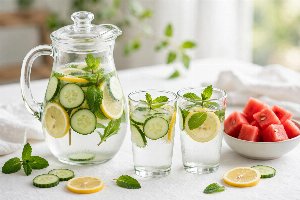
- Flavor it if you're bored: lemon, cucumber, or mint make plain water far more appealing.
- Check the color: pale yellow usually means you're on track; dark yellow means drink more.
Key Takeaways
- Most hydration myths bend a small truth into a rigid rule — question one-size-fits-all advice.
- There's no universal “8 glasses” target; needs vary with size, activity, climate, and diet.
- Coffee, tea, and water-rich foods all count toward your daily fluid intake.
- Thirst is a reliable early signal for most healthy people — drink when thirsty.
- More isn't always better: overhydration is rare but real, so aim for balance.
- Pale-yellow urine is the simplest day-to-day gauge that you're drinking enough.
Frequently Asked Questions
Q: How do I know if I'm drinking enough water?
A: For most people, pale-yellow urine, regular bathroom trips, and rarely feeling very thirsty are good signs. Stable energy and healthy-looking skin often follow, though they're influenced by many factors. If your urine is consistently dark yellow, gradually increase your intake.
Q: Does coffee count toward my daily water intake?
A: Yes. Despite caffeine's mild diuretic effect, the water in coffee and tea more than compensates, and research suggests moderate intake hydrates similarly to water. Just don't rely on sugary coffee drinks, which add calories without extra hydration benefit.
Q: Can drinking too much water be dangerous?
A: In extreme cases, yes — hyponatremia (water intoxication) can occur when very large volumes dilute blood sodium, mostly in endurance athletes. For everyday life, drinking to thirst plus a sensible baseline is safe. There's no benefit to forcing gallons beyond that.
Q: Is sparkling water as hydrating as still water?
A: Yes — carbonation doesn't change water's hydrating power. Choose unsweetened varieties without added sodium if you drink a lot of it. Some people find fizzy water causes bloating, in which case still water is the more comfortable choice.
Q: Do I need electrolyte drinks?
A: Most people don't. Plain water covers everyday hydration, including typical workouts under an hour. Electrolyte drinks become useful for long, intense exercise (over 60–90 minutes), heavy sweating in heat, or illness with fluid loss.
This article offers general guidance, not medical advice. Talk to a healthcare professional about your personal hydration needs, especially if you have a kidney, heart, or other medical condition.




Comments (0)
No comments yet. Be the first to share your thoughts!
Leave a comment