
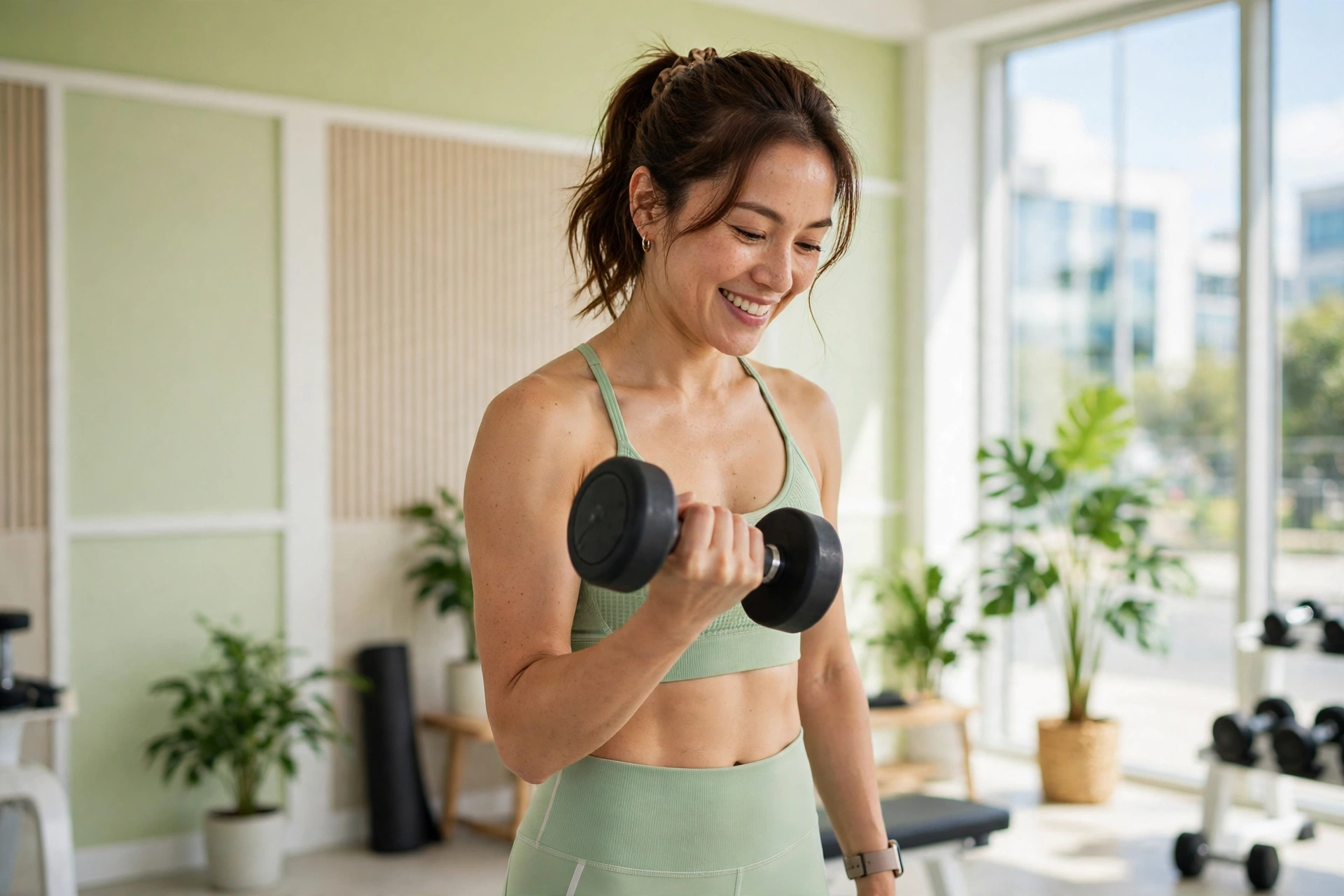
Strength training for women is a practical way to get stronger, protect bone health, and feel more capable in everyday life. Start with two to three short sessions a week using basic moves — squat, hinge, push, pull, and core — with light weights and good form. Progress slowly, rest well, and strength builds steadily.
Many women want to feel stronger but are not sure where to begin. The weight room can look intimidating and online advice often contradicts itself. This guide removes that guesswork and explains strength training for women in plain language, with a simple, realistic starting point.
Strength training simply means using resistance to make your muscles work harder than in daily life — dumbbells, kettlebells, bands, machines, or your own body weight. You do not need heavy weights on day one: a few well-chosen exercises, done regularly with good technique, are enough to start.
Why Strength Training for Women Matters
Strength is useful at every age, and it matters more as the years pass. Muscle gets smaller and weaker if it is not used, and bones gradually lose density. Regular training helps to slow both changes. It is not about chasing a certain look — it is about keeping your body capable, steady, and independent.
Stronger bones and muscles
When muscles pull on bones during resistance exercise, it signals the body to keep bone tissue strong. Strong leg and hip muscles also help with balance and lower the risk of falls. Carrying shopping, climbing stairs, and lifting a suitcase all become easier when those muscles are trained.
A healthier metabolism and body composition
Muscle uses more energy at rest than fat, so keeping muscle supports a healthy metabolism. With enough protein and sleep, training can help you feel leaner and more energetic without extreme dieting. If weight loss is a goal, it pairs well with walking — estimate your energy needs with the BMR and TDEE calculator.
Everyday strength and confidence
After a few weeks of regular training, many women stand taller, move more easily, and feel less tired. Training can also be a welcome break — a short session just for you, with progress you can feel.
How to Start Strength Training for Women Safely
Starting safely matters more than starting fast. Your first goal is to learn the movements well, not to lift the heaviest weight possible. Choose weights that challenge the last few repetitions while letting you keep good form. If your form breaks down, the weight is too heavy for now.
Warm up for five to ten minutes before every session — a brisk walk, gentle cycling, or marching in place, then a few easy repetitions of your planned exercises with very light weight. Wear stable shoes, keep water nearby, and stop if you feel sharp pain, dizziness, or chest discomfort. Mild effort and next-day soreness are normal at first; sharp joint pain is not.
If you have a health condition, are pregnant, have recently given birth, or have had an injury or surgery, talk to your doctor first. One session with a qualified coach can also help to check your squat, hinge, and pressing technique. Use the exercise tool to plan sessions and track the exercises you practise.
A Simple Strength Training for Women Beginner Routine
This routine covers the five basic patterns: squat, hinge, push, pull, and core. Do it two or three days a week, with at least one rest day between sessions. Each session takes about 30 to 45 minutes, including the warm-up. Rest 60 to 90 seconds between sets.
Aim for two to three sets of 8 to 12 repetitions per exercise. Choose a weight that makes the last two repetitions hard but doable. When you can complete all sets of 12 with good form, increase the weight slightly. Note the weight, sets, and repetitions each session so you can see progress.
Day A
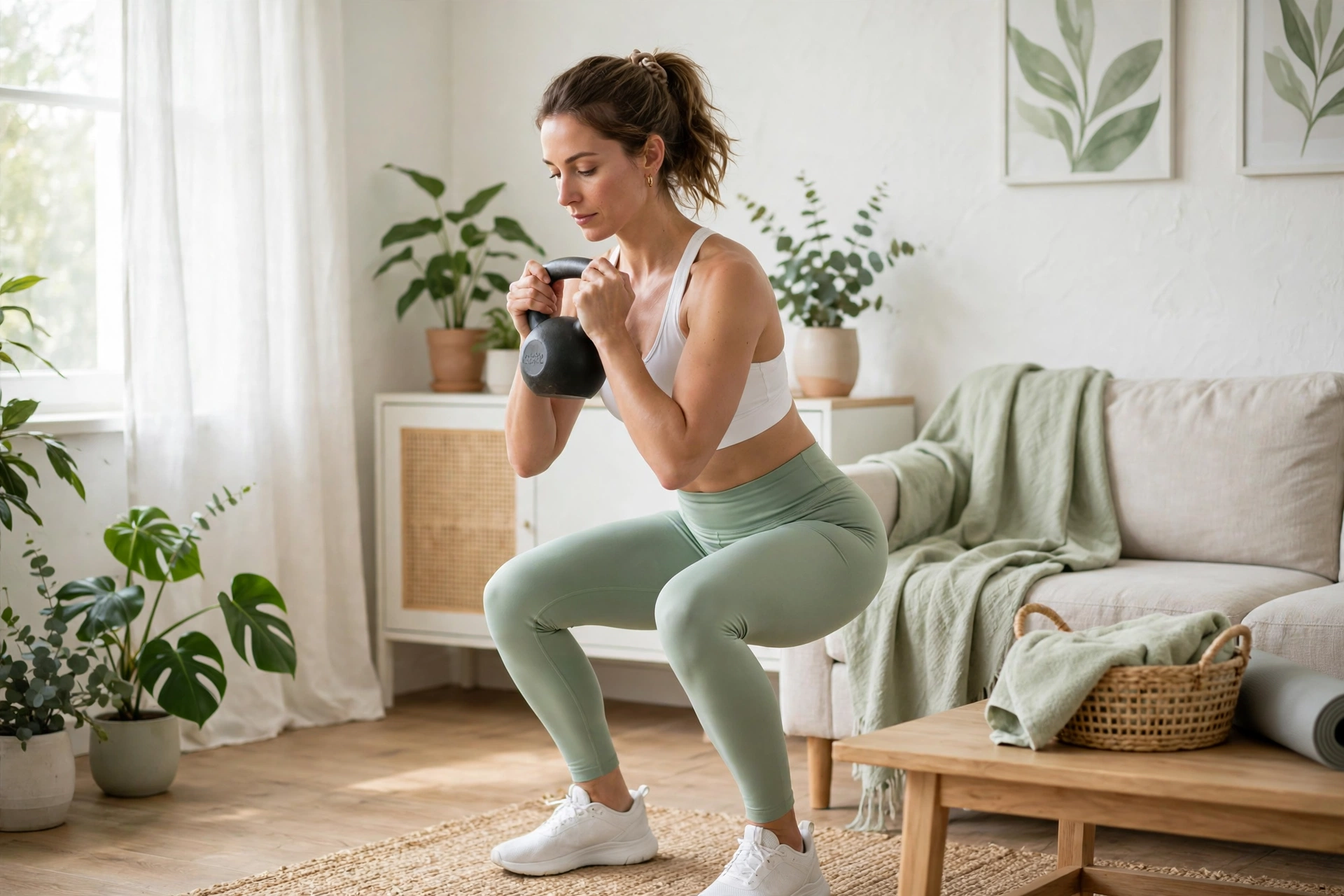
- Goblet squat — 3 sets of 8–10 repetitions. Hold a dumbbell close to your chest, sit back and down, and keep your chest up.
- Dumbbell Romanian deadlift (hinge) — 3 sets of 10 repetitions. Push your hips back and lower the weights along your legs.
- Knee or incline push-up (push) — 3 sets of 8–12 repetitions. Keep your body in one straight line.
- One-arm dumbbell row (pull) — 3 sets of 10 repetitions per side. Support yourself on a bench and pull the weight toward your hip.
- Dead bug or plank (core) — 3 sets of 30 seconds, or 8 slow repetitions per side.
Day B
- Bodyweight squat or leg press — 3 sets of 10–12 repetitions. Sit back as if into a chair and drive up through your whole foot.
- Glute bridge (hinge) — 3 sets of 12 repetitions. Squeeze your glutes at the top without arching your lower back.
- Dumbbell shoulder press (push) — 3 sets of 8–10 repetitions. Press overhead without leaning back.
- Resistance band row (pull) — 3 sets of 12 repetitions. Pull toward your ribs and squeeze your shoulder blades together.
- Bird dog (core) — 3 sets of 8 repetitions per side. Extend the opposite arm and leg slowly, keeping your hips level.
Alternate Day A and Day B — for example, Day A on Monday, Day B on Wednesday, Day A on Friday, then start the next week with Day B. Two sessions a week are still enough to progress. A short session you actually do beats a long one you skip. For more at-home ideas, see home workouts for beginners and strength training for beginners.
Progression: How to Get Stronger Week by Week
Your body adapts to the work you ask it to do, so the work needs to grow a little over time. This is called progressive overload. Add a small amount of weight, one or two extra repetitions, or one extra set when the current version feels comfortable. Change only one thing at a time.
Expect progress to be uneven. Some weeks you will add weight easily; other weeks you will stay at the same weight. Both are normal. If you miss a session, just pick up where you left off. After four to six weeks, change one or two exercises — for example, swap the goblet squat for a dumbbell squat — to keep training interesting while keeping the same patterns.
Rest, Recovery, and What to Eat
Muscles get stronger during recovery, not during the workout, so rest days are part of the programme. Leave at least one full day between sessions for the same muscles, and aim for seven to nine hours of sleep most nights. Short sleep makes training feel harder than it needs to.
Include protein at each meal — eggs, yoghurt, beans, lentils, chicken, fish, or tofu — and eat enough overall to fuel training. You do not need special supplements to start, and none replaces regular training and good food. Drink water through the day, and eat a balanced meal with protein and carbohydrate within a couple of hours after training if you can.
Common Mistakes to Avoid
- Skipping the warm-up. Cold muscles make good form harder and raise the risk of strain.
- Lifting too heavy too soon. Good form with a lighter weight builds more strength than sloppy repetitions with a heavy weight.
- Only training favourite muscles. Train legs, back, chest, and core — not just arms or abs.
- Rushing the repetitions. Lower the weight slowly and with control; the lowering phase counts too.
- Skipping rest days. Training the same muscles hard every day leaves no time to recover and grow stronger.
- Comparing yourself to others. Compare yourself with a month ago, not with the strongest person in the room.
Strength training is a skill that improves with practice. Start light, learn the movements, train two or three times a week, and give your body time to adapt.
Key Takeaways
- Strength training for women builds muscle and bone strength, supports metabolism, and makes everyday life easier.
- Start with two to three short sessions a week: squat, hinge, push, pull, and core.
- Choose weights that challenge the last few repetitions while keeping good form.
- Progress slowly — a little more weight, a few more repetitions, or one extra set.
- Rest, sleep, and enough protein are part of getting stronger, not extras.
- You will not get bulky by accident — large muscles take years of focused training and eating.





Comments (0)
No comments yet. Be the first to share your thoughts!
Leave a comment