
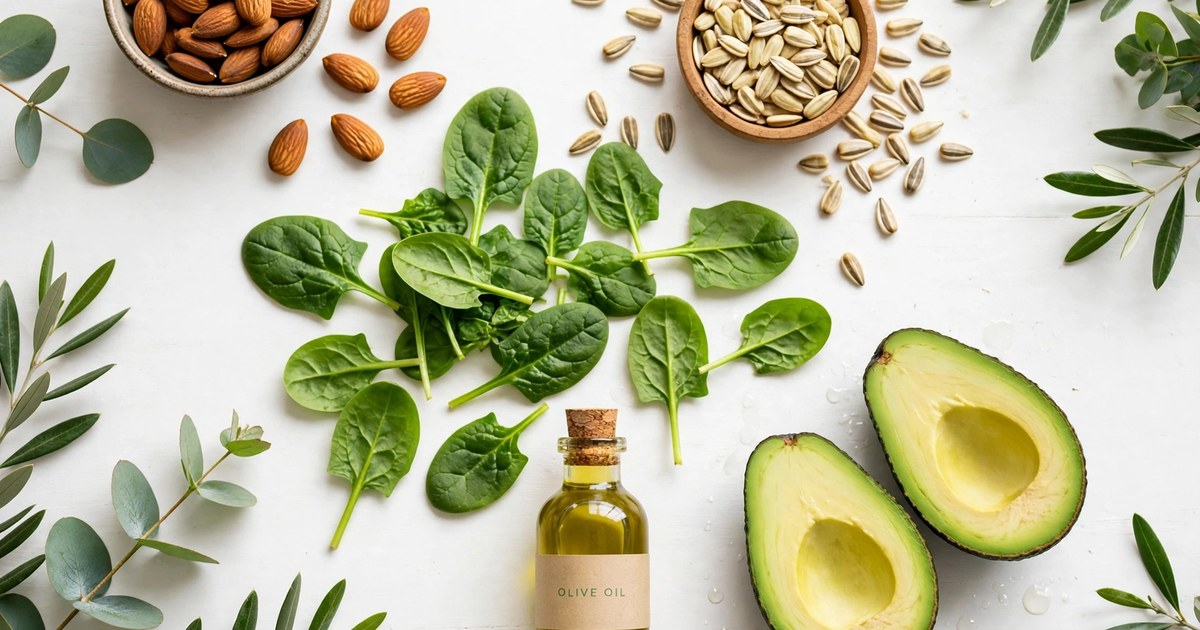
Vitamin E is a fat-soluble antioxidant that protects your cells from damage caused by free radicals, supports your immune system, and helps keep your skin and eyes healthy. Most people get enough from food — especially nuts, seeds, plant oils, and leafy greens — and true deficiency is rare in healthy adults who eat a varied diet.
Key Takeaways
- Vitamin E is a fat-soluble antioxidant that protects cells from free-radical damage.
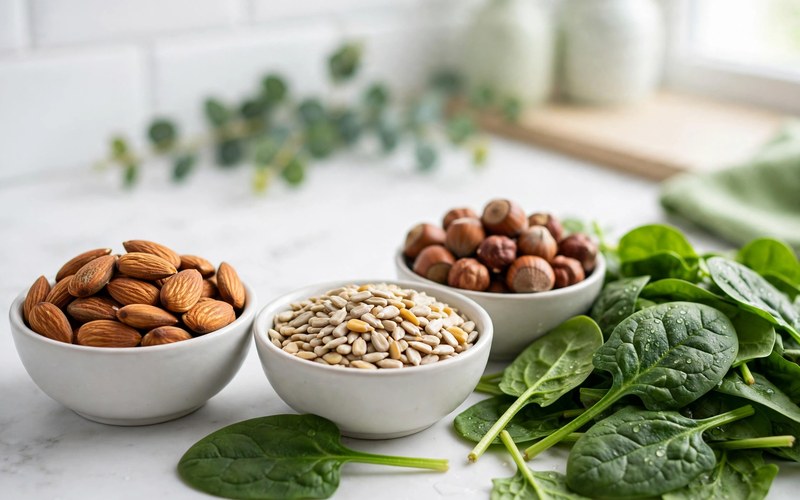
- The best food sources are sunflower seeds, almonds, hazelnuts, plant oils, avocado, and leafy greens.
- Most healthy adults get enough vitamin E from food; true deficiency is uncommon.
- Deficiency is most likely in people with fat-absorption problems or very restricted diets.
- High-dose vitamin E supplements can be harmful — food first, and talk to a doctor before supplementing.
What Is Vitamin E?
Vitamin E is not a single compound but a family of eight related compounds, of which alpha-tocopherol is the form your body uses most. Because it is fat-soluble, it is stored in your body fat and liver, and it is absorbed best when eaten together with some dietary fat — which is why vitamin E-rich foods like nuts, seeds, and oils are such efficient sources.
Its main job is as an antioxidant: it helps neutralise free radicals, unstable molecules that can damage cells over time. Vitamin E also supports immune function, helps widen blood vessels, and plays a role in keeping skin and eyes healthy. It works alongside other antioxidants — notably vitamin C, which helps recycle vitamin E after it has done its antioxidant work.
Benefits of Vitamin E
The benefits of vitamin E come mainly from its antioxidant and immune-supporting roles:
- Cell protection: by limiting free-radical damage, vitamin E helps protect cell membranes throughout the body.
- Immune support: adequate vitamin E supports normal immune function, which matters most for older adults, whose intake is often lower.
- Skin health: vitamin E helps protect skin from oxidative damage, though creams and supplements are not a substitute for sun protection.
- Eye health: as part of an antioxidant-rich diet, vitamin E contributes to long-term eye health.
- Heart health support: diets rich in vitamin E foods — nuts, seeds, and plant oils — are linked with better cardiovascular health, although this reflects the whole dietary pattern, not vitamin E alone.
It is worth being honest about the limits: vitamin E is not a miracle nutrient. Large supplement trials have not shown that high-dose vitamin E prevents heart disease or cancer in the general population, and in some cases high doses increased risks. The real benefit comes from eating vitamin E-rich foods as part of a balanced diet.
Best Food Sources of Vitamin E
Plant oils, nuts, and seeds are by far the richest sources. A small handful of sunflower seeds or almonds can provide a large share of your daily needs, which makes vitamin E one of the easiest nutrients to cover through food:
- Sunflower seeds — one of the richest sources of all.
- Almonds and hazelnuts — a handful a day covers much of your daily need.
- Sunflower and wheat germ oil — a tablespoon adds a large amount, but watch the calories.
- Peanut butter and peanuts — a practical everyday source.
- Avocado — a good source, plus healthy fats that help absorption.
- Leafy greens — spinach, Swiss chard, and broccoli provide smaller but useful amounts.
- Fortified foods — some breakfast cereals and spreads are fortified with vitamin E.
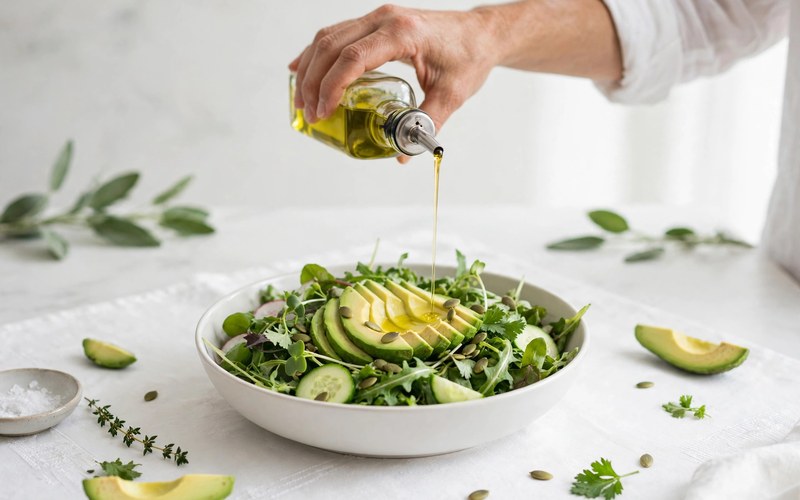
Because vitamin E needs fat for absorption, a spinach salad with olive oil dressing or avocado delivers more usable vitamin E than plain steamed greens alone. If you track your meals with the calorie tracker, you can see at a glance whether nuts, seeds, and oils appear regularly in your week.
How Much Vitamin E Do You Need?
For adults, the recommended daily allowance is 15 mg of alpha-tocopherol per day (about 22 IU of natural vitamin E). Most people who eat a varied diet — including some nuts, seeds, or plant oils most days — reach this without trying. Children need less, and needs rise only slightly during breastfeeding.
There is also an upper limit: 1,000 mg per day from supplements is the tolerable upper intake level for adults. Amounts from food alone very rarely approach this, because you would have to eat enormous quantities of nuts and oils. The risk comes almost entirely from high-dose supplements, not from food.
Signs of Vitamin E Deficiency
True vitamin E deficiency is rare in healthy people, because the body stores it and most diets supply some. When it does occur, it is usually linked to conditions that impair fat absorption — such as cystic fibrosis, chronic pancreatitis, or certain liver and gallbladder disorders — or to extremely low-fat diets maintained for a long time.
Possible signs include:
- Muscle weakness and loss of coordination or balance problems.
- Numbness, tingling, or reduced reflexes in the hands and feet.
- Vision problems, including difficulty moving the eyes normally.
- A weakened immune response and more frequent infections.
These symptoms have many possible causes, so they do not by themselves mean you are deficient. A blood test can confirm low levels, and anyone with a fat-absorption condition should discuss monitoring with their doctor rather than self-diagnosing.
Vitamin E Supplements: Helpful or Harmful?
For most people, supplements are unnecessary — and high doses can cause harm. Large doses of vitamin E (hundreds of milligrams per day) can interfere with blood clotting and increase bleeding risk, which is a particular concern for people taking blood thinners such as warfarin, or before surgery. High-dose supplements have also been linked in some studies to increased mortality risk, which is why health authorities advise against routine high-dose use.
Supplements do have a place for people with a diagnosed deficiency or a medical condition that prevents absorption — but that is a medical decision, not a wellness choice. A standard multivitamin typically contains a modest amount close to the daily requirement, which is very different from a standalone high-dose capsule.
Like vitamin K, vitamin E is fat-soluble, so excess is stored rather than flushed out in urine. That is exactly why "more" is not "better" with this nutrient — and why food, where doses are naturally moderate, is the safest route.
Disclaimer: this article is general information only, not medical advice. If you take blood thinners, have a bleeding disorder, a fat-absorption condition, or liver disease, or you are considering a vitamin E supplement, talk to a doctor first. Never take high-dose vitamin E supplements without medical guidance.
Frequently Asked Questions
What is vitamin E good for?
Vitamin E acts as an antioxidant that protects your cells from free-radical damage, supports your immune system, and helps keep your skin and eyes healthy. Its benefits come mainly from eating vitamin E-rich foods like nuts, seeds, and plant oils as part of a balanced diet, not from high-dose supplements.
What are the signs of vitamin E deficiency?
Deficiency is rare in healthy adults. When it occurs, usually due to fat-absorption problems, signs can include muscle weakness, loss of coordination, numbness or tingling in the hands and feet, vision problems, and a weakened immune response. These symptoms have many causes, so a blood test is needed to confirm deficiency.
Which foods are highest in vitamin E?
Sunflower seeds, almonds, and hazelnuts are among the richest sources, followed by sunflower and wheat germ oil, peanut butter, avocado, and leafy greens like spinach. A small handful of sunflower seeds or almonds provides a large share of your daily needs.
How much vitamin E do I need per day?
Adults need 15 mg of alpha-tocopherol per day. Most people reach this through food alone if they eat nuts, seeds, or plant oils regularly. The upper limit from supplements is 1,000 mg per day, but high-dose supplements are not recommended without medical advice.
Are vitamin E supplements safe?
Modest amounts in a multivitamin are generally safe, but high-dose vitamin E supplements can interfere with blood clotting and increase bleeding risk, especially for people on blood thinners. Unless a doctor has diagnosed a deficiency or an absorption problem, food is the safer source.

Comments (0)
No comments yet. Be the first to share your thoughts!
Leave a comment