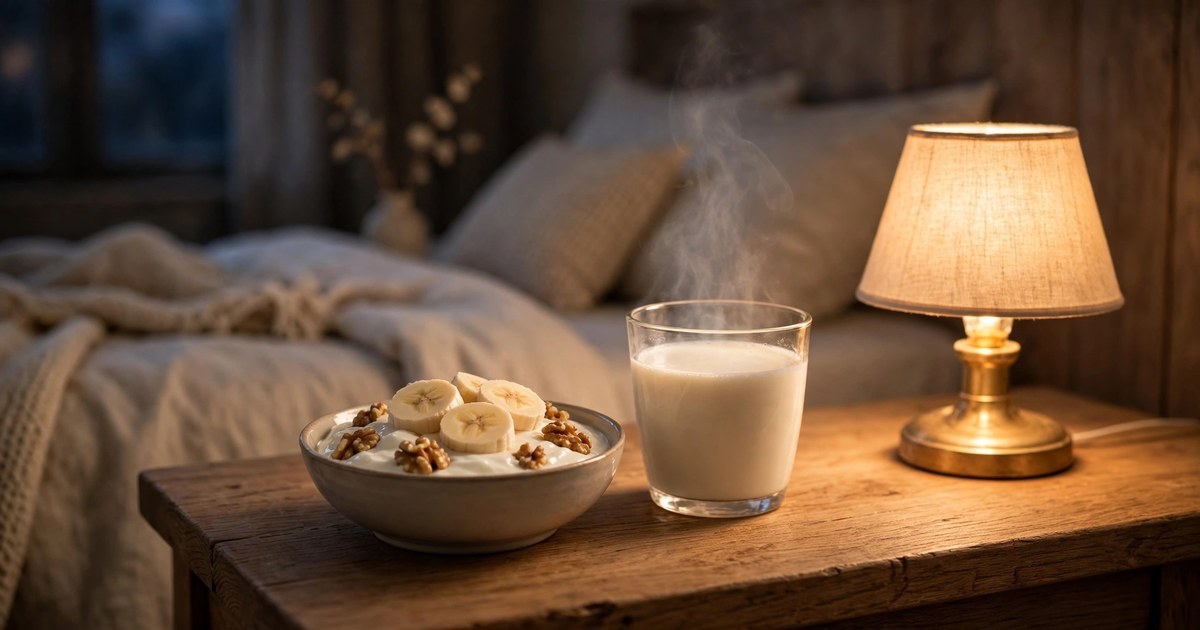
The best eating schedule to lose weight also helps you sleep better: finish large meals 2–3 hours before bed, and if you're hungry later, choose a light snack — yogurt with banana, tart cherries, kiwi, or a small handful of almonds — 30–60 minutes before sleep.

Why late-night eating affects your sleep and your weight
Eating late at night is not automatically bad — a small snack before bed will not ruin your weight-loss progress. What matters is what you eat and how much. A heavy, fatty, or spicy meal close to bedtime forces your digestive system to work hard while your body tries to wind down, causing heartburn, restlessness, and broken sleep — and poor sleep leaves you tired, hungry, and craving sugary foods the next day.
Sleep and weight are closely linked: poor sleep raises ghrelin, the hunger hormone, and lowers leptin, the fullness hormone — so you feel hungrier the next day and crave sugary foods. The fix is simple: keep evening meals moderate, finish them well before bed, and choose foods that support sleep.
The best eating schedule to lose weight — and sleep better
The best eating schedule to lose weight is not about skipping dinner or going to bed hungry — it is about giving your body time to digest before you lie down. Finish your last large meal 2–3 hours before bed. If dinner is early and you feel hungry later, a light snack of around 150–250 calories 30–60 minutes before bed is fine — often better than lying awake with a growling stomach.
Think of your evening as a wind-down, not a second dinner: regular meals, a protein-rich dinner, and no all-evening grazing. For a fuller plan, read our guide on the best time to eat for weight loss, and log your evening meals in the meal log — seeing the whole day makes late-night snacking patterns easy to spot.
8 foods that help you sleep
These foods work in different ways: some provide tryptophan, which your body uses to make serotonin and melatonin; others are rich in magnesium, which helps muscles relax; and some contain melatonin itself. None is a sleeping pill — but as part of a calm evening routine, they help.
1. Tart cherries
Tart cherries are one of the few foods that naturally contain melatonin, the hormone that regulates your sleep-wake cycle. A small bowl — or a glass of tart cherry juice — is a simple sleep-friendly choice.
2. Kiwi
Kiwi is rich in serotonin and antioxidants, and small studies link it with falling asleep faster and sleeping more soundly. One or two kiwis make an easy, light, low-calorie snack.
3. Bananas
Bananas provide magnesium and potassium, which help muscles relax, plus tryptophan and slow-digesting carbohydrates. One with a spoonful of yogurt stops hunger without disturbing sleep.
4. Almonds
Almonds are a good source of magnesium and contain some melatonin. A small handful — about 20–25 g — is enough: a handful helps you sleep, a whole bag does not.
5. Yogurt and warm milk
Yogurt and warm milk provide tryptophan and calcium, which helps your body make melatonin. Warm milk is also a calming ritual that signals the day is ending — choose it plain, without added sugar.
6. Oats
Oats raise blood sugar gently and contain both melatonin and magnesium. A small bowl of oatmeal with milk, or a few oatcakes with yogurt, is warm and comforting without being heavy.
7. Turkey or chicken (a small portion)
Turkey is famous for its tryptophan, and chicken offers the same benefit. A few slices of turkey or leftover chicken makes a satisfying, protein-rich snack — just keep the portion small and skip heavy sauces.
8. Chamomile tea
Chamomile tea contains apigenin, a plant compound with a mild calming effect, and the warm drink is part of a relaxing bedtime routine. Caffeine-free and calorie-free, it is one of the easiest evening habits to build.

5 foods and drinks to avoid before bed
Just as some foods help you sleep, others make it harder — keep these out of the last hours of your day:
- Caffeine: coffee, energy drinks, black and green tea, cola, and dark chocolate all contain caffeine, which can stay in your system for hours. Stop caffeine at least 6 hours before bed — 8 if you are sensitive.
- Alcohol: a drink may make you feel drowsy at first, but alcohol fragments sleep, reduces deep sleep, and often wakes you later in the night. It also relaxes the stomach valve, which can worsen heartburn.
- Spicy foods: chilli, hot sauces, and heavily spiced curries can trigger heartburn and raise body temperature, making it harder to fall and stay asleep.
- Heavy, fatty meals: pizza, fried food, creamy sauces, and large portions of red meat take a long time to digest, and lying down with a full stomach often leads to reflux and restless sleep.
- Sugary snacks and desserts: biscuits, cake, ice cream, and sweets cause a quick energy spike followed by a dip that may wake you at night — and add calories exactly when your body needs the fewest.
The best eating schedule to lose weight: a simple evening plan
A sleep-friendly evening looks like this: dinner around 6–7 pm with lean protein, vegetables, and whole grains; no more big meals after that; and, if you are hungry an hour before bed, a small snack from the list above — yogurt with banana, a handful of almonds, or chamomile tea with a kiwi. Eat it sitting down, not in front of a screen, and wait 30 minutes before lying down.
Good sleep habits matter as much as the food: a dark, cool bedroom, no screens in the last 30–60 minutes, and a regular bedtime. Our guide to sleep hygiene habits covers the full routine, the sleep tool tracks how your evenings affect your nights, and our tips on how to fall asleep fast are a good next read.
Key takeaways
- A small, light snack before bed is fine — heavy, fatty, or spicy meals are the real problem.
- Finish large meals 2–3 hours before bed; a 150–250 calorie snack 30–60 minutes before sleep is OK.
- Sleep-friendly foods: tart cherries, kiwi, bananas, almonds, yogurt and warm milk, oats, turkey, and chamomile tea.
- They provide tryptophan, magnesium, melatonin, or calming complex carbohydrates.
- Avoid caffeine, alcohol, spicy foods, heavy fatty meals, and sugary snacks before bed.
- Poor sleep raises hunger hormones, so better sleep makes weight loss easier.
Frequently Asked Questions
Is it bad to eat before bed?
No — a small, light snack before bed is fine, and better than going to bed hungry. Problems come from a large, heavy, fatty, or spicy meal close to bedtime, which can cause heartburn and restless sleep. Keep it to 150–250 calories, and choose sleep-friendly foods like yogurt, banana, or almonds.
What is the best snack to eat before bed for weight loss?
The best bedtime snack is small, protein-rich, and easy to digest: plain yogurt with half a banana, a handful of almonds, a kiwi, or chamomile tea with an oatcake. These are roughly 150–250 calories, stop hunger without overloading digestion, and contain tryptophan and magnesium that support sleep.
How long before bed should I stop eating?
Finish large meals 2–3 hours before bed so your body can digest before you lie down. A light snack is fine 30–60 minutes before sleep. If dinner is regularly less than an hour before bed, move it earlier — even 30 minutes makes a noticeable difference.
Does eating late at night cause weight gain?
Eating late does not automatically cause weight gain — what matters most is your total calories across the day and the foods you choose. But late-night eating often means extra, unplanned calories, and poor sleep after a heavy late meal raises hunger hormones the next day. The best eating schedule to lose weight keeps evenings light and consistent.
Does warm milk really help you sleep?
Warm milk contains tryptophan and calcium, which your body uses to make melatonin, so there is a real — if modest — basis for it. Just as important is the ritual: a warm, caffeine-free drink signals that the day is ending. It works best as part of a regular wind-down routine, not as a cure for serious sleep problems — those are worth discussing with a doctor.




Comments (0)
No comments yet. Be the first to share your thoughts!
Leave a comment