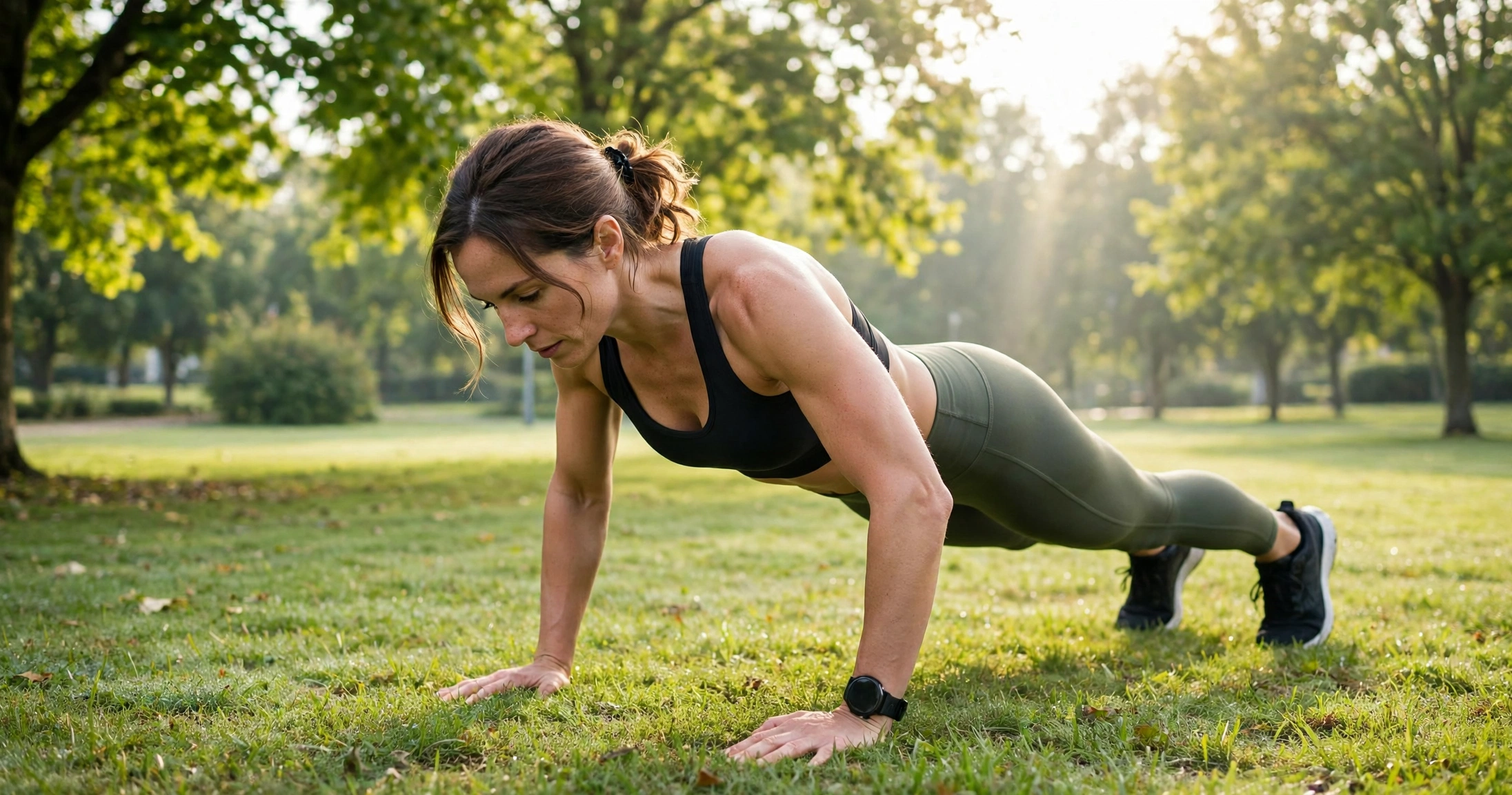
Calisthenics is strength training that uses your own body weight instead of machines or dumbbells. For beginners, it works because six basic moves — push-ups, squats, rows, planks, lunges, and glute bridges — train the muscles you use every day. Start with two or three short sessions a week, focus on good form, and add reps slowly.
 What Is Calisthenics?
Calisthenics means exercising with your body weight as resistance — push-ups, squats, pull-ups, dips, and planks are all calisthenics. No gym membership needed: train at home, in a park, or while travelling. The idea is simple — control your own body before adding extra load.
Unlike machines, which guide you along a fixed path, bodyweight work asks your muscles to stabilise you as well as move you — that is why a push-up feels harder than it looks. Beginners often notice better balance within weeks.
Why Calisthenics Works for Beginners
Calisthenics is a good starting point. First, the cost is zero: no equipment, no commute, no waiting. Second, moves are scalable — a push-up is easier with hands on a table, harder when you slow the lowering phase. Third, overload risk is lower than with heavy weights, since you cannot lift more than your own body weight.
It also builds a base for other training: strength, joint control, and body awareness carry over to weights, running, and sport. If you later join a gym, that foundation makes everything easier. For a broader beginner plan, see our guide to strength training for beginners.
The 6 Foundational Movements
These six moves cover the whole body: pushing, pulling, squatting, hinging, and core stability. Master them before chasing muscle-ups — quality beats quantity.
1. Push-Up
Place hands under shoulders, body straight from head to heels. Lower your chest to the floor, then push back up. Too hard? Start with hands on a table or wall. Aim for slow, controlled reps.
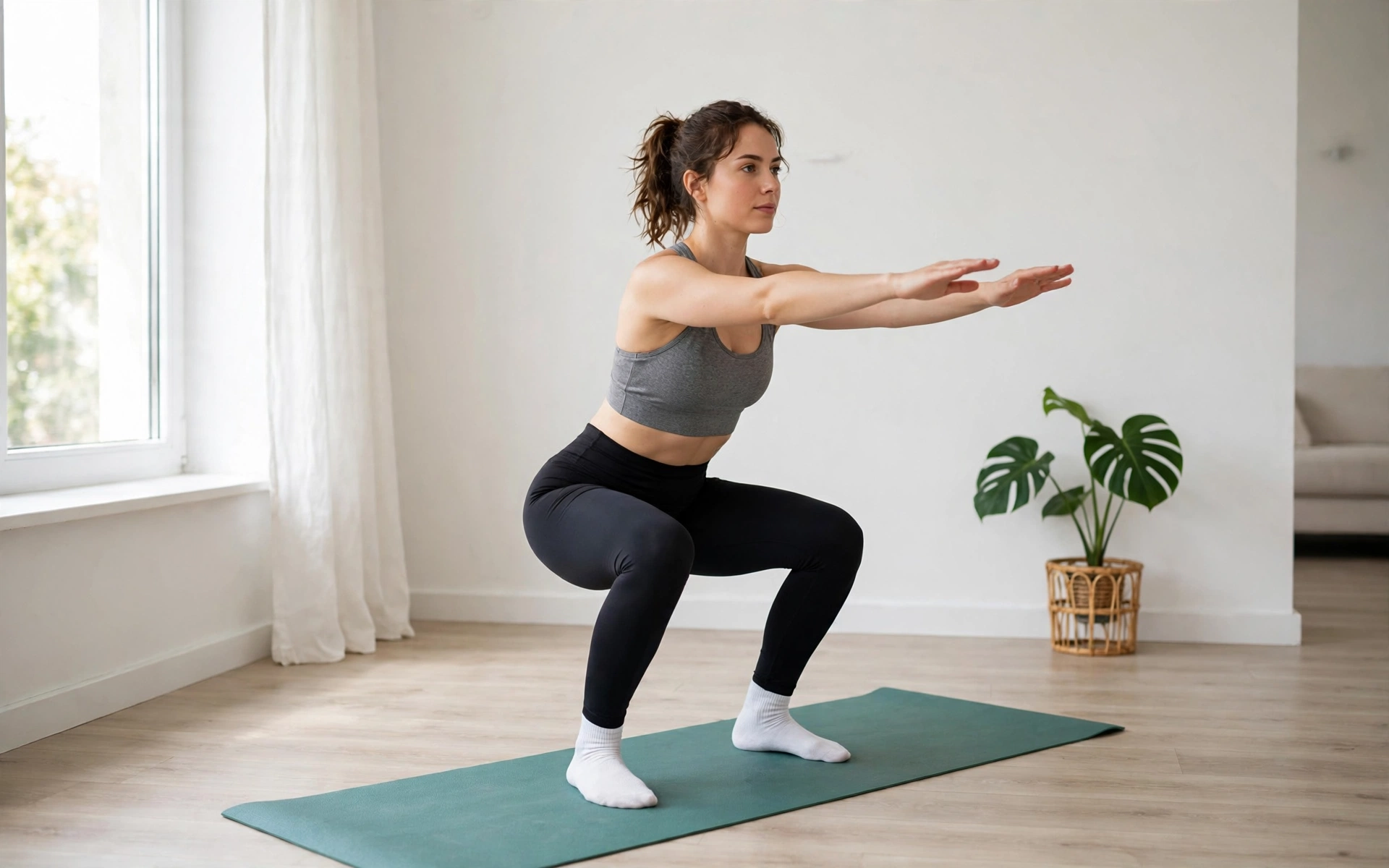
2. Squat
Stand feet shoulder-width apart. Push hips back, bend knees as if sitting into a chair, chest up, heels down. Go as low as good form allows, then stand tall. Squats build leg strength for stairs and lifting.
3. Inverted Row
Find a sturdy low bar, a table edge, or a broom across two chairs. Lie underneath and pull your chest to the bar, body straight. Rows are the pulling move most beginners skip — they strengthen your back and balance the pushing work.
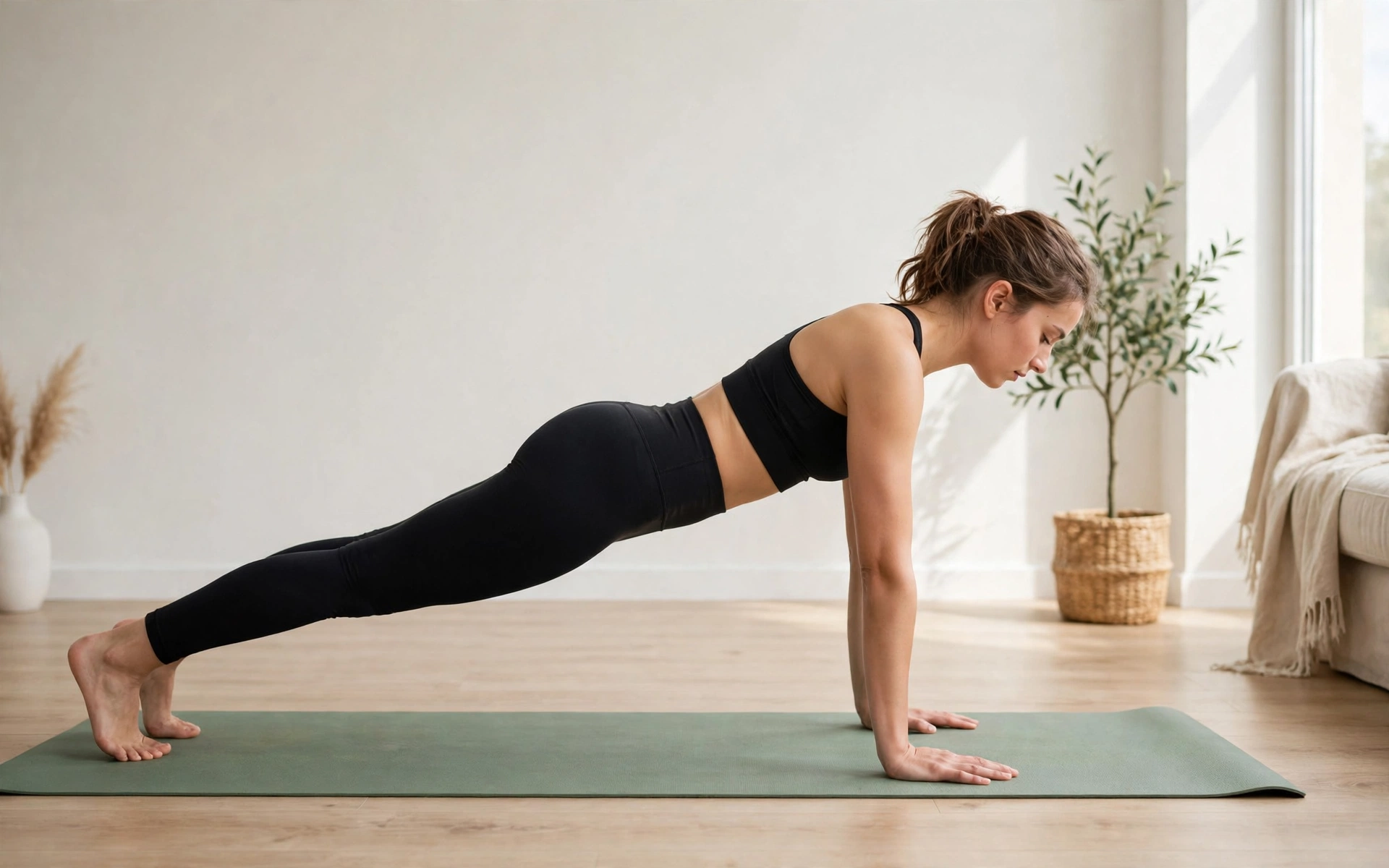
4. Plank
Rest on forearms and toes, body straight. Squeeze glutes and brace your stomach as if someone were about to poke it. Do not let hips sag or rise. Start with 15 to 20 seconds — a good plank teaches the core control every other move needs.
5. Lunge
Step forward, lower your back knee toward the floor, front knee over your ankle. Push through the front foot to return. Lunges train each leg separately and reveal a weaker side. Hold a wall or chair at first if needed.
6. Glute Bridge
Lie on your back, knees bent, feet flat. Push through heels to lift hips until your body is straight from shoulders to knees. Squeeze glutes at the top, then lower slowly. It strengthens glutes and hamstrings and supports healthy hips.
A Sample 3-Day Beginner Week
Train three days a week, with a rest day between sessions. Each session takes 25 to 30 minutes, warm-up included. Do two or three sets per exercise, resting 60 to 90 seconds between sets. Start with five to ten minutes of warm-up routine so your joints and muscles are ready.
Day 1 — Full body A: wall or knee push-ups, bodyweight squats, inverted rows, glute bridges, plank.
Day 2 — Rest or a gentle walk. A brisk 20-minute walk is enough.
Day 3 — Full body B: push-ups, lunges, inverted rows, glute bridges, plank with shoulder taps.
Day 4 — Rest.
Day 5 — Full body A again: repeat Day 1, aiming for one more rep per set.
Days 6 and 7 — Rest or light activity such as walking, stretching, or cycling. For more ideas, see our home workouts with no equipment.
 Progression Rules: How to Get Stronger Without Weights
Muscles grow stronger when you ask a little more of them over time. Progress comes from changing leverage, tempo, or volume — not from adding plates. Follow these rules in order:
- Add repetitions first. At 3 sets of 12 clean reps, try a harder version.
- Slow the lowering phase. Taking 3 seconds to lower adds work with no equipment.
- Change the angle. Move hands from table to floor for push-ups, or from a high to a low bar for rows.
- Add a pause. Hold 2 seconds at the bottom of a squat or the top of a bridge.
- Try a harder variation. Split squats instead of regular squats, or a single-leg bridge.
- Track your sessions. Log sets and reps to see progress. Our exercise calorie calculator to see how much energy your sessions use.
Change one thing at a time — change two and you will not know what helped. Small, steady steps beat big jumps that lead to soreness or injury.
Common Mistakes to Avoid
Most beginner problems come from rushing:
- Skipping the warm-up. Cold muscles raise injury risk. Five to ten minutes is enough.
- Rushing repetitions. Fast, bouncy reps use momentum, not muscle. Slow down and control every move.
- Skipping pulling work. Many beginners do push-ups and squats but skip rows. Without it, posture suffers and shoulders grow imbalanced.
- Letting form collapse. If hips sag in a plank or knees cave inward, stop the set — bad reps teach bad habits.
- Training hard every day. Muscles need rest to recover and grow. Three focused sessions beat seven tired ones.
- Comparing yourself to others. Progress is personal: someone else's tenth push-up is not your target — your next clean rep is.
Safety Notes: When to See a Professional
Calisthenics is low-impact and safe for most healthy adults, but listen to your body. Mild soreness for a day or two is normal; sharp pain, joint pain, dizziness, chest pain, or numbness is not — stop and seek advice. With a heart condition, high blood pressure, a recent injury, or after surgery, talk to your doctor first. A qualified trainer or physiotherapist can check your form. Nutrition matters too: enough protein and calories support muscle building — check your needs with our BMR and TDEE calculator. If your goal is to lose fat while building muscle, read our guide to body recomposition.
Key Takeaways
Calisthenics builds strength anywhere with no equipment. Master six moves — push-up, squat, inverted row, plank, lunge, glute bridge — and train three times a week. Progress by adding reps, slowing tempo, or changing the angle. Warm up, include pulling work, and rest. Eight to twelve weeks of steady practice brings real strength.
Frequently Asked Questions
Can beginners build muscle with calisthenics alone? Yes — beginners can build noticeable muscle with bodyweight training alone. Your body adapts quickly at first, so regular push-ups, squats, rows, and lunges stimulate growth. Progress slows later, but harder variations keep it coming.
How many days a week should a beginner do calisthenics? Three days a week is ideal — enough training to progress, enough rest to recover. Walk or stretch on rest days, but avoid hard training on consecutive days until your body adapts.
Do I need any equipment to start calisthenics? No — start with zero equipment: push-ups, squats, lunges, planks, and glute bridges. A table edge or low bar helps for rows, and a pull-up bar is useful later. A yoga mat is optional.
How long does it take to see results from calisthenics? Most beginners feel stronger in three to four weeks, with visible changes in eight to twelve. Strength improves first, then definition follows. Training, sleep, and protein speed things up.
Is calisthenics good for weight loss? Calisthenics supports weight loss by building muscle, which burns more calories daily. Alone, though, exercise burns fewer calories than most expect. Lasting fat loss needs regular training, a sensible calorie deficit, and enough protein.
What should I do if I cannot do a single push-up? Start with wall push-ups, then a table or sturdy chair, and finally the floor. Knee push-ups work as a stepping stone. Use a version you can do for 6 to 10 clean reps, then move up when it is easy.





Comments (0)
No comments yet. Be the first to share your thoughts!
Leave a comment