
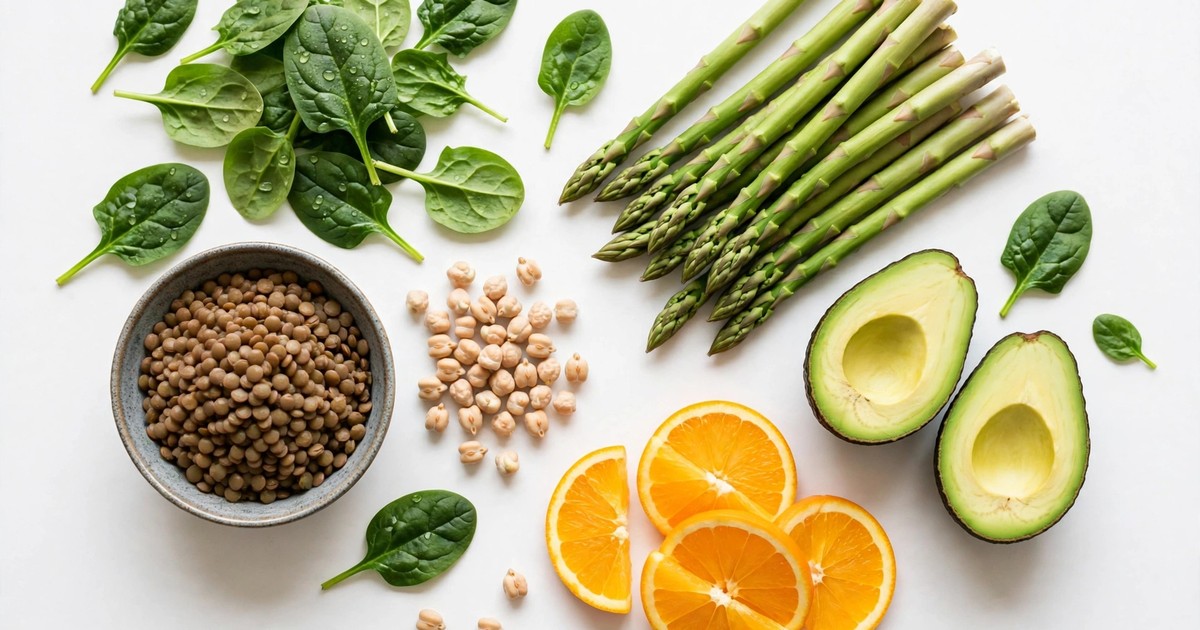
Direct answer: Folate, or vitamin B9, is a B vitamin your body needs to make healthy red blood cells, build and repair DNA, and support growth. You get it mainly from leafy greens, legumes, citrus fruit and fortified foods. Low folate over time can cause tiredness, weakness and a type of anaemia, and getting enough before and during early pregnancy is important.
What Is Folate (Vitamin B9)?
Folate is the natural form of vitamin B9 found in food, while folic acid is the synthetic form used in supplements and fortified foods. Your body converts both into an active form it can use, but food also brings fibre and minerals a tablet alone does not provide. Like other B vitamins, folate is water-soluble, so your body does not store large amounts for long — regular intake from everyday meals matters more than an occasional large dose.
Folate works closely with vitamin B12 and vitamin B6 in keeping blood cells healthy, which is why symptoms of these deficiencies can overlap. The NutriCounter Nutrition tool can help you see whether folate-rich foods appear in your week regularly.
Folate Benefits: Why Your Body Needs Vitamin B9
Folate's best-known job is helping the body make red blood cells and DNA. Without enough folate, red blood cells can become abnormally large and less effective at carrying oxygen, which is one reason tiredness is such a common early sign of deficiency. Folate also supports normal cell growth and repair throughout life.
During pregnancy, folate plays a particularly important role. Adequate folate before conception and in the first weeks of pregnancy helps reduce the risk of neural tube defects, serious problems affecting the baby's brain and spine. Because these structures form very early, often before a person knows they are pregnant, health authorities in many countries recommend paying attention to folate intake in advance and discussing supplements with a healthcare professional. This article is general information only, not a substitute for personal medical advice.
Other benefits of getting enough folate from food include:
- Steady energy: healthy red blood cells carry oxygen more effectively.
- Healthy mood and focus: B vitamins help make chemical messengers in the brain.
- Normal cell growth: folate is needed whenever cells divide.
- Support during growth: children, teenagers and pregnant people have higher needs.
Folate Deficiency Signs to Watch For
Folate deficiency usually develops gradually, when intake stays low for weeks or months. Early signs are easy to miss because they resemble ordinary tiredness. Common signs include:
- Feeling tired, weak or light-headed
- Pale skin or shortness of breath on mild exertion
- A sore, red or swollen tongue, or mouth ulcers
- Poor appetite, weight loss or digestive discomfort
- Difficulty concentrating, irritability or low mood
- Tingling is less typical of folate deficiency alone and more often points to vitamin B12 deficiency, so new numbness or tingling deserves prompt medical attention
If these symptoms persist, do not try to diagnose yourself from a list. A simple blood test can check folate and vitamin B12 levels. Severe or long-lasting deficiency can lead to megaloblastic anaemia, in which the body produces fewer, oversized red blood cells — a condition that needs medical treatment, not just a change of diet.
Who Is Most at Risk of Low Folate?
Most people who eat a varied diet get enough folate, but some groups need extra care:
- People who could become pregnant: needs rise before and during early pregnancy.
- People with limited diets: very restricted eating or heavy alcohol use reduces intake or absorption.
- People with digestive conditions: coeliac disease and inflammatory bowel disease can reduce absorption.
- People taking certain medicines: some anti-seizure and methotrexate-type medicines interfere with folate metabolism — discuss with a doctor, never stop on your own.
- People with higher demand: pregnancy, rapid growth and some blood conditions raise demand.
Best Food Sources of Folate
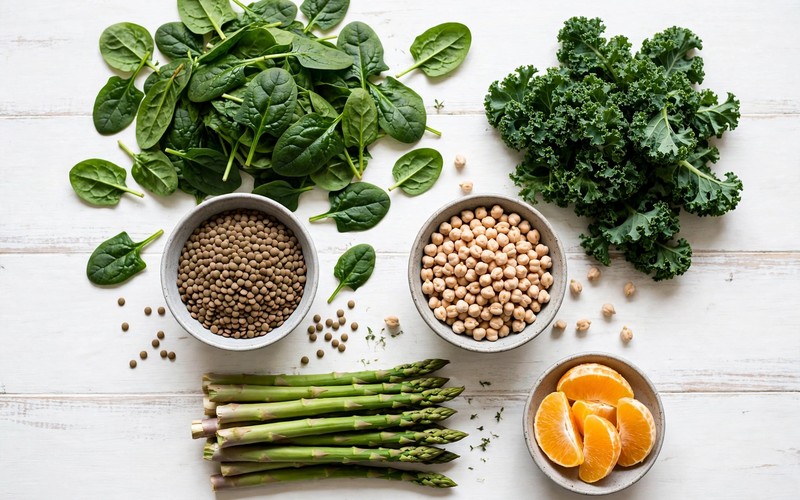
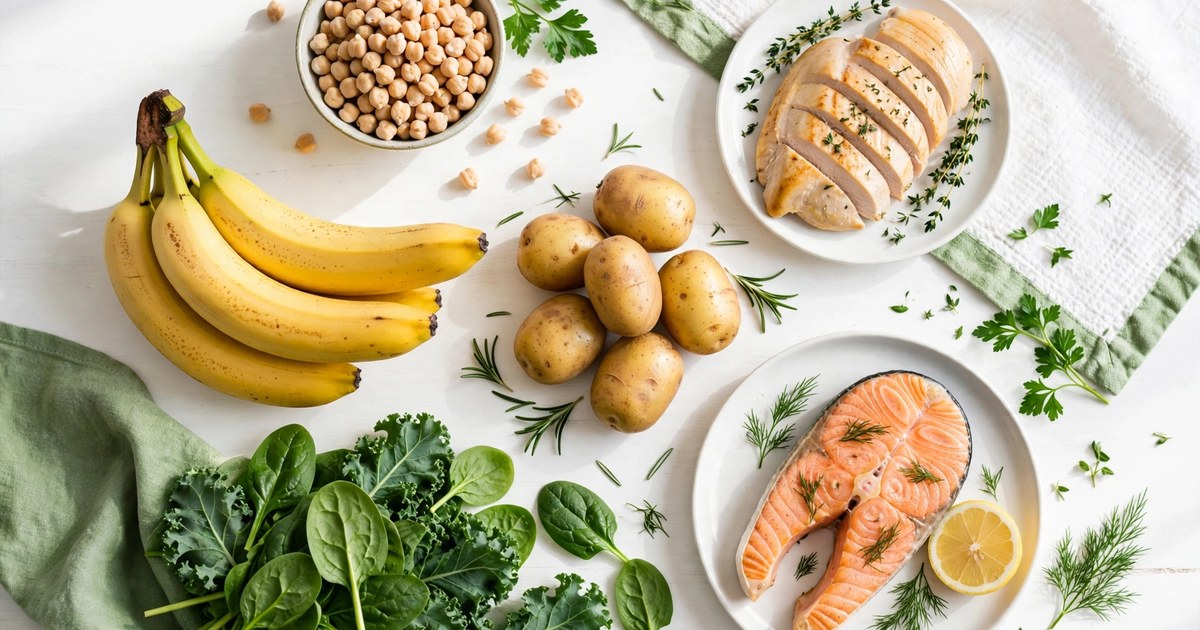
Folate-rich foods are affordable and easy to add to everyday meals. The richest sources are:
Leafy greens and vegetables
- Spinach, kale, rocket and other dark leafy greens
- Asparagus, Brussels sprouts, broccoli and green peas
- Avocado, which also adds healthy fats and fibre
Legumes
- Lentils, chickpeas, black beans and kidney beans
- Edamame and other soy foods
Fruit, nuts and fortified foods
- Citrus fruit such as oranges and grapefruit, plus bananas and papaya
- Nuts and seeds, including peanuts and sunflower seeds
- Fortified breakfast cereals, breads and flours, which are an important source in many countries
- Eggs and liver (liver is very rich, so small, occasional portions are enough)
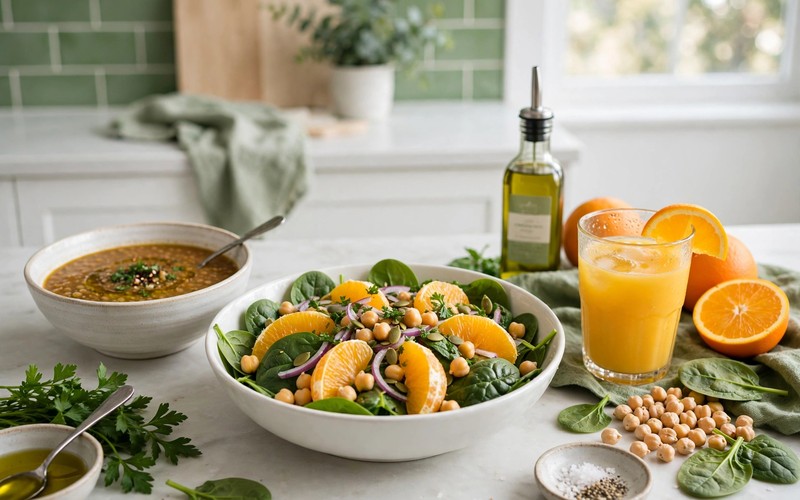
Folate is sensitive to heat and water, so long boiling can reduce the amount in vegetables. Steaming, quick sautéing, or using cooking water in soups and sauces helps keep more of it. A mix of raw and cooked sources across the week — a spinach salad one day, lentil soup the next — is a practical way to cover your needs.
Folate vs Folic Acid: What Is the Difference?
Folate and folic acid are often used as if they mean the same thing, but they are not identical. Folate is the natural vitamin in foods; folic acid is the stable, synthetic form added to fortified foods and most supplements. Your body must convert folic acid before it can use it, and most people do this efficiently. For pregnancy planning, folic acid supplements are commonly recommended precisely because the dose is reliable and well studied.
For most healthy adults, food first is the right approach, with supplements reserved for pregnancy planning, a diagnosed deficiency, or a doctor's recommendation. Very high-dose folic acid without advice is not better: it can mask a vitamin B12 deficiency by correcting the anaemia while nerve damage continues unnoticed.
How Much Folate Do You Need?
General adult guidance in many countries is around 400 micrograms of dietary folate equivalents per day, rising to around 600 micrograms during pregnancy. Rather than counting micrograms at every meal, focus on the pattern: a daily serving of leafy greens or legumes, some fruit, and fortified grains where available.
Practical ways to raise your intake:
- Add a handful of spinach or rocket to salads, sandwiches, pasta and smoothies.
- Swap one meat-based meal a week for lentil soup, chickpea curry or bean tacos.
- Choose a fortified breakfast cereal and add citrus fruit or berries.
- Keep frozen peas, spinach and edamame on hand for quick, folate-rich side dishes.
- Steam vegetables instead of boiling them for a long time.
Key Takeaways
- Folate (vitamin B9) is essential for healthy red blood cells, DNA and normal growth.
- Leafy greens, legumes, citrus fruit and fortified foods are the best everyday sources.
- Tiredness, pale skin and a sore tongue can be early signs, but a blood test is needed to confirm.
- People who could become pregnant and those with digestive conditions are among those most at risk.
- Food first is best for most people; folic acid supplements are important for pregnancy planning and diagnosed deficiency, under professional advice.
- High-dose supplements without advice can mask vitamin B12 deficiency.
Frequently Asked Questions About Folate
What is the difference between folate and folic acid?
Folate is the natural form of vitamin B9 in foods such as spinach and lentils; folic acid is the synthetic form in supplements and fortified foods. Folic acid is commonly recommended for pregnancy planning because its dose is precise and reliable.
What are the first signs of folate deficiency?
The earliest signs are often tiredness, weakness, pale skin and shortness of breath, sometimes with a sore tongue or poor appetite. A blood test is the only reliable way to confirm low folate or tell it apart from vitamin B12 deficiency.
Which foods are highest in folate?
Dark leafy greens, legumes, asparagus, Brussels sprouts, avocado, citrus fruit and fortified cereals are among the richest sources. A mix across the week beats relying on a single so-called superfood.
Do I need a folate supplement?
Most healthy adults who eat a varied diet do not need one. Supplements matter most for pregnancy planning, diagnosed deficiency, or a doctor's recommendation. Always discuss them with a healthcare professional first.
Can you get too much folate from food?
It is very difficult to get too much folate from food alone, as excess is excreted. The risk comes from high-dose folic acid supplements without advice, which can hide vitamin B12 deficiency — keep doses within recommended levels unless a doctor advises otherwise.




Comments (0)
No comments yet. Be the first to share your thoughts!
Leave a comment