Light Korean Beef Bibimbap
Nutrition per serving
Ingredients
- 400g lean beef sirloin, thinly sliced
- 150g dry brown rice (cooks to 2 cups)
- 1 large carrot, julienned
- 1 small zucchini, julienned
- 150g fresh spinach
- 150g shiitake mushrooms, sliced
- 100g bean sprouts
- 2 eggs
- 2 tbsp gochujang
- 1 tbsp soy sauce
- 1 tbsp sesame oil
- 2 garlic cloves, minced
- 1 tsp grated ginger
- 1 tbsp honey
- 1 tsp rice vinegar
- 1 tbsp sesame seeds
- 2 spring onions, sliced
Instructions
1. Marinate the beef in the soy sauce, garlic, ginger, honey and half the sesame oil for 10 minutes.
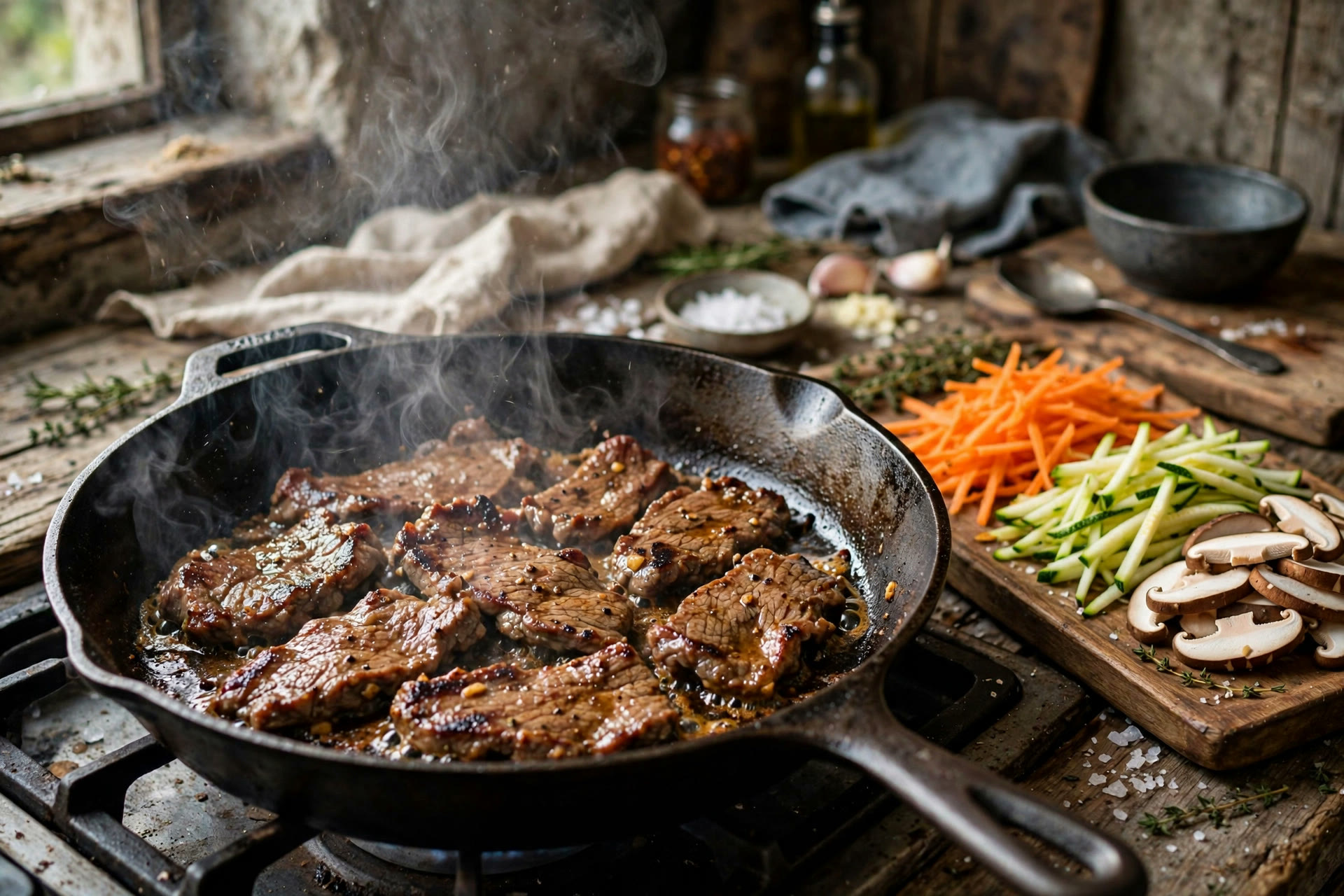
2. Sear the beef in a very hot pan for 2–3 minutes until charred at the edges, then set aside.
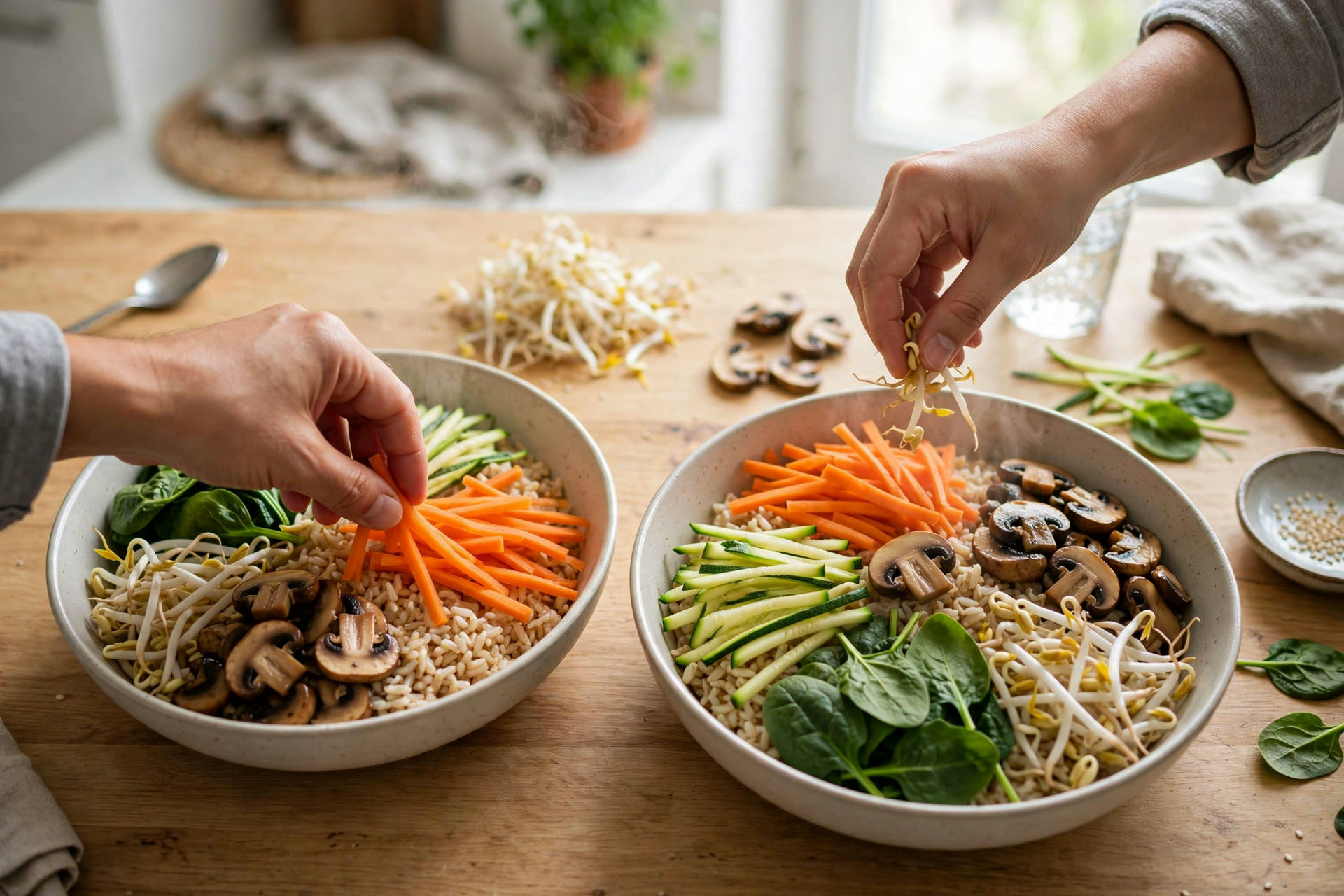
3. Stir-fry the carrot, zucchini and mushrooms for 3–4 minutes; blanch the spinach and bean sprouts for 1 minute and squeeze out all the water.
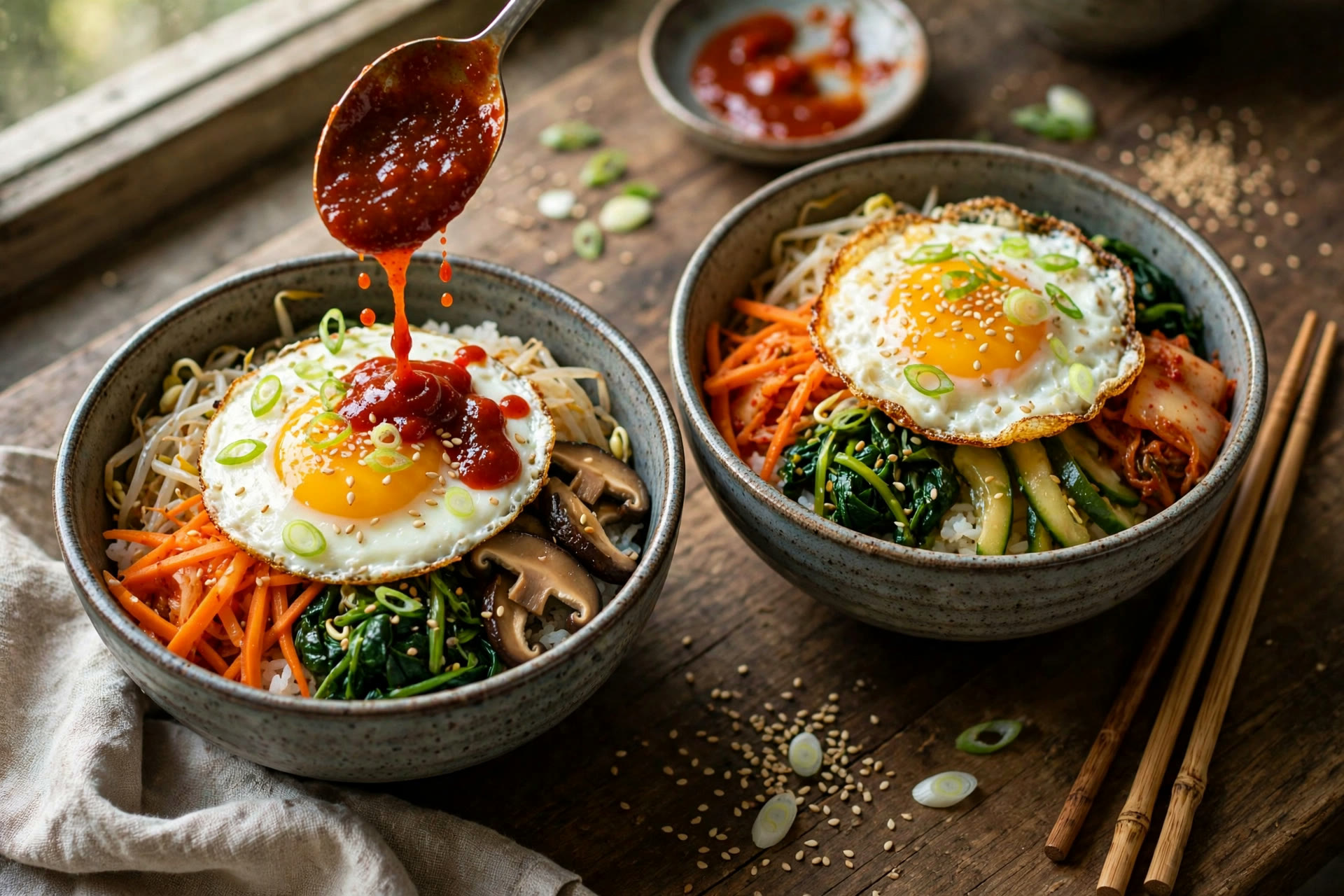
4. Whisk the gochujang, rice vinegar and remaining sesame oil into a sauce.
5. Divide the brown rice between two bowls and arrange the beef and vegetables in colorful sections.
6. Top each bowl with a fried egg, spoon over the sauce and scatter the sesame seeds and spring onions. Mix before eating.
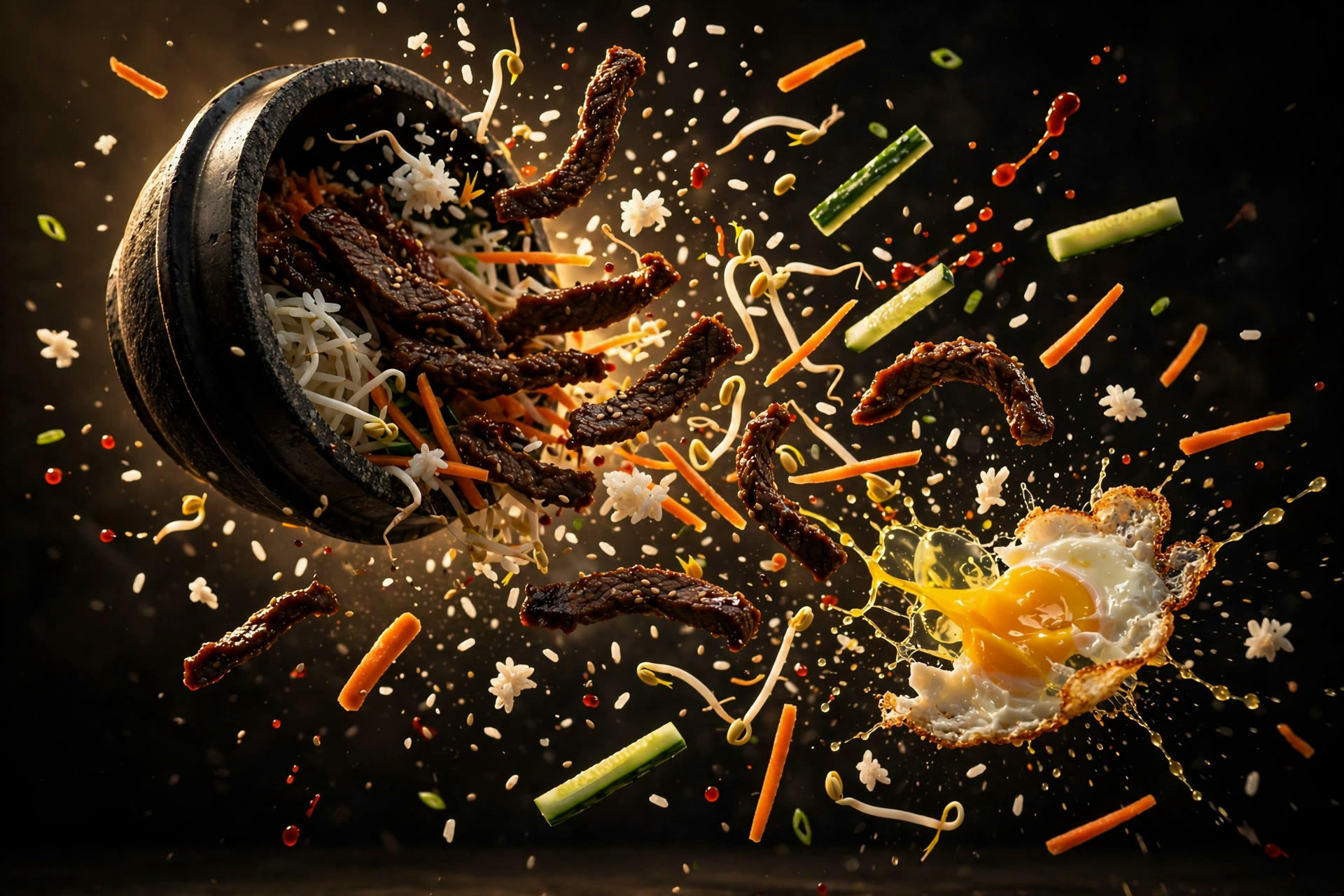
This bibimbap is my favorite post-workout meal when I want to gain weight the healthy way. It starts with marinated, seared beef — 400 grams of thin sirloin strips in soy, garlic and ginger — arranged over warm brown rice with colorful sections of carrot, zucchini, spinach, mushrooms and bean sprouts. The sauce is the real star: smoky gochujang whisked with sesame oil and rice vinegar, and the fried egg on top makes everything creamy when you mix it all together. Each bowl packs 38 grams of protein, and at 560 calories it feeds your muscles without feeling heavy. It looks restaurant-fancy but assembles in 40 minutes, and the veggies meal-prep beautifully.